

DinoBeam is presented as a small projector that can turn a child’s bedroom into a moving dinosaur world. The page is cheerful, polished, and unusually confident.
The important details sit beyond that first impression. The site’s age, review timeline, bundle design, contact information, and refund rules tell a more complicated story.
Overview
What the store is selling
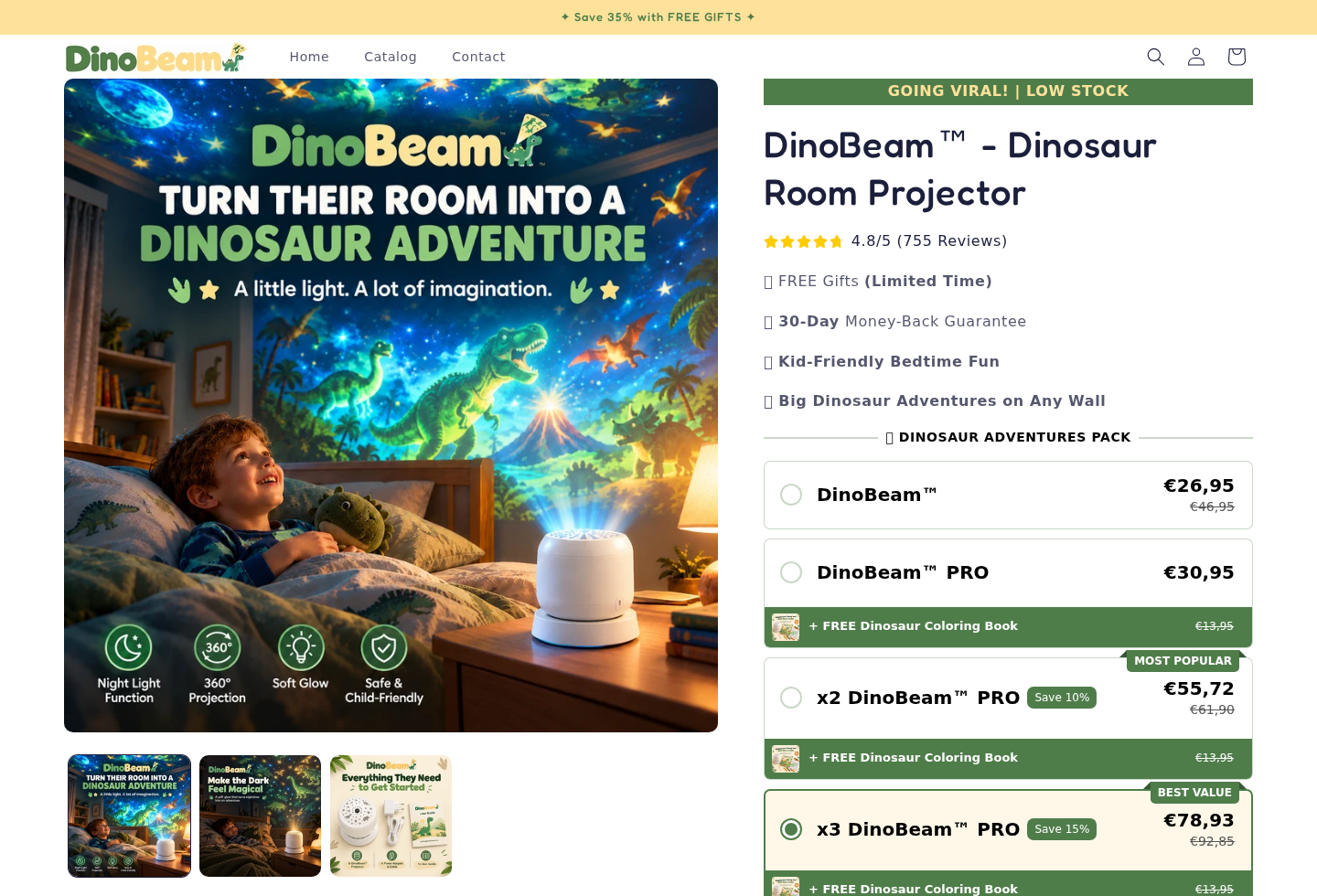
DinoBeam is a compact children’s projector sold through thedinobeam.store. Its advertising focuses on dinosaur scenes, bedroom play, gifts, and easy setup.
The storefront encourages customers to buy multiple units and presents percentage savings, bonus gifts, payment logos, review stars, and low-stock language.
This type of item may physically exist and may be shipped. The concern is whether the page accurately represents its history, value, support, and return rights.
Similar projectors often appear across marketplace listings under different names. A custom logo does not necessarily mean the hardware was uniquely designed by the seller.
The timeline does not make sense
Public domain records show thedinobeam.store was registered on September 23, 2026. The site therefore had only days of visible domain history during this review.
Yet its product page displays hundreds of reviews and testimonials dated before the domain existed. Several names and comments also repeat.
A new domain could belong to an older business that moved. The site does not clearly document such a migration or explain where those reviews originated.
Until the seller proves the review history, shoppers should not treat the displayed rating as an independently verified record of DinoBeam orders.
The refund promise is much narrower than it sounds
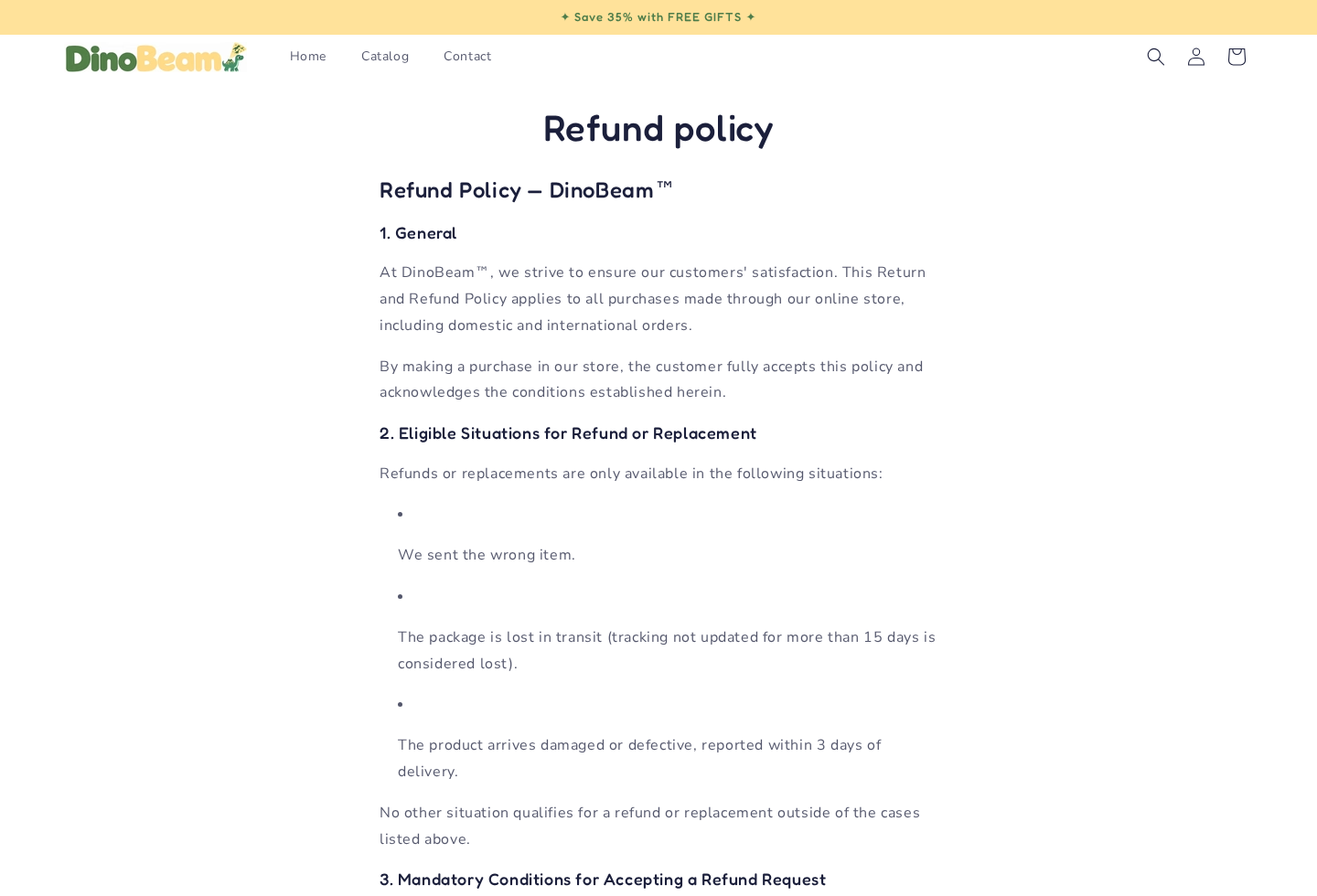
The store promotes a 30-day guarantee impression, but its detailed refund policy lists only limited situations that qualify.
Those situations include receiving the wrong item, a package missing beyond the specified period, or damage and defects reported within three days.
The policy says no other situation qualifies. That language may leave ordinary dissatisfaction, changed minds, quality concerns, or misleading expectations outside the return path.
- The domain was registered only recently.
- Displayed reviews predate that registration.
- Several testimonial entries appear duplicated.
- Multi-unit bundles are strongly promoted.
- Contact information is limited to an online form.
- The detailed refund conditions are unusually restrictive.
How the DinoBeam Sales Funnel Works
Step 1: Sell a vivid family moment, not technical specifications
The offer begins with the emotional result: a child surrounded by dinosaurs, excited parents, and a bedroom transformed into an adventure.
That scene is easier to remember than resolution, brightness, projection distance, battery capacity, included media, warranty length, or the projector’s actual manufacturer.
A buyer should pause and ask what is produced by the device itself. Some marketing scenes may be illustrative rather than literal photographs of output.
Look for an unedited demonstration showing the projector, room lighting, wall distance, sound, controls, and projected image in one continuous recording.
Step 2: Manufacture social proof before the buyer investigates
The page places a high rating and a large review count close to the product. This tells visitors that many families supposedly purchased first.
However, review dates visible on the site precede the domain’s registration date. That chronological conflict requires a credible explanation.
Duplicated wording also weakens confidence. Independent customers can share opinions, but repeated identities and identical text suggest imported or manufactured testimonials.
Do not let a star graphic replace outside research. Search the exact product image, seller name, domain, and review sentences before accepting the rating.
Step 3: Push larger bundles as the sensible choice
DinoBeam offers price reductions for buying two or three units. Free gifts and percentage savings make the larger order appear more valuable.
This structure raises the checkout total while the shopper is still imagining gifts for siblings, grandchildren, or friends.
The risk grows when return rights are limited. A disappointing single item is inconvenient, while several unwanted units create a larger loss.
Check the cart quantity before payment. Save a screenshot showing the exact number ordered, discounts applied, shipping charge, and final total.
Step 4: Use broad reassurance beside restrictive fine print
A “30-day guarantee” can sound like a normal satisfaction return. The detailed policy is what determines whether the seller agrees.
DinoBeam’s policy focuses on incorrect, lost, damaged, or defective orders. It requires damage or defect reports within three days.
It then states that no other circumstances qualify. That is substantially narrower than many shoppers expect from general guarantee language.
Read policies before purchase, not after delivery. Save the version you relied upon because a live web page can later be changed.
Step 5: Route problems through a thin support channel
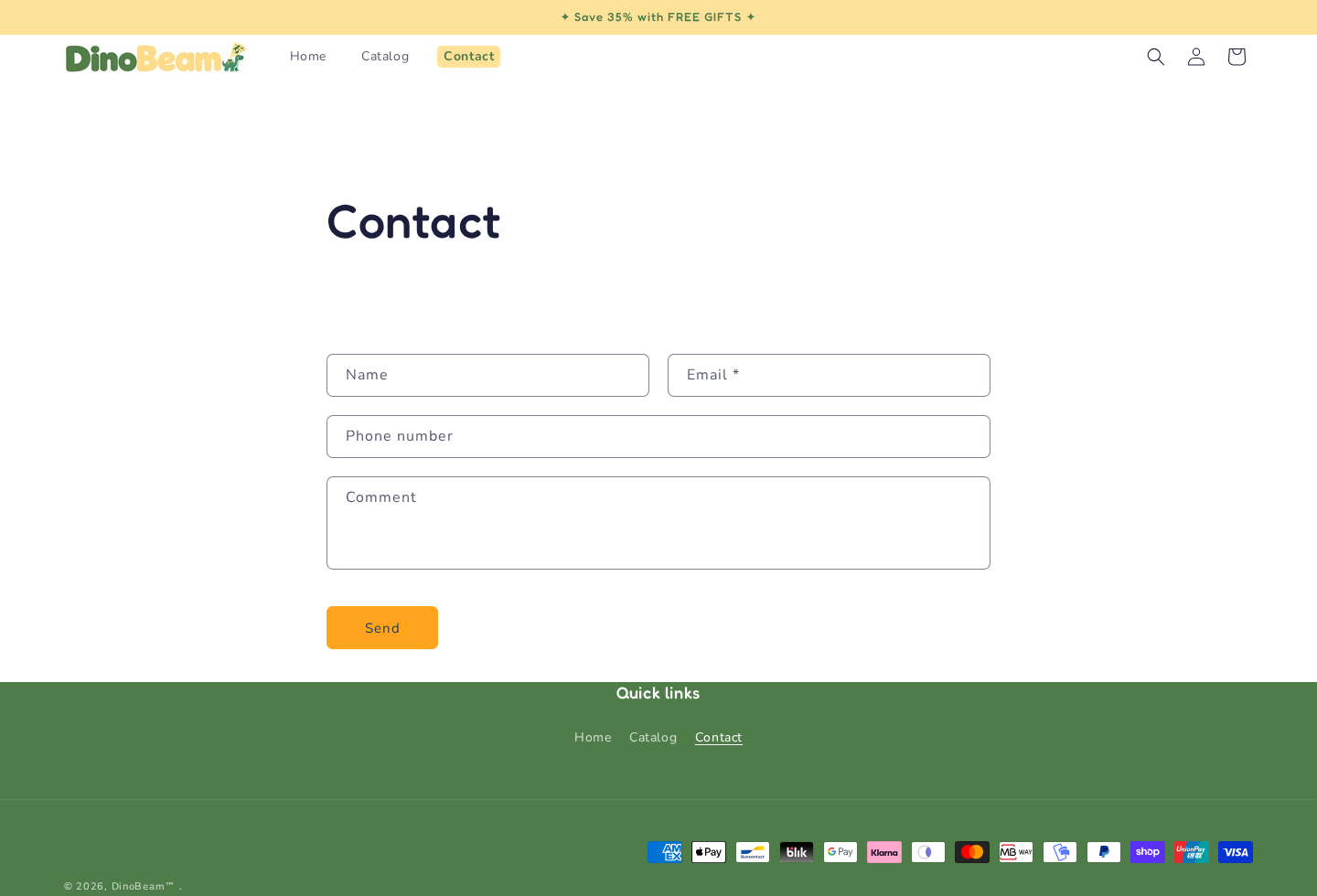
The contact page contains a web form asking for a name, email, phone number, and comment. A visible business address is not prominent there.
A form may work, but it provides less immediate accountability than a clearly identified company, service email, telephone number, and return location.
If the seller does not reply, the customer may reach the payment provider without a clear record unless the original form submission was captured.
Take a screenshot before sending, then preserve the success message. Follow up using any address in the order confirmation or package paperwork.
Why the Review History Is a Serious Warning
The domain is newer than the testimonials
A review cannot normally describe an order from a store before that store’s domain was registered. That mismatch is objective and easy to understand.
There are benign possibilities, such as imported reviews from a previous shop. A responsible seller would disclose the source and verify that connection.
Without that explanation, the testimonials should be treated as advertising content controlled by the seller, not independent proof.
Review volume can create false safety
Hundreds of positive entries make an unfamiliar product feel established. They also reduce the chance that a visitor will conduct separate research.
A polished review widget can be installed instantly. Its design does not demonstrate when orders occurred, whether purchasers were verified, or whether criticism was removed.
Check neutral platforms, marketplace listings, image matches, and complaint records. Absence of outside history matters more when the site claims enormous internal popularity.
Repeated entries undermine authenticity
Duplicate names or identical comments can result from a technical mistake. Multiple repeats still make the collection unreliable until the seller corrects or explains it.
A genuine review system should identify dates, products, verification standards, and moderation rules. DinoBeam’s displayed social proof lacks enough context to resolve the concerns.
Do not confuse “verified” text printed by the page with verification by an independent marketplace. The site controls its own labels.
Company, Address, and Fulfillment Checks
The legal seller is difficult to identify
A brand name is not necessarily a registered company name. The checkout, terms, receipt, and card statement should identify who actually accepted the order.
DinoBeam’s contact page emphasizes a form rather than a prominent legal entity or office address. That makes pre-purchase accountability harder to assess.
Search every company name appearing in the footer and policies. Compare jurisdiction, registration status, business age, and directors with the transaction documents.
A return address may be only a warehouse
If support later provides an address, search it before shipping. It may be a fulfillment center, mailbox, residential property, or unrelated logistics operator.
A warehouse can receive parcels without operating the store or deciding refunds. Delivery to that building does not guarantee the merchant approves reimbursement.
Demand return authorization and tracking instructions in writing. Never pay expensive international postage until the seller confirms the exact destination and eligibility.
The hardware may be generic
Reverse-image searches can reveal visually identical devices sold under other names. Compare lens layout, controls, ports, accessories, packaging, and remote design.
A generic product is not automatically unsafe or fraudulent. It does weaken claims that the store offers rare technology deserving a premium price.
Marketplace comparisons also reveal likely replacement value, ordinary specifications, and buyer photos that may be more realistic than promotional scenes.
Support must be tested before ordering
Send a precise pre-sale question about brightness, content licensing, warranty, returns, and the legal seller. A useful response should address each point directly.
Silence, copied marketing language, or refusal to name the business are warnings. Do not expect post-sale support to improve after payment.
Keep support messages outside disappearing social-media chats. Email and saved screenshots provide stronger evidence if a charge dispute becomes necessary.
What Buyers Should Verify Before Paying
Start with the projector itself. Ask for native resolution, ANSI brightness, power source, supported files, speaker details, and included dinosaur content.
Confirm whether the product streams copyrighted services or merely plays local animations. DinoBeam is not described as a licensed subscription replacement.
Next, identify the seller. Find the legal entity, operating address, support email, telephone number, and card-statement descriptor.
Read the refund exclusions word for word. Decide whether you would still purchase if ordinary dissatisfaction cannot produce a return.
Calculate the entire bundle cost. A lower per-unit price saves nothing when extra projectors were not needed.
Pay with a credit card or another method offering meaningful dispute rights. Avoid transfers, cryptocurrency, gift cards, and payment outside checkout.
Save the advertisement, product page, cart, policies, and order confirmation. These records document what was promised when you purchased.
A Realistic Test for the Projector
When the package arrives, compare the model number and housing with the product page. Photograph differences before removing protective films or labels.
Test the projector in daylight, dim light, and darkness. Marketing scenes often show ideal conditions that hide limited brightness.
Measure the distance needed for a clear image. A bedroom may not have enough uninterrupted wall space for the advertised effect.
Check whether dinosaurs are built into the device, stored on removable media, or shown through a connected phone.
Confirm that promised cables, remote controls, stands, gifts, instructions, and power adapters are included and compatible with your location.
Listen for fan noise and inspect heat after normal use. Stop immediately if the device smells burnt, becomes dangerously hot, or damages a cable.
Do not leave an unfamiliar projector running unattended in a child’s room. Follow the stated ventilation, power, and supervision instructions.
Record a short continuous demonstration showing startup, focus, sound, controls, and output. This evidence is stronger than isolated photographs.
Compare the result with the exact claims you saved, not with a general expectation that every inexpensive projector has limitations.
If the mismatch is material, report it promptly. The seller’s three-day defect window makes delay particularly risky.
Keep the original box until the dispute is resolved. Some sellers require packaging even when the item itself is defective.
Ask children what they actually see, but document the technical result yourself. Excitement on the first night does not measure product durability.
After several uses, retest focus, buttons, charging, memory cards, and remote response. Early intermittent faults can become easier to demonstrate over time.
What to Do If You Ordered DinoBeam
- Check the order immediately. Confirm the quantity, total, shipping method, address, and any add-ons before fulfillment begins.
- Request cancellation in writing. Use the contact form and every support address in your confirmation. Save the submission and response.
- Inspect delivery on camera. Record the sealed package, label, opening, contents, accessories, damage, and first power-on test.
- Report defects within three days. The published policy uses a short window, so send photographs, video, order number, and requested remedy promptly.
- Do not return without authorization. Obtain the exact address and confirmation that the return qualifies before paying postage.
- Challenge an inaccurate charge. Contact the card issuer if quantity, amount, delivery, or promised remedy differs materially from the agreement.
- Secure exposed accounts. If checkout redirected to a suspicious copy, change reused passwords and scan the device with Malwarebytes.
- Block malicious advertising. AdGuard may reduce redirects and deceptive ad placements, but it cannot recover an existing payment.
Frequently Asked Questions
Is DinoBeam a confirmed scam?
The evidence supports a strong buyer warning. The impossible-looking review timeline, young domain, thin contact details, and restrictive refunds are serious concerns.
Does the DinoBeam projector exist?
The page shows a physical projector, and similar devices are sold elsewhere. The main issue is whether this seller’s claims, value, and support are reliable.
Why do the review dates matter?
Some testimonials predate the site’s domain registration. Unless the seller documents a prior store and legitimate transfer, those reviews cannot establish DinoBeam’s sales history.
Can I return DinoBeam if I dislike it?
The posted policy does not present ordinary dissatisfaction as qualifying. It focuses on wrong, lost, damaged, or defective orders and imposes short reporting conditions.
Should I buy a three-unit DinoBeam bundle?
Only if you genuinely need three units and accept the return limitations. The percentage saving can magnify losses when quality falls below expectations.
What payment method is safest?
Use a credit card with dispute protections. Avoid irreversible payment methods, and retain screenshots showing quantity, final amount, promises, and policies.
The Bottom Line
DinoBeam may be a real projector, but the storefront does not provide a trustworthy purchasing history. Its displayed reviews conflict with the domain timeline.
The restrictive refund language, multi-unit pressure, and limited company visibility add practical risk if the product disappoints or arrives differently than advertised.
Do not buy based on stars or bedroom imagery alone. Verify the hardware, seller, return rights, and total quantity before giving the site payment details.

Join the discussion
0 commentsShare your experience or ask a question about this article.
Discussion
Start the conversation
Have a question or something useful to share? Add the first comment.