

ColonBroom GLP-1 Booster arrives with polished packaging, steep subscription savings, and promises aimed directly at people frustrated by cravings and weight gain.
The offer deserves a closer look before checkout. Several details only become clear when the product page, renewal terms, refund policy, and buyer complaints are read together.
Overview
What ColonBroom GLP-1 Booster actually is
ColonBroom GLP-1 Booster is a dietary supplement sold by the established ColonBroom brand. It is not a prescription GLP-1 medicine or injectable treatment.
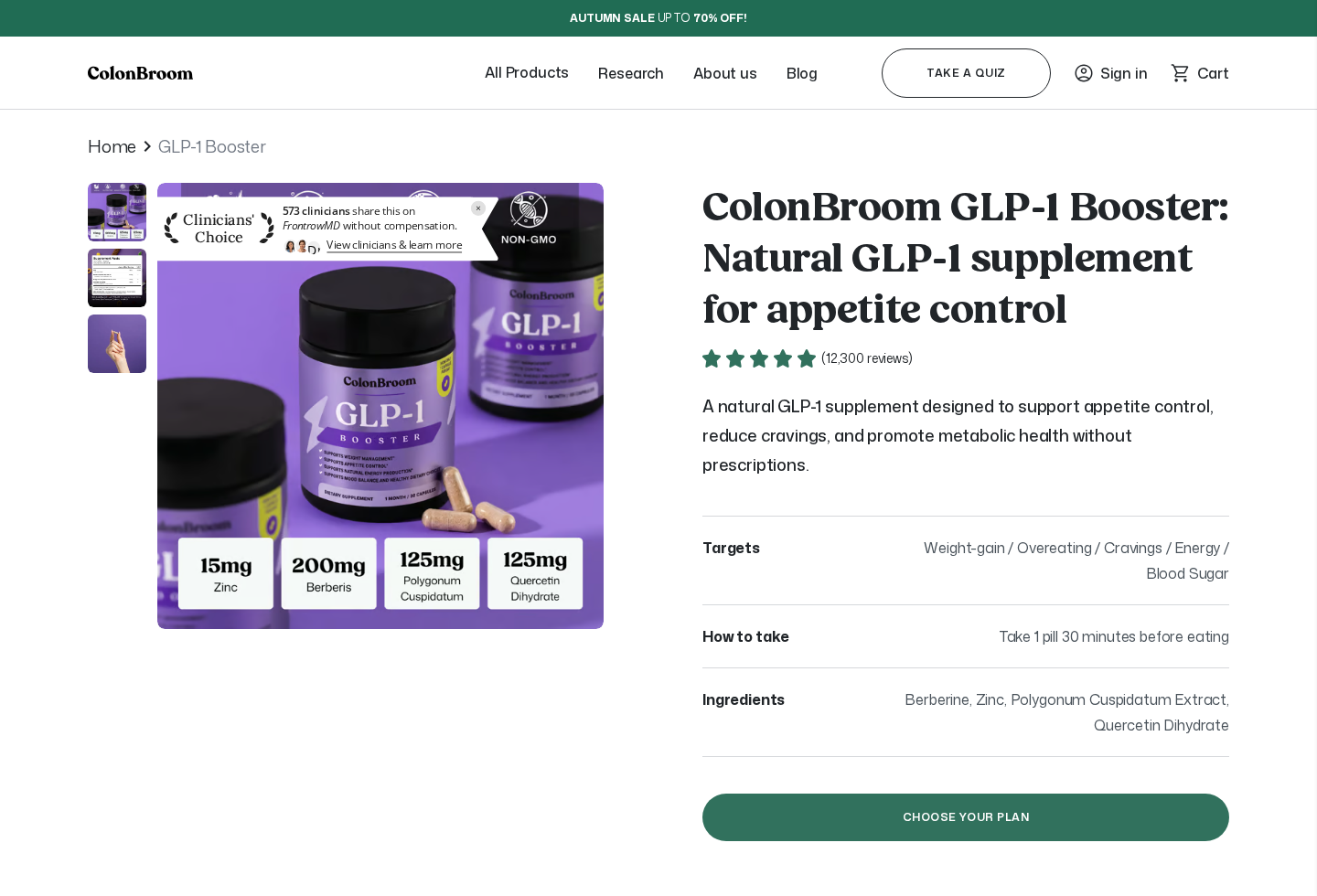
The official product page lists berberine, zinc, Polygonum cuspidatum extract, and quercetin dihydrate. Buyers are told to take one capsule before eating.
The page says the formula supports appetite control, cravings, energy, blood sugar, and metabolic health. Those are marketing claims, not guaranteed outcomes.
The company also displays thousands of reviews and uses phrases such as “Clinicians’ Choice.” Shoppers should examine what those labels actually establish.
Why the subscription deserves special attention
The purchase page presents both one-time and subscription plans. The subscription prices can look dramatically cheaper than the ordinary bottle price.
That discount changes the transaction. A buyer is no longer considering one bottle alone, but future deliveries and repeat charges on an agreed schedule.
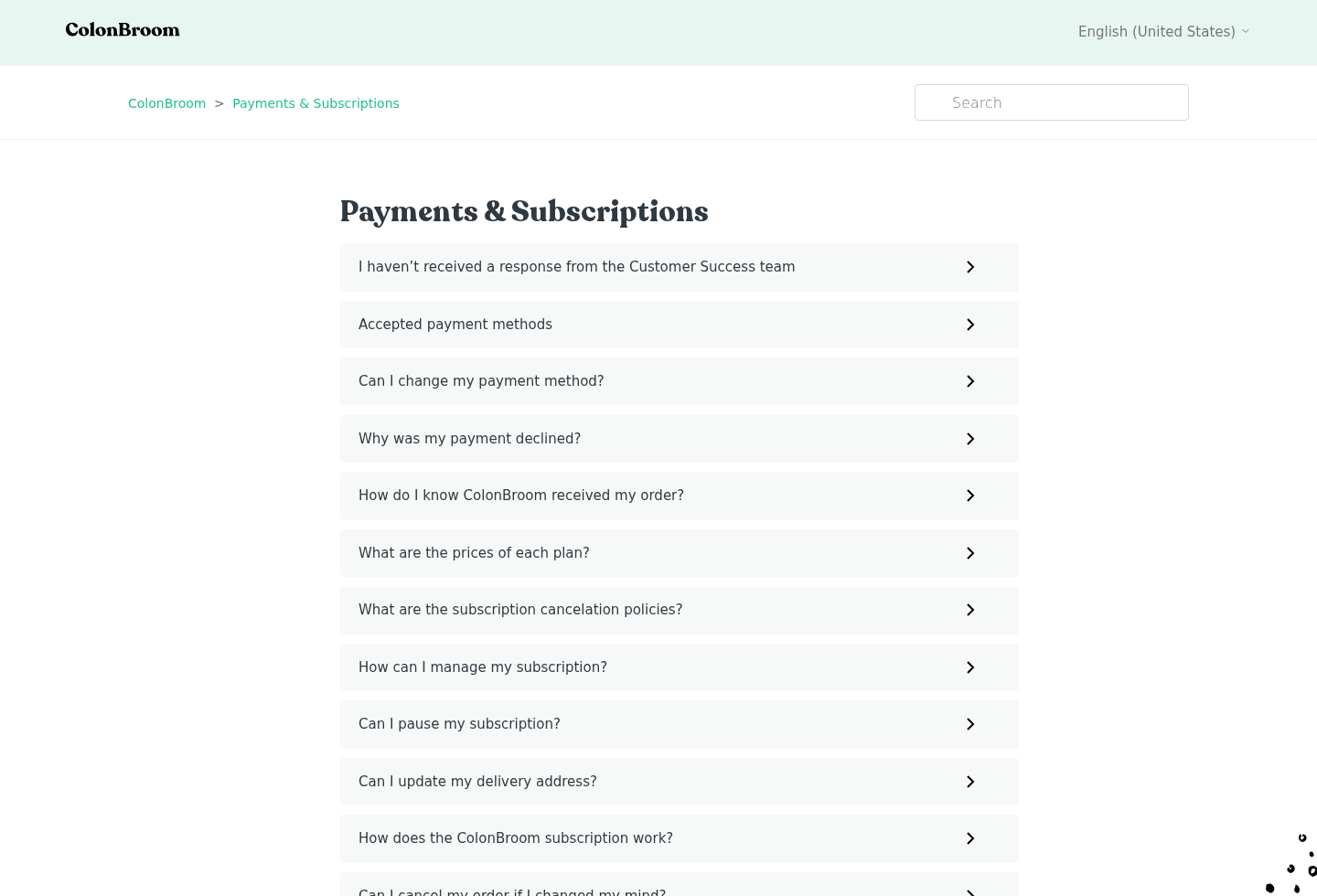
ColonBroom’s own help center separates subscription management from ordinary purchases. It also explains that recurring subscription goods are excluded from its standard refund eligibility.
This does not mean every ColonBroom charge is unauthorized. It means the renewal terms should be treated as a central part of the purchase.
What our investigation found
ColonBroom is a real brand with functioning support pages, published policies, and products that customers receive. Calling the entire operation fictitious would be inaccurate.
However, its funnel strongly encourages subscriptions, while public complaints describe unwanted renewals, confusing cancellation experiences, and difficulty obtaining refunds.
- The GLP-1 wording may be mistaken for a prescription-style treatment.
- The largest advertised savings are tied to recurring deliveries.
- The refund policy treats initial purchases differently from renewals.
- A prepaid return label may cost $15 in the United States or Canada.
- Public complaints include charges reported after cancellation attempts.
The appropriate conclusion is a subscription-risk warning, not a claim that every order is fraudulent or that no customer benefits from the product.
How the ColonBroom GLP-1 Subscription Funnel Works
Step 1: Lead with a familiar medical phrase
“GLP-1” is now closely associated with prescription weight-loss medications. The product name benefits from that familiarity even though the bottle is a dietary supplement.
The official page describes a “natural GLP-1 supplement” and emphasizes appetite control without prescriptions. That distinction matters before anyone compares expected results.
A supplement cannot simply be assumed to work like semaglutide, tirzepatide, or another prescription medicine because its marketing uses the same biological term.
The label and ingredient amounts should guide the comparison. A healthcare professional can explain interactions, limitations, and whether the ingredients fit your circumstances.
Step 2: Make the subscription look like the obvious bargain
The product page places one-time purchase and subscription choices inside the same plan selector. Larger savings naturally pull attention toward recurring options.
Bundles offer lower per-bottle prices, free gifts, and bold percentage reductions. That presentation can make the total commitment less noticeable than the advertised saving.
A customer may focus on the first displayed amount without recording the delivery interval, number of bottles, renewal price, or cancellation deadline.
Before pressing the payment button, write down four facts: today’s total, future total, renewal date, and the exact route for stopping renewals.
Step 3: Convert a health goal into repeat deliveries
Weight-management products are well suited to subscriptions because results are framed as gradual. Customers are encouraged to continue long enough to build a habit.
That model can be convenient when the buyer knowingly wants repeated shipments. It becomes frustrating when the recurring agreement was overlooked or misunderstood.
The number of bottles also matters. A multi-bottle renewal can create a much larger charge than someone expecting a single monthly container anticipated.
Never rely on memory after checkout. Save the order screen, confirmation email, renewal terms, and any cancellation message as soon as each appears.
Step 4: Apply narrower rules when the customer seeks a refund
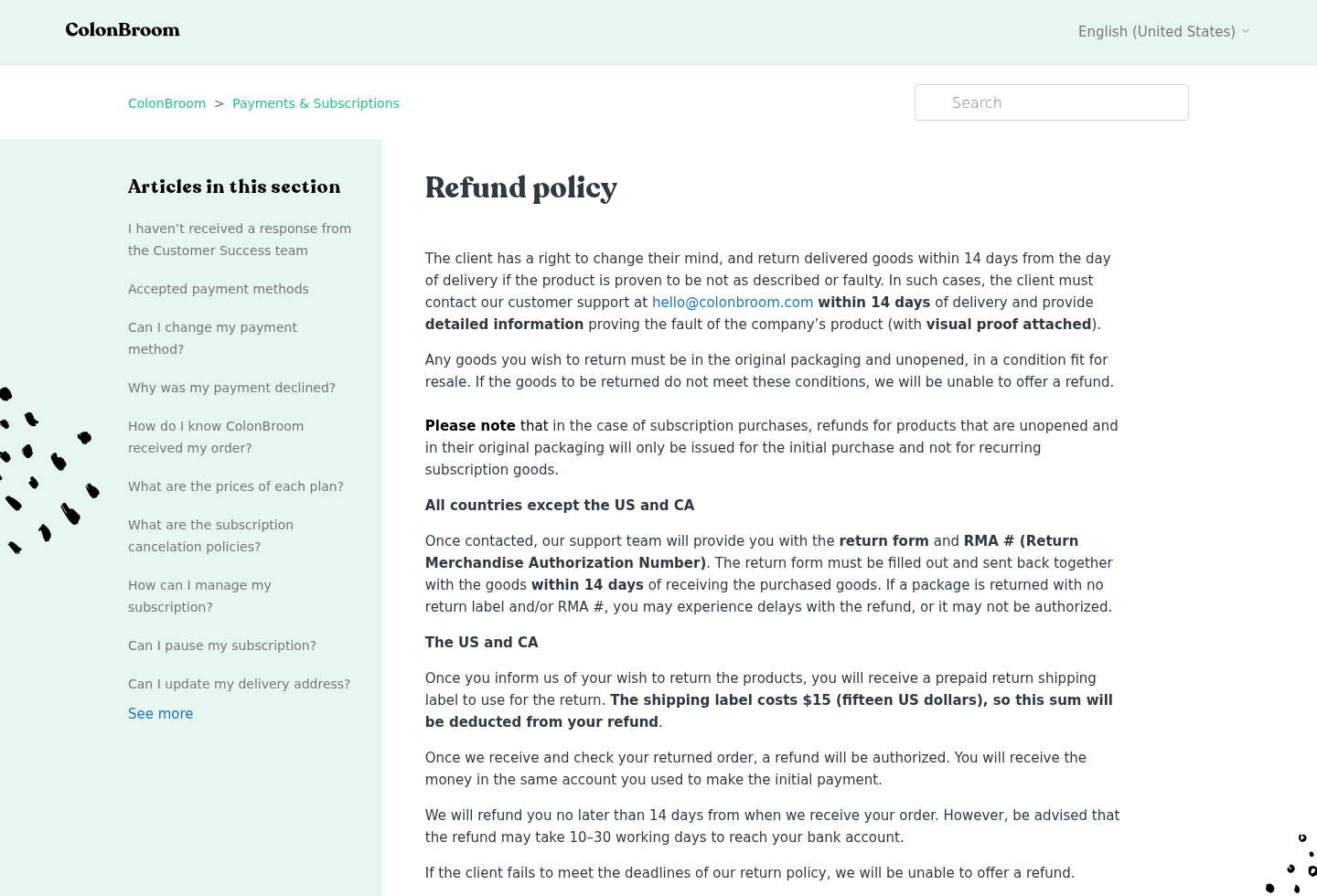
The refund page says initial purchase orders may qualify under stated conditions. It separately excludes recurring subscription goods from the refund policy.
That distinction can surprise someone who treats a renewal package like an ordinary unopened order. Eligibility depends on which transaction produced the shipment.
The policy also sets time conditions and asks customers to follow the company’s return process. Mailing a package back without authorization may not secure reimbursement.
For United States and Canadian returns, the help page says a $15 prepaid label charge can be deducted from the refund amount.
Step 5: Leave the buyer managing separate cancellation and refund questions
Stopping a future renewal and recovering a past charge are different requests. A cancellation confirmation does not automatically decide whether an earlier payment is refunded.
Several public complaints describe consumers who believed they had canceled, yet reported another shipment or charge. Company responses sometimes reference the agreed auto-renewal terms.
Those reports do not prove that every customer faces the same outcome. They do show why vague requests such as “close this” can create disputes.
State the order number, disputed amount, renewal date, requested remedy, and demand written confirmation that no future billing authority remains.
Product Claims and Evidence: What GLP-1 Means Here
This is not a prescription GLP-1 drug
Prescription GLP-1 medicines are regulated drugs with specific active ingredients, dosing instructions, contraindications, and clinical evidence. ColonBroom GLP-1 Booster is marketed as a supplement.
The product page itself emphasizes that no prescription or injection is involved. Consumers should not use it as a substitute for prescribed care.
If an advertisement visually compares the bottle with injections, that comparison does not make their mechanisms, evidence, or expected effects equivalent.
Ingredient evidence is not finished-product proof
Individual ingredients may have published research. That does not automatically prove that this exact combination produces every advertised result for every user.
Dosage, formulation, study population, duration, and outcome measurements all matter. A citation about one ingredient can be narrower than the headline surrounding it.
Look for trials on the finished product, not only articles discussing berberine or general metabolic pathways. The company’s disclaimer also deserves equal visibility.
Large review counts require context
The official page displays a very large review total. A number alone does not reveal collection methods, moderation, verified-purchase status, or negative-review visibility.
Independent review platforms show both satisfied customers and complaints about billing, delivery, effectiveness, and support. Read the pattern, not only the average score.
A positive product experience and a poor subscription experience can coexist. Separate comments about results from comments about the transaction itself.
Company, Address, Support, and Subscription Checks
The brand has identifiable support channels
ColonBroom publishes a help center and the support address hello@colonbroom.com. That is more accountable than a storefront containing only an anonymous contact form.
Use the official help center rather than a number copied from a social-media comment. Impersonators sometimes post fake support details beneath popular advertisements.
When contacting support, include only information needed to locate the order. Never send a card PIN, online-banking password, or remote-access code.
The refund policy contains important exclusions
The headline idea of a refund is not enough. ColonBroom’s published policy distinguishes initial purchases from recurring subscription goods.
It also describes qualifying conditions, deadlines, return handling, and possible label deductions. Read the current version before sending anything back.
Take a dated screenshot because online policies can change. Your order confirmation may also contain terms that applied when the transaction occurred.
Cancellation needs a written record
Use the account tools or official support process, then preserve the confirmation. A browser screen saying “submitted” is weaker than a message naming the canceled plan.
Check the next renewal date and ask whether an already processed shipment can still be stopped. Do not assume the two actions happen together.
Review the card statement after cancellation. Merchant descriptors can differ from the brand name printed on the bottle.
Fulfillment does not answer the medical question
A delivered package proves that goods were shipped. It does not prove that a supplement is suitable, clinically equivalent to medicine, or guaranteed to work.
Inspect seals, lot information, expiration date, Supplement Facts, and warnings before use. Contact the company if packaging appears altered or incomplete.
Discuss berberine and other ingredients with a clinician if you take medication, manage blood sugar, are pregnant, or have a relevant condition.
Warning Signs to Notice Before Ordering
The first warning is a health phrase that sounds closer to prescription treatment than an ordinary supplement. Confirm which product category you are actually buying.
The second is an unusually large discount attached to a subscription. Calculate the real cost across the full delivery schedule.
The third is urgency, including countdowns, seasonal sales, low-stock language, or gifts that make careful reading feel expensive.
The fourth is a refund promise summarized more broadly in advertising than in the detailed policy. The detailed conditions control the practical outcome.
The fifth is assuming cancellation and refund are identical. One prevents future billing, while the other disputes money already collected.
None of these signs alone proves criminal fraud. Together, they create a purchase that demands more attention than a simple one-time bottle order.
How to Calculate the Real Cost
Ignore the crossed-out price temporarily. Start with the amount that will actually leave your account today, including shipping, taxes, and added products.
Then multiply the renewal amount by the number of scheduled deliveries you reasonably expect before reassessing the supplement.
A three-bottle shipment every three months is not a $26.99 decision. It is a multi-unit transaction that repeats on a timetable.
Write the total beside the one-time option. The subscription may remain cheaper, but the comparison should use complete charges rather than per-bottle headlines.
Check whether promotional pricing applies only to the first shipment. A future renewal at a different rate can erase the apparent saving.
Include return deductions and postage in the calculation. A $15 label charge changes the value of a refund on a smaller order.
Consider unused inventory. Receiving another bundle before finishing the first creates a cost even when every bottle arrived correctly.
Set two reminders: one before renewal and another before the cancellation cutoff. Calendar alerts are more reliable than remembering a date months later.
If the site changes the cart after an upsell, return to the final summary. Confirm quantity, frequency, gifts, and total once more.
Finally, decide what evidence would justify continuing. Define a realistic review date with a clinician instead of letting billing determine treatment length.
What to Do If You Were Charged or Cannot Cancel
- Identify the transaction. Record the statement descriptor, amount, date, order number, product quantity, and whether the charge was initial or recurring.
- Cancel through the official route. Use the account or help center, and request written confirmation showing the plan and effective cancellation date.
- Request the correct remedy. Ask separately for renewal cancellation, shipment interception, return authorization, and refund review. Specify each outcome you need.
- Preserve the evidence. Save the offer, checkout screen, confirmation, policy, emails, chat transcripts, tracking details, package label, and card statement.
- Contact the card issuer promptly. Explain the exact dispute, including any post-cancellation charge. Do not describe an authorized purchase as stolen.
- Watch future statements. A canceled subscription should stop additional billing. Report a new charge immediately and provide the earlier confirmation.
- Protect your accounts. If you entered payment details on an imitation site, change reused passwords, enable multifactor authentication, and scan the device with Malwarebytes.
- Reduce risky advertising. AdGuard can block many malicious redirects and aggressive ad placements, but it cannot cancel an existing subscription.
Frequently Asked Questions
Is ColonBroom GLP-1 Booster a scam?
ColonBroom sells a real supplement through an operating website. Evidence supports warning about subscription and refund friction, not declaring every order a fictitious scam.
Is ColonBroom GLP-1 Booster the same as Ozempic?
No. It is a dietary supplement, not Ozempic, semaglutide, or another prescription GLP-1 drug. Similar terminology does not make the products medically equivalent.
Does a ColonBroom order automatically create a subscription?
The site offers one-time and subscription plans. Your result depends on the option selected at checkout, so inspect the confirmation and renewal schedule immediately.
Can recurring ColonBroom orders be refunded?
The published refund policy excludes recurring subscription goods from its standard eligibility. Contact support quickly and check the terms attached to your transaction.
How do I cancel ColonBroom?
Use the official account or help-center process and obtain written confirmation. Then monitor the payment method through the next scheduled renewal date.
What should I do with an unexpected package?
Do not discard it. Photograph the sealed package and label, contact official support, request instructions, and ask your card issuer about dispute deadlines.
The Bottom Line
ColonBroom GLP-1 Booster is a real supplement wrapped in forceful weight-loss language and a heavily discounted recurring-order model.
The greatest documented risk is not an imaginary bottle. It is misunderstanding the subscription, renewal quantity, cancellation process, or narrower rules for recurring-order refunds.
Read the final checkout summary, save every term, and treat “GLP-1” as marketing that requires medical context rather than proof of prescription-level results.

Join the discussion
0 commentsShare your experience or ask a question about this article.
Discussion
Start the conversation
Have a question or something useful to share? Add the first comment.