

ColonBroom now appears in ads as more than a familiar fiber drink. Its newer GLP-1 language places the product inside one of today’s busiest weight-loss conversations.
The offer deserves a closer look, especially before a discounted first order turns into a purchasing commitment you did not fully understand.
Overview
What ColonBroom GLP-1 actually is
ColonBroom’s GLP-1 product is a dietary supplement, not a prescription GLP-1 medicine. The distinction matters because the advertising borrows language associated with powerful medical treatments.
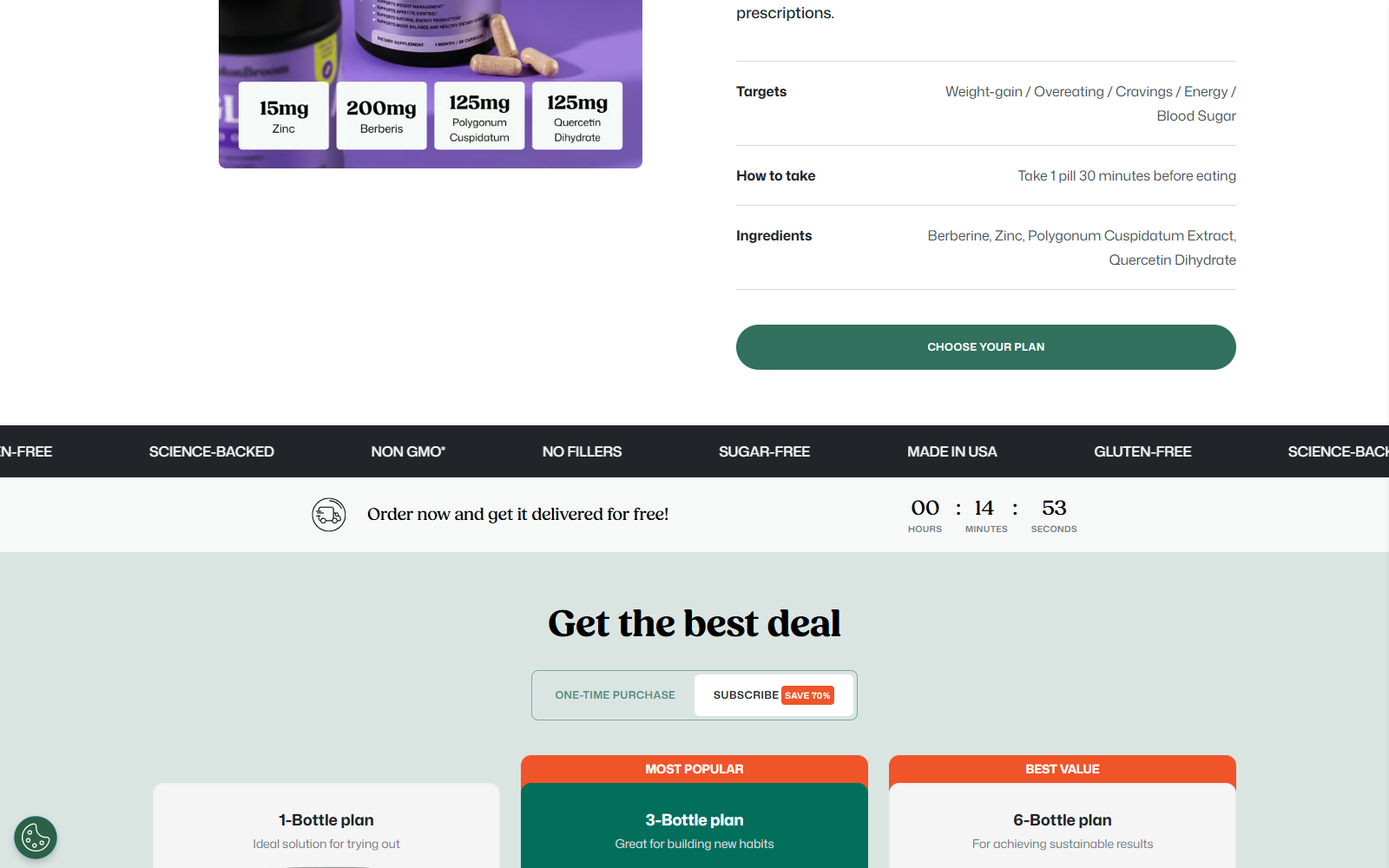
The listed formula includes berberine, zinc, Polygonum cuspidatum extract, and quercetin. It is marketed for appetite control, cravings, metabolic health, and natural GLP-1 support.
Those phrases can sound clinical. They do not mean the supplement works like semaglutide, tirzepatide, or another prescription drug.
Why the discounted price needs attention
The purchase page offers both one-time and subscription choices. The subscription option advertises savings of up to 70%, making the recurring plan visually more attractive.
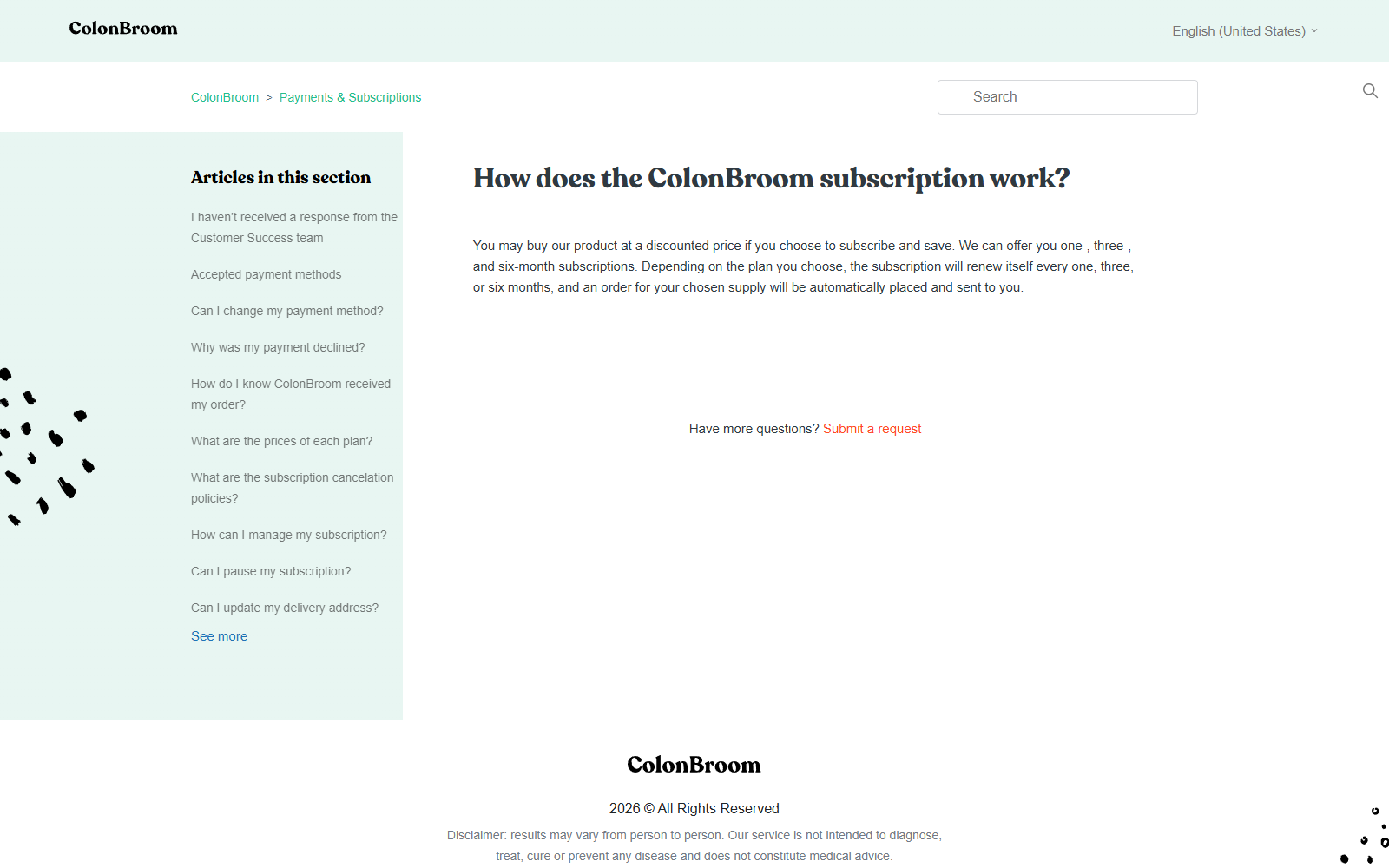
ColonBroom’s own help pages confirm that subscriptions renew every one, three, or six months. Each renewal creates another order and sends another supply.
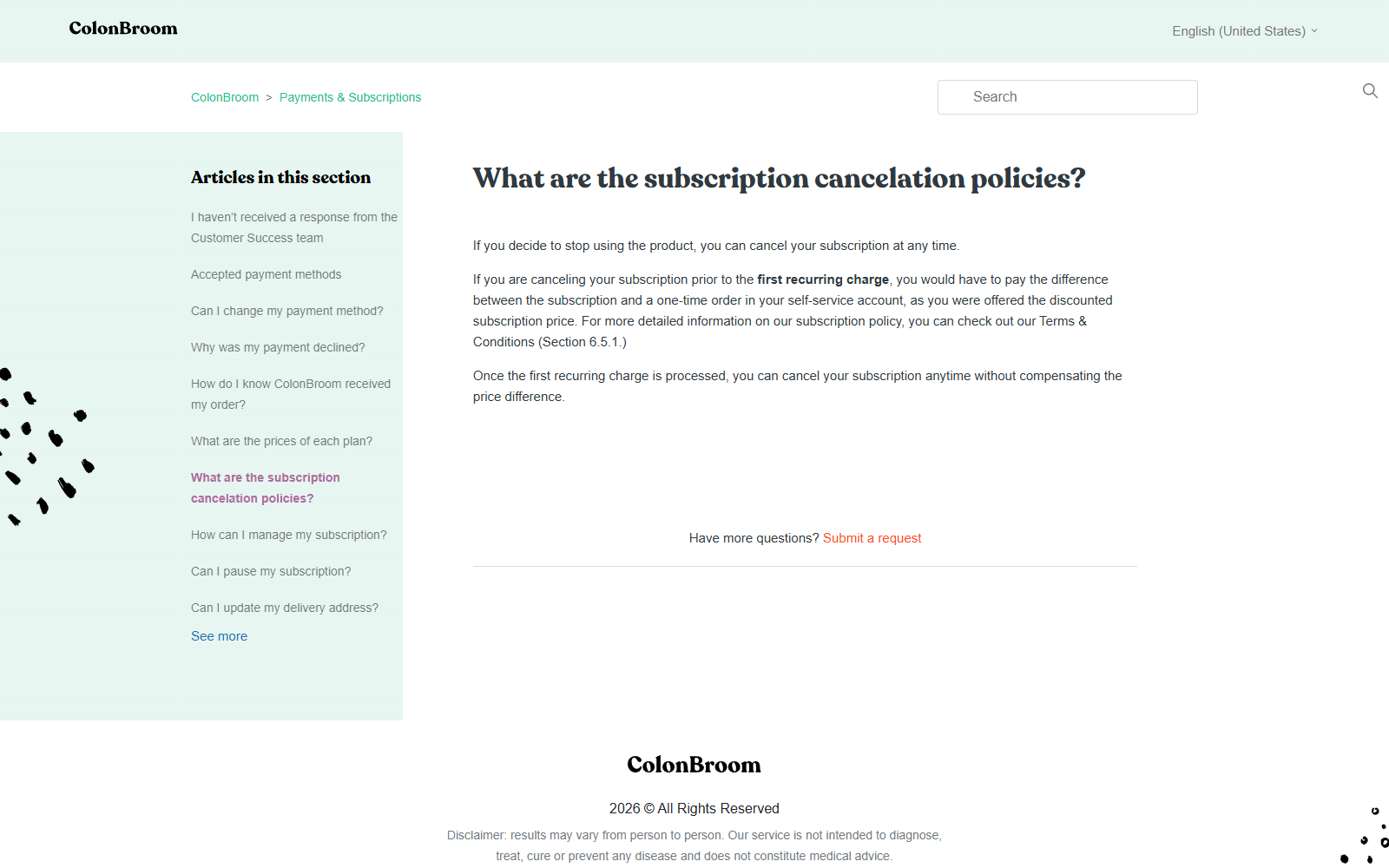
The important details are not limited to the renewal date. A customer canceling before the first recurring charge may owe the difference between subscription and one-time pricing.
Our conclusion in plain language
ColonBroom is a real product sold through a functioning company website. This investigation did not find evidence that every order is fraudulent or that nothing is delivered.
The concern is the sales design. Medical-sounding GLP-1 wording, steep subscription discounts, recurring shipments, and restrictive refund terms can create an expensive misunderstanding.
- It is a dietary supplement, not an approved GLP-1 drug.
- The lowest advertised prices require recurring deliveries.
- Early cancellation may trigger a price adjustment.
- Recurring subscription shipments generally are not refundable.
- Return shipping and a short eligibility window can reduce recovery options.
Why the GLP-1 Label Can Be Misleading
GLP-1 is a hormone involved in blood sugar regulation, digestion, and appetite. Prescription GLP-1 receptor agonists imitate or amplify specific biological effects under medical supervision.
A supplement that says it “supports GLP-1” is making a much looser marketing claim. The wording does not establish comparable strength, dosing, clinical outcomes, or safety monitoring.
ColonBroom does not hide that its product is a supplement. However, shoppers arriving from short advertisements may associate “GLP-1” with prescription results before reading the details.
The National Center for Complementary and Integrative Health says evidence for berberine and weight loss remains inconclusive. Studies vary in quality, dose, duration, and formulation.
Berberine can also cause digestive effects and interact with medications. It should not be treated as harmless simply because it is sold without a prescription.
The FDA does not approve dietary supplements for safety and effectiveness before they reach the market. That regulatory difference is easy to miss in polished wellness advertising.
How the ColonBroom Subscription Works
Step 1: An ad connects fiber with the GLP-1 trend
The first contact may be a social post, search result, affiliate review, or wellness advertorial. It introduces a natural answer to appetite or weight-management concerns.
GLP-1 terminology gives the pitch immediate familiarity. Many readers already know the term from news about prescription injections, even if they do not understand the biology.
The ad may focus on cravings, stubborn weight, digestion, or metabolic support. That broad framing lets one product speak to several worries at once.
Step 2: The product page makes the subscription look economical
On the sales page, the subscription tab displays the strongest discount. Larger bundles reduce the stated per-bottle price and create a sense of long-term value.
The one-time option exists, but it costs more. A hurried shopper may select the cheaper-looking plan without calculating the future charge or shipment schedule.
This is not automatically deceptive. Recurring billing becomes problematic when price emphasis is stronger than the consumer’s understanding of the continuing obligation.
Step 3: The selected interval controls future deliveries
ColonBroom says its subscriptions renew every one, three, or six months. The interval corresponds to the supply selected during the initial order.
When the renewal date arrives, the system places another order automatically. The customer does not need to return and manually approve each shipment.
A buyer should therefore record the renewal date immediately. Waiting until another package appears may leave fewer options under the company’s refund rules.
Step 4: Early cancellation may erase the introductory discount
The cancellation policy contains an unusual detail. Before the first recurring payment, cancellation can require paying the difference between the subscription and one-time purchase prices.
That means “cancel anytime” may not mean leaving without another cost. The customer can stop future deliveries yet still face a price adjustment on the first order.
After the first renewal, the policy says cancellation can occur without that adjustment. By then, however, another multi-bottle shipment may already have been billed.
Step 5: Refund eligibility narrows quickly
The published refund policy provides a 14-day period and requires eligible products to remain unopened. That is short for a supplement marketed around gradual wellness changes.
Most people must open the product to evaluate it. Once opened, the ordinary refund route becomes substantially weaker, regardless of whether the buyer likes the experience.
The policy also says recurring subscription goods are not refundable. Customers in the United States and Canada may have $15 deducted for a prepaid return label.
Step 6: Complaints begin after expectations and terms collide
Public reviews include satisfied customers, but they also include allegations about unexpected renewals, upsells, cancellation friction, and refund disputes. These are customer reports, not court findings.
The recurring pattern is still useful. People often remember the attractive introductory price but not the renewal interval, adjustment clause, or unopened-product limitation.
This is why the safest moment to assess the offer is before checkout. Once bottles are shipped or opened, the written policies give the customer less leverage.
Pricing Details Buyers Can Easily Miss
At the time of our review, the subscription page showed one bottle at $49.99. A three-bottle plan displayed $34.74 per bottle.
The six-bottle option displayed $25.83 per bottle. Those figures can change, so the final checkout total matters more than a screenshot or affiliate headline.
A per-bottle number is not the amount charged today. A multi-bottle package usually bills the entire bundle in one transaction.
The renewal amount may also differ from the first promotional total. Read every line beside “today,” “renews,” “frequency,” and “next shipment.”
Do not rely on the word “save.” Calculate the complete first payment, the next payment, annual cost, and the cost of canceling before the initial renewal.
Take screenshots of the selected option and order summary. If a later dispute arises, those records show which price and billing language appeared during purchase.
Company, Address, and Fulfillment Checks
Identify the seller on every document
Compare the entity named in the checkout, terms, confirmation email, package label, and card statement. Differences do not prove fraud, but unexplained differences deserve attention.
Search the billing descriptor before disputing a charge. A legitimate merchant can appear under a parent company or processor name that the customer does not recognize.
Do not confuse a warehouse with headquarters
A return location may be a logistics center that receives packages for many brands. It does not necessarily manufacture the supplement or manage customer complaints.
Never mail bottles to the address printed on the parcel unless support authorizes it. Unapproved returns can be rejected and leave no usable tracking trail.
Test support before the return window closes
Contact support in writing immediately. Ask for the exact renewal date, cancellation status, return authorization, approved destination, and amount expected after any deductions.
Keep the full email thread. A phone promise is difficult to prove when the written policy or final refund says something different.
Treat supplement quality as a separate question
A professional website cannot verify purity, dose accuracy, manufacturing quality, or clinical effectiveness. Look for a complete label, lot details, warnings, and independent testing evidence.
Discuss berberine with a qualified clinician if you take medication, manage diabetes, are pregnant, or are breastfeeding. “Natural” does not eliminate interaction risks.
What to Do if You Bought ColonBroom
- Confirm the selected plan. Open the order confirmation and identify whether the purchase says one-time, subscription, monthly, three-month, or six-month delivery.
- Record the renewal date. Save screenshots of the account page, checkout summary, cancellation policy, refund policy, and any promotional price shown.
- Cancel through the official account or support channel. Request written confirmation that future orders and charges are stopped. Keep the cancellation reference.
- Ask about the price adjustment. If canceling before the first renewal, request the exact amount and policy clause before authorizing any additional payment.
- Request return instructions promptly. Keep bottles sealed until eligibility is confirmed. Obtain an authorization and approved address before shipping anything.
- Use tracked shipping. Photograph the package and label, retain the receipt, and monitor delivery. Do not rely on an untracked envelope.
- Contact your card issuer when necessary. Dispute only charges you did not authorize or terms that were materially misrepresented. Provide your records and merchant correspondence.
- Secure exposed information. If you entered payment details on an imitation page, contact the bank, replace the card, and change reused passwords.
- Scan the device if an ad triggered downloads. Malwarebytes can check for unwanted software. AdGuard can reduce malicious redirects and aggressive advertising.
- Speak with a clinician about side effects. Stop using the supplement and seek medical advice if symptoms appear or medication interactions are possible.
How to Avoid Similar Supplement Traps
Ignore the headline price until you know whether it requires autoship. A discount is not savings if it commits you to bottles you never planned to buy.
Search the page for “subscription,” “recurring,” “renew,” “frequency,” and “cancel.” Repeat that search inside the terms and refund policy.
Be cautious when a supplement borrows the vocabulary of a prescription treatment. Similar terminology is not evidence of similar biological effects.
Read the worst reviews, not only the average score. Look for recurring operational complaints involving billing, support, returns, and product condition.
Use a credit card rather than bank transfer, cryptocurrency, or a payment method without dispute protection. Keep one browser tab open with the final order summary.
Set a calendar reminder several days before renewal. Canceling on the billing date may be too late if fulfillment has already started.
Questions to Ask Before Taking the First Dose
Begin with the complete ingredient label, not the front of the bottle. Marketing summaries rarely provide enough detail for a medication-interaction decision.
Ask whether every active ingredient lists an exact amount. Proprietary blends can make it difficult to compare the formula with research or clinician guidance.
Confirm how many capsules equal one serving and how many servings each bottle contains. A low bottle price can hide a shorter supply.
Check warnings for pregnancy, breastfeeding, diabetes, liver conditions, surgery, and prescription drugs. Berberine can affect how the body handles certain medicines.
Do not combine several “metabolic” supplements without professional advice. Overlapping ingredients can increase exposure even when each label looks ordinary by itself.
Ask the seller for recent independent testing covering identity, potency, microbes, and heavy metals. A generic manufacturing badge is not the same evidence.
Record the lot number and expiration date when the parcel arrives. Missing, altered, or unreadable details should be reported before use.
Inspect the safety seal, bottle condition, smell, and capsule appearance. Photograph anything unusual and keep the package until the concern is resolved.
Track one change at a time. Starting several supplements together makes it harder to identify which product caused benefits, side effects, or interactions.
Set a realistic evaluation point with a clinician. Weight fluctuates naturally, and short-term scale changes do not prove that a supplement changed GLP-1 activity.
Stop and seek advice for severe digestive symptoms, allergic reactions, dizziness, or unexpected blood-sugar changes. An online guarantee cannot replace medical safety.
Finally, calculate the full course cost. Compare that amount with evidence-based nutrition counseling, medical evaluation, and treatments supported for your individual needs.
Frequently Asked Questions
Is ColonBroom GLP-1 a prescription GLP-1 drug?
No. It is a dietary supplement. Its ingredients and regulatory status are different from prescription GLP-1 receptor agonists used under medical supervision.
Does ColonBroom automatically renew?
The subscription option does. ColonBroom’s help center says plans renew every one, three, or six months and automatically generate another shipment.
Can I buy ColonBroom only once?
The reviewed page displayed a one-time purchase option. Check the active selection and final order summary because the subscription tab advertises the largest discount.
Can ColonBroom charge me after I cancel early?
Its published policy says early cancellation before the first recurring charge may require paying the difference between subscription and one-time pricing.
Are recurring ColonBroom orders refundable?
The reviewed refund policy says recurring subscription goods are not refundable. Contact support immediately and preserve documentation if a charge was unauthorized.
Is berberine proven to produce GLP-1 drug results?
No reliable evidence establishes that this supplement produces prescription-level results. Research on berberine and weight loss remains limited and inconsistent.
The Bottom Line
ColonBroom is not an imaginary product, but its GLP-1 branding can encourage assumptions the evidence does not support.
The real purchasing risk sits in the recurring plan, early-cancellation adjustment, short return window, unopened-product rule, and nonrefundable renewal shipments.
If you still want to try it, choose the plan deliberately, screenshot every term, set a renewal reminder, and discuss the ingredients with a qualified healthcare professional.

Join the discussion
0 commentsShare your experience or ask a question about this article.
Discussion
Start the conversation
Have a question or something useful to share? Add the first comment.