

A compact vacuum that cleans almost everything, runs quietly, and costs half its usual price sounds like an easy household upgrade.
Osmo ProVacuum advertising leans into that picture. The more useful question is what a buyer can verify before the box arrives.
Overview
There is a product behind the advertising
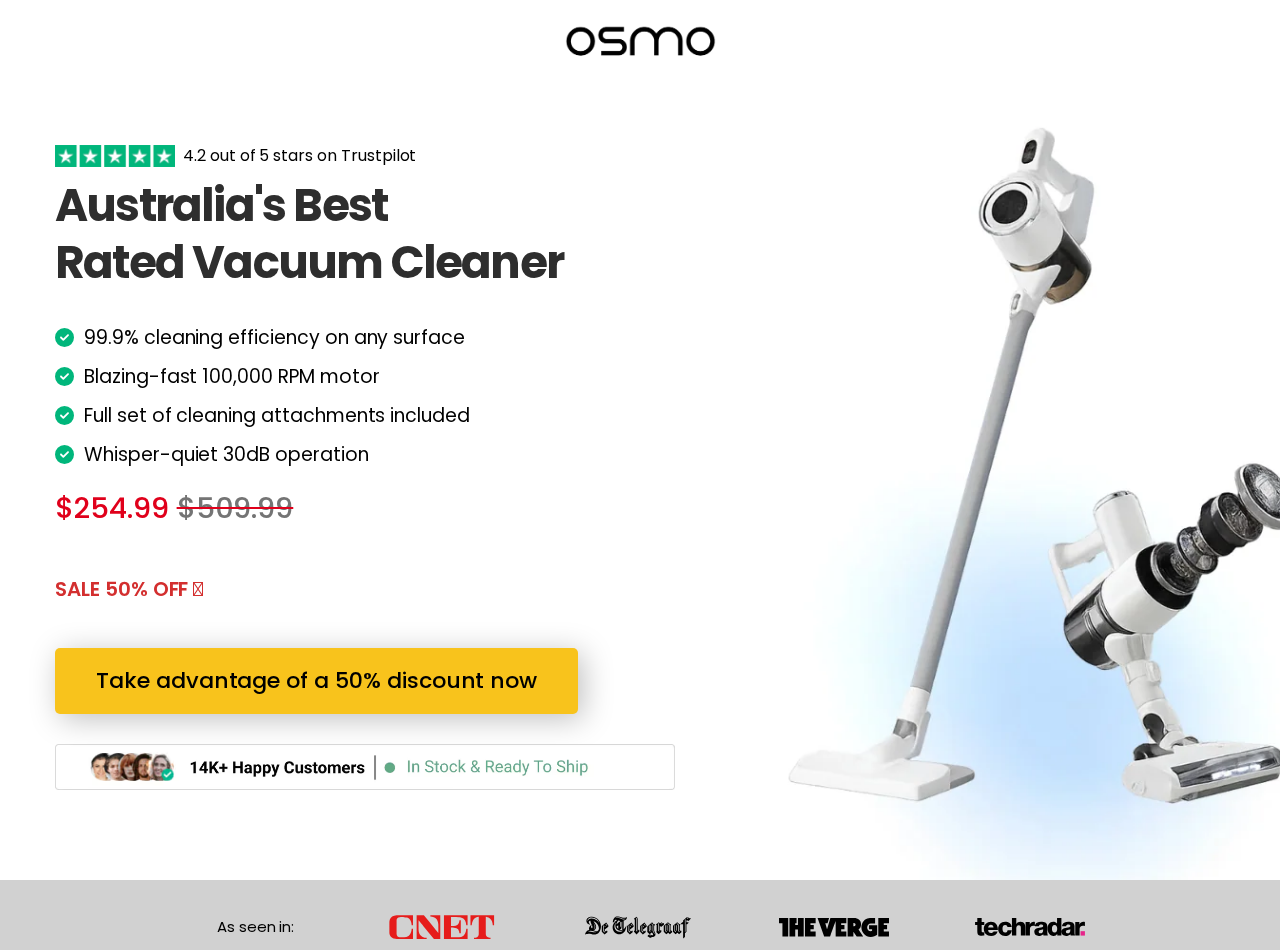
Osmo ProVacuum appears on Osmo-branded product and sales pages. The pages describe a compact vacuum with rotating brushes, suction settings, and other familiar features.
That does not establish that every advertisement is accurate. A delivered appliance and an exaggerated performance claim can both be true.
We found a sales page claiming 99.9% cleaning, 100,000 RPM, low noise, and a large discount. We did not find independent test data proving those figures.
Claims like these need context: test surface, debris type, measurement distance, battery setting, and whether results were measured by an independent lab.
The pages do not tell one consistent battery story
An Osmo-branded product listing describes up to 60 minutes of battery life. Another Osmo sales page presents a 120-minute figure in its FAQ.
Those claims might refer to different models, modes, or sellers. The pages do not resolve that distinction clearly enough to treat the figures as interchangeable.
We have not established that every Osmo-branded domain belongs to one legal company. Buyers should identify the actual seller shown at checkout.
Return language also needs careful comparison
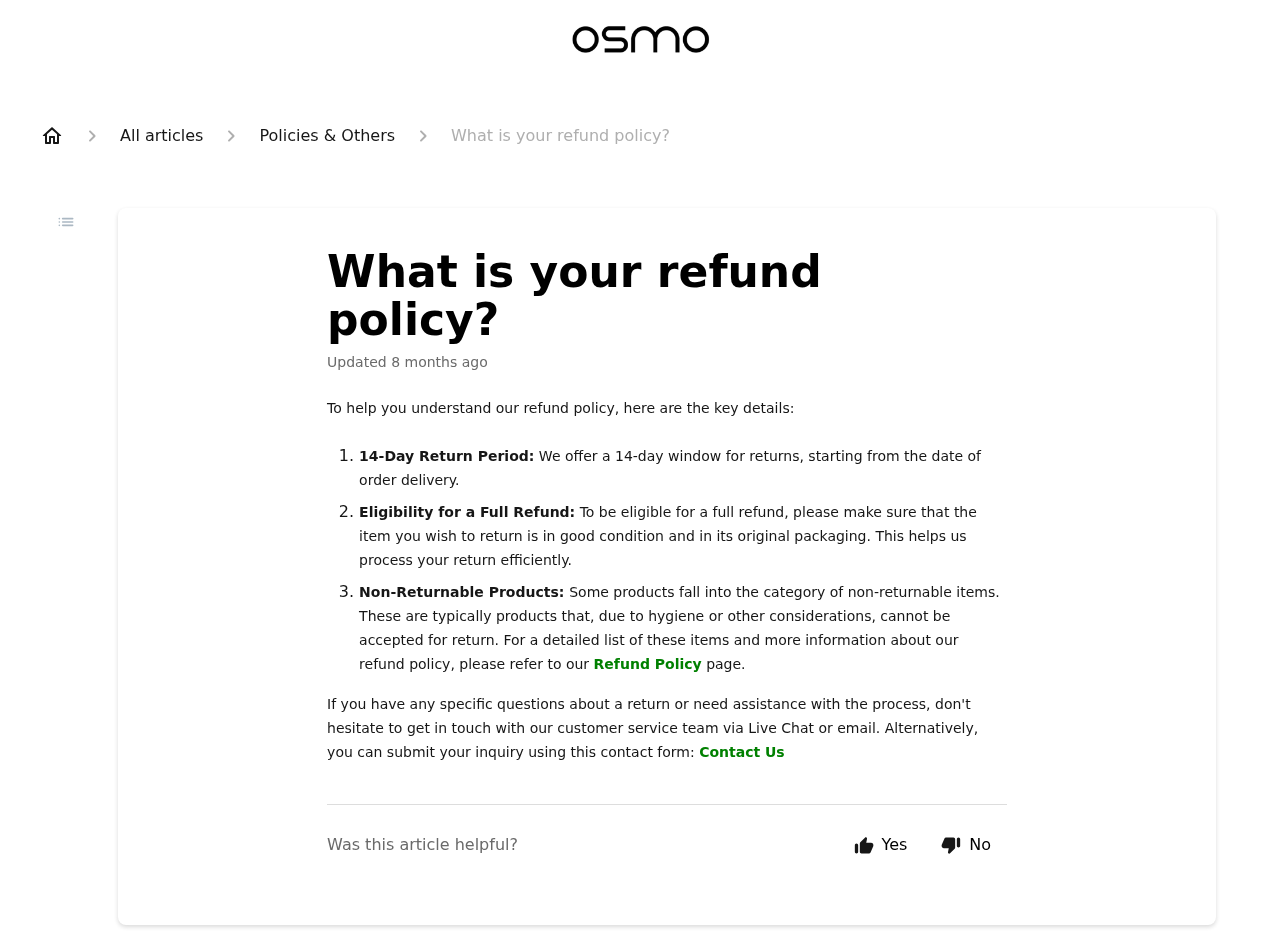
An Osmo help page describes a 14-day return window. A separate Osmo-branded FAQ advertises a 30-day guarantee.
An Australian storefront refund policy also discusses return shipping, a restocking fee, and exclusions for sale items.
These pages may apply to different storefronts. A shopper should not assume the friendliest promise governs the checkout they actually use.
- Product claims include very high cleaning, speed, and quietness figures without independent verification in this review.
- Osmo-branded pages display different battery-duration numbers.
- Return windows and exclusions differ across the pages we inspected.
- The legal seller and exact checkout policy matter more than the brand printed on a banner.
- We cannot conclude the vacuum is imaginary or that every buyer receives the wrong item.
The strongest conclusion is a buying-risk warning, grounded in the pages’ own inconsistencies.
How the Osmo ProVacuum Sales Funnel Works
Step 1: A short advertisement promises relief from chores
The pitch starts with an everyday annoyance: crumbs, dust, pet hair, and the time spent moving a heavy vacuum around.
Short video demonstrations can make a small device look effortless. A satisfying sweep of visible debris does not measure performance on carpet or edges.
Look for uncut testing across different surfaces. A polished advertisement shows what the seller wants you to see, not necessarily typical home use.
If the ad says the device replaces a full-size vacuum, ask whether that claim appears in a written specification or independent comparison.
Step 2: The landing page stacks numbers and badges
On the inspected sales page, claims about cleaning percentage, motor speed, noise, and battery life appear close to discount and purchase buttons.
Numbers create an impression of laboratory precision. Without a test method, a number such as 99.9% can be hard to evaluate.
A motor’s revolutions per minute are not the same as suction at the floor. Design, airflow, brush contact, and filtration all affect real performance.
Likewise, a low noise figure means little without knowing the measurement distance and power setting. Compare published methods, not only bold digits.
Step 3: The discount encourages a quick decision
A large percentage reduction can make hesitation feel costly. The page we inspected displayed a price around $254.99 alongside a promotion.
That price is an observation from one page, not a guaranteed current offer. It may change with location, currency, or seller.
Before accepting a discount, compare the total including shipping and taxes with similar devices from established retailers.
Check whether the advertised original price reflects ordinary sales history. A crossed-out figure alone does not prove a genuine saving.
Step 4: Different Osmo pages may answer different questions
A shopper may move from a product page to a help center or policy page without noticing a domain or country change.
That matters because the battery and return claims we found are not identical across the pages. The applicable policy may be narrower than the headline.
Capture the exact domain and URL of the checkout. Save the terms shown there, not a screenshot from a different Osmo-branded storefront.
If the seller cannot explain which model or policy applies, do not pay until the uncertainty is resolved in writing.
Step 5: The delivered device must match the claims
When the parcel arrives, preserve the packaging and order paperwork. Confirm model number, accessories, plug type, and any serial or warranty information.
Test the vacuum on ordinary surfaces rather than a staged pile of large crumbs. Note runtime on the setting you will realistically use.
A claimed maximum runtime often uses the least demanding setting. That does not make the claim automatically false, but the mode should be disclosed.
Photograph defects and record short videos of failures. Clear evidence makes a seller complaint or payment dispute easier to evaluate.
Step 6: The return policy determines the real exit cost
A product can disappoint without being defective. Whether you can return it may depend on the seller’s policy, deadline, shipping cost, and sale-item exclusion.
The Australian refund policy we reviewed mentions a 14-day period, customer-paid return shipping, and a restocking fee in Australian currency.
Another Osmo-branded FAQ mentions a 30-day guarantee. Do not merge those promises without proof that the same legal seller honors both.
Request return authorization before sending anything. Keep the parcel tracking number and a copy of the approval.
What the Marketing Claims Do Not Prove
“99.9%” needs a defined test
A cleaning percentage could mean one pass over one kind of dirt on one surface. It does not tell you how the appliance handles your home.
Ask whether the result covers fine dust, larger debris, edges, rugs, and repeated use after the bin fills.
If no method is available, treat the figure as unverified advertising rather than a dependable performance benchmark.
A video showing a clear strip on the floor is still only a demonstration. It is not a substitute for comparative testing.
A high RPM figure is not a quality certificate
Motor speed sounds impressive because it is easy to compare numerically. Yet suction and cleaning depend on the entire air path.
Filters, seals, brush design, dust capacity, and maintenance can matter more than a single speed claim.
Look for independently measured airflow or suction, with a method. If none appears, do not assume the highest advertised RPM wins.
Remember that performance can drop as filters clog or the battery weakens. The first minute of a demo may not represent ordinary use.
Quietness and runtime are settings-dependent
The sales material’s low-noise claim is difficult to interpret without a distance and operating mode. A quiet low-power setting may clean less effectively.
The 60-minute and 120-minute figures found on different pages require clarification. They may refer to different models, but the pages do not make that obvious.
Ask the seller for a specification sheet tied to the exact model in your cart. Save the answer before buying.
If a seller replies with generic promotional language, that does not resolve a specific technical contradiction.
How to Check the Company and Return Address
Find the legal entity named in the checkout terms and receipt. A brand name or logo may not identify the company that owes you a refund.
Compare the contact email, phone number, and return address across the policy pages. Differences are not automatically fraud, but they require explanation.
A warehouse can receive returns without being the headquarters or manufacturer. Do not treat a fulfillment address as proof of where a device was designed.
Call or write before ordering and ask for the exact model number, warranty provider, and return location for your country.
Ask whether sale-price units are returnable. That question matters when a huge discount is the primary reason to buy.
Search the seller’s legal name, not only “Osmo review.” Many promotional posts repeat product copy without identifying the accountable company.
We could not verify the factory or country of manufacture from the pages inspected. Do not assume a Chinese origin merely because the device looks generic.
Likewise, do not assume a celebrity, news logo, or review badge on a landing page is an independent endorsement.
Is Osmo ProVacuum a Scam?
We cannot substantiate a blanket claim that every Osmo ProVacuum sale is fraudulent. There is an advertised product and multiple Osmo-branded sales pages.
We can document inconsistent specifications and return language, plus performance claims that need independent evidence.
That is enough reason to slow down, identify the seller, and save the exact checkout terms. It is not enough to invent undelivered orders.
Customer complaints on review platforms may highlight problems, but an individual review is not proof that all orders follow the same pattern.
The cleanest buying test is simple: Can the seller reconcile the claims and tell you exactly what happens if the device disappoints?
If the answer is evasive, choose a retailer with clearer specifications and a return process you can verify.
A Sensible Home Test If You Already Own One
Compare like with like
Start with the same kind of debris on the same surface for each device you compare. Otherwise, an impressive result may reflect an easier test.
Use ordinary dust, crumbs, and pet hair if those are your real cleaning problems. Avoid deliberately extreme piles that no handheld vacuum handles well.
Count the passes needed to clear a small area. Notice whether debris scatters at edges or collects in the brush.
Photograph the floor before and after. A visual record makes a quality complaint more concrete than a general statement that suction feels weak.
Measure useful runtime
Fully charge the battery, start a timer, and use the setting you normally need. Note when suction becomes noticeably weaker.
Repeat only if safe and practical. A single run can vary with temperature, brush friction, and battery conditioning.
Compare your result with the seller’s model-specific written claim. A maximum measured on low power is not a promise of equal high-power runtime.
If the listing fails to specify a mode, ask the merchant which setting produced its advertised figure.
Check the unglamorous details
Inspect how easily the dust bin empties and whether a filter can be cleaned or replaced. Maintenance affects real ownership cost.
Look for replacement brushes and batteries from a trustworthy source. A cheap-looking accessory can become expensive if parts are unavailable.
Check the plug, voltage, and charger markings. Stop using a unit that overheats, smells unusual, or has damaged wiring.
A product’s durability cannot be established in a five-minute demonstration. Keep your order record and warranty terms after the first successful test.
Why a Seller’s Identity Matters After Delivery
A fulfillment center may put the parcel at your door, but it may not have authority to approve a return or honor a warranty.
The payment descriptor and receipt are better starting points for identifying the merchant responsible for your order.
If support redirects you among several Osmo-branded sites, ask each representative to confirm in writing whether it owns your order number.
Do not send the vacuum abroad based only on a chat message. Obtain the legal seller’s return authorization and tracked destination first.
What to Do If You Bought Osmo ProVacuum
- Preserve the purchase record. Save the order page, receipt, product claims, terms, card charge, and correspondence with the seller.
- Identify the actual seller. Check the legal entity and contact route on the receipt. A different brand page may use a different policy.
- Inspect and test promptly. Photograph the parcel, model label, accessories, and any defect. Measure usable runtime on a normal setting.
- Request return instructions within the applicable period. Quote the policy shown at your checkout and ask about shipping or restocking costs.
- Escalate a documented mismatch. If the item differs materially from the offer or a promised refund is refused, contact your payment provider with evidence.
- Watch for further charges. Review your statement for unexpected accessories, warranties, or additional items. Challenge anything you did not authorize.
Do not mail a return to an address found on an unrelated Osmo page. Obtain the seller’s written authorization and use tracked shipping.
If you paid with a card, learn the issuer’s dispute deadline early. Waiting for weeks of circular emails can narrow your options.
Frequently Asked Questions
Is Osmo ProVacuum a real device?
Osmo-branded pages advertise a physical vacuum. This review does not establish that every order is fake or that every buyer receives nothing.
Does it clean 99.9% of dirt?
A sales page makes that claim, but we did not find an independent test method supporting it. Real performance depends on surface and debris.
Why do battery figures differ?
Different Osmo-branded pages describe 60 and 120 minutes. They may refer to different models or settings, but buyers should request a model-specific answer.
Is there a 14-day or 30-day return period?
We found both types of language on different pages. The binding policy depends on the seller and checkout you used. Save that exact page.
Will return shipping be free?
Do not assume so. An Australian storefront policy discusses customer-paid shipping and a restocking fee. Check your own seller’s terms before ordering.
What if my order contains more items than expected?
Check the receipt against the cart you approved. Ask for correction immediately and dispute unauthorized additions with your payment provider if necessary.
The Bottom Line
Osmo ProVacuum’s strongest sales claims deserve better evidence, and its branded pages do not present one simple set of specifications and return terms.
Buy only after identifying the seller, exact model, and applicable refund policy. If those basics remain unclear, the discount is not worth the uncertainty.








