

A sweater catches your eye, the fall sale looks generous, and the homepage says returns are easy. It feels like a simple wardrobe refresh.
Arden New York makes that first impression quickly. A closer read of its policies raises questions worth settling before the order is placed.
Overview
The store’s first impression
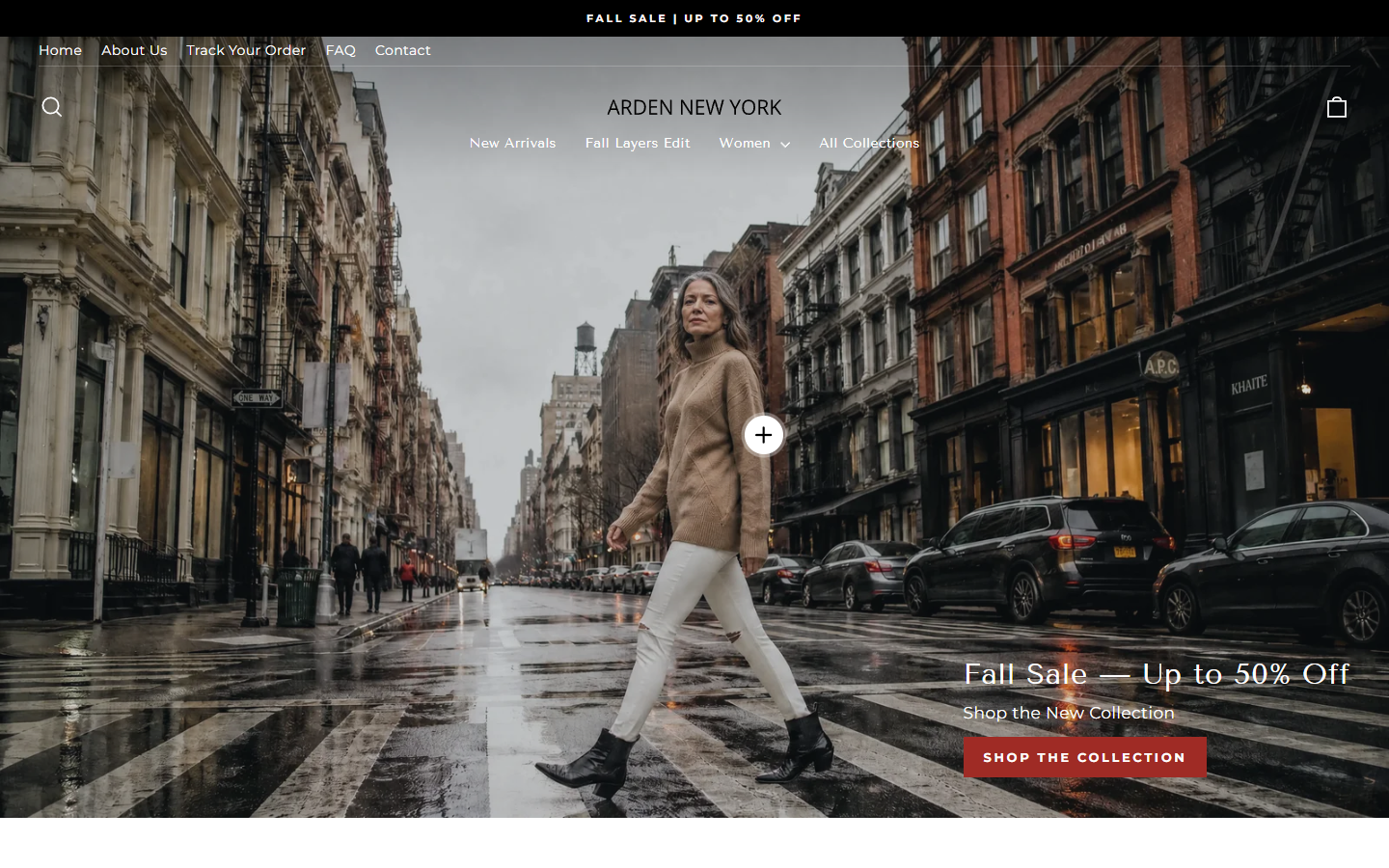
Arden New York sells apparel through a U.S.-styled storefront. During our October 1 review, its homepage promoted a fall sale of up to 50% off.
Many products carried sale labels. The homepage FAQ presented a 30-day return window in reassuring, uncomplicated language.
For someone choosing a size online, a return promise can matter as much as the displayed discount.
The return-policy conflict
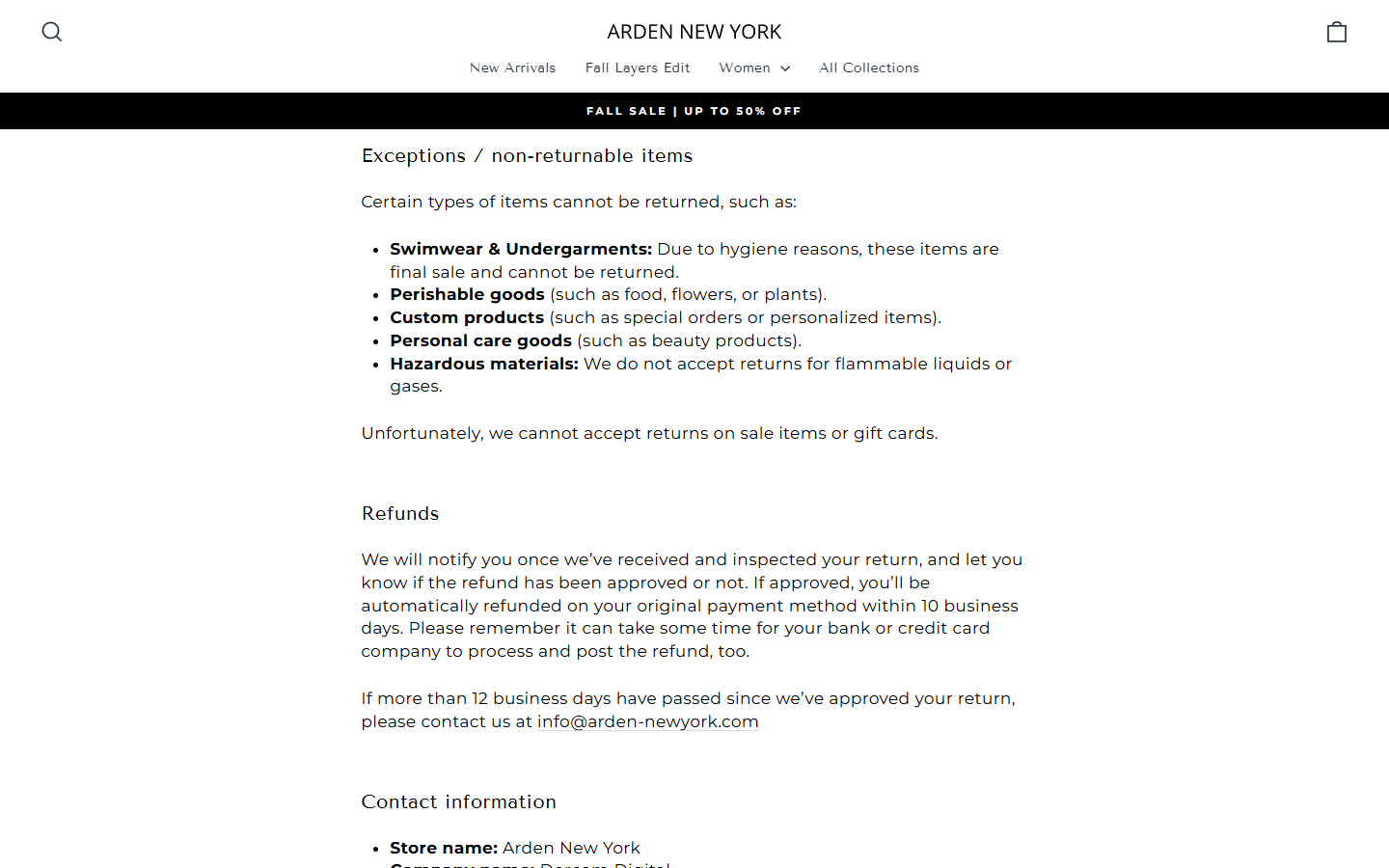
The formal refund policy says sale items cannot be returned. It also limits cancellation requests to one hour after an order is placed.
That creates a meaningful tension with the homepage’s broad 30-day language, especially when so much of the catalog appears to be on sale.
The policy additionally requires authorization before a return and places ordinary return-shipping costs on the customer.
What ownership and shipping disclosures show
The store identifies Dorcom Digital in the Netherlands as its owner and gives a Dutch registration number and address.
That disclosure is important. A New York brand name alone is not proof of a hidden or fake company.
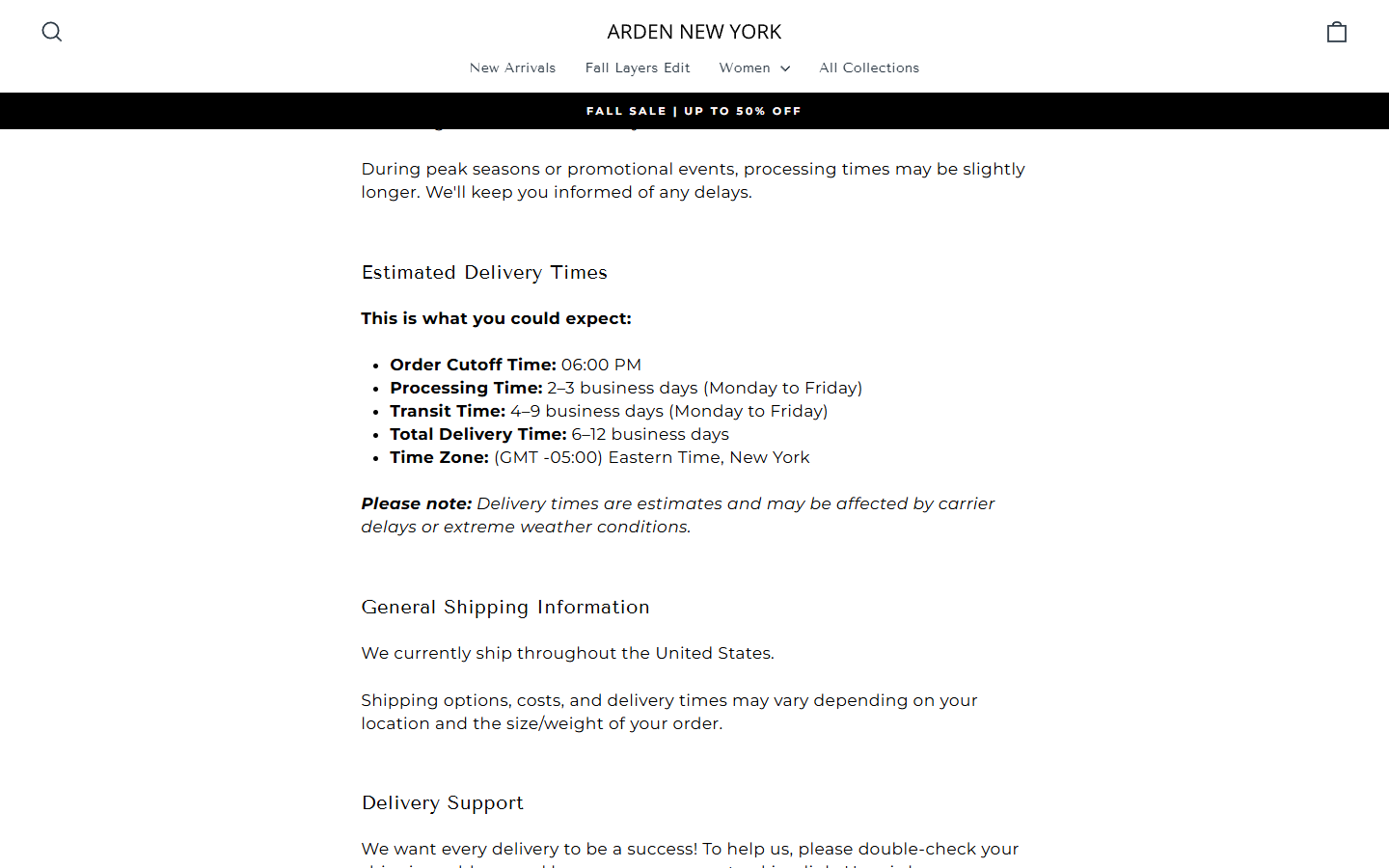
The shipping policy estimates 2–3 business days of processing and 4–9 business days of transit, for a stated total of 6–12.
- The homepage advertises a 30-day return window.
- The detailed refund policy excludes sale items.
- The cancellation window is stated as one hour.
- Customer-paid return postage may reduce the value of a refund.
- The site discloses a Netherlands-based owner, not a New York headquarters.
We did not place an order or examine the garments. The documented problem is the mismatch between customer-facing return messages, not proof of universal non-delivery.
Why the Fall Sale Changes the Return Question
A discount can quietly remove an expected option
The homepage invites visitors into a large sale. A shopper may reasonably interpret the nearby 30-day FAQ as applying to that purchase.
Yet the refund policy carves out sale items. If most tempting garments are reduced, the exception may cover the very order the advertisement encourages.
Before buying, ask whether the selected product is returnable despite its sale tag. Get the answer in writing for that exact item.
Do not rely on a generic statement such as “easy returns.” The specific exclusion controls the risk you are trying to assess.
A discount has limited value if the size is wrong and the seller rejects an ordinary change-of-mind return.
Also distinguish a voluntary return from a remedy for a defective or misdescribed product. Consumer rights can differ by location and circumstance.
Imagine ordering three discounted sweaters for a family visit. If only one fits, the exclusion could leave you with two unwanted garments.
That is why return eligibility should be checked per item, not assumed from a single sitewide sentence.
One hour is a narrow cancellation window
Online clothing orders invite second thoughts. You might notice a wrong color, apartment number, or size only after the confirmation email arrives.
Arden’s policy says to request cancellation within one hour. That gives little time if the email lands in spam or you order late at night.
It does not guarantee the seller will cancel within that period. It states the window in which the customer should ask.
Review every cart line and address before paying. Save the order timestamp so you can show that a correction request was timely.
If a seller says an order is already processing, ask for a written explanation and the applicable return path.
Shipping time is not the same as delivery certainty
The policy estimates 2–3 business days to process an order, then 4–9 business days in transit.
Added together, the stated 6–12 business-day range is longer than a shopper may infer from a simple “free shipping” badge.
These are estimates, not a guaranteed arrival date. Confirm timing if the outfit is intended for a trip, event, or gift.
The site mentions multiple carriers. It does not establish from the policy alone where a particular garment was made or stocked.
If the checkout displays a shorter estimate, save it. Ask support which promise applies to your postal code and selected items.
Multiple garments in one cart may ship separately, so ask whether every item has the same dispatch timeline.
A Dutch owner can contract with warehouses elsewhere, just as a U.S. brand can use international manufacturers. Avoid guessing from the name.
How the Arden New York Sales Journey Works
Step 1: A familiar fashion identity draws attention
The name Arden New York and a polished clothing layout give the store an American fashion feel.
Branding is not itself deceptive. The relevant question is whether the shopper can identify the legal seller and understand the purchase conditions.
Arden does disclose a Netherlands-based owner. Read that information rather than assuming the name describes the operator’s address.
Step 2: Sale labels encourage browsing
The fall promotion highlights reduced prices across apparel. A shopper can quickly assemble several items before considering how each might fit.
Check whether the percentage refers to a genuine prior selling price and whether similar garments are available at comparable delivered costs.
The apparent saving is only useful if material, cut, and sizing meet your expectations.
Keep a record of each product page. Descriptions can change after a dispute about fabric or design.
Step 3: A broad return message lowers hesitation
The homepage FAQ describes a 30-day return window. For clothing, that can reduce the fear of guessing the wrong size.
The detailed policy then excludes sale items. That distinction deserves to appear clearly beside the item and checkout, not only in longer legal text.
Before paying, ask the seller to confirm return eligibility for every discounted garment in your cart.
If the answer conflicts with the written policy, ask for the relevant policy to be clarified instead of assuming an email overrides it.
Step 4: Checkout fixes the actual total
Confirm the final item prices, quantity, shipping charge, tax, and currency. Save the page that lists the terms you accepted.
Use a card or payment service with a dispute process. Do not send bank transfers or pay through an unfamiliar link from a social message.
Read the confirmation immediately. The site’s stated one-hour cancellation window makes early correction unusually important.
Step 5: Processing and carrier transit begin
The shipping policy separates processing from transit. Expect a tracking number only after the order reaches the relevant shipping stage.
If tracking is created but does not move, ask the seller for a shipment handoff date and carrier confirmation.
Do not treat a tracking number alone as proof that a parcel has reached the carrier or that the right garment is inside.
Step 6: Fit or quality concerns meet the fine print
If the garment is the wrong size, a normal return may be blocked by the sale-item exclusion. If it is defective, a different remedy may apply.
The policy asks customers to seek approval before sending a return and says they generally bear return postage.
Describe the issue accurately. “I changed my mind,” “the size chart was wrong,” and “the delivered item is misdescribed” are different claims.
Photographs, measurements, packaging, and the saved listing help the seller and a payment provider assess what happened.
Company, Address, and Fulfillment Checks
The seller names its owner
Arden’s policies identify Dorcom Digital, a Netherlands-based business, with a Dutch registration number and address.
That is not an anonymous store. The name Arden New York functions as branding; it should not be mistaken for proof of a New York corporate office.
Use the disclosed registration details to check the appropriate official registry if legal identity is important to your purchase.
Keep a copy of the owner information at checkout. It can help identify the merchant on a receipt or payment dispute.
Ask where returns actually go
A registered address, a customer-service address, and a returns warehouse may be different places.
The practical concern is not that a business uses multiple locations. It is whether a shopper can learn the return destination and cost before ordering.
Ask for the country and postal address used for returns from your location. Ask whether there is a handling fee.
For a low-cost sale item, shipping a parcel across borders could eliminate much of the refund’s value.
Request a written example of the cost for a return from your country. A theoretical refund is less reassuring than a workable process.
Origin of the clothes remains unverified
We cannot establish the factory or stock location of Arden’s garments from its homepage and policies.
Do not label the pieces “made in China” without a manufacturing label or verified supply-chain evidence. The Dutch owner does not answer that question.
Ask for fabric composition, care instructions, country-of-origin labeling, and garment measurements before placing a multi-item order.
If those details are missing or vague, consider a smaller test order or a retailer with clearer product specifications.
Support responsiveness is part of the risk
Send a precise presale question about a sale item’s returnability and another about the return destination.
A specific written response is more useful than a generic statement that customer satisfaction matters.
If support cannot reconcile the homepage FAQ with the refund policy, that uncertainty should affect your buying decision.
Save the answer. It may become important if an agent later applies a different interpretation of the policy.
What to Do If an Arden New York Order Goes Wrong
- Save the purchase record. Keep the product pages, size chart, sale labels, homepage return promise, detailed refund policy, confirmation, and receipt as they appeared when you ordered.
- Request a correction promptly. If the size, address, or quantity is wrong, write to support within the stated one-hour cancellation period and preserve the message timestamp.
- Track the parcel against the policy. Allow for stated processing and transit ranges, then request a clear explanation if the order remains unshipped or the tracking stops updating.
- Document any product mismatch. Photograph labels, seams, fabric, measurements, packaging, and defects. Compare them with the saved listing without exaggerating the difference.
- Ask for a written remedy. Explain whether the issue is non-delivery, damage, misdescription, or a change of mind. Request the relevant refund, replacement, or lawful consumer remedy.
- Escalate if communication fails. Give your card issuer or payment provider the timeline, seller replies, listing, and carrier evidence before its dispute deadline expires.
If the seller rejects a return because the garment was on sale, point to the homepage’s broad 30-day language and ask for a specific explanation.
Local consumer laws may give separate rights for faulty or misdescribed goods. A store’s sale-item rule does not automatically settle every kind of complaint.
Do not mail garments to a guessed address. Obtain the approved return destination and keep postage tracking.
Buying Clothing From Social Ads Without Regret
A polished storefront and an attractive model photo cannot tell you how a sweater feels or whether a jacket fits your shoulders.
Use exact garment measurements, not only letter sizes. Compare them with clothing you already own, including sleeve, chest, and length.
Read the material composition. “Soft” is a description, not a fiber specification. Look for a concrete label or ask the seller.
Check whether product photos show the back, seams, and fabric texture. A single stylized image is a poor basis for a multi-item purchase.
Search for independent customer experiences, but examine the evidence behind each complaint or endorsement. One post cannot represent every order.
Read the return rules for discounted items before letting the price tag decide. Clothing is a category where returns are especially relevant.
Check whether the store lists a phone number, email response window, and full return instructions. Test support with a question only a human can answer.
If an ad promises a deadline, verify the promotion on the actual store and take time to compare other sellers.
A fair purchase is possible only when the buyer knows the price, item, delivery expectation, and realistic options if something goes wrong.
Frequently Asked Questions
Is Arden New York a proven scam?
We found a notable conflict in return messaging, not evidence that all orders are fraudulent. The store discloses a legal owner.
Is the company actually in New York?
The brand uses New York in its name, while its policies identify Dorcom Digital in the Netherlands as the owner.
Can sale items be returned?
The formal refund policy says sale items cannot be returned, despite the homepage’s broad 30-day return language. Ask about your exact item before buying.
How quickly can I cancel an order?
The policy asks customers to request cancellation within one hour. Sending a timely request does not guarantee that processing can be stopped.
How long does shipping take?
The published estimate is 2–3 business days for processing and 4–9 in transit, totaling an expected 6–12 business days.
Does the Dutch owner mean the clothes come from Europe?
No. Ownership location does not establish manufacturing or warehouse location. Check the garment label and ask for order-specific shipping details.
The Bottom Line
Arden New York identifies its Dutch owner, but its cheerful 30-day return message sits uneasily beside a policy excluding sale items.
For a sale-heavy clothing store, that distinction matters. Confirm eligibility, sizing, delivery, and the return route before the discount becomes a disappointing purchase.








