

A boutique’s closing-season sale can make an ordinary pair of shorts feel like the last good find of summer. Margot & Wren Boston leans into that feeling.
The story is inviting, but the details that matter after checkout tell a more complicated tale. Read them before the sale clock makes the decision for you.
Overview
The boutique image and steep markdowns
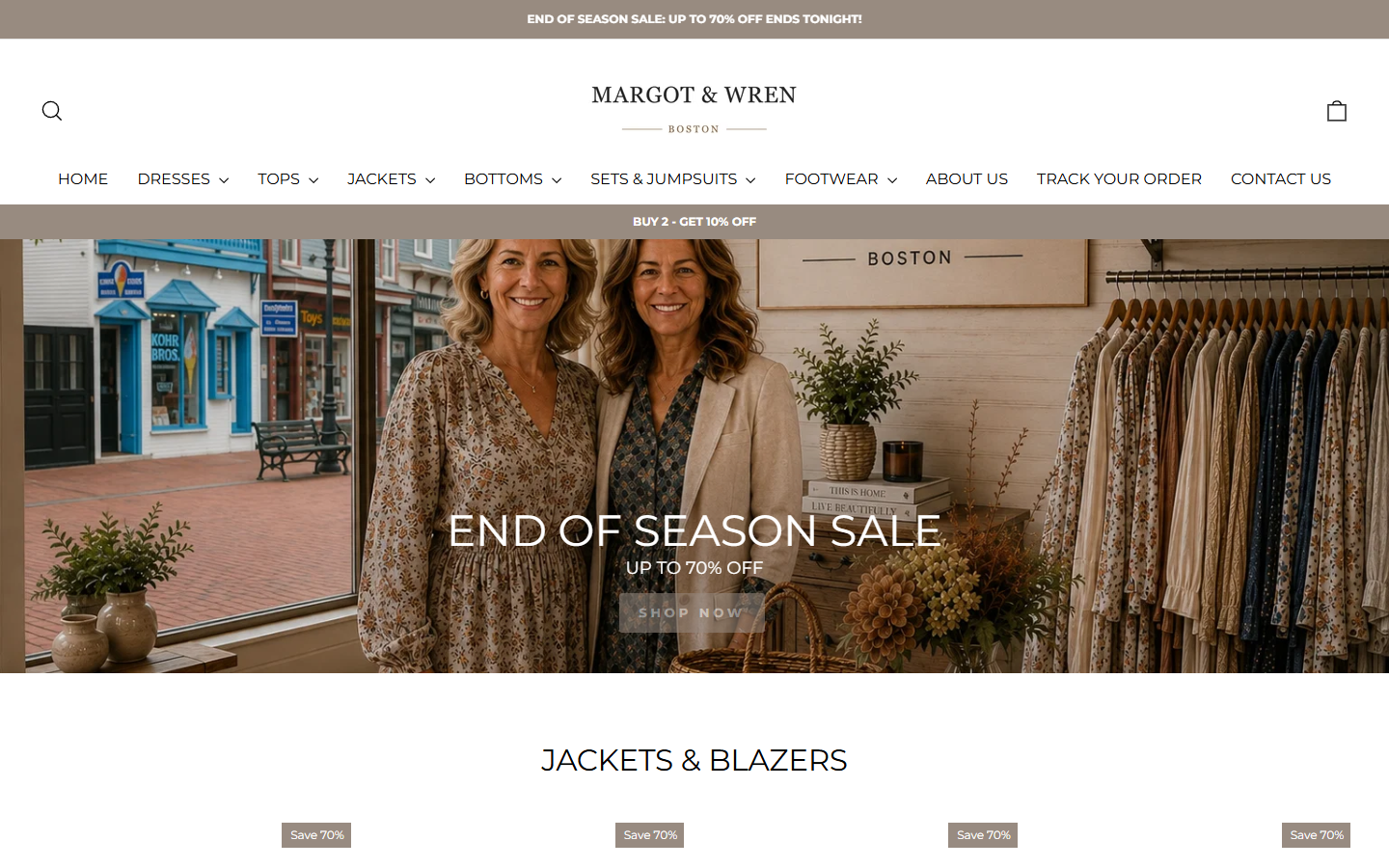
Margot & Wren Boston presents itself as a small independent boutique, with an end-of-season sale advertising discounts as high as 70%.
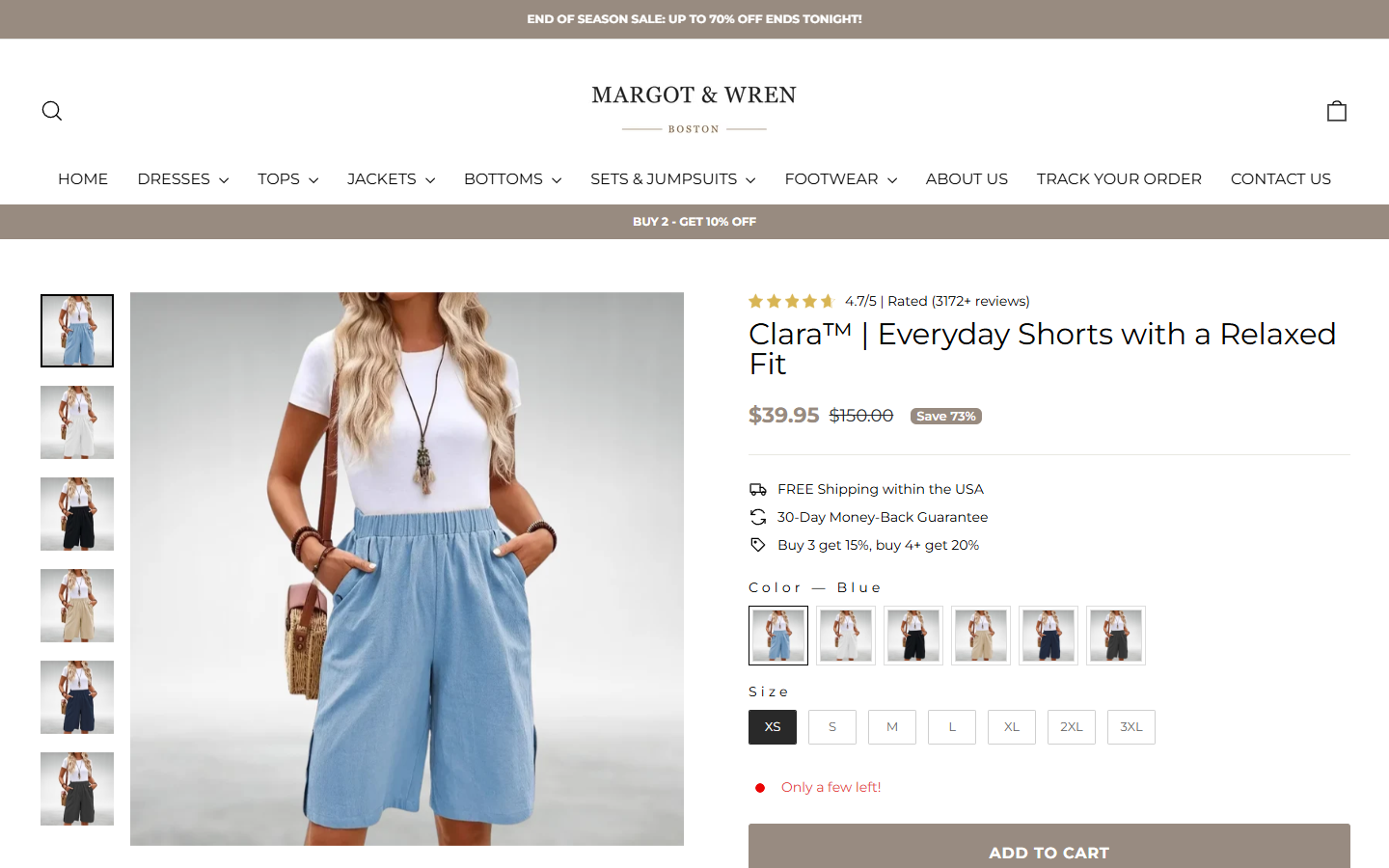
Its Clara Everyday Shorts page showed $39.95 against a crossed-out $150. That contrast is the heart of the offer.
A reference price is not proof that shoppers commonly paid it. We did not verify historical sales at $150 or inspect a delivered garment.
Two return promises point to different deadlines
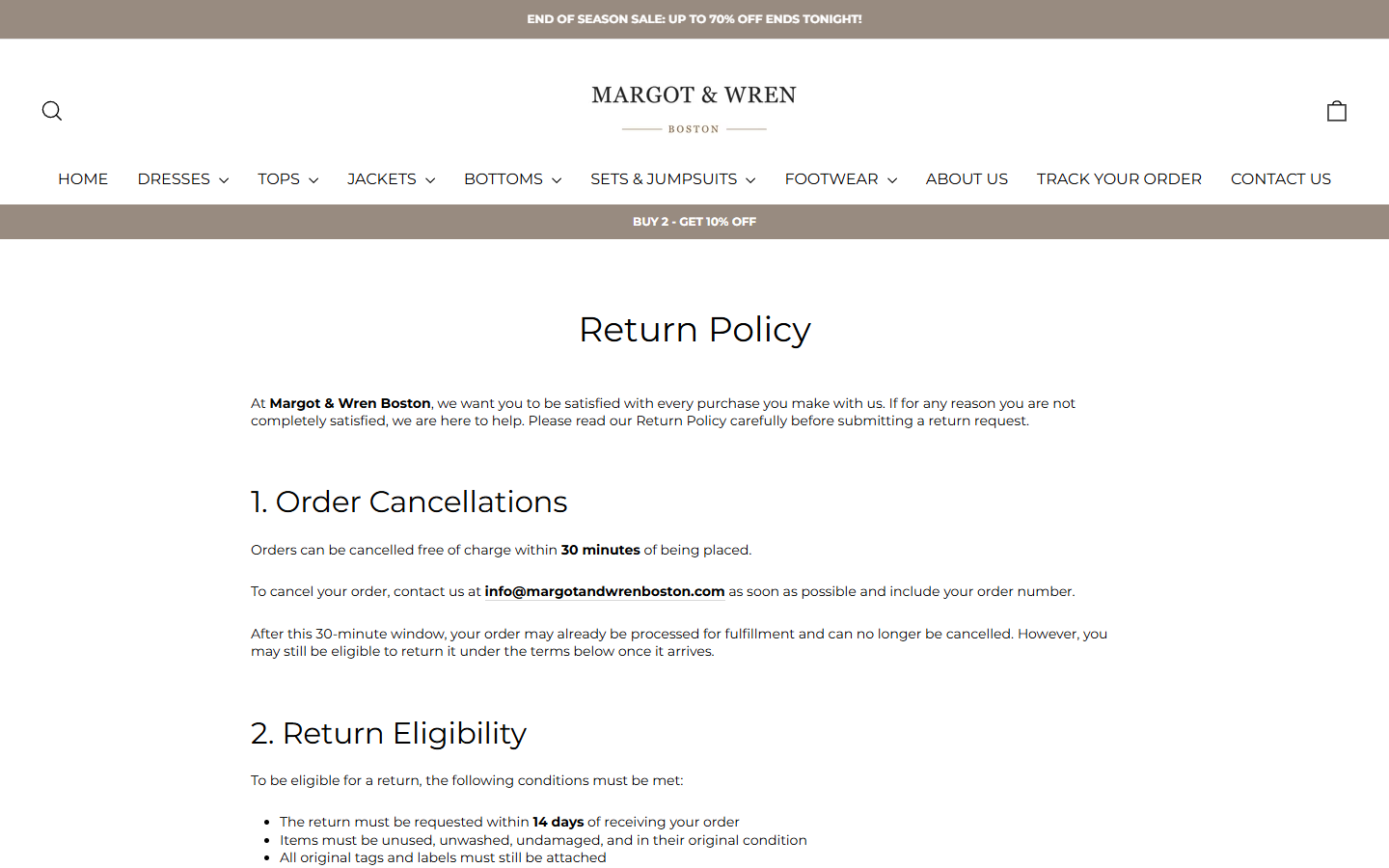
The product page we reviewed offered a 30-day full-refund reassurance. The formal return policy instead says customers have fourteen days to request a return.
The same product page advises contacting the company within twelve hours to cancel. The written policy narrows cancellation to thirty minutes after ordering.
Those are material conflicts. A shopper cannot sensibly plan a return when one page gives twice as long as another.
The return route could be expensive
The formal policy says a fulfillment partner provides the return address after approval. It also says customers pay international return postage.
Without the destination country in advance, shoppers cannot estimate what a tracked return will cost. A discount may vanish if sending the garment back is costly.
We have not proved every order ships internationally, that the clothes come from China, or that the business has no Boston presence.
- The website uses a local-boutique story and prominent end-of-season markdowns.
- The Clara product page showed $39.95 compared with $150.
- That page promised thirty days for a refund, while the written policy gives fourteen days to request one.
- A twelve-hour cancellation suggestion conflicts with a thirty-minute formal deadline.
- Approved returns may require customer-paid international postage.
- These contradictions justify caution but do not establish that every shipment is fraudulent.
What the Boutique Presentation Does, and Does Not, Establish
A city in the name creates a picture
“Boston” evokes a place where a customer might imagine a real shop, local staff, and carefully selected stock. The homepage reinforces a personal, independent-store tone.
That is branding, not evidence of a public storefront. We could not independently confirm an address where shoppers can visit or return a purchase.
Ask for the legal seller’s name and actual customer-service location. An answer should distinguish a headquarters, mailing address, warehouse, and returns depot.
A small online boutique can use outside fulfillment legitimately. The problem arises when the shopping experience implies local simplicity while the policy anticipates international returns.
Look for a specific business identity on the receipt. If the card statement uses another name, save both and ask how they are connected.
Large discounts can hide the real benchmark
At $39.95, the shorts may seem inexpensive compared with $150. Whether they are a good value depends on fabric, construction, fit, and return expense.
Compare the full product description with photos from buyers outside the seller’s own site. Search distinctive image details and garment measurements, not only the boutique name.
We did not establish the shorts’ manufacturer or whether the product photography is artificial. A polished image alone cannot answer either question.
Check the size chart in actual inches or centimeters. “Relaxed fit” is not a substitute for waist, hip, rise, and inseam measurements.
If the seller offers only broad small-medium-large labels, ask whether sizing corresponds to a specific regional standard. A cheap garment becomes expensive when fit is a guess.
Reassurance on a product card is not the entire agreement
A 30-day full-refund badge is easy to remember. A return-policy page takes longer to read, especially on a phone where exceptions sit below the fold.
Customers are entitled to know which promise the merchant will honor. A contradiction should be resolved before purchase, preferably in a written support reply.
Ask directly: “If I receive these shorts and they do not fit, may I request a full refund on day twenty?” The answer should not be evasive.
Also ask whether the original shipping fee, customs charges, and return postage are reimbursed. “Full refund” may refer only to the item price.
Save screenshots with the date visible in your files. Marketing pages can change, and the version shown when you paid may matter in a dispute.
How the Margot & Wren Boston Sales Journey Works
Step 1: An end-of-season message creates urgency
A shopper sees an ad or a search result suggesting boutique clothing is heavily reduced. The story promises discovery, not a generic marketplace search.
The homepage frames the sale as a limited chance to buy before seasonal stock disappears. That feeling can make a customer skim the footer.
Do not let the discount decide the purchase by itself. Ask whether you would still want the garment at the displayed price without the crossed-out figure.
Look for a dated end to the sale, specific inventory information, and a clear business identity. A perpetual “last chance” message offers little useful information.
Step 2: The product page makes the purchase feel protected
The Clara page uses attractive imagery, a large apparent markdown, and a 30-day full-refund promise beside the purchase decision.
These elements address common worries: price, appearance, and the possibility of a disappointing fit. None tells the buyer where an actual return must go.
Read the complete description for material percentages and care instructions. If those details are missing, ask support rather than inferring quality from photography.
Check whether customer reviews include sizing information and date-stamped photographs. Seller-controlled testimonials can be helpful, but they are not a complete distribution of outcomes.
Step 3: A short checkout commits the buyer
At checkout, confirm the item, size, quantity, shipping address, taxes, and total. A discount banner on the homepage may not match the final invoice.
Use a payment method that allows a dispute if goods do not arrive or the seller refuses its written terms. Avoid sending money by an irreversible transfer.
Save the selected product page and policy before submitting payment. A screenshot after the dispute begins may capture a changed version.
Pay particular attention to any checkbox for marketing messages or added services. We did not find evidence of a recurring subscription on this clothing offer.
Step 4: The cancellation window becomes disputed
The product page’s twelve-hour advice sounds manageable. The policy’s thirty-minute rule is much harsher, especially for a buyer who orders at night.
If you spot a mistake, contact support immediately. Include the order number, exact requested change, and the product-page wording you relied upon.
Ask whether the order has actually entered fulfillment. A statement that the system is automated should not replace a clear account of its current status.
Keep a copy of the first request. The timestamp matters when the merchant’s own pages disagree about how much time you had.
Step 5: Delivery reveals fit and quality
When the package arrives, note the delivery date. Photograph labels, contents, garment tags, seams, and any defect before washing or removing permanent tags.
Compare the shorts with the advertised measurements and material description. A concrete mismatch is easier to resolve than a broad statement that the item feels cheap.
Do not assume a sender address on the package is the approved return address. Fulfillment addresses often accept outbound shipping but not inbound claims.
If the garment is unusable or materially different, contact the seller promptly. Include photographs and request the applicable remedy in writing.
Step 6: The return request exposes the policy conflict
The formal policy asks customers to request a return within fourteen days. A buyer relying on the 30-day product promise may discover the contradiction too late.
Quote both pages in your message. Ask the company to honor the specific assurance shown next to the shorts or explain which rule it applies.
Request the exact return destination and estimated postage responsibility before sending the parcel. International tracking can be a substantial fraction of the purchase price.
Do not send goods to an address found through a search engine. Wait for written authorization, then keep the tracking and proof of delivery.
Company, Address, and Fulfillment Checks
Identify who accepted the money
The boutique story may use one name while the payment processor records another. Check the order confirmation, policy footer, and card statement side by side.
Ask support for the legal entity responsible for the sale. A clear reply should not require you to infer it from a generic email signature.
We did not independently confirm the owners or the physical location of a boutique. Do not treat a city name as proof of local stock.
Separate customer support from the warehouse
The policy refers to a fulfillment partner that supplies a return address after approval. That makes the logistics chain important to the buyer.
Ask whether the partner is domestic or overseas, whether customs forms are necessary, and how long a return takes to reach inspection.
Even if the first shipment arrives quickly, the return route can be different. Do not estimate it using only the outward delivery time.
A warehouse is not automatically the seller’s headquarters or factory. Its presence does not establish where the clothes were made.
Put contradictory deadlines in one question
Support should resolve the thirty-day versus fourteen-day return discrepancy and twelve-hour versus thirty-minute cancellation discrepancy without making the buyer choose.
Include links or screenshots of each page. Ask for the answer to apply to your exact order rather than a generic statement about store policy.
If there is no response before you order, consider that silence part of the purchase risk. The cheapest time to resolve a return dispute is before payment.
Check the garment and the comparison price
Ask for composition, care instructions, dimensions, and country-of-origin labeling. Those details are more meaningful than “premium” or “boutique quality.”
Use independent image search and comparable retail listings cautiously. Similar-looking clothing can vary in fabric and stitching, and an image match is not proof of common ownership.
If the $150 reference price matters to your decision, ask when and where that price applied. We could not verify a prior sale at that amount.
Check whether the same shorts appear under other names. That comparison may show different prices, but it still cannot prove shared inventory without matching specifications.
Keep the garment’s material tag if you order. It can resolve a specific composition dispute more reliably than a broad argument about how “premium” feels.
Shopping slowly is reasonable. A legitimate seller should be able to explain its product and return terms without requiring an impulse purchase.
What to Do If You Ordered from Margot & Wren Boston
- Save the invoice, product page, thirty-day promise, formal fourteen-day policy, and any discount shown at checkout. Keep dated copies.
- If the order is wrong, request cancellation immediately. Cite both the twelve-hour product advice and thirty-minute policy if timing is disputed.
- Track the package and record the confirmed delivery date. The return deadline may be calculated from receipt, so do not rely on memory.
- Inspect the garment before removing tags or washing it. Photograph measurable discrepancies, defects, labels, and the shipping package.
- Ask for return authorization promptly, even if you believe the product page gives thirty days. Mention the conflicting promises in the same message.
- Get the destination and estimated return costs in writing. Do not ship internationally until you know whether the proposed refund makes financial sense.
- Keep proof of tracked delivery and all customer-service replies. If the seller offers only store credit, compare that with its written refund promise.
- If the seller refuses a remedy for undelivered or materially misrepresented goods, ask your card issuer about dispute deadlines and submit the evidence.
Frequently Asked Questions
Is Margot & Wren Boston a confirmed scam?
We have not established that. The clearest verified concern is contradictory cancellation and return language, plus uncertainty about the cost of an international return.
Is there a physical boutique in Boston?
The site uses a Boston boutique narrative. We could not independently verify a public shop, so ask the seller for its business identity and location.
Do customers get thirty days or fourteen days to return?
The Clara page described a thirty-day full refund, while the formal policy says request a return within fourteen days. Get a written answer before buying.
How long do I have to cancel?
The product page suggests twelve hours, but the formal policy says thirty minutes. Contact support immediately and save the timestamp of your request.
Are returns free?
The written policy places international return postage on the buyer. Ask for the destination and a tracked-shipping estimate before ordering.
Does the large discount prove good value?
No. The $150 comparison was a seller claim we could not verify. Judge the current price against materials, fit information, and likely return costs.
The Bottom Line
Margot & Wren Boston’s boutique story and dramatic markdowns may appeal to bargain hunters. The problem is that its product and policy pages give different answers to basic buyer questions.
Get those answers in writing, check the real return cost, and preserve the version of the offer you accepted. A discount is useful only when the terms remain workable.








