

An elegant jacket at a steep discount can make an unfamiliar boutique feel worth a try. Parker Hayes wraps that choice in a polished storefront.
Before the checkout, look past the photographs and see how shipping, returns, and the seller’s identity work when something goes wrong.
Overview
What the store sells and who operates it
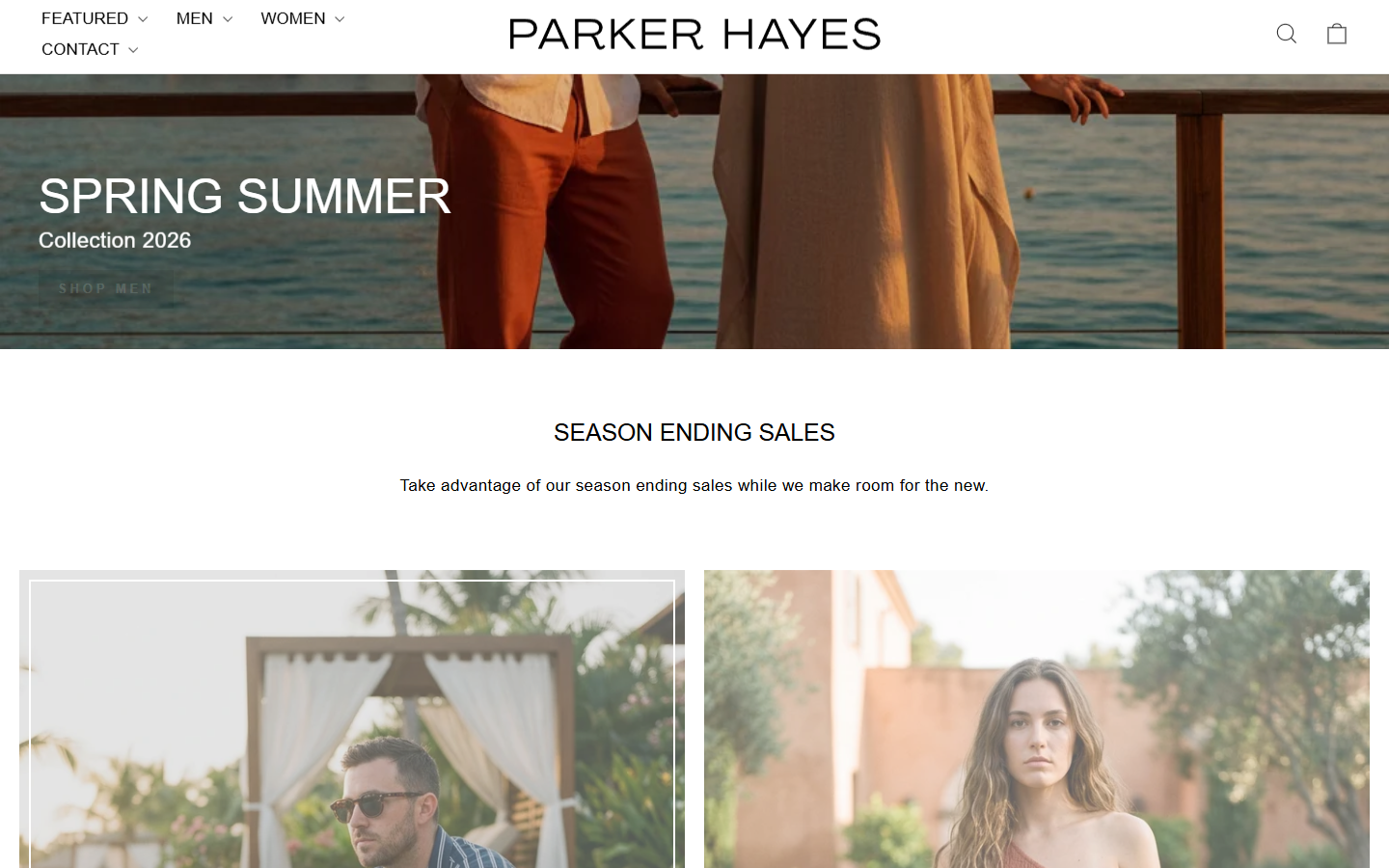
Parker Hayes sells clothing and accessories through a boutique-style website. Its product photography and discounts invite a quick fashion purchase.
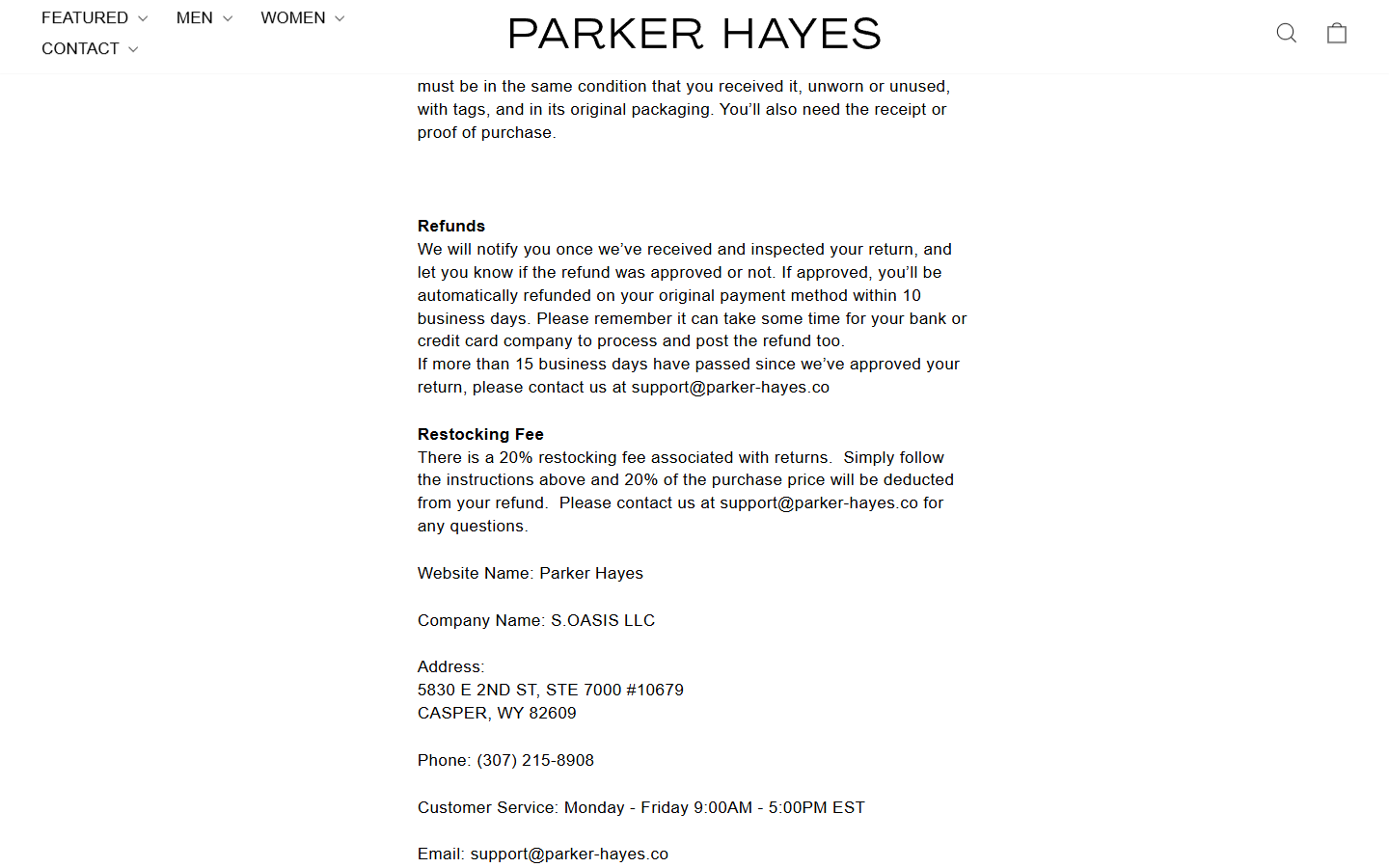
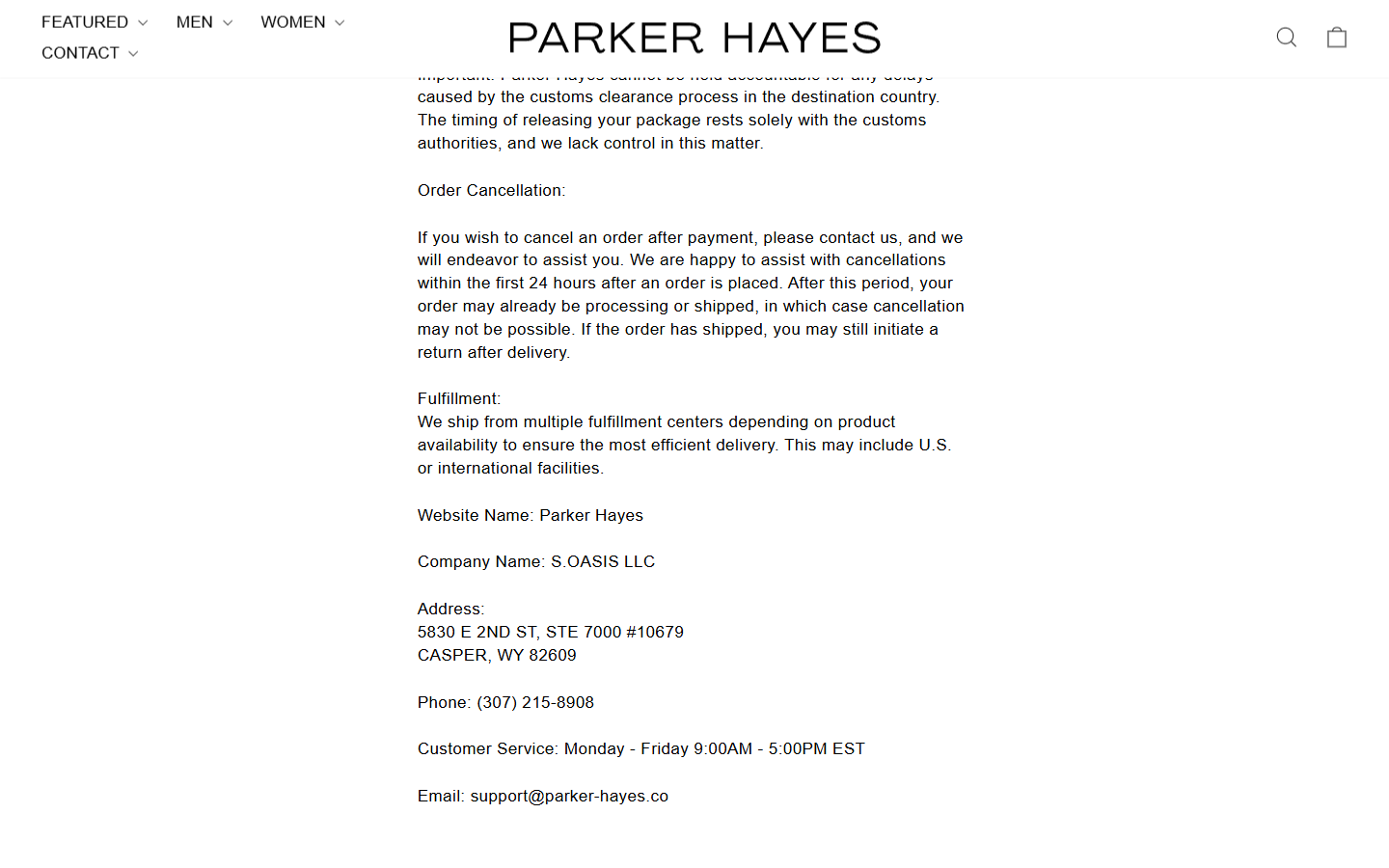
The site identifies S.OASIS LLC as its operator and provides a Wyoming mailing address. That is a business-contact detail, not proof of a local workshop.
The domain `parker-hayes.com` has redirected to `parker-hayes.co` during our review. Save the exact domain shown on your receipt or advertisement.
We did not place an order and cannot determine where a specific item is manufactured. The shipping policy describes both domestic and international fulfillment locations.
The return cost can change the bargain
The refund policy states a 30-day return window, buyer-paid return shipping, and a 20% restocking fee for eligible returns.
Some items are excluded as final sale. A buyer should check whether the selected size or discounted piece falls into an excluded category.
The policy does not give a public return address to use without approval. The customer must contact support and follow its instructions.
A dress that looks inexpensive on the product page may cost considerably more to return than the shopper anticipated.
Our classification is commercial risk
Public customer feedback is mixed. Some reviewers report satisfaction; others describe unexpected shipping origins or return frustrations.
We cannot verify each review or declare the merchant fraudulent from that mixture. The directly documented issues are policy costs and fulfillment transparency.
- The storefront names S.OASIS LLC as the operator.
- The shipping policy allows domestic and international fulfillment.
- The refund policy can make the buyer pay shipping and a 20% restocking fee.
- Returns require seller instructions rather than simply mailing goods to the published business address.
- The similarly named Parker & Hayes New York website lists a different operator; we found no evidence of affiliation.
The Discount Is Only One Part of the Price
Imagine a size that does not fit
Fashion is difficult to judge from a photograph. Cut, fabric weight, seam quality, and sizing become clear only after the parcel arrives.
If a $60 item is returned under a 20% restocking charge, the fee alone would be $12. The buyer may also pay return postage.
That illustration is simple arithmetic, not a statement that every return receives the same charge. Check the policy’s conditions and exceptions.
International return postage can erase much of a refund. Ask the seller for the destination before placing an order with uncertain sizing.
If the item arrived damaged or materially unlike its description, ask whether the seller covers the remedy instead of accepting a change-of-mind fee.
Imagine ordering two sizes to try at home. Returning the unsuitable one may create two sets of costs that were invisible in the advertised price.
Before buying duplicates, ask whether the store offers exchanges without a restocking deduction and whether the replacement must be the same item.
Some stores issue store credit instead of returning funds to the original card. Confirm the form of reimbursement in advance.
“Shipped” and “delivered” are different dates
The shipping policy describes processing before delivery. It lists 1 to 3 business days to prepare an order.
Its stated delivery estimates include 7 to 10 business days for the United States and 10 to 14 business days for international shipments.
Those are estimates, not guarantees for a particular order. Holidays, customs, or handoffs between carriers may add time.
Read whether the advertised delivery period begins when you pay, when a label is created, or when the carrier actually receives the parcel.
For a time-sensitive gift, do not rely on a generic countdown or an optimistic review. Ask for a written delivery commitment.
If an estimated delivery date passes, check whether the parcel has actually been handed to a carrier. A tracking page may show only label creation.
Keep those scans. They help distinguish a carrier delay from an order that was never dispatched.
International fulfillment changes expectations
The policy says orders may ship from domestic or international fulfillment centers. That wording does not identify where any garment was made.
A US mailing address also does not guarantee US dispatch. An address used for corporate mail may never handle clothing returns.
Look at the order confirmation and first carrier acceptance scan. A tracking number created in one country can still precede a different dispatch route.
Do not call a store a scam solely because a package crosses borders. The concern is whether the buyer was given accurate expectations beforehand.
Customs duties, taxes, and delivery exceptions can also differ by destination. Confirm who pays them before checkout.
Final-sale language needs attention
A marked-down item may be presented as a bargain, yet a final-sale designation can eliminate ordinary change-of-mind returns.
Read the precise product page and cart. The policy may define exclusions differently from the promotional banner.
Take a screenshot showing size, color, price, and any final-sale label. That evidence matters if the wrong variant arrives.
If an exclusion appears only after payment, ask the merchant to point to where it was disclosed during checkout.
Do not rely on a broad “30-day returns” message without checking exceptions and fees attached to the item you selected.
Inspect the cart before pressing Pay. A variant or add-on can be selected accidentally, especially on a phone screen.
Take one screenshot showing the complete order summary, not only the attractive product image.
How the Parker Hayes Shopping Journey Works
Step 1: A boutique presentation creates confidence
The site looks like a conventional online clothing store. Attractive models and sale prices make browsing feel familiar.
That presentation says little about fabric composition, fit consistency, or how a return would be processed. Read product details as carefully as the images.
Search for the exact garment photograph elsewhere, but remember a shared image alone does not prove identical manufacturing or dishonest selling.
Step 2: A discount narrows the comparison
A reduced price can pull attention away from material quality and after-sale costs. Compare the total, not just the crossed-out reference price.
Ask whether the reference price was actually used for a meaningful period. We did not independently establish a price history for every item.
Even a genuine reduction may be poor value if return costs make a wrong size expensive to correct.
Step 3: The buyer commits to a size
Check measurements in inches or centimeters rather than relying only on familiar size letters. Compare them with a garment you already own.
Read whether a product has stretch, lining, or a fitted cut. Request clarification if the chart omits bust, waist, or length.
Keep the size chart that existed at purchase. A changing chart can complicate a later misdescription claim.
Measure a similar garment flat and compare like with like. Body measurements and garment measurements are not interchangeable.
If a page lists only broad sizes, ask for shoulder width or inseam before buying a piece that is hard to alter.
Step 4: Fulfillment may happen outside the expected location
The shipping policy allows multiple domestic and international locations. Your tracking route may therefore differ from the store’s US branding.
Wait for an actual carrier scan before assuming the package is moving. A generated label is not delivery progress.
If tracking stalls past the published estimate, contact support with the order number and ask for a realistic update.
Step 5: A return requires prior coordination
The refund policy tells customers to contact the store before sending an item back. That protects against mailing goods to the wrong place.
Request a complete return address, authorization number if needed, deadline, and written explanation of deductions.
Do not send the parcel to the Wyoming mailing address unless support explicitly confirms it handles returns for your order.
Step 6: The refund may be smaller than expected
Return postage and a 20% restocking fee can reduce the amount recovered. The original shipping charge may also be handled separately.
Ask for an itemized refund calculation before mailing. If the item was faulty or wrong, state that clearly and include photographs.
Keep the shipment receipt and tracking proof. The refund clock may depend on the merchant receiving and inspecting the return.
Ask when the inspection normally happens after delivery. If weeks pass without an update, follow up with proof that the return arrived.
Do not accept a partial refund without understanding whether it closes the issue. Request the calculation before agreeing.
How to Check the Company, Address, and Fulfillment Details
Start with S.OASIS LLC
The business name shown on the store is the first identity to compare with the checkout receipt, card descriptor, and support email.
A Wyoming address can serve as a registered or mailing address. It does not establish a physical fashion boutique or a local returns desk.
Ask for the legal seller’s full name, customer-service route, and the jurisdiction governing a purchase. Keep the answer with your order record.
If another name appears at payment, request an explanation before assuming it is either harmless or fraudulent.
Separate manufacturing from dispatch
Where clothing is manufactured, where it is stocked, and where it is mailed from are three different facts.
The shipping policy’s international-fulfillment language speaks to dispatch capacity. It does not prove that all pieces are produced in any particular country.
Check care labels and garment tags when the item arrives. Preserve them if you need to show a mismatch with a claimed material or origin.
Cheap overseas production is possible in fashion generally, but attributing it to a specific item requires more than a store’s postal address.
Likewise, an international parcel does not automatically mean the product is counterfeit or unsafe. The accurate question is whether the description matched reality.
If a garment claims a particular fiber, compare the care label with the listing and photograph any discrepancy.
Read reviews as individual experiences
The Trustpilot profile shows mixed feedback, including praise and complaints. Review counts and ratings can change.
Focus on specific, dated accounts that describe the purchased item, shipping route, support response, and final resolution.
Do not assume a review for a similar domain or a different company belongs to this operator. Names in fashion can be nearly identical.
Photographs of a delivered garment are useful, but lighting and body shape still affect how it appears compared with a listing.
Do not confuse Parker Hayes with Parker & Hayes New York
Another live storefront uses the name Parker & Hayes New York. Its footer identifies a Netherlands-based operator called RO Retail Services.
Parker Hayes on `parker-hayes.co` identifies S.OASIS LLC. We found no reliable evidence that those operators are affiliated.
When searching reviews or contacting support, copy the exact domain from your receipt. A similar name can lead you to the wrong policy.
Do not send an order number or payment information to either site until you have verified which one actually handled your purchase.
What to Do if Your Order Disappointed You
- Record the purchase terms. Save the product page, size chart, final-sale label, refund policy, checkout total, and order confirmation.
- Document the parcel. Photograph labels, packaging, care tags, and the garment. Measure a sizing issue against the chart shown when you ordered.
- Contact support promptly. Explain whether this is a change-of-mind return, wrong item, damage, or material mismatch. Ask for the applicable fee in writing.
- Get the correct return destination. Request instructions and a full address before shipping anything. Use tracked postage and retain proof of delivery.
- Check the refund math. Ask for an itemized explanation of return shipping, restocking deductions, and any excluded original shipping.
- Escalate a material misdescription. If the seller refuses an appropriate remedy, contact your payment provider within its dispute deadline with concise evidence.
A normal change-of-mind return and a faulty-product claim may be treated differently. Use the category that honestly fits what happened.
Do not discard packaging before photographing it. The return policy may require a particular condition even when the garment has only been tried on.
Make a short video of a broken zipper or visible seam defect if a still photo cannot show it. Keep the original file and timestamp.
If support offers a replacement, confirm whether you must return the first item and who pays for that shipment.
Frequently Asked Questions
Is Parker Hayes a confirmed scam?
We did not establish that. The documented concerns are return costs, international fulfillment possibilities, and the need to identify the correct seller.
Does a US mailing address mean US-made clothing?
No. It identifies a contact location. Manufacturing and dispatch require separate evidence, such as garment labels and tracking information.
Can I return an item after 30 days?
The published policy sets a 30-day window for eligible returns. Check its current wording and seek support promptly if an issue appears.
Will I receive the entire purchase price back?
Not necessarily. Buyer-paid postage, a 20% restocking fee, and exclusions can reduce an eligible change-of-mind refund.
Where should I send a return?
Ask support for the approved destination and instructions. Do not assume the public business address accepts parcels.
Is Parker & Hayes New York the same store?
We found different operator names and domains, with no verified affiliation. Check the exact website and receipt before using another store’s policy.
The Bottom Line
Parker Hayes has a polished storefront, but the most important reading happens in its refund and shipping policies.
Know the potential return deduction, dispatch window, and responsible seller before ordering. A discount is less appealing if fixing a size mistake is costly.








