

The caller says your money is no longer safe at the bank. An investigator will explain what to do, and you are told to keep listening.
The cash shipping scam can turn that conversation into an urgent errand. Before following delivery instructions, check what the person is asking you to hand over.
Overview
Shipping cash for an unsolicited account rescue is a confirmed scam
The FBI has documented criminals directing victims to withdraw cash and send it through shipping companies. The parcel carries real money to someone connected to the fraud.
The opening story can involve technical support, an imaginary refund mistake, or people impersonating a bank and government investigators.
In the bank-rescue version, the caller claims your savings must leave an unsafe account. Shipping cash is presented as protection, even though it removes money from your control.
The bank, FBI, and shipping company are not the scam operators. Their identities and legitimate services are being used to make the request look trustworthy.
A real parcel can deliver a fraudulent payment
One family report described fake bank and FBI contacts persuading a parent to send $30,000 by overnight delivery. The family later reported getting the parcel back.
That outcome is not a recovery guarantee. It does not establish universal carrier deadlines, who can request an interception, or what will happen in another shipment.
The central warning is the payment route. A legitimate tracking number can confirm that a parcel is moving without confirming that the instructions behind it are honest.
- A caller claims your bank account, computer, or refund is involved in a crisis.
- Another voice appears as an investigator or specialist.
- You are told to withdraw banknotes instead of using normal account protection.
- The caller supplies a delivery destination or packing instructions.
- Overnight delivery and secrecy discourage outside questions.
- The recipient is not independently confirmed as part of a legitimate process.
The next action depends on whether the cash has left you
If you still have the cash, do not send it. End the contact and speak with your real bank through its established number or app.
If a parcel is already moving, contact the genuine carrier immediately. You may also need the retail shipping location or account holder that created the shipment.
Use truthful sender-authorized procedures. Do not impersonate the recipient or invent a different delivery purpose while trying to stop the package.
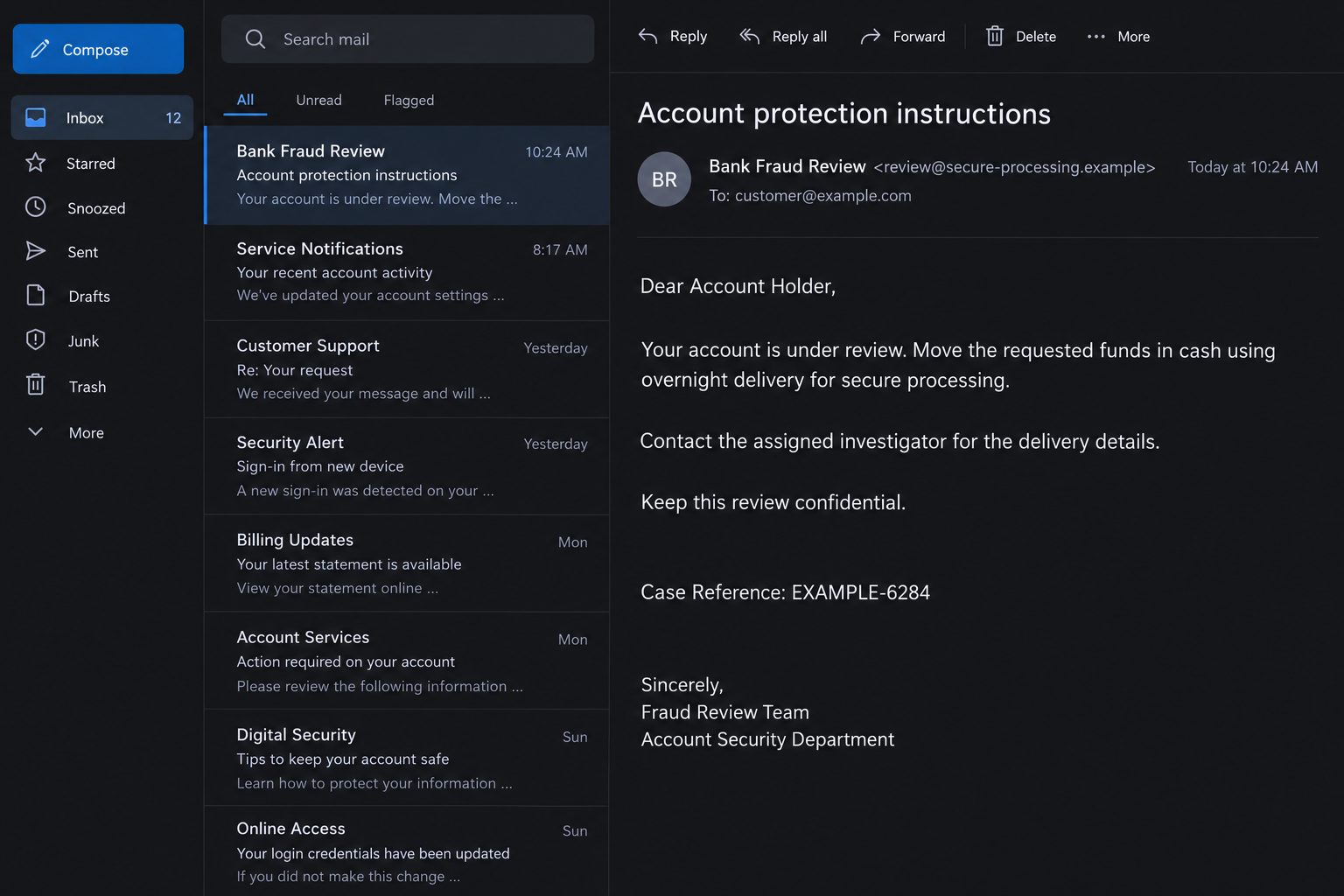
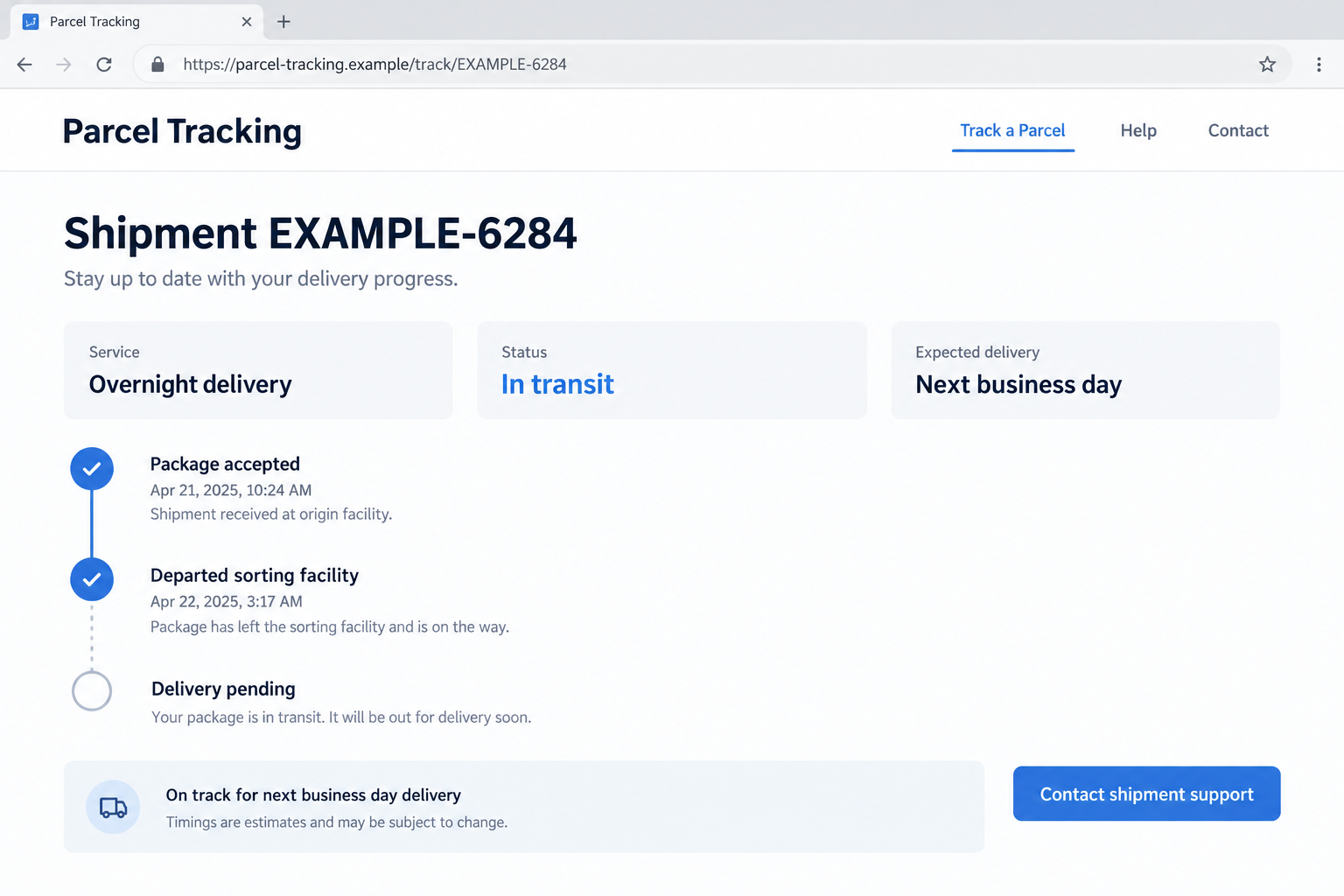
The reconstructed screens here illustrate a fraudulent instruction and a shipping stage. They are not actual bank notices, FBI paperwork, or live tracking records.
Why a Shipping Counter Can Make the Story Feel Legitimate
Much of the errand takes place around real businesses. You withdraw money at an actual bank and obtain a receipt from an actual shipping counter.
Those normal steps can make the overall story feel official. But each business may know only the part of the transaction happening in front of it.
A teller sees a withdrawal. A carrier sees a parcel. Neither interaction proves that the stranger on your phone has authority over your savings.
The caller may discourage you from describing the true purpose. That removes the context someone else needs to recognize the fraud.
Multiple voices can reinforce the illusion. A supposed bank specialist hands the call to a supposed investigator, making two people sound like independent confirmation.
They can be part of the same deception. A handoff arranged by the original caller does not verify either person’s identity.
Copied documents add another layer. A case reference, badge image, seal, or office address can look convincing without belonging to a genuine investigation.
The financial instruction remains the useful test. Sending your cash to an unknown destination does not secure an account that the caller says is compromised.
How the Cash Shipping Scam Works
Step 1: The contact creates an account or computer emergency
The scam starts with a claim that something must be fixed immediately. It may arrive by call, email, or a screen alert leading to a conversation.
The FBI’s cash-shipping warning describes technical-support fraud using this payment route. Fake bank and government stories can also end with mailed cash.
The exact opening does not authenticate what follows. An alarming message is a claim that needs checking, not authority to direct your money.
If you were already dealing with a genuine account problem, check the new contact separately. A real concern can make an unrelated fraudulent request more believable.
Do not install software or provide credentials just to find out whether the caller is genuine. That can introduce an additional exposure before the cash request appears.
Step 2: A supposed investigator explains why ordinary protections are unsafe
The caller may say bank employees are involved, transfers cannot be trusted, or your money must be moved to a secure processing account.
That explanation undermines the people you would normally ask for help. You are encouraged to trust the stranger rather than the bank’s own verified process.
A second voice, professional vocabulary, and copied paperwork can make the explanation sound coordinated. They do not establish an actual investigation.
The FBI’s government-impersonation warning identifies demands for money through several methods, including cash sent by mail.
End the conversation before taking instructions. Locate your bank and the relevant agency independently, rather than accepting another transfer arranged by the caller.
Step 3: You are directed to withdraw and package the banknotes
The request changes from discussing account protection to physically removing funds. The caller may specify how much to take and how to describe the withdrawal.
The FBI has documented cash concealed in magazines for these schemes. Do not assume every case uses that packaging, or that other packing makes the payment legitimate.
Secrecy is particularly revealing here. A person who instructs you to hide the reason from bank staff is preventing a useful fraud check.
Tell the bank what is happening honestly. If someone warns you that the errand resembles a scam, stop and verify before proceeding.
You still control the cash until it leaves you. Having already made the withdrawal does not require you to complete the shipping instruction.
Step 4: A real carrier moves the parcel toward the supplied address
The shipping service may be genuine, and its tracking may work normally. That does not mean the destination belongs to an authorized bank or agency.
Overnight delivery shortens the time available to recognize and interrupt the transaction. The delivery estimate should prompt action, not confidence in the payment.
Save the receipt and tracking information. They identify the shipment when you contact the carrier, retail location, or police.
Do not discard those records because the caller says they are unnecessary or confidential. Without them, you may struggle to identify the parcel quickly.
Our tracking illustration shows why a normal delivery record is not a financial guarantee. It demonstrates movement of a shipment, not protection of its contents.
Step 5: The contact keeps you focused on the promised resolution
The caller may describe the shipment as temporary and promise that the money will return after an investigation, correction, or verification.
A promise from the person requesting the cash is not an independent guarantee. Once delivered, the banknotes may be much harder to locate or recover.
Further demands can follow, including another amount to complete the supposed process. Do not treat a new request as proof that the first payment worked.
Stop communication and work through genuine institutions. You do not need the caller’s permission to ask a carrier whether an interception remains possible.
A later recovery offer is another contact that needs verification. Do not pay a stranger to retrieve the parcel or release allegedly recovered funds.
If Your Cash Shipment Is Already in Transit
Use the carrier’s official contact details, found independently. Explain that the parcel contains cash sent under fraudulent instructions and that you want urgent sender-authorized assistance.
Have the tracking number, receipt, shipment date, origin location, destination details, and contact information ready. Give these privately to the legitimate responder.
If a retail counter created the shipping label, contact that location too. The named shipper or account holder may need to initiate the available request.
Ask what can be done: interception, a hold, return to sender, or escalation to carrier security. Availability depends on the shipment’s stage and the carrier’s rules.
Do not assume a request has succeeded until the carrier confirms it. A submitted form and a package actually held are different states.
Also contact local police and provide the shipment record. Ask how they can coordinate with the carrier or authorities at the destination.
If the parcel shows delivered, report that accurately. Do not abandon reporting or assume a private recovery service can retrieve it for a fee.
What the Address and Tracking Can Tell You
A real address is not a verified government destination
An address can receive parcels without belonging to the institution named by the caller. Do not identify its residents as perpetrators without evidence.
The destination could involve an intermediary or another person whose role you cannot establish. Give the address to investigators rather than confronting anyone there.
An address copied into official-looking paperwork still needs independent authentication. The same document cannot both introduce a destination and prove who controls it.
Tracking records describe transport, not the legitimacy of the instruction
A successful scan or delivery confirmation shows what the carrier recorded about the parcel. It does not establish a safe account or a refund obligation.
Do not confuse a carrier’s shipment service with responsibility for the financial claim. The false bank or investigator story came from the person directing you.
Keep all tracking updates and support case numbers. They help establish what happened without inventing universal deadlines or assuming every carrier uses the same process.
What to Do if You Have Fallen Victim to This Scam
-
Stop any shipment not yet handed over. Keep the cash with you and end the caller’s instructions. Contact your bank about safely securing the money.
Do not send a smaller amount as a test. A trial shipment would still put real funds into the same unverified route.
-
Call the carrier immediately for a moving parcel. Ask for the appropriate fraud or security escalation and explain the true contents and suspected scam.
Use the genuine sender’s details and follow identity checks honestly. Do not pretend to be the recipient to obtain different delivery controls.
-
Involve the shipping location or account holder. A retail counter may have created the label under its own shipping arrangement.
Ask who is authorized to request an interception or return, and contact that party promptly. Do not rely on a stranger’s claim about carrier opening hours.
-
Tell your real bank about the withdrawal and the story. Explain whether you disclosed credentials, account details, or codes as well as sending cash.
The bank may need to protect remaining funds or review account activity. It cannot simply reverse a delivered cash parcel as though it were an ordinary card charge.
-
Preserve the message and shipment evidence. Save phone details, emails, documents, receipts, tracking updates, and the timeline of instructions.
Keep private financial information out of public posts. Do not call the impersonator again to collect more evidence at the cost of another risky conversation.
-
Report the fraud to police and online-crime authorities. In the United States, submit internet-enabled fraud details through IC3.
Provide relevant carrier case references and destination information. Reporting can support an investigation, but it does not promise that every package or payment will be recovered.
-
Check technical exposure separately. If the original story involved an untrusted installation or remote session, isolate the affected device and get trusted technical help.
Malwarebytes may assist with inspecting supported systems. AdGuard can reduce exposure to known malicious pages and scam ads, but neither product retrieves cash.
A phone call or shipment alone does not prove your computer is infected. Describe what software, links, or permissions were actually involved.
-
Watch for new demands framed as recovery. Ignore private agents who claim another payment will release the money or settle the investigation.
Bring a trusted person into the response. A frightening call is designed to isolate you, and you do not have to handle the aftermath alone.
Frequently Asked Questions
Is shipping cash to protect a bank account legitimate?
The unsolicited rescue request described here is a confirmed fraud pattern. Check account problems with your bank independently instead of sending cash to a caller’s destination.
Does a real tracking number mean the request was genuine?
No. A real carrier can transport a payment obtained through deception. Tracking verifies the shipment record, not the caller’s identity or financial promises.
Can I stop an overnight package containing cash?
Ask the carrier immediately. An authorized shipper may have options depending on the parcel’s stage, but interception is not guaranteed and rules vary.
Should I pretend to be the recipient to delay delivery?
No. Explain the fraud honestly and use sender-authorized controls. The carrier, shipping location, security team, and police can tell you which lawful steps are available.
Can my bank cancel the payment after I mailed the banknotes?
A cash shipment is different from a bank transfer or card purchase. Notify the bank about exposure, while the carrier and authorities assess the parcel itself.
What if someone claims they already recovered my package?
Verify through your existing carrier or police case. Do not pay an unsolicited contact for a release, processing fee, or supposed investigation clearance.
The Bottom Line
The cash shipping scam uses fake protection instructions to move real banknotes through a legitimate carrier. The parcel is the payment, not a safety procedure.
Do not send it. If it is already moving, contact the genuine carrier, authorized shipper, bank, and police promptly, using honest information and independently verified channels.








