

An ACI notice says your vehicle tax isn’t settled. The page offers a quick check using your tax code and license plate, followed by a small fee.
It looks like ordinary car paperwork. Before putting anything into that form, see where the ACI bollo auto scam takes the information you supply.
Overview
A €15.87 penalty is being used to collect card details
Don’t pay through the fake ACI pages described here. They turn an alleged vehicle-tax problem into a request for your identity, contact information, and payment card details.
The name belongs to Automobile Club d’Italia, a real organization. Criminals copy its branding to make their form look connected to the services drivers already use.
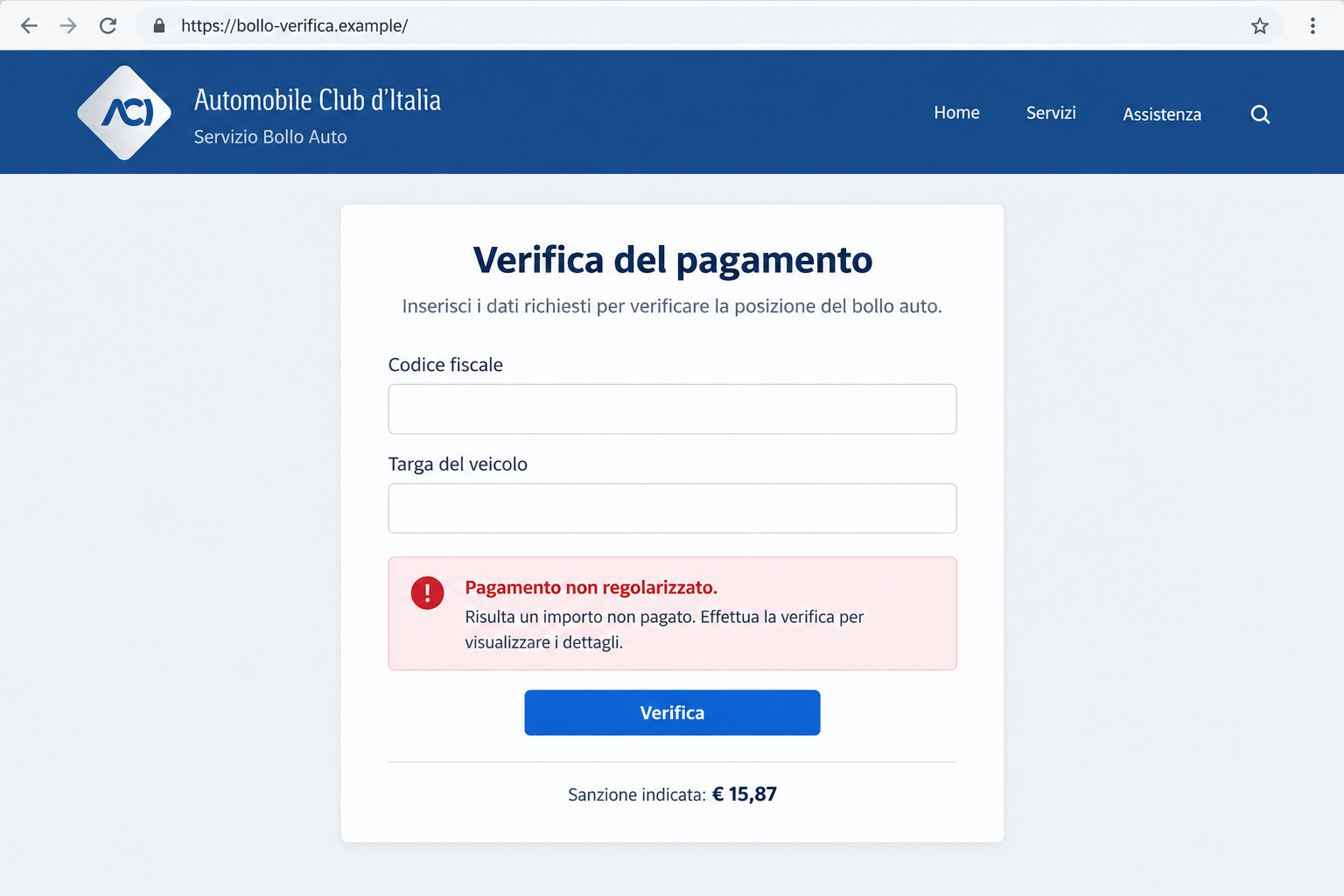
CERT-AGID describes the trap: a tax-code and plate check, a contact-details page, and a final card form displaying a €15.87 penalty.
That’s the amount in the documented example. A different sum wouldn’t make an otherwise identical collection process safe.
The image is an illustration with a fictional address. It shows the kind of first form involved, rather than a captured original page.
The page repeats information you just gave it
The payment screen includes the tax code and license plate entered earlier. Seeing your own details beside a penalty can make the case look personalized.
But a website can repeat a value without checking it against an official record. You supplied those details; their reappearance doesn’t authenticate the alleged debt.
The same distinction applies to a case-looking layout. A heading, a reference, and an amount can be generated by the page displaying them.
You need confirmation from the actual tax service, not reassurance from the form asking for your card. The scam tries to make those feel like the same thing.
Check the real payment record before responding
- Use ACI’s genuine website or your region’s actual vehicle-tax service to investigate the claim.
- Find earlier receipts if you think the tax was already paid.
- Don’t enter card details just because the proposed penalty seems too small to argue about.
- Keep a suspicious card form separate from any legitimate tax issue you may still need to resolve.
- If the false site received your card details, contact the issuer promptly even when no charge is visible.
The known campaign addresses include acitalia[.]info and acitalia[.]click. Treat them as examples of the deception, not the complete list of addresses to avoid.
Why the Vehicle-Tax Story Feels Plausible
Bollo auto is real vehicle-tax administration. Drivers may know they have responsibilities without remembering precisely which payment period a particular notice concerns.
That uncertainty is enough for the opening request. A page offering to check your status can feel helpful before it starts asking for more.
The threat of a penalty changes the mood. Instead of asking who operates the site, you may begin thinking about how to clear the problem quickly.
A small displayed fee makes that decision easier. You might rather pay €15.87 than worry about whether an overlooked task will become expensive.
You may be thinking about €15.87 while the form asks for an entire card. That mismatch is a reason to stop before completing it.
Suppose you paid your tax through a bank and can’t immediately find the receipt. That doesn’t make the email right; it means you need your own records.
Similarly, owning the vehicle mentioned in a form doesn’t authenticate its operator. A license plate is relevant to car administration, so the request can sound reasonable.
Reasonable-looking questions still need a trustworthy destination. Verify the service before using a form to answer an administrative doubt.
How the ACI Bollo Auto Scam Works
Step 1: A tax problem is introduced before you have checked your records
The false notice or page claims an annual vehicle-tax payment wasn’t settled. It invokes consequences such as penalties or restrictions to make the issue hard to ignore.
At this point, you have an allegation from the sender. You haven’t seen an authentic record connecting that allegation to your vehicle or payment history.
Don’t try to resolve that uncertainty by asking the linked page. Its answers are part of the same unverified communication.
Start with your receipt, your genuine account, or the appropriate real service. You can investigate a tax question without accepting this particular route.
Step 2: Tax code and license plate make the lookup look official
The first form asks for codice fiscale and targa, your tax code and vehicle plate. That pairing gives the apparent check an administrative purpose.
It also connects identifying information to the vehicle information you provide. Don’t dismiss the disclosure just because the form hasn’t reached payment yet.
If you stopped here, record those two fields when describing the incident. There’s no need to claim a card was compromised if you never entered one.
A progress screen can encourage you to keep going, but progress isn’t validation. It only tells you that the website is ready for another step.
Step 3: A contact form expands the collection
The next documented page gathers a name, email address, phone number, and residential address, including city, province, and postal code.
Each field can seem routine when the process already looks like an official case. Together, they provide a fuller picture of the person completing it.
A later contact using your name or referring to your vehicle still needs checking. Familiar details can come from this form rather than a real agency record.
Don’t send extra documents to make the case clearer. Stop the disclosure and get the actual organization to locate its own records.
Step 4: The small penalty becomes a complete card request
The final reported screen displays €15.87 and asks for the cardholder’s name, card number, expiry date, and CVV.
It also repeats the identifying information entered earlier. That makes the payment feel attached to a specific vehicle rather than a generic demand.
The useful question is who receives the card details. A familiar logo and your repeated plate cannot answer it.
Stop at this point even if you have already filled in other fields. Adding a card increases the exposure without proving that any tax debt will be resolved.
The documented collection doesn’t establish every later charge or account takeover. Your bank should assess the actual card exposure and any transactions that followed.
What a Genuine ACI Check Can Look Like
ACI provides genuine tax-calculation and payment services. Avoiding the fake form doesn’t mean you should ignore vehicle-tax responsibilities or distrust every ACI page.
The official online payment portal describes access through recognized digital identification, including SPID, CIE, CNS, or eIDAS.
Other real channels also exist. ACI’s payment-method guidance includes banks and authorized physical services, so a universal rule that every payment requires the same login would be misleading.
There is also a public calculator. Asking for a plate isn’t fraudulent by itself; the identity of the service and the surrounding request matter.
For your own check, reach ACI independently and follow its current service links. Don’t let a lookalike page choose the real site’s entry point for you.
If your region uses another relevant service, use that organization’s published route. Regional availability can differ, and a scam page won’t clarify your genuine obligations.
If a payment is missing from a record, keep the receipt and ask the appropriate service to reconcile it. Don’t solve a record mismatch by paying an unrelated link.
Check the payment period on the receipt as well as its amount. A payment for one period won’t explain a claim about another without further confirmation.
If someone else handled the tax, ask for their actual confirmation. A remembered payment is useful context, but the receipt gives the service something concrete to check.
The right response to a genuine discrepancy is a verified inquiry. The right response to this fake form is to stop supplying information.
The Two Address Checks That Matter
First, inspect the complete domain. Acitalia may sound connected to ACI, but recognizable words don’t give an operator permission to collect payments for that organization.
Second, check the address at the moment a page requests sensitive information. Navigation can take you somewhere different from the site you thought you opened.
The published campaign indicators identify the known fake addresses. They are useful for reporting a matching interaction without visiting the site again.
A padlock doesn’t replace either check. An encrypted connection can still deliver your information securely to the wrong recipient.
If a browser or security tool blocks the page, don’t disable that protection to finish the alleged payment. Use the genuine service to investigate instead.
A page becoming unavailable later doesn’t tell you what happened to earlier disclosures. Keep the message and transaction records you already have.
What to Do if You Have Fallen Victim to This Scam
-
Contact your card issuer if the card form was completed. Tell it the details were entered into a suspected ACI impersonation page.
Specify whether the number, expiry date, CVV, or any payment approval was supplied. Ask about blocking or replacing the card and reviewing activity.
Don’t wait for a charge of exactly €15.87. The amount in the lure doesn’t limit the possible use of the card information.
-
Report any actual payment. Give the issuer the transaction time, amount, recipient details, and payment method shown in your records.
Ask about the options available for that transaction. A possible dispute or reversal depends on its circumstances, so preserve the evidence rather than assuming a refund.
-
Write down the earlier information you provided. Include tax code, plate, address, phone number, and email, even if you stopped before the card page.
This helps you recognize subsequent impersonation attempts. It also avoids confusing personal-data exposure with an unobserved banking-password disclosure.
-
Check the real tax status independently. Use the actual ACI or regional route and keep receipts for any legitimate payment already made.
If there is a genuine outstanding issue, address it there. A real obligation doesn’t validate the separate counterfeit collection site.
-
Save the false message and the page address. Keep the sender, alleged penalty, and relevant screenshots before removing the message from your inbox.
Redact tax codes, plates, addresses, and card data from any public warning. Appropriate support or reporting channels may need fuller private evidence.
-
Report the impersonation through official contacts. Use ACI’s actual site and CERT-AGID’s published reporting guidance, not a help button inside the false portal.
Explain which steps you completed. If identity misuse or financial loss occurs, keep the relevant report reference for subsequent conversations.
-
Protect credentials only if they were exposed. If a version asked for a password and you entered it, change it through the genuine account.
Check important accounts where that password was reused. Don’t tell yourself all accounts are compromised merely because a vehicle-tax form received a plate.
-
Check the device if software was involved. If the linked site led to an installation or suspicious behavior, a Malwarebytes scan can help investigate unwanted software.
AdGuard may block some deceptive ads and unsafe destinations before another visit. Card exposure still needs the issuer’s attention; a browser tool can’t retract those details.
If Someone Calls About the Information You Entered
Ask how you can reach them through the real organization’s published contacts. End the unexpected conversation and make that contact yourself.
A caller may quote a plate or tax code and sound informed. Those details don’t authenticate them if the same details were disclosed on the false site.
Don’t read out bank codes to cancel the alleged fine or recover a payment. Discuss actual transaction problems with your bank through a route you trust.
Keep a note of the call, what was requested, and whether you acted. It can help connect a second approach to the initial disclosure.
If you’re helping a relative, start with the bank and payment record rather than blame. A clear account of the interaction is more useful than embarrassment.
Frequently Asked Questions
Is ACI itself operating a scam?
No. The campaign impersonates a legitimate organization. The false websites and their staged information requests are the conduct described here.
Does the €15.87 penalty prove my tax is unpaid?
No. It’s the amount displayed by the fake process. Check your actual vehicle-tax record and receipts through an independently reached genuine service.
Why does the payment screen know my plate?
The documented site repeats information entered earlier. Reusing your input doesn’t prove that the page checked an official database or found a real debt.
Are all forms asking for a vehicle plate fraudulent?
No. Legitimate calculators and services can request it. Verify the operator and purpose rather than judging a single field in isolation.
What if I gave my tax code but never entered a card?
Record that disclosure and verify later contacts carefully. It doesn’t automatically mean your card was exposed or that a completed identity fraud occurred.
Should I pay again if I can’t see a receipt?
Don’t retry through the suspicious site. Check bank activity and the real tax service, then ask the appropriate genuine support team about any payment discrepancy.
The Bottom Line
Do not enter information or pay through these fake ACI bollo auto pages. The alleged small penalty leads to a complete identity and card-data collection.
Use the genuine tax service to resolve actual obligations. If you supplied card details or paid, contact the issuer now and keep the message and transaction evidence.








