

A water-bill bonus page says there’s money waiting for you. Enter a phone number, and an apparently precise refund amount appears beside your case details.
For someone watching household bills, that’s welcome news. The ARERA water bonus scam makes the next step look like a small formality.
Overview
The €100.93 refund page is a card-data trap
Don’t enter card information into this supposed ARERA refund process. It uses a real water-benefit name to disguise a false payout and collect payment-card details.
ARERA is Italy’s utility regulator, not the operator of the deceptive website. Its name and logo are copied to make the page appear authoritative.
CERT-AGID describes the sequence: a phone-number check, a fictitious €100.93 credit, and a request to verify a card before receiving the money.
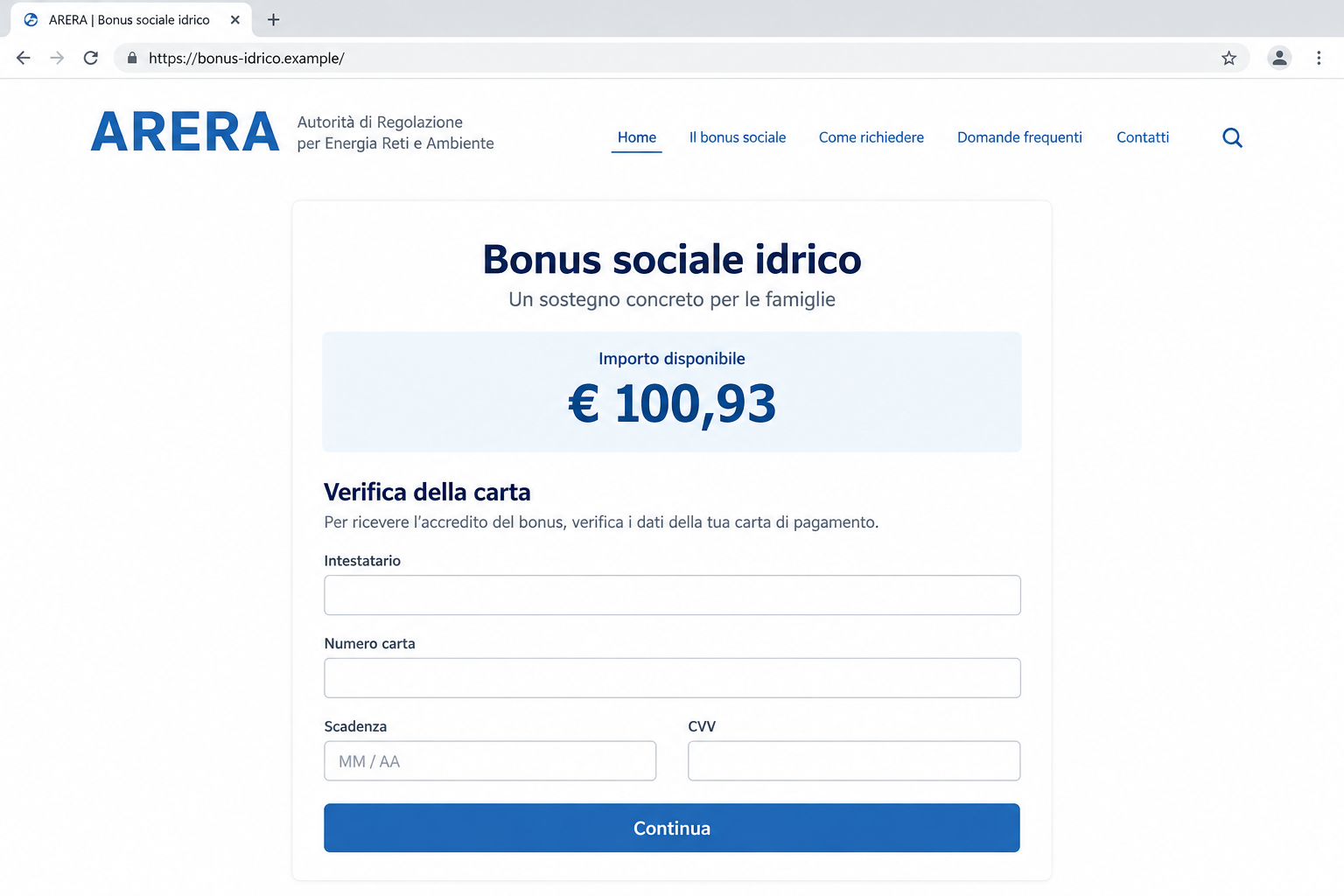
The card screen asks for the holder’s name, number, expiry date, and CVV. Those details go into the counterfeit process, not an authenticated benefit account.
The picture uses a fictional address to illustrate that request. It isn’t an original captured page or proof that you personally qualify for a refund.
A real benefit makes the false offer easier to believe
Bonus sociale idrico is a genuine form of support with water costs. The scam borrows that name so the reader doesn’t have to accept an entirely invented program.
Someone expecting help with bills may be especially ready to complete the process. The apparent refund seems connected to something they already know exists.
You may qualify for water support and still receive a fake claim link. Check your actual benefit with the provider instead of trusting the card form.
Nor does a precise amount prove that anyone calculated your entitlement. The false page can display cents and a case-looking summary without a genuine eligibility decision.
Your water supplier is a better place to ask
- Check the benefit through ARERA’s actual guidance and your genuine water-service contacts.
- Look for relevant information in your own bill or established account rather than trusting a refund banner.
- Don’t provide a CVV to complete this alleged water-bonus payout.
- If only a phone number was supplied, watch for follow-up contacts without assuming your bank account was accessed.
- If the card form was completed, ask the issuer to protect the card immediately.
The known fraudulent domain is arerae[.]cfd. The extra letter and unfamiliar ending matter more than the regulator’s name printed at the top of the page.
Why €100.93 Can Sound More Believable Than a Large Prize
The offer fits an everyday expense. It doesn’t need to promise wealth; it only needs to look like a modest amount you shouldn’t leave unclaimed.
The cents make it appear calculated. A reader may imagine that an account adjustment, household assessment, or billing difference produced that exact figure.
But a displayed number doesn’t show the calculation behind it. Ask where the amount appears in your real records before considering the form’s instructions.
A phone-number field also lowers the barrier to beginning. It can feel less intrusive than a password, so you may complete it without stopping to examine the site.
Once a result appears, the process feels underway. The next request may seem like the last requirement rather than a fresh decision about sensitive information.
That’s the moment to slow down. You haven’t received money; you’ve received another instruction from the same page that introduced the offer.
If you’re waiting for genuine support, the right question is whether your actual provider recognizes the benefit and payment route. A copied logo can’t answer that.
You can preserve a real entitlement while rejecting a fraudulent form. There’s no need to finish this process to avoid missing legitimate assistance.
How the ARERA Water Bonus Scam Works
Step 1: The website borrows the regulator’s identity
The false page presents the water benefit using ARERA’s name and visual branding. It appears to offer an institutional route for checking a payment.
A visitor familiar with utility bills may recognize the organization immediately. That recognition can arrive before the address receives any serious attention.
Read the domain before using the form. You’re deciding who will receive your information, not simply whether the page mentions a real public body.
If the page was reached through an unexpected message, leave that route and open ARERA independently. Follow its genuine consumer information from there.
Step 2: Your phone number starts an apparent eligibility check
The documented first screen asks for a phone number to check entitlement. It gives the visitor a quick task before asking for banking information.
A result after that task can feel personalized. Yet submitting a contact number doesn’t prove that the website consulted your household’s benefit record.
A phone number also gives the recipient a way to contact you again. Keep that possibility in mind if someone later calls about the supposed refund.
If you stopped here, explain that limited exposure when seeking advice. There’s no reason to report a card disclosure that never happened.
Step 3: A precise credit and case details make progress look official
The next reported page displays €100.93 as available for payout, together with apparent case information. It makes the offer look settled and ready to complete.
The reader is encouraged to think about receiving the money rather than confirming the original claim. A pending balance can make another form feel worthwhile.
Don’t mistake the page’s summary for an independent record. An operator controlling the form also controls the amount and case details shown beside it.
Check those details through the genuine service before supplying anything else. A refund offered only by the unverified page remains an unverified refund.
Step 4: Receiving money becomes a request for card credentials
The process then asks for credit-card verification. That phrase makes disclosure sound protective, even though the form collects the full set of payment-card details.
The purpose has changed from checking water support to handling a card. A reader should notice that change before treating the next field as routine.
Stop rather than entering a different card to see whether it works. Providing another payment method only adds information to the same false route.
If you already entered the details, a success or error screen can’t tell you that they’re safe. Your card issuer needs to know what was disclosed.
Keep any later payment approval separate in your incident note. The documented warning identifies the card form; your own actions determine whether additional financial exposure occurred.
How the Genuine Water Benefit Is Handled
The real support follows an eligibility process. It isn’t established by typing a phone number into a page that announces a fixed cash credit.
ARERA’s consumer guidance explains the payment arrangements, including differences between direct and shared water supplies.
For direct water supplies, support can be recognized on the bill. Where supply is shared, the provider can use an off-bill method after the relevant checks.
That distinction matters. Saying every payment outside a bill is a scam would mislead readers whose genuine support is handled another way.
The safe route is to ask your actual water provider about your own situation. Use contact details from an existing bill or its independently reached website.
If you live in a building with a shared supply, ask which provider handles it. Don’t assume the refund page knows the arrangement simply because it requests contact details.
ARERA also explains the genuine support process associated with household eligibility. Consult current official information rather than relying on an old social-media post or a copied claim page.
If a provider needs information, verify the request through its real channel before responding. A possible legitimate administrative need doesn’t validate this particular counterfeit form.
What You Can Check Without Giving Away Anything Else
Start with the message that brought you to the page. Save its sender and destination, but don’t use its reply address to ask whether the offer is genuine.
Look at your own billing records. A real account adjustment should be discussed with the organization responsible for that account.
Check whether the offer explains which water supply it concerns. A generic banner promising money can’t replace a connection to your actual service.
The official campaign indicators identify the reported false domain. If your interaction matches it, include that address in your incident report without revisiting it.
Don’t make a small payment to activate the payout. The documented offer is already fraudulent, so an additional transfer isn’t a useful verification test.
If the site won’t load, keep the evidence you already have. A missing webpage doesn’t retrieve submitted card information or explain a suspicious transaction.
What to Do if You Have Fallen Victim to This Scam
-
Tell your card issuer what the refund form received. Identify the card number, expiry date, CVV, and any payment confirmation you supplied.
Ask whether the card should be blocked or replaced and how to review suspicious activity. Use the issuer’s normal app or a trusted published contact.
Don’t wait for a water-bonus deposit before reporting the exposure. The claim of incoming money doesn’t protect the information entered into the false form.
-
Check for actual transactions. Keep records of unfamiliar pending or completed activity and ask the issuer how to handle each one.
If you made a payment yourself, explain its amount, time, method, and displayed recipient. Keep the bank’s case number with the rest of your evidence.
-
Record whether you only supplied a phone number. That is different from completing the card screen, sharing a password, or approving a banking action.
Watch for callers or texts using the refund story. Someone knowing your number or previous interaction still needs verification through the real organization.
-
Contact your genuine water provider about the underlying benefit. Explain the offer and ask how any real support for your household would be handled.
This keeps a legitimate entitlement from being confused with the phishing incident. Use a bill or an independently obtained contact, not the false page’s support link.
-
Keep the false message and destination. Save the alleged amount and relevant screenshots, concealing full card information from public examples.
Report the impersonation through official channels. CERT-AGID’s warning provides a source you can reference when explaining why this collection route is suspicious.
-
Change any password disclosed during the interaction. Use the authentic service to make the change and review other accounts using that same password.
If no password was entered, don’t invent a login compromise. Focus on the contact or card details actually exposed.
-
Investigate device exposure separately. If the page prompted an installation or the device behaves unexpectedly, examine it and run a trusted security scan.
Malwarebytes can help identify unwanted software. AdGuard can reduce some future exposure to deceptive ads and risky web destinations.
Neither tool cancels a financial transaction or retrieves data sent through the form. Keep the bank and provider conversations moving while checking the device.
-
Decline follow-up requests for refund fees or bank codes. Speak to your actual provider or issuer through the channels you chose yourself.
A caller quoting the promised €100.93 is repeating the lure, not necessarily demonstrating legitimate access to your account.
If You Were Waiting for Help With Your Bills
It is understandable to want the offer to be real. The useful next step is to identify the support available through your actual supply arrangement.
Keep your bill, household application records, and genuine provider communications together. They give you a starting point that doesn’t depend on the false refund banner.
If the process is difficult to navigate, ask an appropriate official support contact for help. Don’t substitute an unsolicited caller who offers to handle everything using your card.
When helping a relative, explain the card request rather than simply saying the internet is unsafe. A specific reason makes the decision easier to remember.
You can warn others using the fake refund amount and request, without circulating a working phishing link. Keep any exposed household or banking data private.
Frequently Asked Questions
Is bonus sociale idrico a real benefit?
Yes. The deception concerns the false ARERA-branded refund website. Check genuine eligibility and payment arrangements through official guidance and your actual provider.
Did the fake page calculate a real €100.93 entitlement?
The authority’s warning describes that figure as fictitious. Its precision isn’t evidence of a genuine assessment or a payment waiting in your name.
Does ARERA’s logo make the card form safe?
No. A copied name or logo doesn’t connect the website to the regulator. The reported form is part of the documented phishing process.
Does genuine support always appear directly on a bill?
No. Arrangements differ, including some shared-supply payments handled off the bill. Ask the real provider how your household’s support is processed.
What if I stopped after entering my phone number?
Record the interaction and verify follow-up contacts carefully. That limited disclosure isn’t proof that card details, passwords, or banking access were compromised.
Should I wait for an unauthorized charge before calling the issuer?
No. If the false form received your card details, tell the issuer promptly. It can advise on protecting the card before visible misuse occurs.
The Bottom Line
Do not complete this ARERA water-bonus card check. The apparent €100.93 payout is bait for collecting your payment details, not a genuine benefit confirmation.
Check real support with your water provider. If you entered card information, contact the issuer immediately and save the false message and any transaction records.








