

A bedroom full of glowing castles sounds like a memorable gift. WizardBeam’s product page turns that idea into a colorful, apparently ready-made purchase.
Before choosing a bundle, though, it helps to understand exactly which projector the seller describes and what happens if the promised experience falls short.
Overview
A themed bedroom projector, not a home cinema
WizardBeam is marketed as a compact USB-C-powered projector for displaying wizard-themed scenery. The listing appears on dinobeam.store under the ProjectorBeam branding.
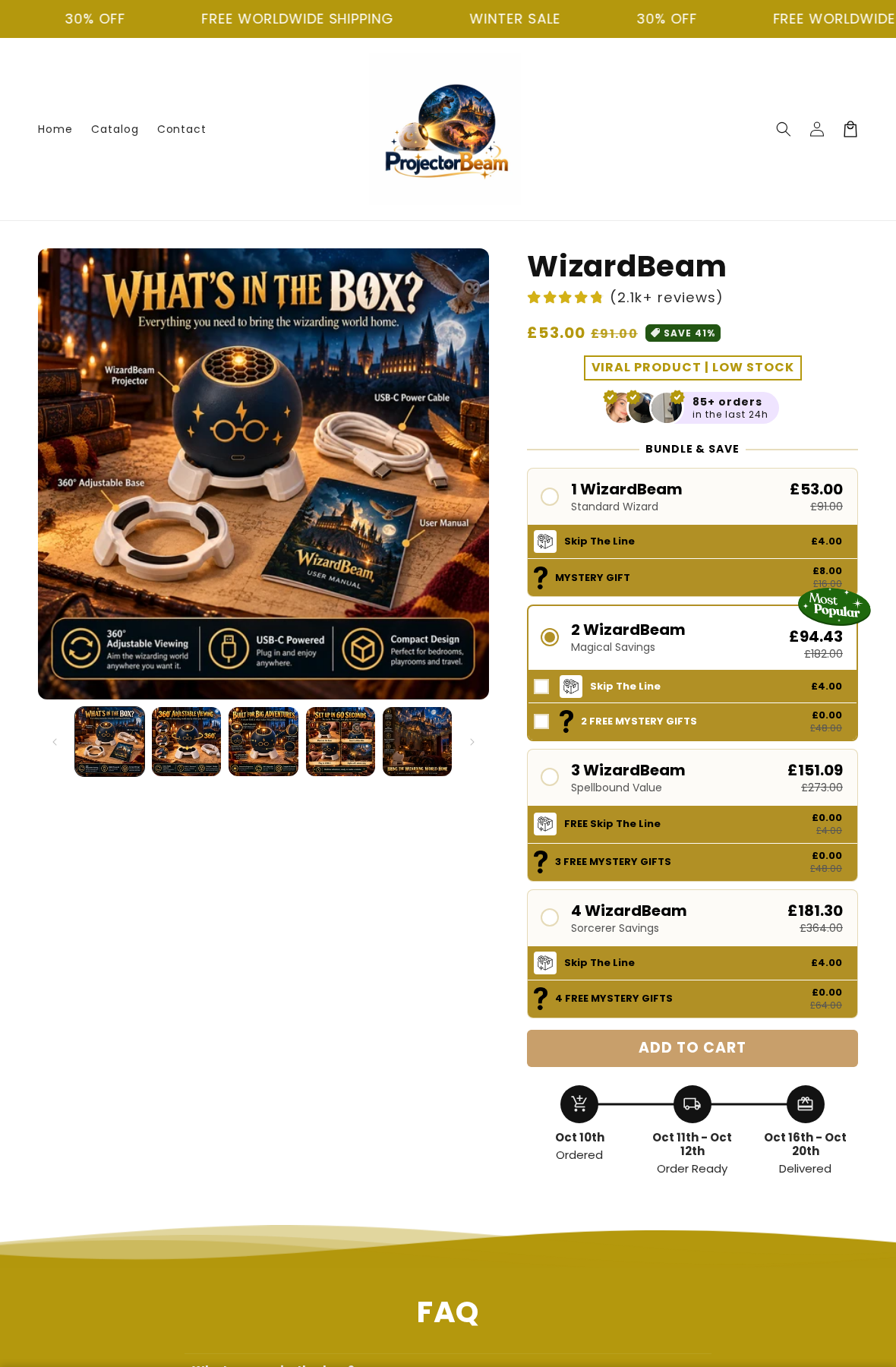
The illustrated package shows a spherical projector, adjustable base, power cable, and manual. Castles, owls, and familiar-looking wizard imagery provide much of the appeal.
This is a decorative light-product offer. It should not be confused with a projector intended to stream movies, display a computer screen, or replace a television.
The distinction matters because shoppers may picture something more capable than the device actually described. The listing needs clear model-specific specifications to settle that expectation.
The description switches between different products
Although the purchase heading says WizardBeam, parts of the FAQ describe StarBeam. Another answer says dinosaurs come alive, and later promotional text uses space-fantasy language.
A retailer can legitimately sell several themed projectors. The problem is placing another product’s contents, instructions, and guarantee inside the WizardBeam listing.
You should not have to guess which promises apply to the item being ordered. Copied or mismatched explanations make the purchase harder to evaluate.
What buyers should question
These inconsistencies support a warning about the advertised offer. They do not prove that no projector exists, that every photograph is fabricated, or that every order fails.
The practical issue is whether the seller can define the actual product and stand behind it. The reviewed listing does not do that reliably.
- Product naming changes within the same listing.
- A 30-day happiness promise refers to StarBeam rather than WizardBeam.
- Bundles increase the number of projectors and introduce optional extras.
- Review counts and recent-order figures are seller-controlled claims.
- A contact form does not establish a legal seller or return destination.
How the WizardBeam Offer Works
Step 1: A dramatic room transformation sells the idea
The listing uses richly styled imagery to make a small projector feel like a doorway into a fantasy world. That emotional appeal is especially strong for gift buyers.
A child who loves castles or wizards may seem like the perfect recipient. The decision can become about the imagined reaction rather than the device’s limitations.
Separate the themed artwork from the hardware. Ask which scenes are included, whether scenes can change, and how the projector produces the advertised effect.
The page’s illustrations alone cannot establish projection brightness, usable image size, or how a real bedroom looks with the device operating.
For a lighting gift, an ordinary demonstration in an ordinary room is more informative than an elaborate promotional composition.
Step 2: Popularity claims make hesitation feel unnecessary
The purchase area displays a 2.1k-plus review figure and claims more than 85 orders in the previous 24 hours. Low-stock wording adds another nudge.
These figures appear within the seller’s own page. They are not a purchase log or an independently verified customer-review dataset.
A large number beside stars should not replace reading the product information. It cannot tell you whether the shown reviews concern this exact model.
The same goes for urgency. If you still need basic specifications, a stock message is a reason to pause, not a reason to skip them.
Do not turn a seller’s popularity claim into proof that thousands of people received the advertised result. That requires evidence outside the claim itself.
Step 3: Bundles turn one gift into a larger order
The listing offers one, two, three, or four WizardBeam units. Larger packages carry names suggesting magical savings, value, or a more complete purchase.
The captured offer displayed £53 for one unit and £94.43 for two. Prices can change with the selected region, so compare the currency actually shown.
Several packages include mystery gifts or priority handling. Some extras are presented as free, while others have a separate charge.
Check the selected quantity before continuing. Buying four projectors is not automatically better value if you only wanted one suitable gift.
Pay particular attention to any preselected bundle. The screenshot shows a two-unit package selected, not evidence that a completed payment was made without consent.
A cart total and confirmation are what establish the final order. No payment was submitted here, so an unauthorized extra-unit charge has not been demonstrated.
Step 4: The FAQ should answer questions, but changes the model
The contents answer names a StarBeam projector, base, USB-C cable, and guide. That conflicts with the WizardBeam heading above the purchase controls.
The lighting answer recommends a dark room because ordinary room lighting makes the projection faint. That limitation deserves attention before choosing a bedside gift.
Other wording mentions dinosaurs even though the product’s illustrated theme is wizard scenery. A buyer cannot tell which material was written for this model.
For a seller, these may be editing errors. For a customer, they affect contents, performance expectations, and the promises supporting the purchase.
Ask the merchant to confirm those details for WizardBeam by name. An answer about StarBeam or DinoBeam does not resolve the mismatch.
Step 5: The guarantee becomes crucial after delivery
The page suggests a refund or replacement if a child does not love the projector. However, that happiness promise is worded around StarBeam.
Before buying WizardBeam, obtain confirmation that the same protection applies to the exact unit, including an opened item tested in a bedroom.
You also need the return location, postage responsibility, and deadline’s starting point. A reassuring sentence is not a complete return procedure.
If these details remain unanswered, you are being asked to pay first and discover the practical conditions later. That is an avoidable purchasing risk.
Product Details That Need a Clear Answer
Scenes, movement, and projection quality
An adjustable base concerns where the device points. It does not necessarily mean the projected scene rotates, changes automatically, or can be replaced.
Ask for the actual scene list and a demonstration of every advertised mode. A manual should explain controls rather than merely repeat themed slogans.
Projection quality also depends on distance, wall color, ambient light, and the room’s shape. A ceiling effect in a photograph may not match your child’s bedroom.
The FAQ’s dark-room guidance suggests that daytime use is not the intended experience. Evaluate the device as nighttime decoration, not powerful display equipment.
If detailed specifications are unavailable, do not invent them from the pictures. That includes resolution, brightness ratings, image-adjustment features, or compatibility with other devices.
USB-C power does not answer every safety question
The FAQ describes USB-C power and says a wall adapter is not included. The pictured package should therefore not be assumed to include a mains charger.
Ask for the required electrical input and follow the actual manual. The shape of a connector does not establish every compatible power setting.
Keep cables away from a child’s sleeping area and avoid leaving accessible cords around very young children. A decorative gift still needs sensible placement.
Low-power wording is not a substitute for a clear manufacturer label or applicable compliance information. Nor does incomplete wording prove the device is electrically dangerous.
The Seller, Support, and Return Trail
ProjectorBeam is the storefront name
The site uses ProjectorBeam branding while operating on dinobeam.store. Its catalog includes DinoBeam, StarBeam, and WizardBeam as separate product entries.
This explains why several names appear across the store. It does not explain why the WizardBeam page uses another model’s FAQ and happiness promise.
The relevant product here is WizardBeam. Previous coverage of DinoBeam should not be treated as a hands-on test or transaction record for this different listing.
A reliable retailer would distinguish the model, manufacturer, and legal business accepting payment. These identities serve different purposes and should not be left interchangeable.
No clearly identified returns location
The reviewed contact page provides a message form but does not display a return address. Its fields request a name, email, phone number, and comment.
Do not fill every optional field just to ask a product question. A simple request for model and return details should not require unnecessary personal information.
An address printed on a parcel may belong to a shipping partner. It is not automatically the destination authorized to accept a refunded return.
Get a written destination before mailing anything, including the recipient and any authorization reference. Without those details, paying return postage can create another unresolved cost.
A form is a channel, not a successful support test
A contact form can be a legitimate support method. The question is whether a shopper receives a clear, relevant answer and a record they can retain.
No message was submitted or support conversation tested for this review. Response speed, successful replacements, and refund fulfillment therefore remain unverified.
If you contact the seller yourself, save a copy of the submission. Ask specific questions rather than requesting a general reassurance that the store is trustworthy.
A useful answer should mention WizardBeam, explain the mismatched FAQ, and state what happens if the delivered product does not match its listing.
The manufacturing origin is not established
The offer does not provide a verified manufacturing trail for the reviewed device. A themed name and polished artwork cannot establish who produced it.
Chinese manufacture is not demonstrated by this page alone. More importantly, a country label would not settle whether this exact projector meets the promised specifications.
Focus on a traceable manufacturer, correct model information, and an enforceable return arrangement. Those details are more useful than guessing where an inexpensive device originated.
There is also no established subscription mechanism here. Bundle pricing and one-time extras should not be misreported as recurring refill charges.
What to Do if You Bought WizardBeam
- Recover your selected package.
Find the confirmation and identify the exact quantity, model, currency, and extras. Compare the charge with the package you intended to purchase.
Separate optional priority handling or gifts from the hardware price. Report an unexplained difference promptly, using the confirmation rather than your memory of the headline.
- Ask for correction before dispatch.
If the order contains too many units or an unwanted extra, request an amendment or cancellation immediately. State the desired result explicitly.
Keep the seller’s reply and any revised confirmation. An unanswered message does not mean the package was corrected, and a promised refund needs follow-through.
- Record what arrives.
Photograph the unopened packaging, shipping label, model markings, contents, and manual. Count the units and compare them with the paid order.
Do not discard packaging until the product is checked. It may help establish that a different model or incomplete package was delivered.
- Test the advertised use reasonably.
Follow the supplied instructions and check the projection in a dark room. Document scenes, controls, and any difference from the promised contents or function.
A short video can explain a specific problem better than a vague complaint. Avoid opening the electrical housing or attempting repairs that could create hazards.
- Claim the relevant promise in writing.
Send the listing screenshot and describe the mismatch or defect. Ask whether the advertised happiness guarantee covers your WizardBeam order.
Request a refund or replacement, the required procedure, and postage arrangements. Do not ship a parcel to an address obtained from an unrelated product page.
- Use the payment provider if the problem remains unresolved.
Ask which dispute process applies to non-delivery, a materially different product, or an unfulfilled refund. Provide the order, evidence, and communication history.
Confirm the filing deadline independently. Repeated promises of another update should not consume the entire period available to challenge the transaction.
Frequently Asked Questions
Is WizardBeam a confirmed scam?
The listing has documented product-name and guarantee inconsistencies. Those support a warning against the current offer, but do not establish that every sale is criminal fraud.
A product can exist and still be marketed through unreliable descriptions. You can decline that offer without claiming that the projector itself is imaginary.
Why does the WizardBeam FAQ mention StarBeam?
The contents and happiness-guarantee answers use StarBeam’s name inside the WizardBeam page. Other copy also refers to dinosaurs and a space-fantasy theme.
The seller needs to clarify which descriptions apply. Buyers should not assume a promise for another model automatically covers the product in their cart.
Does WizardBeam play movies or television?
The reviewed offer presents a decorative themed light projector, not a movie-streaming device. No verified specification establishes television, computer-display, or streaming-app functionality.
If you want those features, choose equipment with explicit display inputs and supported functions. A cinematic room illustration is not a technical specification.
Can the bundles cause extra charges?
Packages offer different quantities and optional extras, so the total can exceed the single-unit headline. Check every selected item before confirming payment.
That is not evidence of an unauthorized completed charge. Your cart and receipt determine what was selected, charged, and potentially needs correction.
Is the 30-day happiness guarantee reliable?
The reviewed wording refers to StarBeam. WizardBeam buyers need explicit confirmation of eligibility, timing, return destination, and who pays postage.
Save the original promise before ordering. If the seller later refuses it, that record is useful for explaining the purchase dispute.
What should I do if a different projector arrives?
Keep the packaging and photograph its model identification. Compare the device, scenes, accessories, and manual with the WizardBeam listing and your confirmation.
Request a documented remedy from the seller. If it remains unresolved, ask your payment provider about a materially-not-as-described purchase dispute.
The Bottom Line
Do not buy WizardBeam through this mismatched listing. A gift purchase needs clear product details and a guarantee that names the item being sold.
Already ordered? Check the quantity, document the delivered model, and request a specific remedy. Escalate an unresolved charge before your payment provider’s deadline expires.








