

A tablet fizzing in a glass of water looks like a small addition to your day. H2Tab surrounds that simple ritual with a much bigger wellness story.
For anyone wondering whether it is worth buying, the most useful place to look is beyond the product photograph. Start with the details behind the reassurance.
Overview
H2Tab sells tablets intended to produce hydrogen-rich water
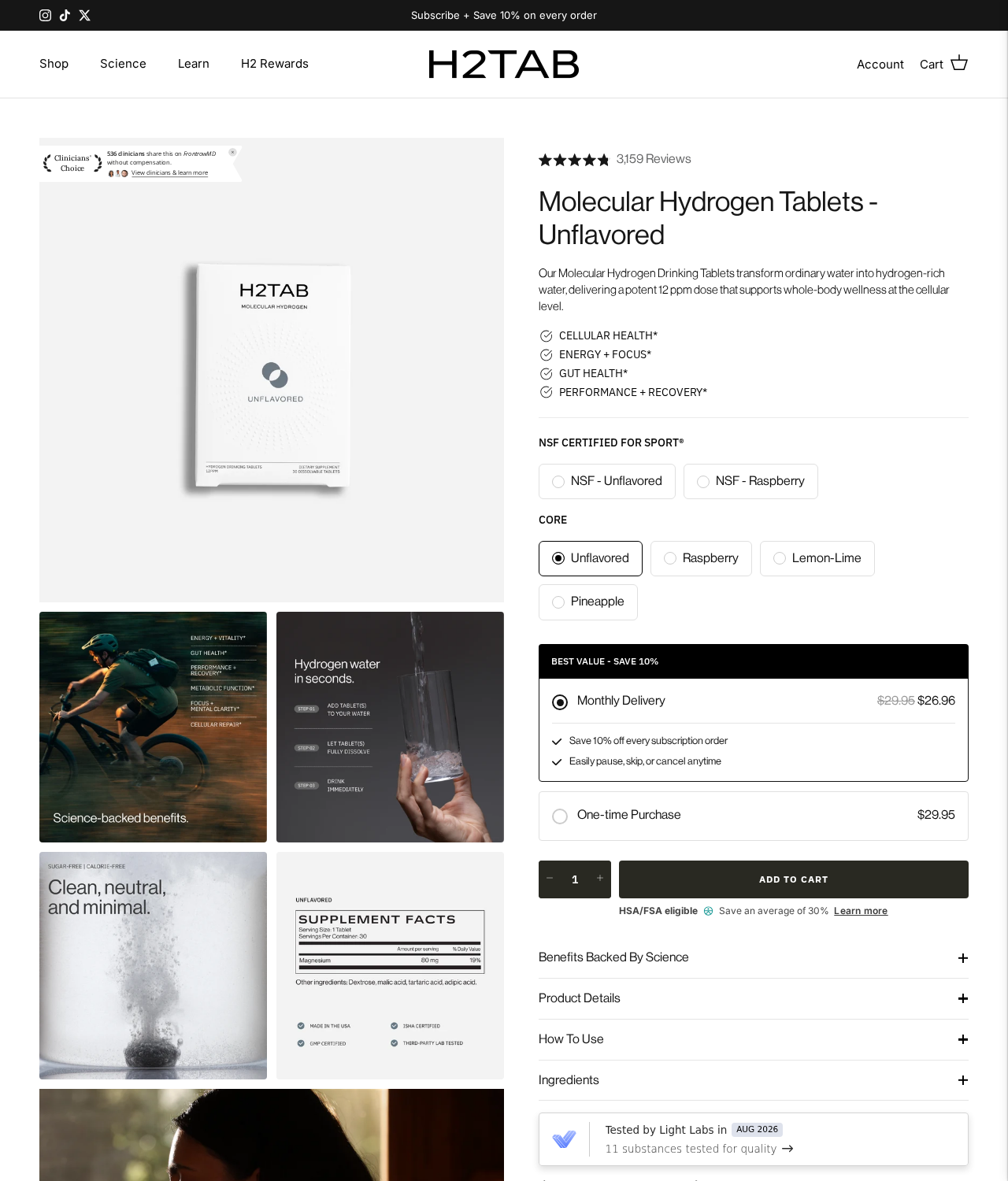
The unflavored H2Tab product contains magnesium-based tablets dissolved in drinking water. Its marketing links molecular hydrogen with energy, recovery, gut health, and broader cellular benefits.
The product page offers a 30-tablet package for $29.95 once or $26.96 with monthly delivery.
Both options are visible. Monthly delivery was selected on the fresh offer captured for this investigation, so a buyer intending one purchase needs to change it deliberately.
Several research descriptions do not match their linked papers
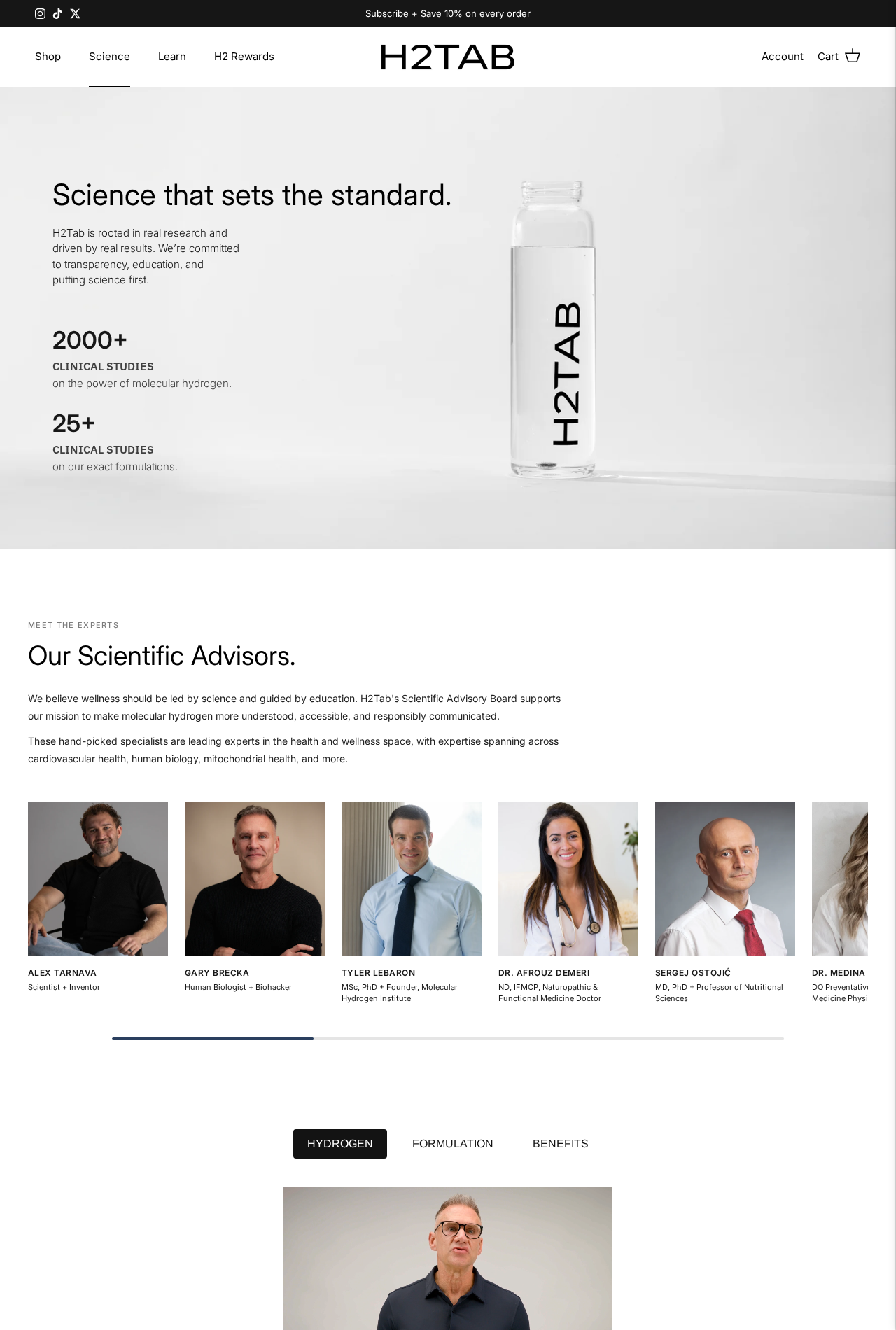
The science page contains citations presented as support for the wellness explanation. Checking several of those links reveals mismatched descriptions, not simply debatable interpretations.
One entry describes research in healthy adults while linking to a rat study. Another describes human-cell telomerase research while linking to a paper about mice.
That is a serious credibility problem for a page emphasizing scientific transparency. Readers should not have to discover that the advertised study design is wrong.
The product exists, but the evidence needs a much stricter reading
Hydrogen-water research is real. The inaccurate citations do not establish that all hydrogen research is worthless, or that H2Tab is a nonexistent product.
They do mean the sales presentation cannot be accepted at face value. Our recommendation is to withhold a purchase based on these health promises until support is demonstrated properly.
- Open cited research and check whether it studied humans, animals, or cells.
- Look for the exact formulation, dose, and outcome relevant to the promised benefit.
- Distinguish quality testing from proof that a product improves health.
- Choose one-time purchase deliberately if you do not want recurring delivery.
- Do not replace medical care with a supplement’s broad wellness claims.
How the Science-Led Offer and Refill Work
Step 1: A familiar hydration habit becomes a health purchase
The product’s appeal starts with convenience. You already drink water, and adding a dissolving tablet appears easier than changing a diet or exercise routine.
That familiar setting can lower the scrutiny you would give a more complicated health product. A small daily ritual can still carry substantial promises.
Decide which particular outcome interests you before reading the advertising. General phrases about cellular wellness are harder to evaluate than a clearly defined health measure.
If the promise concerns an ongoing symptom, identify the cause with a healthcare professional. A convenient drink does not answer why that symptom exists.
Step 2: Large research counts create a sense of established certainty
The science page promotes large study totals, including research it says concerns its exact formulations.
A study count is not an explanation of study quality. Experiments can involve different delivery methods, populations, concentrations, and outcomes.
The relevant question is narrower: what research supports the benefit you want from this particular product? Hundreds of unrelated experiments do not answer it.
Ask for the paper identifying the formulation, the study participants, and the measurable result. That turns an impressive number into a claim you can actually assess.
Step 3: Scientific references provide reassurance unless you inspect them
A PubMed link feels authoritative because PubMed is a trusted research database. But the database does not approve the advertising text placed beside that link.
A seller can point to a real paper while describing the paper inaccurately. The link works, yet the impression given to the reader is still wrong.
Here, the mismatch is not hypothetical. Several descriptions in the research window differ materially from the records they direct readers to.
Check the paper’s own title, authors, participants, and methods. Do not stop at the presence of a respected database name.
Step 4: Product-quality signals are placed near broad benefit claims
The page displays testing information and separates core products from versions labeled NSF Certified for Sport. These details can matter when evaluating a supplement.
However, checking a product for specified substances is a different task from proving that it improves focus, gut symptoms, or long-term health.
Do not transfer a quality assurance claim into a clinical efficacy claim. Ask what was tested and which product version the result actually covers.
A clearly identified test report is more useful than a badge alone. The report should specify the sample, the test method, and the measured result.
Step 5: The discount turns the experiment into a recurring order
The monthly option saves $2.99 against the displayed one-time price. In return, you agree to repeated deliveries and charges rather than a single trial purchase.
For twelve monthly payments at the displayed rate, the product subtotal would be $323.52, before applicable shipping or taxes. That is an illustration, not an upfront charge.
If you are only curious about one packet, select the one-time option and check the confirmation. Do not assume the lower price means the same payment arrangement.
A disclosed subscription is not automatically a hidden trap. The practical problem arises when a buyer overlooks the selected option or does not understand its renewal deadline.
The Citation Problems That Buyers Should See
A supposed healthy-adult trial links to research on rats
The store describes one reference as a randomized study of hydrogen-rich water and gut microbiota in healthy adults. Its link is PubMed identifier 35508571.
The actual PubMed record concerns hydrogen-rich water and hydrogen inhalation in rats, including microbiome and metabolite measurements.
Animal experiments can inform future research. They do not become human clinical trials simply because an advertising page labels them that way.
The distinction matters directly to a customer seeking a gut-health benefit. Evidence in another species cannot establish the same outcome for someone drinking this product.
A human-cell telomerase description points to a mouse paper
Another entry is presented as human-cell research about telomerase and telomere length. It points to article 6736 in volume 25 of a molecular-sciences journal.
The publisher’s record identifies a 2024 study by Mizzoni and colleagues about hydrogen-rich alkaline water in chemically stressed mice.
The advertised description differs in subject, authors, and year. That is more than a minor formatting error in a bibliography.
Nothing about a working link fixes the mismatch. A customer must evaluate the paper that exists, not the more persuasive study described beside it.
A real human pilot is cited inaccurately too
The entry linking to PubMed 34601077 assigns the paper different authors and a different journal. The underlying human study itself is real.
The correct record describes a six-month pilot involving 40 adults aged 70 and older, with molecular and functional aging-related measurements.
That is a specific population and a small exploratory trial. It is not a demonstration that every purchaser will live longer or feel younger.
Some measured outcomes differed, while others did not. Broadly translating selected findings into an all-purpose wellness promise would overlook the study’s actual limits.
What Real Hydrogen Research Can and Cannot Establish
A fair investigation should acknowledge promising results without inflating them. Research can be interesting and still insufficient to justify a particular commercial promise.
A 2024 systematic review discusses potential hydrogen-water benefits while calling for larger studies and more rigorous methods to substantiate preliminary findings.
That is not an instruction to discard the field. It is a warning against treating preliminary findings as settled answers for an individual’s health.
Concentration also needs context. A laboratory measurement of dissolved hydrogen describes a property of the prepared water, not proof of a particular clinical improvement.
Ask whether a study tested this tablet formulation, the same preparation method, and the relevant outcome. Similar terminology can conceal important differences.
For a personal health decision, bring the full label and your medication list to a qualified professional. Magnesium-containing supplements may require individual suitability checks.
The tablets are intended to dissolve in water, not be swallowed directly. Follow the actual package directions rather than treating a product photograph as dosing instructions.
H2Tab Company, Research Accountability, and Subscription Support
The legal page names H2TAB LLC
The terms identify H2TAB LLC and list a St. Petersburg, Florida address at 7901 4th St N, suite 300.
They also publish info@drinkh2tab.com and (305) 849-8422. These details identify the contacts stated by the seller, not a facility we have inspected.
A correspondence address is not proof of a manufacturing plant or research laboratory. For product-origin questions, request the responsible manufacturer and batch-specific documentation.
Subscription support has a separate published route
The terms direct subscription management through the account portal or subscriptions@drinkh2tab.com before the authorized charge date.
Requests submitted after that window apply to the following billing cycle. That detail is more useful than a general promise that cancellation is easy.
Keep confirmation of the effective date. Removing yourself from promotional messages does not necessarily end a product-delivery subscription.
The seller should explain the research mismatches
A meaningful response would identify corrected citations and the studies supporting each specific benefit. Simply restating that hydrogen has been widely studied would miss the issue.
The inaccurate entries do not prove who created them or why. They do establish that the presented bibliography needs correction before it can be relied upon.
Ask for the exact study behind a claim, not a collection of loosely related links. Authors, methods, and participants should match the description supplied.
Testing should be traceable to the version you buy
The offer distinguishes core flavors from sport-certified versions. Preserve the selected product name and label, because assurances for one version should not be assumed for every variant.
Ask for documentation covering that version and, where relevant, your batch. A generic report about molecular hydrogen does not identify what was tested in your packet.
This is a product and evidence check, not an allegation that the tablets are contaminated. No laboratory analysis of a purchased H2Tab batch was performed here.
What to Do if You Bought H2Tab
- Check the order’s payment arrangement.
Read the confirmation for recurring delivery, the selected interval, and the next charge date. Compare it with the option you intended to purchase.
If you meant to buy once but received a subscription confirmation, address that immediately rather than waiting for another packet.
- Stop unwanted future deliveries through the published route.
Use the portal or subscription email before the next charge. Request written confirmation that the subscription has ended and identify the effective date.
For a payment already processed, ask about that order separately. Ending future renewals does not automatically refund a shipment already charged.
- Keep the evidence that influenced your health purchase.
Retain the relevant benefit claim, science-page description, linked paper, and receipt. Explain the specific mismatch if you ask the seller to review the purchase.
Do not frame the issue as hydrogen having no research. The stronger complaint is that a cited study was described inaccurately.
- Review product suitability before continuing use.
Keep the packaging and full ingredient panel. Discuss symptoms, relevant medical conditions, and medication interactions with your clinician or pharmacist.
Seek appropriate care for ongoing health concerns rather than increasing supplement use because a wellness claim sounds promising.
- Use the order-specific refund process and escalate if needed.
Ask the seller about eligibility, authorization, and any return requirement before mailing anything. Preserve the written response and shipment documentation.
If billing remains unresolved, consult your payment provider about available dispute procedures. Provide the actual authorization, cancellation, and product-representation evidence.
Frequently Asked Questions
Is H2Tab a confirmed scam?
The investigation confirms inaccurate research descriptions and a selected recurring-delivery option. It does not establish a nonexistent product, blanket fraud, or intentional fabrication by a named person.
Those evidence problems are still significant. Do not buy for broad health promises that the seller has not supported accurately.
Are there real studies about hydrogen-rich water?
Yes. The field includes human research as well as animal and laboratory work. Their findings differ in scope and strength.
A real study in the field does not automatically validate every commercial tablet, preparation method, or advertised benefit.
What was wrong with the H2Tab citations?
Several linked papers differ from the descriptions shown. Notably, a rat study was presented as healthy-adult research, and a mouse paper as human-cell telomerase research.
A separate genuine human pilot also had incorrect bibliographic details. Readers should check the primary records, not rely on the accompanying sales description.
Does the product page contain an automatic refill option?
Yes. Monthly delivery appears beside a one-time purchase option and was selected in the captured offer. Its displayed price was lower than the one-time price.
Check your selection and order confirmation. The existence of a disclosed refill does not establish that every purchaser authorized it.
Does laboratory testing prove the health benefits?
Not by itself. Product composition, dissolved-hydrogen measurements, banned-substance screening, and clinical outcomes are different questions.
Ask what a test actually measured and which product version it covered before using a quality badge as a health guarantee.
What is the best decision before ordering?
Hold off on buying for the advertised benefits until the research support is accurate and relevant. Discuss individual suitability with a qualified healthcare professional.
If you eventually choose a single packet, deliberately select one-time purchase and verify the receipt before assuming there will be no renewal.
The Bottom Line
H2Tab’s scientific presentation contains demonstrable citation problems. Real hydrogen research does not excuse describing animal studies as human evidence or attaching incorrect bibliographic details.
Do not turn that uncertain health promise into a recurring expense. Require accurate support for the benefit you want, and review any existing subscription now.








