

A small payment for a fresh start can sound appealing, especially when another complicated diet is the last thing you want. MetaBoost Connection makes that invitation.
Before deciding whether the program fits your life, take a moment with the pages around the offer. They deserve as much attention as the recipes.
Overview
The main purchase is a digital diet and exercise program
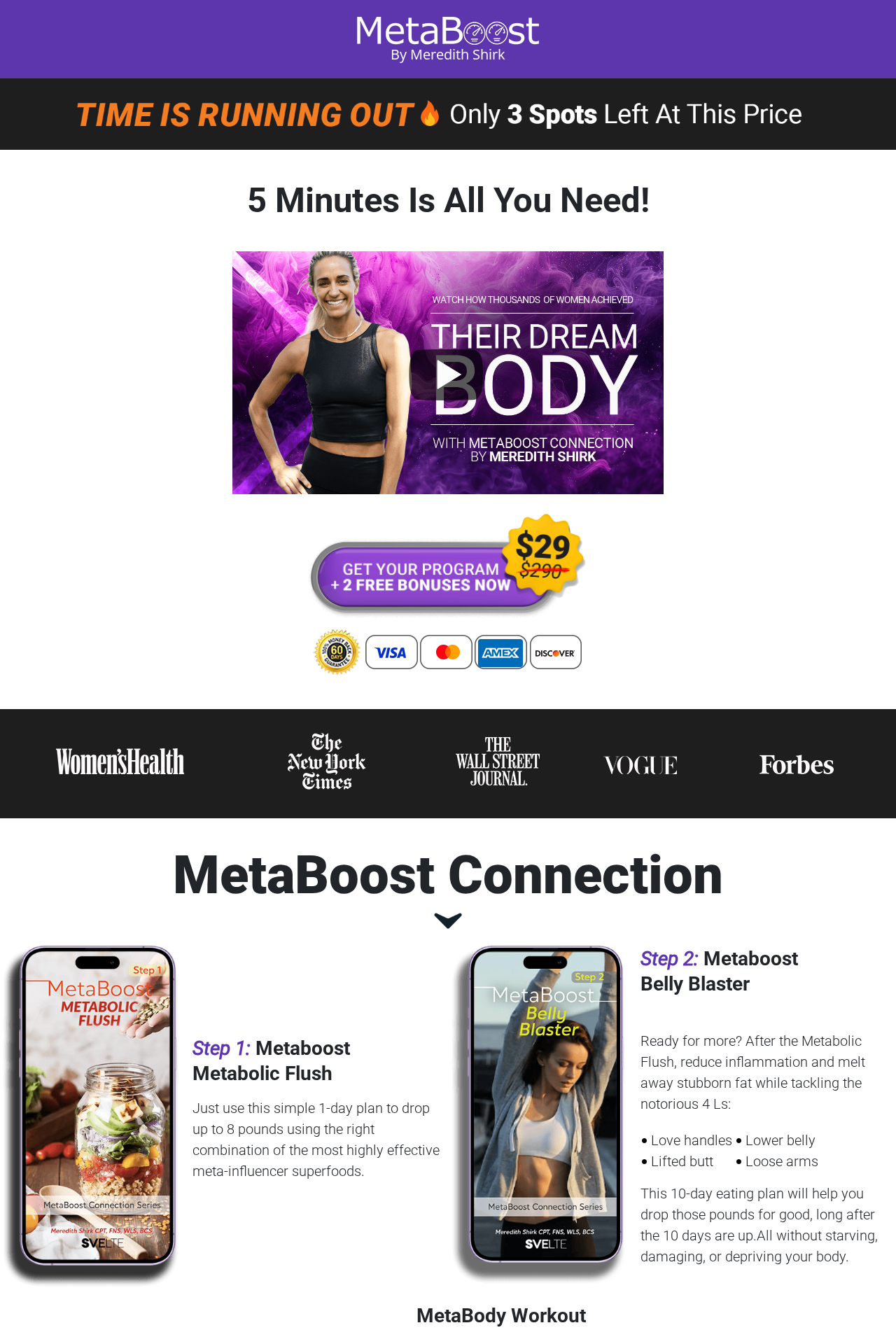
MetaBoost Connection is a program promoted by Meredith Shirk and Svelte. The examined offer sells access to nutrition and workout material for a $29 one-time payment.
The main offer advertises a 60-day money-back guarantee. It describes the basic purchase as having no subscription.
This is important context. The basic program should not automatically be described as a recurring supplement order or an invented celebrity endorsement.
A separate free trial can become a monthly membership
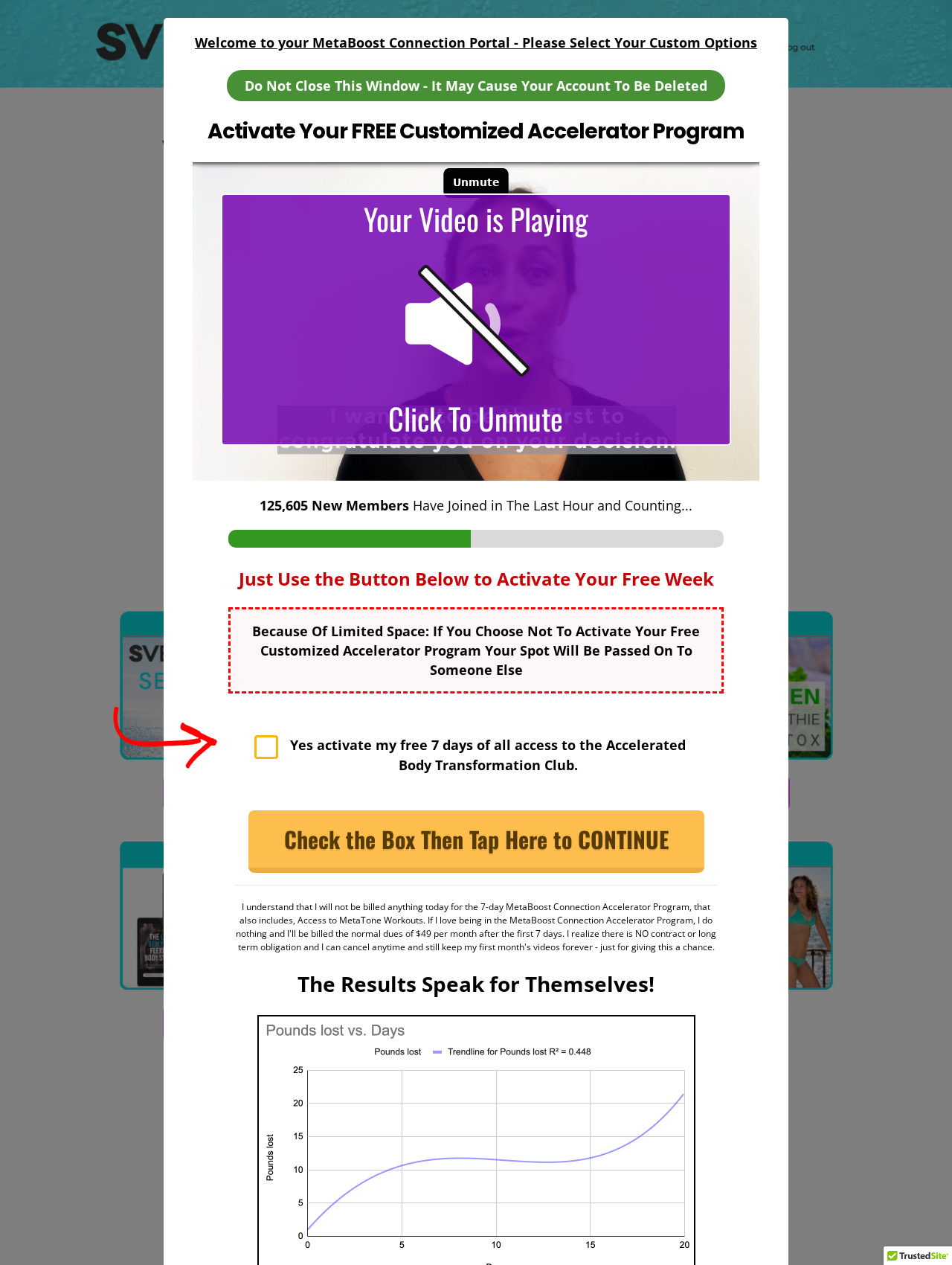
A publicly accessible customization page presents an optional accelerator membership. Its free period lasts seven days, followed by a $49 monthly charge unless canceled.
That is a different commitment from paying once for the original program. Accepting an extra membership can change the cost without changing the familiar MetaBoost branding.
The trial checkbox was unchecked on the offer examined. We are not claiming every customer is enrolled automatically or that the price is entirely undisclosed.
The real concern is pressured decision-making
The customization page warns that closing the window may delete an account and says a declined place may go to somebody else.
Those messages make an optional choice feel like something necessary to preserve your purchase. That is the part buyers should resist.
- Separate the $29 program from the optional recurring membership.
- Read the amount charged after any free period, not just today’s total.
- Keep a record of which extras you accepted or declined.
- Judge rapid weight-loss language separately from access to the materials.
- Do not let an account-loss warning rush a new payment decision.
How the Offer and Optional Trial Work
Step 1: A low introductory price lowers the commitment
The initial proposition is straightforward: buy an organized program rather than work everything out alone. At $29, it can feel like a manageable experiment.
That price may be affordable, but it should still buy a clearly defined product. Decide what you actually want before moving through any customization screens.
For example, someone seeking recipes and a workout calendar may have no interest in ongoing coaching or a community membership.
Making that distinction early prevents the purchase from expanding simply because each additional screen presents another attractive benefit.
Step 2: Transformation stories build confidence in the program
The sales presentation combines short routines, nutrition guidance, and customer transformation stories. These make the program easier to imagine using in everyday life.
A testimonial can describe someone’s genuine experience without establishing what a typical purchaser will achieve. It does not control for other diet or exercise changes.
Ask a more useful question than whether a photograph looks impressive. Can you understand the routine, afford the ingredients, and sustain the plan without buying extras?
Those practical details are what determine whether a digital program has value to you. Dramatic results shown on a sales page are not a personal forecast.
Step 3: A customization page introduces a different product
The accelerator offer presents a free week of access to the Accelerated Body Transformation Club.
The same page explains that taking no action after the trial leads to monthly billing. A free start is therefore not the same as a free membership.
You do not need to enter this agreement merely because the original purchase felt worthwhile. Assess the membership as a new purchase with its own recurring price.
If your intention was to spend only once, decline optional recurring services. Do not check a box just to make a large continue button usable.
Step 4: Pressure language makes declining feel costly
Warnings about account deletion, limited places, and missing a special opportunity change the emotional tone. The choice becomes about avoiding a loss rather than choosing a service.
That pressure is especially confusing after you have already decided to buy something. You may think another acceptance is required to finish or retain the original order.
The appropriate response is to stop and read. Look for the route that continues without adding the trial, and ask support if the distinction is unclear.
We have not established that the membership counts are false. Their practical effect is urgency, and urgency should not determine whether you accept recurring billing.
Step 5: The trial deadline arrives before the program is fully familiar
Seven days is a short evaluation period for a lifestyle program. A busy week can pass before you have opened all the materials.
Meanwhile, a trial has a billing clock independent of your progress. Not using the membership does not, by itself, cancel an agreement you accepted.
Record the enrollment date and exact first-charge date. If you do not want the paid membership, cancel early and obtain confirmation rather than waiting until the deadline.
The program’s original access, the membership’s access, and a refund request should be discussed separately. That keeps support from misunderstanding what you want to stop.
What the Weight-Loss Language Does Not Tell You
A quick scale change is not a promise of fat loss
The basic sales page promotes an initial one-day eating plan with an unusually large potential scale change. Buyers should not read that as guaranteed fat loss.
Body weight can change for reasons beyond body fat, including hydration and digestive contents. A dramatic short-term number is not the same as sustained progress.
The CDC’s weight-loss guidance favors gradual, steady progress, commonly around one to two pounds weekly, rather than dramatic quick-loss goals.
If a plan makes you feel unwell or conflicts with medical advice, stop and speak with a qualified clinician. Do not push through symptoms to reproduce a testimonial.
Marketing vocabulary is not a clinical measurement
Special names for food combinations and metabolism routines can make ordinary nutrition advice sound unique. They do not establish that a branded mechanism has been clinically proven.
Useful material should still be understandable without the sales vocabulary. You should be able to identify meals, portion guidance, exercise demands, and reasonable goals.
Ask what evidence supports the particular result being advertised. Research about an ingredient or exercise habit cannot automatically validate every promise made for a commercial program.
This does not mean recipes or workouts cannot help. It means their practical usefulness should be evaluated without assuming every promotional explanation is established science.
Motivation is valuable, but it should not become another obligation
Some people benefit from a structured plan, reminders, or a supportive group. Others need a simple guide they can follow independently.
There is nothing wrong with preferring the less expensive option. Declining an upgrade does not show that you are less serious about your health.
A program that fits your schedule and budget is more useful than a membership you accepted while worried about losing a place.
Before paying for ongoing support, find out what that support actually includes. A library of videos and individualized professional advice are not interchangeable services.
MetaBoost Seller, Support, and Digital Delivery Checks
Svelte Media is the company named in the terms
The formal terms identify Svelte Media, Inc. as the website operator. They distinguish educational wellness information from professional medical care.
Keep this name with your receipts and support correspondence. It is more useful in a billing inquiry than relying only on the program logo.
The existence of a named company does not settle whether a particular advertising claim is justified. It helps identify where to direct an order-specific question.
Digital delivery should produce identifiable access
The offer describes access through an online portal rather than a shipped physical product. A fulfillment warehouse is not the central issue for this purchase.
After ordering, locate the confirmation and access email. Check spam folders before assuming the program was never delivered, but do not let that delay a timely complaint.
If you cannot log in, ask support to identify the purchase and restore the promised access. Do not buy again just because the first email is missing.
Refund requests and membership cancellations are different tasks
The offer-specific guarantee concerns a refund request for the program. Ending an optional membership concerns future charges. One request may not automatically accomplish both.
State exactly which service you want canceled and which payment you want refunded. Ask support to confirm each outcome separately in writing.
The general terms say refund arrangements depend on the specific product. Preserve the advertised guarantee applicable to your purchase rather than assuming every add-on shares it.
Use the published support route, not an unrelated ad comment
The pages list (317) 662-2322 and the Svelte contact route. The formal terms also provide support@sveltetraining.com.
These are published contact details, not proof of a particular response time. We have not made a test call or submitted a customer complaint.
If you write, include the order identifier and the service name. Never send a full card number or password to establish which purchase you mean.
What to Do if You Bought MetaBoost or Accepted the Trial
- Work out what you actually purchased.
Gather the receipt, portal welcome email, and any trial enrollment messages. List the basic program and every optional service separately.
Check whether the total matches your intention. A receipt for the basic program alone does not explain an additional membership or a later recurring payment.
- Cancel an unwanted trial before its first charge.
Contact the seller promptly, giving the membership name and enrollment date. Explicitly request termination of recurring billing, not merely removal from promotional messages.
Ask for the effective cancellation date and confirmation that no further membership payment is scheduled. Keep that reply with the original enrollment evidence.
Set a reminder before the trial ends while waiting for a response. Unsubscribing from email marketing is not a substitute for canceling a paid service.
- Use the advertised guarantee if the basic purchase disappointed you.
Explain why you want a refund and identify the original program payment. Attach the relevant guarantee and request confirmation that your submission was received.
Make the request within the applicable period. Do not assume a trial cancellation also starts a refund review for the separate $29 purchase.
If support says a different policy applies, ask which offer or checkout term established that condition for your order.
- Check later statements for the service you canceled.
Look for charges matching the membership amount and unfamiliar descriptions associated with the merchant. Compare dates with your cancellation confirmation.
If another payment appears, provide the seller with the record and request an explanation. A bank statement and a dated cancellation are more useful than guesswork.
- Escalate an unresolved billing problem accurately.
Your card issuer or payment service can explain dispute options and deadlines. Supply receipts, enrollment information, your cancellation request, and the merchant’s response.
If you accepted the trial but canceled on time, say that. If you never authorized the membership, ask the merchant for the consent record.
Do not claim your card was stolen simply because a purchase disappointed you. The strongest complaint describes the actual billing or delivery problem.
Frequently Asked Questions
Is MetaBoost Connection automatically a subscription?
The examined basic offer is a $29 one-time digital purchase. A separate optional accelerator trial can become a monthly membership.
Read your actual receipt and enrollment records. Do not assume accepting the basic program means you also accepted every upgrade.
How much does the accelerator cost after the free week?
The examined customization page discloses $49 monthly billing after seven days unless the trial is canceled. This is separate from the original program price.
Confirm the terms displayed on your own offer before accepting, because a different promotion may have different conditions.
Was the trial checkbox already selected?
It was unchecked on the page examined for this investigation. That does not establish how every version of the funnel behaves.
Our concern is the pressure surrounding enrollment, not a claim that this observed page secretly accepted the trial on the customer’s behalf.
Does the 60-day guarantee cover every possible add-on?
Do not assume so. Keep the guarantee for the precise product purchased and ask about the refund conditions for an optional membership separately.
Cancellation stops a service going forward; a refund addresses money already paid. Make both requests explicit when you need both.
Can the program guarantee the advertised weight loss?
Individual transformation stories cannot predict your results. A short-term scale change also does not establish sustained fat loss or a medically appropriate plan.
Judge the material by practical habits you can maintain, and seek professional guidance when a health condition affects your diet or exercise.
Should I buy the program or avoid it?
Consider it only as a modestly priced digital guide, not a promised metabolic fix. Skip recurring extras unless you deliberately want and can afford them.
If the checkout makes the original purchase or cancellation unclear, pause and obtain written answers before entering payment details.
The Bottom Line
MetaBoost Connection’s basic offer and its optional accelerator are different purchases. The second can turn a small one-time expense into an ongoing commitment.
Ignore the pressure to keep a place or preserve an account. Choose only the services you actually want, and cancel unwanted trials before their billing deadline.








