

An email bearing the HM Treasury name says money lost to fraud has been recovered. An attached certificate appears to confirm that your repayment is already approved.
After months of chasing a loss, that is the message you’d want to receive. Before arranging the next call, look closely at what actually confirms the promise.
Overview
The recovery announcement is an impersonation
The HM Treasury refund email scam presents a supposed recovery as an official decision. The recipient is asked to help coordinate money that allegedly awaits release.
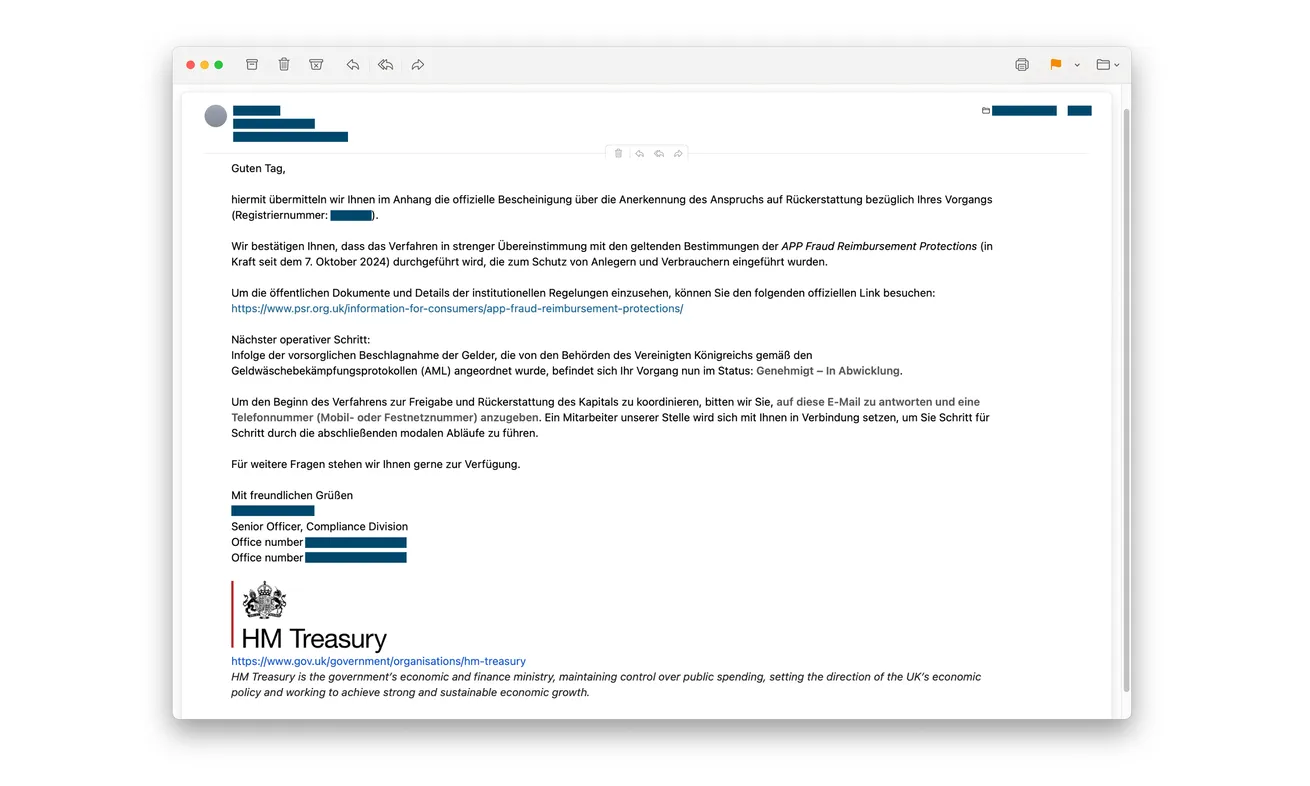
Swiss police document the fraudulent email and certificate. The genuine British department is being impersonated, not offering the repayment described by these senders.
The message claims that authorities seized the funds during investigations. It then asks the reader to reply with a telephone number for personal coordination.
A genuine government link sits beside the false claim
The email points to real British material about fraud reimbursement. That link supplies credibility without proving that its sender represents any authority.
A copied logo, regulatory language, and a certificate can make several parts of the message appear to confirm one another. They still come from one unverified source.
The original email shown here retains the police redactions. It illustrates the approach, not an authenticated claim file or evidence that a recipient’s money was seized.
The useful next step is outside the reply chain
Don’t provide a number or financial information through this recovery offer. Check any genuine loss through the bank, investigator, or reporting channel you reached independently.
- A certificate supplied by the sender doesn’t authenticate that sender.
- A real public website doesn’t endorse every email linking to it.
- An approved-looking status isn’t a payment in your bank account.
- Respond according to what you disclosed, not just the promised payout.
- Keep the original fraud and the new recovery approach as separate incidents.
Why This Message Can Reach Someone Who Knows About Scams
Losing money can leave a long trail of unanswered questions. You may have contacted a bank, filed a report, or waited for news from an investigator.
A recovery email fits into that unfinished story. It offers an explanation for the delay and suggests that the hard part has finally been handled.
The request also begins with something that sounds relatively harmless: a reply and a telephone number, rather than an immediate transfer.
That can lower your guard. You may think the certificate is enough to justify a conversation, even if you’d refuse an unfamiliar payment request.
But the conversation gives the sender another opportunity to build trust. A person on the phone can answer doubts and adapt the story to your circumstances.
Someone who recognizes your earlier loss has not necessarily obtained that knowledge from a legitimate investigation. Don’t let familiarity take the place of independent contact.
You don’t need to explain every detail of your original experience before deciding whether to answer. First establish who is entitled to discuss it.
If you already have a case officer or bank reference, use that established relationship. A surprise recovery offer shouldn’t replace the contact route that created your actual case.
How the HM Treasury Refund Email Scam Works
Step 1: The email announces a recovery instead of asking you to apply
The message treats entitlement as settled. It claims that funds have been secured and that the recipient’s reimbursement has been recognized.
This framing matters because it moves your attention away from whether the money exists. The apparent task becomes finishing the release.
Before accepting that premise, ask which independently confirmed case the announcement belongs to. A reference printed only in the new email cannot answer that question.
Compare it with records you already hold. Don’t send the sender your genuine case documents so they can make their version fit.
Step 2: An attached certificate gives the story an official shape
The attachment is presented as confirmation from HM Treasury. Formal wording can make it feel like a document issued after checks you weren’t personally involved in.
A signature, crest, or department name can be copied into a document. Their presence doesn’t identify who prepared it or authorize a repayment.
Read the distinction carefully: the police warning establishes a false recovery certificate. It does not establish that the attachment installs malware.
Don’t open additional files or enable features to prove whether the offer is real. The proper verification happens through an independently reached organization.
Step 3: Real reimbursement information lends the email borrowed authority
The sender references genuine British rules and links to a real official webpage. Following that link may therefore produce something legitimate and reassuring.
The page can explain real rules without saying anything about you. Your name, loss, and supposed approval still need checking through your actual case.
The same distinction applies to the real HM Treasury address in a signature. A criminal can include an accurate description of a department while impersonating it.
Don’t confuse a true background statement with a true personal claim. Check the claimed decision with the organization responsible for your actual incident.
Step 4: A reply and phone number move the process into personal contact
The email asks you to respond with a mobile or landline number. A supposed representative will then coordinate the release personally.
Replying reaches the impostor, not the genuine authority. The police warn that the contact seeks sensitive information or money.
The documented warning doesn’t establish one fixed later fee or identical phone script. Don’t assume every version will announce its harmful request immediately.
A caller could spend time confirming your story before asking for anything sensitive. You can end the interaction without waiting for a demand you recognize.
Step 5: The promise of getting money back becomes another point of exposure
Once you accept the recovery as genuine, later instructions may seem like ordinary administration. That is where the original hope can work against your judgment.
Keep each new request separate from the promise. Providing a password, authorizing a payment, or sending identity documents requires its own verified reason.
Don’t make a payment because someone labels it a release step. A reassuring description doesn’t change the recipient of the money.
If you already followed an instruction, document the action plainly. Financial providers can respond to an actual transfer more effectively than to a promised future reimbursement.
A Real GOV.UK Page Doesn’t Make the Email Official
HM Treasury’s genuine government directory gives you an independent starting point. It identifies the real department and its contact routes.
Open that destination separately if you need to check a claimed departmental communication. Don’t use a new address supplied by someone handling the alleged payout.
A copied contact address can also be genuine while the reply address is not. You should not need to solve the mismatch by sharing more information.
Nor should you send sensitive records to several government offices hoping one will recognize the story. Establish the responsible organization before supplying documents.
This is HM Treasury in the United Kingdom, not the U.S. Treasury. It also isn’t automatically an HMRC tax-rebate case because the word refund appears.
Use the department and jurisdiction actually involved. Similar names can send a worried reader toward the wrong reporting route.
If you are waiting for a genuine bank reimbursement, ask that bank about the existing claim. The email’s legal language doesn’t determine your eligibility or reporting deadline.
If You Already Have a Fraud Case Open
Tell your established contact that someone is claiming a recovery. Share the new message through the organization’s verified evidence-submission process.
Keep the original loss amount separate from any new payment. Mixing them can make it harder to show which money went where.
Record when the recovery email arrived and whether you replied, spoke to anyone, sent documents, or transferred funds.
If a caller quotes your case number, don’t treat that alone as authentication. Verify the contact by returning through the organization you already know.
Ask how genuine updates will reach you. Having a clear follow-up process makes later surprise instructions easier to challenge.
You may feel embarrassed about being approached again. That feeling shouldn’t delay telling the bank what happened, especially while a transfer or account change may still need attention.
If a relative is helping, agree who will keep the records and contact providers. Avoid having several people independently negotiate with the supposed recovery team.
Check where a proposed repayment would actually appear. A genuine provider can explain its own notification and payment process without asking you to follow the recovery sender’s instructions.
Keep records in the currency used by each transaction. The first fraud and the recovery approach may concern different amounts, accounts, or payment methods.
If you paid through a transfer service, find that service’s receipt yourself. Ask its genuine support what options remain rather than accepting the caller’s claim that reporting is pointless.
If a supposed representative asks you to withdraw an existing complaint, contact the organization holding that complaint independently. Don’t abandon your verified case to satisfy the new sender.
You can share a short description of the approach with genuine support first. Ask which files they need before sending bank statements or earlier investigative correspondence.
Store replies from the real organizations with their case references. That makes it easier to recognize which conversation you initiated and which promises arrived from an unknown source.
If the promised payout never arrives, don’t return to the impostor for an explanation. Continue the financial and reporting steps already underway through your verified contacts.
What to Do if You Have Fallen Victim to This Scam
-
End the recovery conversation. Stop replying to the email and don’t accept the certificate as permission to continue with its representative.
Keep the original message before blocking the sender. You don’t need to answer another call to learn how the rest of the scheme works.
-
If you supplied only a telephone number, watch for targeted follow-up. A number disclosure doesn’t automatically mean someone accessed your bank or installed software.
Don’t confirm further identifying details to an unexpected caller. Check claimed bank or police involvement through a contact you obtained elsewhere.
Let anyone helping with the original case know about the approach, so a later call doesn’t receive a fresh introduction as genuine support.
-
Contact the payment provider promptly after sending money. Explain the recovery pretext and identify the actual transfer or card transaction.
Give the date, amount, currency, recipient, and available transaction reference. Ask which protective and recovery procedures apply to that payment method.
Follow the provider’s deadlines. A criminal’s promise to return the money later is not a reason to postpone reporting.
-
Secure credentials if you disclosed them. Use the genuine account service to change an exposed password and address reused copies elsewhere.
Tell the provider about authentication codes, approvals, unfamiliar devices, or changed contact details. Those events deserve attention beyond deleting the email.
If you never entered credentials, say so. Accurate exposure details help support concentrate on the right problem.
-
List documents and personal details you sent. Include identity copies, addresses, financial records, and information about the earlier fraud.
Contact the relevant issuer or institution about protection appropriate to those records. Don’t assume every disclosed detail can be replaced like a password.
Keep full identity documents out of public posts about the incident. A helpful warning shouldn’t expose the same information to more strangers.
-
Report through the correct official channel. In England, Wales, or Northern Ireland, Report Fraud provides reporting routes for suspicious contacts and fraud incidents.
Its guidance directs cases in Scotland to Police Scotland. Elsewhere, use the relevant local authorities rather than assuming a British impersonation determines your reporting jurisdiction.
A report preserves information and may assist investigators. It is separate from asking your financial provider to secure an account or attempt payment recovery.
-
Refuse another paid rescue offer. Don’t send a correction payment, provide fresh banking codes, or authorize a stranger to handle your claim.
Continue with the contacts you independently verified. Someone knowing about this second approach still hasn’t proved that they can retrieve your funds.
Frequently Asked Questions
Is the HM Treasury refund email scam confirmed?
Yes. Police document the impersonation, false certificate, genuine-link credibility tactic, and request for a reply with a telephone number.
Why does the email contain a real official website?
It lends the surrounding story credibility. A public government or regulatory page doesn’t confirm the sender’s identity or your supposed payout.
Does the certificate prove investigators recovered my money?
No. Check a recovery through your existing verified case or financial provider. The sender’s own document cannot independently validate the sender’s claim.
Have I been hacked because I replied with my number?
A reply alone doesn’t establish account compromise. Expect possible follow-up and assess any additional information, codes, payments, or permissions you supplied.
Is this the same as an HMRC tax refund?
No. This warning concerns impersonation of HM Treasury and recovery of supposedly seized funds. Don’t substitute tax-rebate rules for the actual claim.
Should I pay a fee if the caller promises immediate release?
Don’t pay through this fraudulent offer. Contact your provider promptly if money already moved, and keep the payment evidence separate from the promised recovery.
The Bottom Line
Don’t reply to the HM Treasury recovery email or arrange its payout call. The certificate and official link dress up an impostor’s attempt to obtain information or money.
If you already responded, protect what you actually disclosed. Report any payment promptly and continue the original fraud case through independently established contacts.

Join the discussion
0 commentsShare your experience or ask a question about this article.
Discussion
Start the conversation
Have a question or something useful to share? Add the first comment.