

The apartment looks promising, and someone using an agency’s name sends over an application form. Finally, there seems to be a clear next step in the search.
Before uploading the documents you’ve gathered, pause at the handoff. The place where you found the listing and the person collecting your file aren’t necessarily the same.
Overview
The rental application form scam targets the applicant’s dossier
This scheme uses a property listing to obtain personal records, not necessarily an advance rent payment. A complete application becomes the item the impostor wants.
Swiss police describe false rental forms reached through genuine property platforms. The contact impersonates a real agency and directs interested applicants to an outside form.
The named platforms and genuine agencies are being abused. This warning isn’t a claim that Homegate, ImmoScout, Flatfox, or ordinary digital rental applications are fraudulent.
A professional form can collect far more than a viewing request
Identity copies, contact information, income records, and other documents can give the recipient a detailed picture of an applicant and their household.
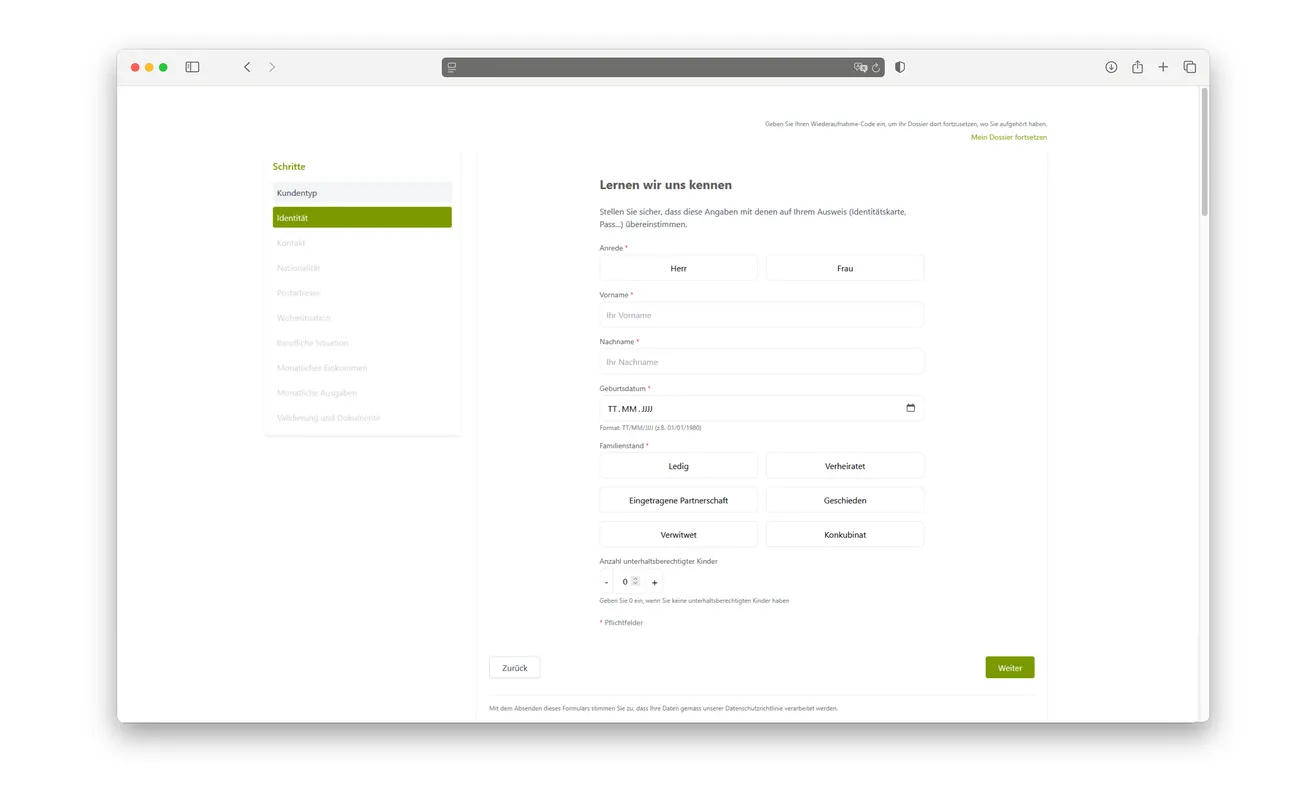
The original form pictured here shows the staged, administrative appearance. Its tidy layout doesn’t establish who operates it or whether they represent the apartment.
Financial loss need not happen at the upload screen. The concern includes later impersonation, unwanted contracts, and more convincing approaches using the disclosed information.
Verify the collector before supplying the file
Confirm the property contact through an independently obtained agency route. Ask whether that person and application destination belong to the real letting process.
- Don’t upload a full dossier because a messenger contact knows the listing.
- Check the agent’s identity and connection to the particular property.
- Ask why each sensitive document is needed and who receives it.
- Keep records of what was uploaded if you already responded.
- Contact issuers and providers about the information actually exposed.
Why the Form Can Feel Like Progress
Apartment hunting can mean repeated inquiries, short viewing windows, and competition from other applicants. A direct invitation to complete a file feels like something finally moving forward.
You may already have the requested records ready. Uploading them seems easier than challenging a process that could decide whether you get the apartment.
A multi-page form adds another reassuring detail. It looks like the sort of organized system a property manager would use to handle applications.
That appearance can hide the real question: who receives the file? A polished interface can organize stolen information just as effectively as legitimate paperwork.
The information is also familiar. A field asking about employment may seem unsurprising, so the next request for an official document can arrive without a fresh trust check.
Don’t measure safety only by whether a payment is requested. A person can obtain something valuable without charging an application fee.
If you are helping a partner or relative, make sure they understand where their documents would go. One applicant shouldn’t unknowingly upload another person’s complete records.
Taking time to verify the collector is not refusing to apply. It is establishing that your application reaches the organization you intended.
How the Rental Application Form Scam Works
Step 1: An appealing listing starts the conversation
The property appears on a real portal. That setting makes the initial inquiry feel ordinary and gives the later contact something concrete to discuss.
But a genuine platform doesn’t establish the identity of every person responding to an advertisement. Trust in the website shouldn’t automatically transfer to a new contact.
Keep the listing reference and original correspondence. They give the platform or actual agency something specific to investigate if the conversation becomes suspicious.
Don’t assume the advertisement must be genuine because you found similar photographs elsewhere. An image match can identify a property without identifying the person offering it.
Step 2: An apparent agent moves the exchange into messaging
The police describe contacts through services such as WhatsApp, using the name of a real property agency. The claimed affiliation helps the new conversation feel connected.
A business name and logo can be copied. Even a real employee’s name would not prove that the account messaging you belongs to that person.
Find the agency independently and ask about the advertised property. Verify the representative through that established route, rather than another number in the same chat.
Messaging alone isn’t proof of fraud. The problem is an unverified representative directing sensitive information to a destination whose connection you haven’t established.
Step 3: A false application site requests a complete file
The contact supplies a form that looks like part of the letting process. It guides the applicant through personal information and document submission.
Required fields and progress indicators can make disclosure feel procedural. You may concentrate on finishing the next page rather than reconsidering who owns the site.
Check the destination before entering sensitive details. A domain containing an agency name isn’t enough if the genuine agency cannot confirm it.
Don’t upload one document to see whether the form works. A successful upload tests the site’s collection function, not the collector’s legitimacy.
Step 4: Ordinary-looking questions build a detailed personal profile
The requests can cover identity, address, employment, income, and financial circumstances. Official records may reveal details the applicant didn’t notice while preparing the file.
A payslip can disclose more than an income figure. An employment contract or insurance record may identify other organizations and relationships that could be misused later.
Read the whole document before deciding to share it. A file’s title doesn’t describe every personal detail printed inside.
Where genuine support needs a record, ask about the minimum necessary information and its verified submission route. Don’t improvise alterations that make a required document unusable.
Step 5: The dossier can support later impersonation
The consequences may arrive after the apartment conversation ends. The information can help someone pose as the applicant or create a more persuasive follow-up approach.
Someone repeating an employer, address, or financial detail may simply be using the uploaded file. That knowledge doesn’t prove they represent the agency or your bank.
The warning describes risks, not proof that every applicant immediately suffered identity misuse. Your response should distinguish disclosure from activity you’ve actually observed.
If an unfamiliar order or contract appears, preserve it. Report that specific event rather than allowing the sender to explain it through another unverified chat.
Verify the Agent, the Property, and the Upload Destination
Start with the apartment you actually want. Then check who is offering it and where that person proposes to receive your documents.
Use the agency’s independently located website or an established office contact. Ask who handles the property and whether the supplied application link belongs to them.
Don’t settle for a new contact introduced by the same person you’re trying to verify. That keeps the entire check inside their control.
If you can arrange a genuine viewing, establish the representative’s connection to the property there too. Access to a building isn’t a substitute for verifying authority to let it.
Homegate’s safety guidance recommends verifying the lister and avoiding unknown or unverified websites for sensitive personal documents.
It also provides a direct listing-report function. Use the original listing to alert the platform, rather than reporting only to the messenger contact.
An agency should be able to explain its real application process without collecting your bank password. Don’t supply authentication secrets to establish that you are a serious applicant.
If the contact insists verification will cost you the apartment, let the genuine agency address that claim. Pressure doesn’t identify the person making it.
Ask for the property’s precise reference when speaking to the real office. A similar building name or another apartment managed by that agency isn’t enough.
If support confirms the form isn’t theirs, ask how to submit the genuine application, if one exists. Don’t let the impostor’s process become your only housing option.
Keep the verification outcome with the listing record. That helps another household member avoid uploading the same dossier after receiving a separate invitation.
Work Out Exactly What Your Upload Contained
Open your own saved copies, not the suspicious form. Make a private inventory of files and fields you submitted.
Separate an identity card from a payslip, an address from a password, and a bank account number from card details. They create different follow-up needs.
Include records belonging to co-applicants, guarantors, or household members. They need to know what was shared and may have their own providers to contact.
Don’t publish the dossier while asking whether it was a scam. Public copies can spread information beyond the original recipient.
If you uploaded identification, ask the issuing authority how to handle a compromised copy and whether replacement is appropriate. Requirements depend on the document and jurisdiction.
A replacement document does not erase the old image from another person’s files. Continue watching for misuse and following the issuer’s guidance.
If an uploaded record includes financial access information, contact the responsible institution promptly. Don’t treat every bank reference as a password, but don’t conceal it from support either.
For sensitive employment or insurance records, ask the relevant organization’s genuine support what protection or incident handling fits the disclosure.
The Application May End, but Follow-Up Can Continue
An impostor may abandon the rental conversation without ever asking for rent. That doesn’t make the information collection harmless or resolve what happened to the dossier.
Keep unexpected invoices, contracts, or account notices that appear afterward. Verify them with the real provider using contact details you obtain independently.
Don’t pay an unfamiliar invoice merely because it contains your correct address. Correct details are precisely what an uploaded application can supply.
At the same time, don’t ignore a genuine provider’s inquiry. Ask about the particular record and explain the suspected identity-document disclosure.
Maintain a simple timeline so you can connect a later event with the original incident without guessing. Include report references and verified replies.
If the original portal removes the listing, retain your own evidence. Removal can stop new contacts, but it doesn’t retrieve documents already uploaded.
What to Do if You Have Fallen Victim to This Scam
-
Stop adding to the dossier. Don’t upload missing pages, provide a clearer identity copy, or send a document again because the supposed agent reports an error.
Keep the conversation and listing reference. You don’t need to finish the application to justify asking for help.
-
Contact the genuine agency independently. Ask whether the representative and form belong to its application process for that property.
Explain what you already submitted without sending the entire dossier to an unverified replacement address. Use the real organization’s confirmed evidence channel.
-
Report the listing and contact to the platform. Supply the advertisement reference, chat details, and the false destination already recorded.
Ask how to preserve the relevant correspondence. Don’t keep interacting with the impostor while waiting for the platform to respond.
-
Involve anyone whose records were included. Tell co-applicants or guarantors which documents and identifying details were shared.
Avoid blame and keep the information private. Each person may need to speak to a different issuer, employer, or financial institution.
-
Ask the identity-document issuer about next steps. Explain that a copy was submitted to a false rental application page.
Follow its advice about reporting, replacement, and possible misuse. Don’t assume changing an account password invalidates a copied official document.
-
Protect financial or account information if exposed. Contact the relevant bank after sharing card details, banking credentials, codes, or an approval.
Change passwords actually entered through the genuine services, including reused copies. If no login was disclosed, don’t describe the incident as confirmed account takeover.
-
Record and report concrete identity misuse. Preserve unfamiliar orders, invoices, contracts, or account activity, including dates and references.
Contact the real provider about each disputed record. For suspected crime or harm, seek the appropriate local police reporting route.
Don’t send a new payment to a stranger promising to delete the dossier. That promise doesn’t establish control over every copy of the information.
Frequently Asked Questions
Is every online rental application a scam?
No. This warning concerns a false collector and destination. Verify the agency, property relationship, and upload process before submitting sensitive records.
Can a genuine property website contain a fraudulent listing?
Yes. The police describe this route through real platforms. The platform’s identity doesn’t independently authenticate the person responding to your inquiry.
Does a WhatsApp conversation prove the agent is fake?
No. It is the unverified identity and document destination that matter. Confirm the representative through the agency’s independently obtained contact.
What if I uploaded documents but paid nothing?
Information can still be exposed. Inventory the records, involve affected people, and ask the relevant issuers or institutions how to respond.
Should I automatically replace every document I sent?
Ask the responsible issuer about the specific document. Replacement rules vary, and a new document doesn’t erase a previously copied image.
Will deleting the application retrieve my files?
Don’t assume so. Stop further disclosure, preserve evidence, and act on the information already supplied rather than relying on the false site’s deletion promise.
The Bottom Line
Don’t send a rental dossier to an unverified form because the apartment looks convincing. This documented scam uses a real-agency identity to collect applicants’ records.
If you already uploaded documents, list what was included, report the listing, and contact the relevant issuers or providers. Continue your housing search through verified contacts.

Join the discussion
0 commentsShare your experience or ask a question about this article.
Discussion
Start the conversation
Have a question or something useful to share? Add the first comment.