


The room is close to campus, the dates line up, and the person posting says they need someone to take over before their internship starts.
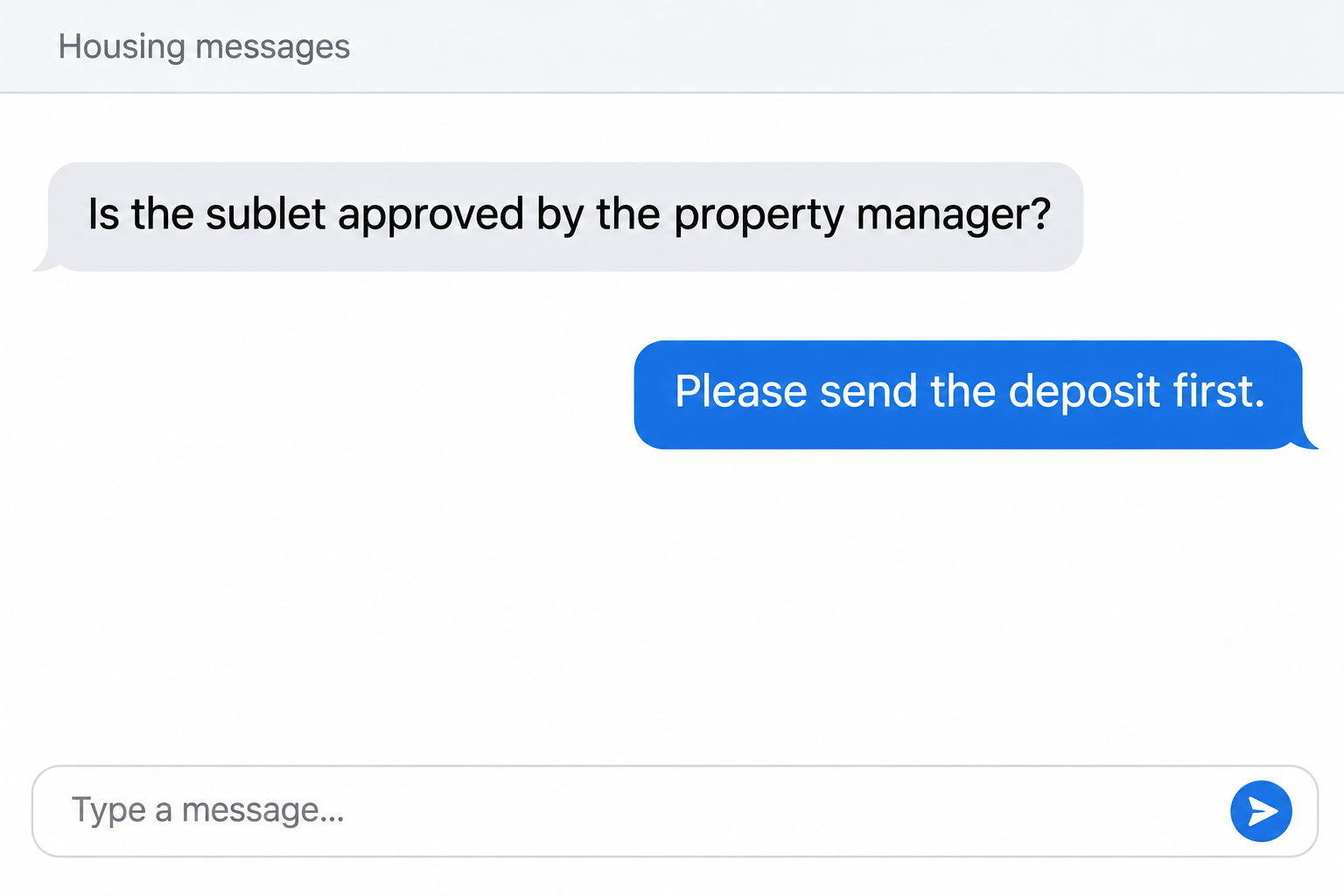
The deposit comes up before the property manager has confirmed anything. A fake student sublet can look convincing precisely because the apartment itself is real.
Overview
Verify the right to rent, not just the address
A fake student sublet doesn’t need an imaginary building. A listing can use a real address and genuine apartment photos while giving you the wrong person to pay.
Even seeing inside the apartment doesn’t settle who can rent it. Someone can live there, know the layout, or get access for a showing without permission to sublet.
The check you need joins three things: a particular apartment, a person with authority to offer it, and a verified agreement covering your dates.
Know whose name belongs on each document
- The owner or manager should be identifiable from a source that doesn’t depend on the listing or on the person asking for money.
- The person offering the room should match the leaseholder or an authorized representative, not merely someone with access to the building.
- The agreement should explain who receives each payment and who is responsible for returning the deposit when the arrangement ends.
You may hear the terms sublet, lease takeover, and roommate replacement used interchangeably. Ask the office which arrangement it actually allows before relying on the label.
A student paid before the viewing
In a 2024 report from University of Illinois police, a student responding to a Facebook sublease ad paid $550 for an application fee and deposit.
When the student asked to see the apartment, the supposed owner asked for more money. A later Zelle transfer to a third party was declined, and the student contacted police.
The useful detail is the order of events. A small application or reservation payment can be the beginning of the loss, not a harmless step toward a showing.
How the Fake Student Sublet Scam Works
Step 1: A believable opening looks like an ordinary campus listing
Someone says they’re graduating early, working elsewhere for the summer, or moving home. The reason explains why the short lease and neighborhood are such a good fit.
That story can be true in a legitimate listing. Compare the price and layout with independently listed units, but don’t reject or trust an offer on price alone.
The FTC’s analysis of rental scam reports describes copied listings and reports of fake ads in groups students use. A group name isn’t a guarantee that someone checked the advertiser.
Step 2: Proof that the apartment exists takes the place of permission
The person sends photos, a floor plan, a lease screenshot, or a video walk-through. All of those can make the offer look serious without establishing authority.
Some scam reports described by the FTC involved people who could arrange a self-guided tour by using an existing listing. Getting through a door is not verification.
Don’t use the tour to interrogate a stranger. Use it to confirm the space, then get the authority and payment answers through an independent channel.
Step 3: Money becomes the condition for moving forward
A supposed tenant asks for a fee or deposit upfront. They claim another student is about to take the room, so the deadline for holding it starts shrinking.
Some requests change after the first transfer. The payee becomes a relative, a colleague, or a person said to handle reservations for several apartments.
When a payee changes, stop and call the verified property office. A screenshot of instructions from the listing contact is not independent confirmation that the money belongs there.
Run These Checks Before You Send Anything
Identify the apartment, not just the complex
Ask for the full address, unit number, bedroom or room if applicable, and exact available dates. Compare those details with the building’s official listing or leasing information.
Search both the address and a distinctive listing photo.
A second post with different contact details gives you a conflict to resolve, not a reliable answer about which one is genuine.
If the address belongs to a house rather than a managed complex, use the county assessor’s site as a lead for the owner’s name.
The tax entry doesn’t verify the advertiser.
Look for the office through the building’s own site, a campus housing resource, or another independent listing. Don’t use the contact details from a PDF the advertiser sent.
Ask management for the right process
Tell the office which unit and dates you were offered. Ask whether the lease allows the proposed arrangement and whether an application or written approval is needed.
The office may not disclose who is on a lease. Ask the current tenant to authorize the check or bring both of you into the official application process.
Ask if this is a sublease under the current tenant, an assignment of the original lease, or a replacement that requires you to sign a new agreement.
Those choices can change who collects rent and remains responsible after you move. Have the office identify the process in writing rather than relying on a verbal label.
Georgia Tech’s housing resource likewise points renters to independently located management contact details. That is especially useful when one person claims to speak for the whole property.
Inspect the room through someone you can identify
If you can visit, meet at a verified leasing office or arrange a showing through it. If you’re moving from another city, ask a trusted person to attend for you.
A live tour is better than a prerecorded clip, but it still doesn’t prove permission. Confirm the office recognizes the arrangement before treating the tour as progress toward payment.
Record what you saw: whether the specific room exists, whether current occupants know about the move, and whether the dates on the written offer make sense.
Avoid private, unaccompanied meetings when the contact can’t be verified. A campus housing office may help you identify legitimate short-term options without exposing your schedule.
Check the Terms and Where Your Money Goes
Don’t pay before you read the agreement. Confirm the unit, dates, names, rent, utilities, and who holds and returns the deposit.
If roommates are involved, confirm which room you will occupy and who pays for shared costs. A promise in a private message may not appear in the agreement.
Some legitimate properties charge screening or application fees. Before paying one, ask the verified office which portal or recipient it uses and exactly what the fee covers.
Do not send a Social Security number, photo ID, pay stub, or bank statement through a group chat simply because the advertiser calls it screening.
If the office requires an application, go to the verified portal independently. Fill out only the required fields and keep the confirmation so you can identify what you submitted.
A tool asking for a paid credit check may start a subscription.
The FTC describes that variation, so ask whether the verified property actually uses the service before entering payment details.
Don’t let a low first payment distract from the total. Include any deposit, the first rent installment, screening charges, and refundable or nonrefundable fees when comparing options.
Before you pay, match the written amount and payee to the route management confirmed. If they cannot confirm the route, don’t use a transfer to solve the uncertainty.
Move-In Questions That Expose a Mismatch Early
Ask who handles keys and when, who can issue a receipt, and what happens if management rejects the paperwork after you have already paid.
Ask whether the current tenant has permission for your entire term. A vacant week in the calendar does not give someone authority to promise you the rest of the semester.
Confirm whether you need separate approval to occupy a bedroom within a shared unit. A private agreement between roommates may not satisfy the landlord’s lease terms.
Describe any deal-breakers in writing before you send money. If the actual agreement says something different about pets or parking, ask for a corrected document before signing.
Keep a copy of the final agreement and the first written payment instruction. Don’t treat an edited message as a new, authorized payment destination without checking it independently.
If you find the offer through a friend, ask whether they know the advertiser personally or only recognized the building. Those are different kinds of reassurance.
A Remote Search Still Needs a Real Verification Plan
Give yourself a fallback while the office checks
When classes start in a few days, a person asking for immediate payment has extra leverage. Protect your timeline by keeping one temporary option available while you verify the sublet.
Contact campus housing about temporary options before you cancel existing arrangements. If you are working with roommates, agree on the latest date you can wait for a verified answer.
A short delay is not the same as losing a semester of housing. Being able to walk away makes it easier to reject a pay-first demand.
Test what the agreement says about the end of the term
Ask management whom you contact if you move out early, what condition checks apply, and who will actually return the deposit. Compare the response with the written agreement.
If a tenant promises to refund you personally but the paperwork sends the deposit elsewhere, ask for a clear written explanation before you agree to anything.
Pay attention to who is accountable if the current tenant stops paying the main lease.
Ask the office how its approved process handles that problem rather than counting on verbal assurances.
Don’t put a guarantor’s information at risk
Fake screening forms can also ask for a parent’s identity, income, or bank details. Have your guarantor independently confirm the portal before sending anything.
Explain which parts of the application are confirmed and which are still in question. No family member should need to provide documents privately just to obtain the exact unit address.
If management confirms the arrangement but the advertised details don’t match, ask it to send the correct paperwork. Wait until every person signing can identify the same unit and terms.
What to Do if You Paid for a Fake Sublet
- Save the listing URL, screenshots showing the poster and the offer, any agreement you received, the conversation, and the actual payment receipt or confirmation number.
- Contact your bank or payment provider right away. Explain whether you authorized a payment under false pretenses or whether someone made a transaction without you, because those aren’t interchangeable.
- Ask whether the payment is pending or completed and whether a recall or dispute is available. Record the case number your provider gives you.
- Notify the verified building office and, if the ad appeared in a campus group, its administrators or the school’s housing office. Keep private IDs out of public posts.
- Report the listing on its platform and document the loss with local or campus police as appropriate. U.S. consumers can also report to ReportFraud.ftc.gov.
- If you submitted sensitive identity information, follow the recovery steps at IdentityTheft.gov. Explain which data was exposed rather than assuming a payment dispute will protect your identity.
- Tell your campus housing office if you are now unable to move in. Finding temporary housing and trying to recover the deposit are separate problems worth addressing in parallel.
Don’t send another payment to someone offering to recover the deposit. Use only the case channels you opened with your bank, platform, or the appropriate public agency.
Frequently Asked Questions
Does a university housing group verify every apartment?
Membership in a group isn’t proof of authority to rent. Ask the independently located property office to confirm the unit and the approval process before paying.
Is a video tour enough to prove the offer?
A live tour helps establish that the space exists and someone can access it. You still need confirmation that the person can offer you that room for those dates.
Does it matter if the payment goes to a roommate?
Yes, compare the actual payee with the agreement and the verified office’s instructions. Pause if the person asking for the money can’t explain the recipient independently.
What if management can’t give me the tenant’s name?
Ask the tenant to take part in an official inquiry or approval request. You don’t need management to disclose private records to confirm its own process.
Can I pay a refundable deposit before I see the agreement?
Calling it refundable won’t recover money from an impostor. Get the written terms and verify the recipient before paying a holding fee, application fee, or deposit.
Should I still report the listing if the bank stopped the transfer?
Yes, a declined transfer can leave the listing active. Preserve the original request and report it to the platform, group administrators, or campus police when appropriate.
The Bottom Line
To avoid a fake student sublet, verify the unit, the advertiser’s authority, and the payment recipient independently. A real address cannot answer the other two questions.
If you already paid, contact the provider before negotiating with the listing contact. Save the records and tell your campus housing office early if your move-in has fallen through.

Join the discussion
0 commentsShare your experience or ask a question about this article.
Community experiences
Did this happen to you?
Your experience could help someone recognize the same scam. Submit a private report for our team to review.
I experienced this tooReports are reviewed before publication. Sharing publicly is always your choice.
Discussion
Start the conversation
Have a question or something useful to share? Add the first comment.