


An email says a deed has been recorded against your house. You haven’t sold it, refinanced it, or signed anything that would explain the notice.
If this is home title theft, the document matters more than the email. An alert gives you a place to start without settling who owns the property.
Overview
A new filing is a lead, not a verdict
Home title theft can involve a forged or deceptively obtained deed affecting property you own. Some cases surface when an owner sees an unexpected document in public land records.
A record can also reflect a genuine refinance, a trust transfer, a correction, or another transaction you recognize once you see the document itself.
A recording notice isn’t a court ruling that a transfer is valid. But an unexplained deed, mortgage, or notice naming your property calls for prompt attention.
Know what each record can tell you
- The recorder or clerk can help you locate an actual filing and obtain a copy of it. Ask for the document, not just the index entry.
- The tax assessor’s records can help identify a parcel, but a tax mailing entry isn’t a substitute for the deed and other recorded instruments.
- An independent real estate attorney can advise you about ownership, urgent deadlines, and what process might challenge or undo an unauthorized filing.
Each of these checks answers a different question. A credit report can help identify loans opened in your name, but it doesn’t list new land records.
A Queens case shows why records matter
On November 5, 2026, New York’s attorney general announced a guilty plea in a Queens deed theft case.
The office described unauthorized transfers and a $552,500 mortgage obtained against the home.
The attorney general said the plea called for vacating the deeds and returning the property to the family. That described the agreed remedy, not confirmation that corrections had already appeared.
A related defendant’s case was still pending in that announcement. The practical point for homeowners is that an earlier deed and a later mortgage can both matter to the response.
What Home Title Theft Can Look Like on the Record
An actual owner can remain in the house
A deed is a document that can convey property rights. Title is the legal ownership interest itself, not a single piece of paper tucked away in your files.
Someone can remain in their home and learn that a recorded document claims an unauthorized change. Continuing to live there doesn’t tell you what has been filed.
The problem is not always a forged signature. The New York attorney general’s deed theft guidance also warns against signing away property rights through a deceptive offer.
One unfamiliar filing can be followed by others
A disputed transfer may be followed by a loan, another transfer, a resale attempt, or a dispute over possession. You need to know what the record currently shows.
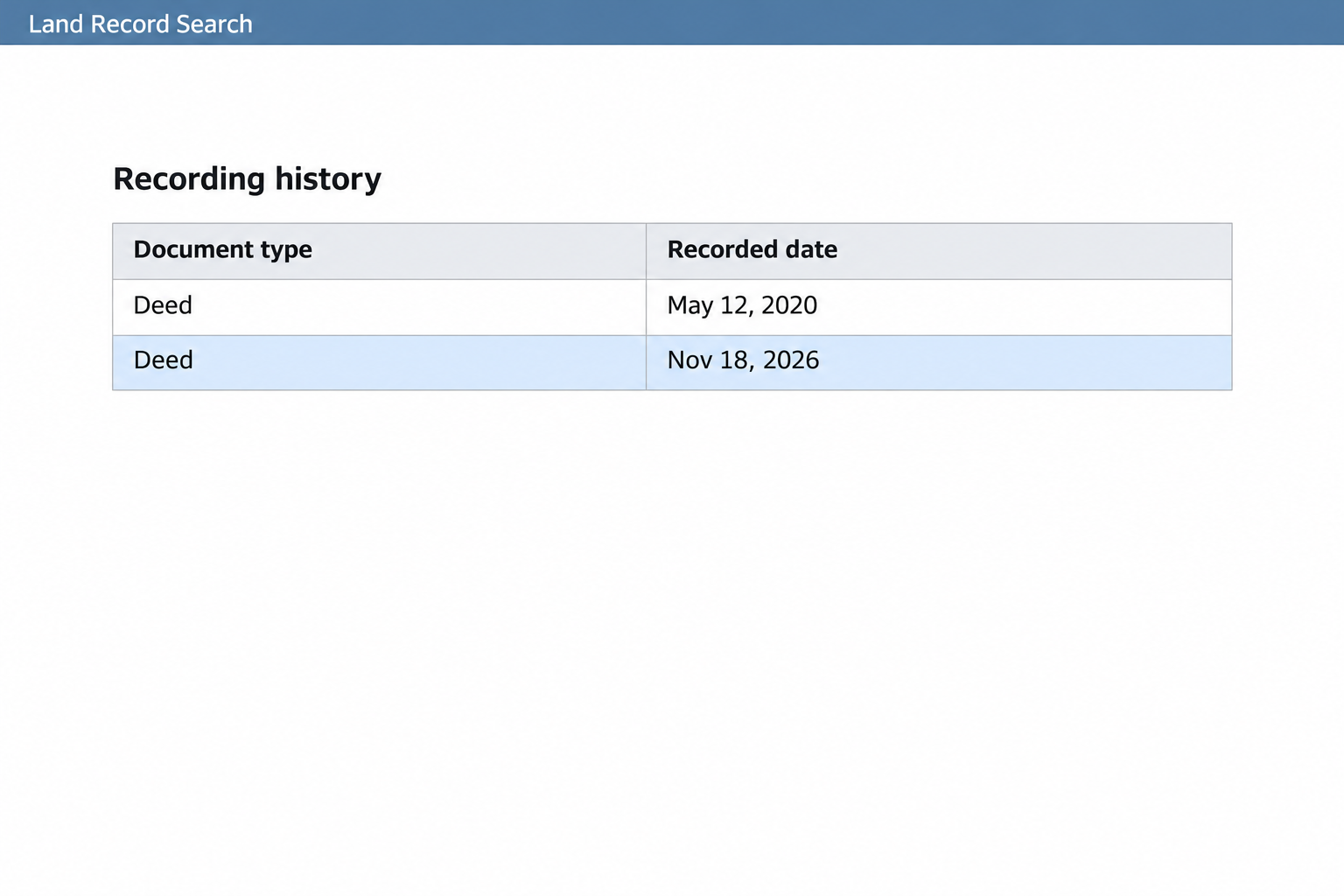
Search for filings after the one that triggered the alert. A list in chronological order can help a lawyer see whether someone else is now claiming an interest.
A recording office may accept a document that satisfies formal requirements without resolving whether the underlying transaction was legitimate.
The record’s existence should not be confused with proof of authorized ownership.
An unexpected name does not always mean theft
You might see a trustee, creditor, spouse, executor, or prior owner in results for your parcel. Compare the roles shown in the actual document before drawing a conclusion.
A mortgage release can appear years after the loan began. A trust or estate document can look unfamiliar if another person handled a legitimate part of the transaction.
If a filing shows a parcel or person you can’t place, ask the recording office for help interpreting the index fields. Don’t ask it to decide who owns the property.
How to Check the Actual Property Record
Start with the official office, not the alert link
Get your county recorder, register of deeds, or clerk’s site from an official government directory you open independently. Office names and search formats vary by location.
Look for a land records or recorded documents search. If the assessor and recorder use separate sites, use the assessor only to confirm basic parcel details.
Keep your prior deed, parcel identifier, and address handy. Where a portal uses name searches, try the name variation under which your genuine deed was recorded.
For a condominium, make sure you have the right unit identifier. A building address alone may retrieve documents about other units or an association rather than your property.
Compare each new entry with a known document
Find the last deed or mortgage you recognize and note its recording reference. Then open newer results against the same parcel and review their actual document type.
Compare the recorded date, owners or parties listed, and the property description with your paperwork. The date a document was signed and the date it was recorded may differ.
If an online image is unavailable, contact the official recording office and ask how to obtain a copy. Ask whether it offers a certified copy and what that costs.
Save a private copy of the filing and the search result. Note the day you learned about it, who alerted you, and any deadline shown on court or lender correspondence.
New York City example: choose the right registry
New York City’s deed theft office points Brooklyn, Bronx, Manhattan, and Queens owners to ACRIS. Staten Island owners are directed to the Richmond County Clerk.
For the first four boroughs, follow the city’s Property records link. Use the identifier or search options for your property to pull up the relevant recorded documents.
If you want ongoing alerts, return to the city’s deed theft page and choose the property and deed alerts service. Follow the official registration and confirmation prompts for your parcel.
The program’s explanation of recorded document notices describes which filings can trigger an alert. If the document is unfamiliar, contact the city through its 311 route for immediate referral.
This is a New York City example, not a national procedure. Elsewhere, use the office serving the property and ask whether results include images, recent filings, and related documents.
An Alert Can Help Without Locking the Title
A county notification can tell you that a document matching your property or name was recorded. It doesn’t generally stop the filing before it appears.
When an alert is based on a name, someone with the same name could be responsible for a match.
Confirm the property identifier and document rather than relying on the subject line.
Some places offer alerts by parcel or address; others are more limited. Ask what triggers each service, how you confirm enrollment, and how to update an old email address.
The FTC distinguishes paid title monitoring from title insurance.
A monitoring subscription is not a policy that pays covered losses, and marketing that calls it a lock doesn’t make it one.
Before paying for monitoring, ask what the local recorder already offers. If you have an owner’s title policy, ask that insurer about actual coverage terms instead of assuming protection.
For inherited, vacant, or distant property, agree on who checks the records and receives mail. Don’t rely on a family member to monitor a property without telling them.
A Closer Look at the Clues That Bring Owners to the Recorder
A bill stops coming, even though nothing changed on your side
Missing tax or mortgage mail often has an ordinary explanation, but you shouldn’t have to guess. Contact the relevant agency or servicer using details from a prior statement.
Ask whether the mailing address or contact on file changed and on what date. If you don’t recognize the change, save that information and check the land records separately.
Keep making verified payments according to your existing arrangements while you investigate. Get advice from your lender or attorney if the place or person asking for payment has changed.
An agent or prospective buyer asks about a sale you never arranged
Don’t sign anything to get the property taken down from a listing. Ask for the listing address or reference, then independently contact the claimed brokerage or platform.
Compare the property details with your own records. A listing for a nearby lot or a unit with a similar address can create confusion without involving your title.
If the listing really concerns your property, preserve it without posting your deed or ID publicly. Get a lawyer involved quickly if there is an offer, closing, or lender inquiry.
You see a loan, lien, or notice that doesn’t belong to you
A mortgage recorded against the property and an account appearing in your credit file are related clues, but one can exist without the other showing up immediately.
Call the servicer listed on your existing statement. If you find an unfamiliar lender, verify its contact details separately before sharing the reference privately.
Don’t assume that a promised foreclosure rescue will erase a notice. A person asking you to transfer ownership as part of a rescue deserves particular scrutiny from your own lawyer.
You’re checking for a relative or an estate
Get permission before collecting sensitive paperwork for a living owner. Ask the recording office which information is public and which requests need identification or documented authority.
An executor or authorized agent may need to show specific paperwork before getting help from a lender or insurer. Ask those institutions what they need, without sharing more than necessary.
If an estate transfer is pending, compare its expected dates with the actual recording history. Ask the estate lawyer about unfamiliar filings before contacting the person listed on the document.
If you monitor several properties for a family, store a separate parcel reference and record history for each one.
An alert for one parcel doesn’t tell you what happened to the others.
What to Do if You Find an Unauthorized Filing
- Call the official recording office and ask how to obtain the suspicious filing and related records. Note the recording reference and get the correct contact for suspected fraud.
- Contact an independent local real estate attorney promptly. Mention any sale, foreclosure, eviction, or court deadline immediately instead of waiting for the full file to arrive.
- Preserve your genuine deed, the new filing, any notices, and the timeline. Ask counsel before signing a correction, transferring the property, or negotiating with the person claiming it.
- Notify your mortgage servicer and owner’s title insurer if applicable. Use existing statements or policy paperwork rather than details supplied by someone involved in the suspicious transaction.
- Report suspected fraud to the appropriate local authorities. New York, for example, directs affected residents to law enforcement and provides independent housing legal assistance options.
- If you also find a loan or credit account opened in your name, deal with that exposure separately. IdentityTheft.gov can help organize a U.S. identity theft recovery plan.
- Check for related filings as your attorney advises, and keep case numbers and contacts together. A report to the recorder or police doesn’t automatically correct the property record.
Don’t ignore a legal notice because the underlying deed appears forged. A court date or response deadline may still need attention, and the available remedies depend on local law.
You can organize the documents yourself, but don’t assume that a form downloaded for another state will fix your case. Ask what remedy applies where the property is located.
Frequently Asked Questions
Does a recorded deed automatically take my home away?
An entry is not a final legal determination of ownership. An unfamiliar deed can still create a serious dispute, so obtain the filing and seek local advice promptly.
Can I rely on the owner name on a property tax website?
Use that entry as a starting point, not as your only evidence. Ask the recording office for the actual documents and compare the parcel or property description.
Will a credit freeze stop someone from recording a deed?
A credit freeze can help with certain attempts to open credit in your name. It isn’t a lock on land records and does not replace checking recent filings.
Is a property notification the same thing as title insurance?
No, a notification can tell you about a recorded change. A title insurance policy covers only risks defined by its terms, and you should ask your insurer about them.
What if a family member arranged a legitimate trust or estate filing?
Ask the attorney or authorized representative who handled it for the signed paperwork. Compare the official record with that file before either accepting or disputing the recording.
Can the recorder delete the document after I call?
Don’t count on a phone call to remove a filing. The office can explain its procedure, while local legal counsel can advise how to challenge the recorded claim.
The Bottom Line
Open the official land records and get the actual document behind the alert. Compare it with your prior records, then get local legal help promptly if you didn’t authorize it.
An alert can help you spot home title theft, not stop a filing. If the document is already on record, save it and get local help promptly.

Join the discussion
0 commentsShare your experience or ask a question about this article.
Community experiences
Did this happen to you?
Your experience could help someone recognize the same scam. Submit a private report for our team to review.
I experienced this tooReports are reviewed before publication. Sharing publicly is always your choice.
Discussion
Start the conversation
Have a question or something useful to share? Add the first comment.