


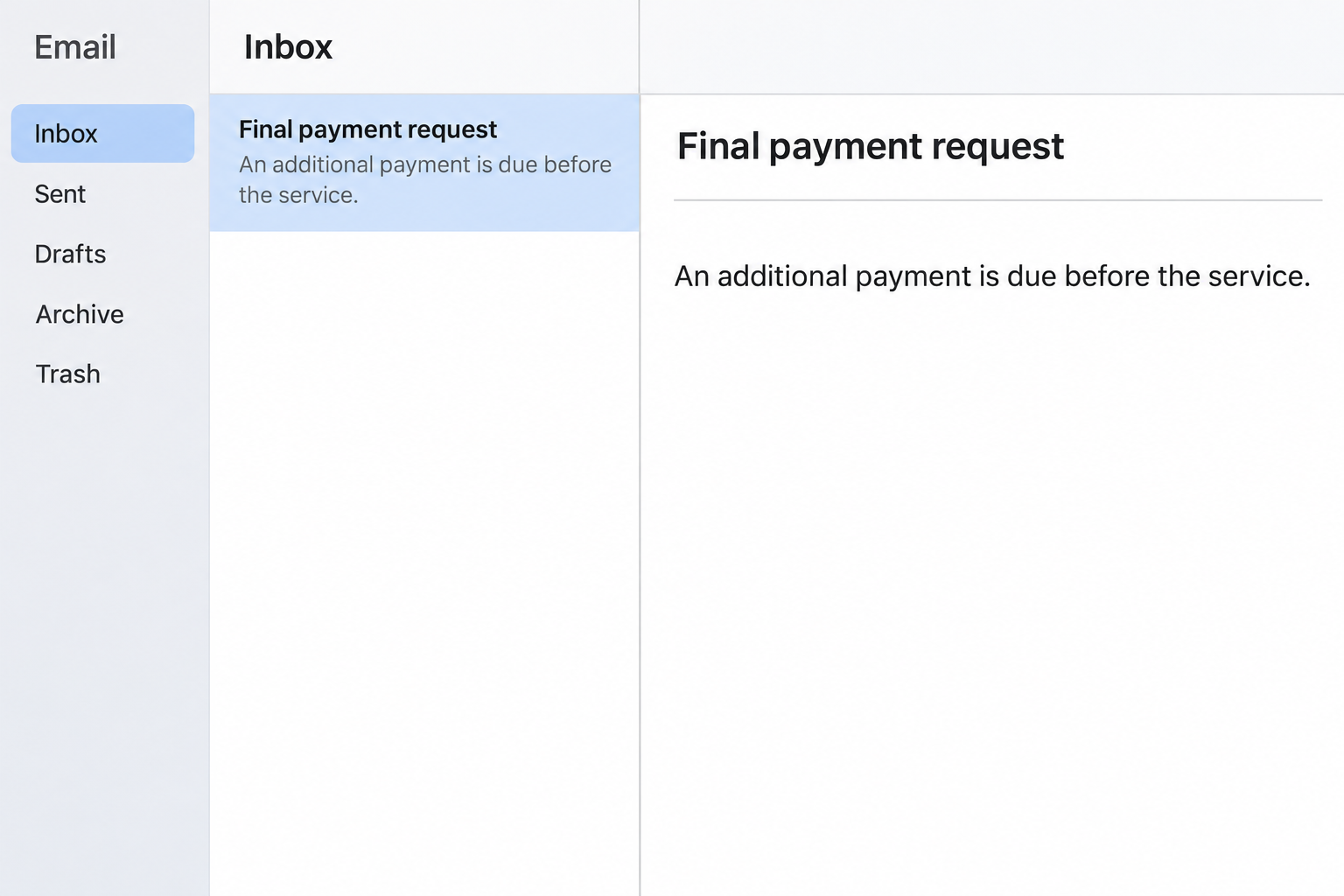
Someone calls the evening before the service and says a balance is missing. They know your loved one’s name and which funeral home your family chose.
They say the service cannot go ahead unless you pay right away. In a funeral home payment scam, the pressure arrives before you can check your paperwork.
Overview
A funeral home can be real while the caller is not
The funeral home payment scam uses an actual service announcement to make a false bill sound personal. The person demanding money is not necessarily connected to the funeral home.
The Georgia Attorney General’s consumer protection division says impostors search public obituaries for details, then claim a final payment is due or the funeral will be canceled.
That warning explains why the caller may recognize your family. It does not mean the business lost customer records or that its staff sent the request.
Put the invoice, the payee, and the service to separate tests
- Ask the person who arranged the service to locate the original itemized paperwork and the most recent genuine receipt.
- Call the funeral home at a number from the existing arrangements or independently confirmed official website. Don’t use the caller’s number or any link they sent.
- Ask the office whether the service is scheduled, what balance remains, and which recipient and payment route it recognizes.
A real unpaid balance, if there is one, doesn’t authorize payment to the person who called. Verify the destination even if the amount happens to sound right.
Give the family a single place to check
Agree on one person to handle invoices and another person who can help if that relative is unavailable. Share their contact details privately with anyone likely to be contacted.
Family members can respond to a surprise demand by forwarding it to the designated contact without paying it. That helps when one caller reaches several households with the same claim.
Complete that check before debating which number appeared on the screen. Caller ID and familiar names cannot tell you who will receive the money.
How the Funeral Home Payment Scam Works
Step 1: The caller uses details that the family recognizes
An obituary or service notice may identify the deceased, relatives, the date, and the provider. Those details can sound like information only staff would have.
Listen for what the caller is asking you to do, not merely what they already know. A correct service date cannot verify an invoice or a payment account.
You don’t need to find out how they got your number before stopping the call. A short verification with the funeral director gives you a better answer.
Step 2: A threatened cancellation makes it hard to pause
The FTC’s warning to funeral providers describes a caller threatening to cancel a funeral unless the family pays more immediately.
The demand may arrive when offices are closed. The caller can make a few minutes feel like the only chance to save arrangements your family has already made.
Tell a trusted relative you received a payment demand and call the number from your paperwork. If there’s an established after-hours route, use that existing contact.
Step 3: The caller offers a new way to pay
An impostor may want a transfer, a payment app, a prepaid card, or cryptocurrency. The common feature is pressure to send money before your family confirms the destination.
An account display name or emailed invoice doesn’t prove the recipient is the funeral home. Keep any instructions for your records, but don’t use them for payment.
A second caller may offer to confirm the first claim. A number or person supplied by the original caller remains part of the same unverified request.
How to Confirm a Funeral Bill Without Delaying the Service
Start with the agreement already in your hands
Find the contract, itemized statement, and proof of previous payments. Look for the name of the person who signed, the total, and the payment schedule the family agreed to.
If another relative arranged the service, ask that person to confirm the paperwork directly. Avoid circulating the entire contract if you only need the office number or current balance.
A real adjustment could involve an item the family approved later. Compare the amount and the specific item, rather than assuming every change is a fake bill.
For U.S. arrangements, the FTC’s funeral pricing guidance explains the itemized statement requirement. Use the actual statement to see what your family selected and the prices listed.
Contact the office on a known number
Use the number printed on a genuine agreement you already have. If your family can’t find it, look up the provider independently and check the location before calling.
Ask for your known director or the person who normally handles accounts. Describe the unexpected request without reading out a card number or forwarding personal documents to an unfamiliar address.
Ask the employee to answer three things: whether the service is still scheduled, whether there really is an unpaid amount, and where approved payments go.
If the office isn’t open, leave a message through the known contact and loop in the relative who signed the paperwork. Don’t pay a stranger to bridge the wait.
Ask the office to put a confirmed change in writing
If the funeral director says a balance remains, ask for an updated statement using the account or contact channel the family established. Compare it with the original selection.
Find out whether a provider is collecting a third-party charge or asking you to pay the other provider directly. Verify that second recipient independently if the names differ.
A legitimate payment should leave a record that shows which bill it applies to. Keep the updated statement and receipt together, especially when relatives are splitting the costs.
If the home says there’s no new bill, note who confirmed it and when. Let other relatives know through your existing family conversation rather than forwarding the scammer’s payment instructions.
What Your Family Can Set Up in Advance
Decide who handles money before another caller decides for you
Share the director’s name and the established number with the people likely to be contacted. Tell relatives that any unexpected payment should go to a designated family contact first.
The person managing invoices can keep a simple log with the date, documented amount, receipt status, and the family member who actually paid. It doesn’t need anyone’s card details.
If people are contributing, tell them how those contributions are handled privately. A relative should never need to ask a cold caller where to send the family’s money.
Ask the real office what it normally does with changes or after-hours questions. A shared understanding of the process helps relatives spot an unusual request without second-guessing one another.
Share service information without sharing everything else
An obituary can still help loved ones attend and remember the person who died. You don’t need to include financial details, your home address, or payment instructions for the service.
If family members need a private detail, pass it through a trusted contact. When posting a fundraiser, make it clear who organized it and how relatives can confirm it.
A claim that someone is collecting donations isn’t the same as an invoice for the service. Verify the fundraiser with the family member or organization that actually arranged it.
If the funeral home wants to warn other clients, give it the useful details privately. Don’t post a recording that contains a relative’s phone number or the deceased’s identifying records.
When the Request Doesn’t Fit the Way Your Family Is Paying
The bill is going to an estate, insurer, or prepaid plan
Ask the funeral director to identify which costs are covered and which remain the family’s responsibility. Don’t ask the caller to explain a contract they have not shown they represent.
Coverage or a prepaid arrangement may not settle every item. If a real balance remains, get the amounts from the director and check them against the actual plan documents.
When someone invokes an insurer or plan administrator, make that second contact independently. A caller cannot verify both businesses by transferring you to a person who says they handle claims.
A relative has no invoice but is asked to contribute
Receiving the request doesn’t make that relative the person who owes the bill. Ask them to check with the person named on the agreement before they send anything.
If family members split the costs, each should know which amounts are already paid and which are still due.
An impostor can use confusion about who paid what to repeat the demand.
Use a private group conversation to tell relatives that the office will confirm new charges in writing.
Do not ask them to forward bank details or payment codes to the group.
The bill changes after the family speaks to the office
Compare the new demand with the amount the verified director just gave you. If someone sends a different amount or account after that call, check again with the director.
Some offices use vendors to handle communications or payments.
The funeral director can confirm which vendor is expected and how to reach it even if you do not recognize its name.
If the office confirms a change, write down the name of the person who approved it and the reason. If they cannot confirm it, leave that demand unpaid.
If the caller threatened to cancel the funeral, ask the real provider to confirm the service is still scheduled in writing when possible.
Share that confirmation with the relatives who received the threat.
The North Carolina Board of Funeral Service warning makes a useful distinction: compare a caller’s threats with the payment arrangements made at the original meeting, then contact the provider independently.
What to Do if You Paid a Funeral Home Impostor
- Stop the conversation and tell the real funeral director immediately. Ask the office to confirm the status of the service separately from any effort to recover the money.
- Save the original demand, caller ID, voicemail or message, amount, payee information, and receipt. Keep full card numbers, personal documents, and family contact details out of public posts.
- If you paid by card, call the issuer from the card or bank app. Explain whether you paid after being misled or noticed an additional charge you didn’t authorize.
- For a bank transfer or payment app, contact the bank or service you used. Give it the transaction reference and ask about stopping, recalling, or disputing the payment.
- If you shared gift-card codes, contact the issuer and keep the cards and receipts. If you sent cryptocurrency, notify the platform you used and preserve the transaction identifier.
- If you gave financial information or identity documents, ask the relevant bank or public recovery service what to secure. A failed payment doesn’t reverse the disclosure of personal information.
- Report the attempt at ReportFraud.ftc.gov in the United States and consider notifying your state consumer protection office. Let the funeral home know what the impostor claimed.
- Do not pay someone who promises to retrieve the money for an upfront charge. Follow the case only through the provider and public authorities you reached independently.
The FTC’s payment recovery guidance separates what to do by payment method. No method guarantees recovery, so make the call promptly rather than waiting for a reply.
If no one paid or disclosed sensitive information, the immediate task is smaller. Confirm arrangements, preserve the demand, and warn any relatives the same person might contact.
Frequently Asked Questions
Does the real funeral home’s caller ID make the call safe?
No, caller ID can be misleading. Use the number you already had for the provider and ask the real office to confirm the amount and service independently.
Can a funeral home genuinely have an unpaid balance?
Yes, an agreed line item or later authorized change can leave a balance. Ask for the updated itemized amount and pay only through the channel the actual home confirms.
What if the caller knows my relative’s name and service time?
Those details may be in a public notice. A correct date is not evidence that the caller can change the arrangements or accept payment for the service.
Should I call back on the number that just called me?
No, use your existing paperwork or a separately verified official number. A callback to the same number doesn’t take you outside the original request.
Is a payment app always a sign of funeral fraud?
No single payment method proves it by itself. The danger is an urgent demand to send money to a recipient the real provider hasn’t confirmed.
What should I do if another family member paid?
Help them retain the receipt and contact the provider that processed the payment. Also call the funeral home separately so the family can confirm the service and real balance.
The Bottom Line
Do not pay someone who threatens to cancel the funeral. Break the funeral home payment scam by calling the actual provider to verify the service, balance, and recipient.
If a relative already paid, help them contact the payment provider now. Keeping the original demand and receipt gives the provider something concrete to act on.

Join the discussion
0 commentsShare your experience or ask a question about this article.
Community experiences
Did this happen to you?
Your experience could help someone recognize the same scam. Submit a private report for our team to review.
I experienced this tooReports are reviewed before publication. Sharing publicly is always your choice.
Discussion
Start the conversation
Have a question or something useful to share? Add the first comment.