

A rental appears on two household-name property sites, the price looks believable, and the supposed manager is ready to reserve a showing. Nothing on the first screen feels improvised.
The Fake Zillow Rental Listing story turns on a question the polished page cannot answer: does the person behind it have any right to rent the home at all?
Overview
A real home can be used in a completely fake rental offer
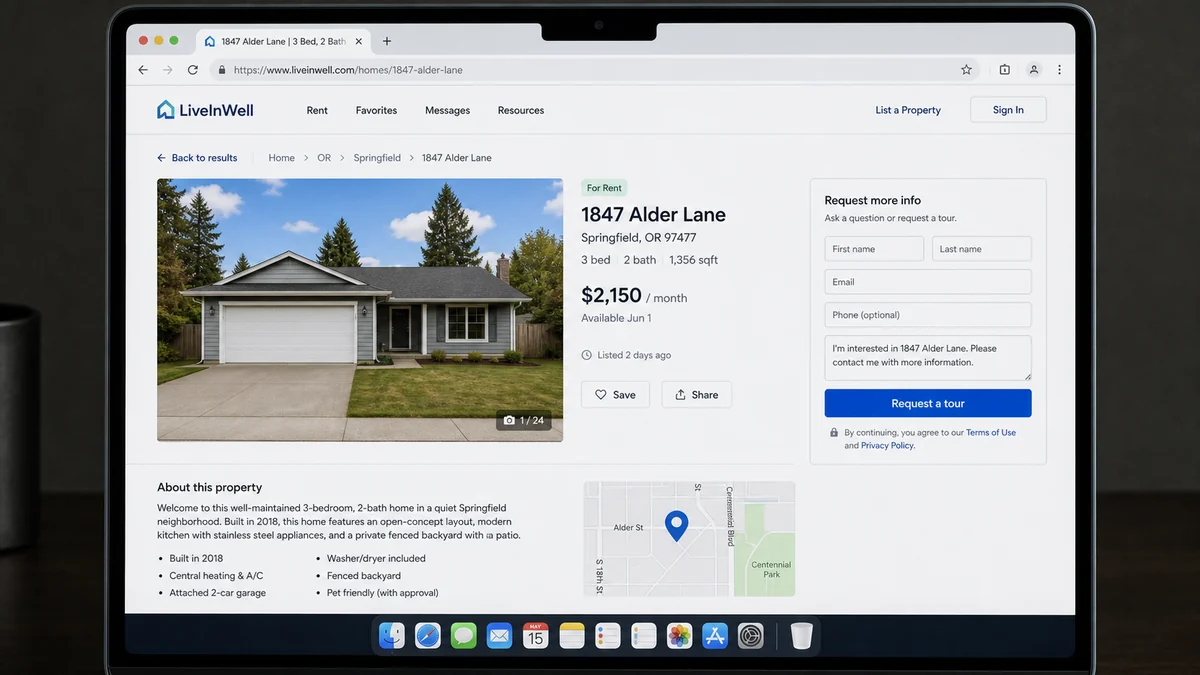
A recent homeowner report describes discovering that their own property had been advertised for rent on Zillow and Trulia without permission. The listing used a real address and reached genuine housing platforms, but the person answering inquiries was not the owner.
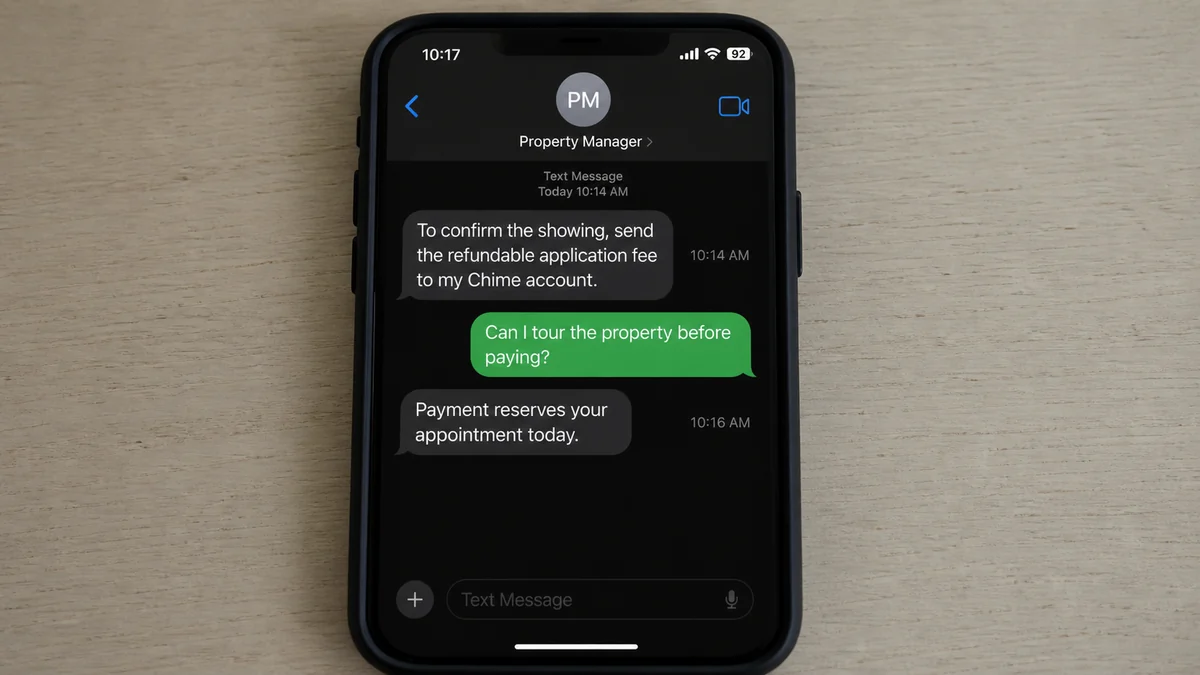
The homeowner submitted an inquiry while pretending to be interested in a tour. The supposed landlord then asked for a payment to a Chime account, calling it a refundable application fee required to confirm the appointment.
That detail reveals the core trick. The property is real, the photographs may be real, and the page may be hosted by a legitimate platform. The rental relationship is the fabricated part.
The fee moves the conversation away from the listing platform
A scammer does not need to collect a full deposit immediately. A smaller application or reservation fee is easier to justify and easier for a renter to risk when competition feels intense.
Payment to a personal finance-app handle also separates the transaction from the marketplace. The platform cannot inspect a checkout that never happens inside its own system, and the victim may have fewer useful records than with a formal property-management portal.
The word refundable lowers resistance. In practice, a promise from an unverified stranger is not a refund policy. Once the payment is sent, the account can stop replying or ask for a larger holding deposit.
The owner and the prospective tenant can both be harmed
The renter risks losing fees, deposits, identity documents, and time. The homeowner may receive unexpected visitors, angry victims, or people arriving with moving plans. Neither party needs to know the scammer.
Zillow has a specific process for reporting a fraudulent listing. Its guidance also tells property owners to report a listing posted at their address without permission across Zillow, Trulia, and HotPads.
Before sending any rental payment, check the whole relationship:
- Can you tour the exact property before paying?
- Does the person have keys and lawful access?
- Does the owner’s name match public property information?
- Is the rent far below comparable local homes?
- Are you being pushed to pay through a personal account?
- Will the person show government identification at the property?
- Is there a written lease naming a verifiable owner or manager?
- Does the management company have an independent website and office?
- Are photographs copied from an older sale or rental listing?
- Does the sender refuse a live video tour or in-person meeting?
One clue can have an innocent explanation. A real address combined with pre-tour payment pressure, an unverifiable landlord, and an off-platform transfer is a much stronger warning.
Why a Listing on Zillow or Trulia Can Still Be Fake
Large property sites reduce risk, but they cannot transform every person who submits or claims a listing into the legal owner. Rental fraud often exploits the difference between a genuine platform and genuine authority over a home.
A scammer can copy an address, description, room count, amenities, and photographs from an old sale page. If the same home was previously advertised, much of the material is already indexed and arranged like a rental listing.
Platform branding then supplies borrowed trust. A renter may think, “I found it on Zillow,” when the necessary conclusion is only, “I found a page on Zillow.” The platform did not meet the person, inspect their keys, or witness a lease signing.
Some fake listings are priced dramatically low. Others use a modest discount so the offer feels plausible while still generating urgent inquiries. The operator wants enough demand to collect multiple small payments before the page is removed.
Removing visible contact details can help the scammer funnel inquiries into whatever messaging route the platform provides. After the first reply, the conversation may move to text, email, WhatsApp, or a payment app where warnings and moderation are weaker.
Zillow’s guide to suspicious rental listings highlights requests for money before a property is viewed, remote landlords, wire payments, verification-code requests, and demands for personal or financial information.
Those signals matter even when every property fact is correct. An address and photograph prove that a house exists. They do not prove who controls it.
The safest verification happens at the property. A legitimate representative should be able to arrange lawful access, identify the owner or management company, explain the application process, and provide a lease that can be checked before money moves.
How the Fake Zillow Rental Listing Scam Works
Step 1: The scammer copies a real property
The operator selects a home with attractive public photographs and enough listing history to build a convincing page. The source might be a previous sale, an expired rental, a short-term rental profile, or a property manager’s old advertisement.
Using a real home prevents an easy image-search contradiction. Street-view details, nearby schools, and the floor plan can all be accurate while the offer remains fraudulent.
Step 2: A fresh rental listing creates borrowed credibility
The copied material is posted to a recognized property marketplace. The scammer may lower the rent, omit direct contact information, or claim that a private owner is handling inquiries remotely.
The listing page becomes social proof. Victims may share it with relatives, who also recognize the platform and overlook the unverified advertiser.
Step 3: Urgency turns interest into compliance
The supposed landlord says several applicants are waiting, a showing slot can be held only today, or the home will go to the first person who completes the application.
Housing pressure makes delay feel costly. The renter starts treating verification as a threat to the opportunity instead of protection from fraud.
Step 4: The scammer avoids a real tour
A remote job, family emergency, travel, renovation, current tenant, or locked key box becomes the excuse. The victim may receive a prerecorded walk-through, an old virtual tour, or instructions to view only the exterior.
None of those prove that the sender can deliver possession. A video can be copied just as easily as photographs.
Step 5: A small refundable fee tests the victim
The first request may be framed as an application fee, screening fee, tour reservation, background check, or refundable hold. A personal Chime handle or another payment-app account is supplied.
The amount is chosen to feel recoverable. Paying it also shows the scammer that the target will follow instructions and has access to a usable payment account.
Step 6: Identity and larger payments can follow
An application form may ask for a driver’s license, Social Security number, date of birth, employer, income records, and current address. The scammer can use this package for identity theft or a more convincing second request.
The next demand may be first month’s rent, a security deposit, pet fee, key delivery charge, or insurance payment. Each is justified by the victim’s earlier commitment.
Step 7: The account and listing disappear
After payment or a platform report, the contact stops responding. The listing is removed, but the same photographs can be posted again under a new profile, phone number, payment handle, or marketplace.
That is why reporting the address alone is not enough. Preserve the full contact path, payment account, messages, form links, and listing URL.
The Application Fee Is Not the Only Risk
Losing one fee is painful, but a rental application can expose a much richer identity record. A criminal who has a name, address history, employer, income, phone number, signature, and identity document can attempt other fraud long after the listing is gone.
Some forms ask applicants to create an account using a password. If the same password protects email or banking, the fake rental becomes a credential-stuffing opportunity.
A scammer may also ask for a one-time code, claiming it verifies that the applicant is human or authorizes a background check. That code may actually be for creating an account in the victim’s name or taking over an existing service.
Bank statements and pay stubs reveal balances, account fragments, employer details, and pay schedules. Do not send them until the property and recipient have been independently verified and sensitive information has been minimized.
The payment handle itself does not prove who is collecting money. An account may be opened with stolen identity information, controlled by a money mule, or abandoned as soon as complaints arrive.
Victims should watch for follow-up messages from supposed investigators or recovery specialists. A person who promises to retrieve the fee for another payment is likely attempting a second scam.
Homeowners face different exposure. Strangers may arrive at the address expecting a tour, confronting occupants, or believing they have paid to move in. A simple sign saying the property is not for rent can reduce confusion while platform reports are processed.
Owners should save the false page before it disappears. Screenshots, the URL, advertised rent, profile name, phone number, and payment instructions can help platforms and law enforcement connect repeated listings.
How to Verify a Rental Before Paying
Search the address in quotation marks and compare every current and historical result. A home advertised for sale by one agent and for rent by an unrelated private owner deserves closer inspection.
Check the county assessor or land-record system where available. Ownership records are not a complete safety test, but they give you a name to compare with the lease and the person collecting money.
If a management company is named, find its website independently. Call a number from that site or a government business record, not one copied from the listing.
Visit the property. Verify that the person can lawfully unlock it and that the occupants know it is being offered. Never trespass or rely on a stranger’s instructions to enter through an unlocked door.
Ask to see identification and written authority. An agent should be able to explain which owner or company employs them. A photo of an ID sent by text is weak evidence because identity documents are frequently stolen.
Read the lease before payment. Check the property address, owner or manager, rent, deposit, refund terms, maintenance contacts, and signature blocks. Search distinctive sentences if the document looks generic.
Use a payment method tied to a documented business process. A formal application portal should identify the company and purpose. A personal transfer requested under time pressure does not gain legitimacy because it is called refundable.
Ask the platform whether the advertiser is verified, but do not treat a profile badge as a replacement for a tour and ownership check.
Search the phone number, email, payment handle, and exact message wording. Reused scripts often appear in other warnings even when the property changes.
Finally, slow the transaction down. A legitimate landlord can explain the process in writing. A scammer is more likely to escalate urgency, avoid precise questions, and threaten to give the home to someone else.
What Homeowners Should Do When Their Address Is Copied
Use the listing site’s report function and choose the option for fraud or an unauthorized listing. Report every version separately if the page appears on Zillow, Trulia, HotPads, social networks, or local classifieds.
Claim or manage the property page through the platform’s official process when appropriate. Zillow’s listing-management guidance includes a route for owners whose address was posted without permission.
Place a visible notice at the property stating that it is not for rent and that visitors should not pay anyone. Avoid publishing personal phone numbers on the sign.
Tell neighbors, tenants, reception staff, or building management. They may spot strangers photographing the home, trying keys, or arriving for appointments.
Preserve evidence before removal. A platform confirmation that a page is gone is useful, but the original screenshots show the advertised price, contact method, and promises.
Report payment details to the relevant provider through its official fraud channel. A provider may not discuss another person’s account, but a documented report can still support its internal review.
File a report at ReportFraud.ftc.gov and use local law-enforcement channels if victims arrive, threats occur, or identity information tied to the address is being abused.
Keep checking the exact address for several weeks. Removal from one marketplace can cause the operator to repost elsewhere with slightly different rent or contact information.
Company, Address, and Fulfillment Checks
Verify who owns or manages the property
Compare the lease and advertiser with public ownership records and any established management company. If the collector cannot explain their relationship to the owner, do not pay.
A copied owner’s name is not enough. Verify through an independently found channel.
Confirm lawful access at the exact address
Tour the correct unit with a representative who can enter lawfully. Match unit numbers, keys, utilities, and lease details rather than viewing only the exterior.
Never follow instructions to break in, retrieve a hidden key, or disturb current occupants.
Inspect the application and payment route
A real application identifies the company, screening provider, fee, privacy terms, and refund rules. A personal payment handle with no invoice or legal entity offers little accountability.
Do not send identity documents through a generic form before verification.
Test whether possession can actually be delivered
The final product in a rental is lawful possession of the home. Ask when keys are delivered, who signs the lease, how deposits are held, and which office handles maintenance.
If every answer depends on paying first, the advertiser has not demonstrated fulfillment.
What to Do if You Have Fallen Victim to This Scam
- Stop all payments. Do not send another fee to unlock a refund, background check, key delivery, or lease.
- Contact the payment provider. Use the official app or website, report the transfer as fraud, and ask whether the receiving account can be reviewed or funds recalled.
- Call your bank. Explain how the payment was authorized and ask about transfer disputes, account monitoring, and replacement credentials.
- Preserve the listing. Save screenshots, URLs, messages, profile names, phone numbers, emails, payment handles, forms, and receipts.
- Report every marketplace copy. Use Zillow’s fraudulent-listing route and the equivalent reporting tool on Trulia, HotPads, social networks, and classifieds.
- Protect identity information. If you sent a Social Security number or identity document, visit IdentityTheft.gov and consider a credit freeze.
- Change reused passwords. Start with email and financial services, then enable strong multifactor authentication.
- Warn the real owner or occupants. Use a safe, respectful contact method so they can prepare for other victims arriving.
- File official reports. Report to the FTC and local police when money, identity documents, threats, or attempted entry are involved.
- Run Malwarebytes. Scan the device if the listing or application required a download, browser extension, or unknown document viewer.
- Use AdGuard as a supporting layer. It can reduce exposure to malicious adverts and tracking, but it cannot verify a landlord or recover a transfer.
- Ignore recovery offers. Anyone promising guaranteed retrieval for an advance payment may be targeting victims again.
Frequently Asked Questions
Can a rental listing on Zillow be fake?
Yes. A page can use a real address and photographs while the advertiser has no authority to rent the property. Verify the person, ownership, access, lease, and payment route separately.
Is a refundable application fee before a tour normal?
Policies vary, but paying an unverified stranger before seeing the property is high risk. Zillow specifically identifies requests for money before viewing as a suspicious pattern.
Does paying through Chime prove the landlord is real?
No. Chime is a legitimate financial service, but a payment handle does not validate a rental, identity, or right to collect money.
How can I tell whether the person owns the home?
Compare public property records, the lease, identification, and independently verified management contacts. Then tour the property with someone who can lawfully access it.
What should a homeowner do about a fake listing?
Save evidence, report each page as fraudulent, alert occupants and neighbors, place a notice at the property, and keep monitoring the address for reposts.
Can a fake rental application lead to identity theft?
Yes. Applications may collect identity numbers, documents, employment data, bank records, and signatures. Treat exposed information as seriously as the lost fee.
Bottom Line
A real house on a trusted property site is not proof of a real landlord. In this pattern, the criminal borrows the address, photographs, and platform reputation, then turns housing urgency into an off-platform “refundable” fee.
Do not pay to reserve a showing for a person whose authority you cannot verify. Tour the exact property, confirm ownership or management, read the lease, and follow a documented business payment process. If those checks are blocked, the safest response is to leave the listing and report it.








