

If you’ve come across online ads claiming that a single cream made from Manuka honey can eliminate eczema, soothe chronic skin irritation, and restore healthy skin within days — you’ve likely encountered AEXZR™ Manuka Honey Eczema Treatment Cream. Promoted with bold testimonials and medical-sounding endorsements, this product seems like a dream come true for anyone suffering from eczema.
But is it truly a skin-saving miracle or just another internet scam?
In this article, we break down the truth behind AEXZR™, expose the red flags, explain how the scam works, and provide actionable steps if you’ve already been misled into purchasing it.
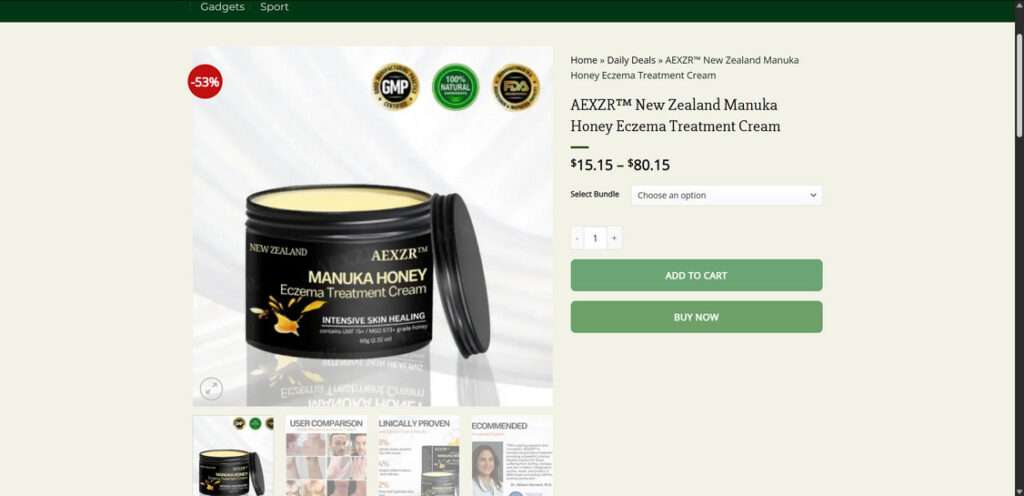
Scam Overview: What Is AEXZR™ and Why It’s Raising Alarms
At first glance, AEXZR™ presents itself as a premium eczema relief product, featuring UMF 15+ / MGO 573+ certified Manuka honey, botanicals like calendula and licorice root, and dermatologist-recommended claims. It’s marketed as being steroid-free, safe for sensitive skin, and “clinically proven.”
However, under the surface, the product’s promotion exhibits all the classic warning signs of a modern skincare scam. From misleading medical claims to questionable store networks and fake reviews, the AEXZR™ eczema cream is not what it appears to be.
1. Unverifiable Scientific Claims
The product page boasts bold phrases like:
- “Clinically proven antibacterial & skin-repairing properties”
- “UMF-certified Manuka honey for accelerated skin regeneration”
- “Recommended by dermatologists”
However, there are no links to studies, no cited research, and no actual dermatologist credentials provided. Legitimate health products reference peer-reviewed sources and have transparent labeling.
2. Fake Testimonials & AI-Generated Reviews
Many testimonials, such as those from “Jessica Quinn” or “George Anderson,” are suspiciously generic. These names appear across unrelated product sites, often attached to stock images. This is a common tactic in AI-generated fake review farms.
Real user feedback from platforms like Reddit, Trustpilot, and consumer forums paints a different picture: little to no effect, products not arriving, and unresponsive customer service.
3. No Verified Manufacturer or Contact Information
AEXZR™ is sold via pop-up websites that often disappear within months. There’s no physical address, no phone support, and no business entity listed. In short: no accountability.
4. Aggressive Marketing on Social Media
The product is primarily advertised on Facebook, Instagram, and TikTok, targeting people who’ve searched for “eczema treatment,” “skin rash remedy,” or “natural skincare.” These platforms allow ads with misleading before-and-after images and exaggerated medical promises.
5. Sold Across a Web of Suspicious Stores
Just like other skincare scams, AEXZR™ is pushed through a rotating group of brand names and stores, including:
- Oveallgo
- LOVILDS
- Fivifivgo
These names are often associated with other scammy health and beauty products, making it even harder for customers to trace the source or request a refund.
How the AEXZR™ Scam Works
To understand why so many people are falling for this scam, it helps to break down how it operates from first click to final disappointment.
Step 1: The Viral Hook
It starts with a catchy social media post: “This honey-based cream cured my eczema in 3 days!” The post includes a photo carousel of dramatic skin transformations, emotional testimonials, and links to a product page.
The ads typically target:
- Parents of children with eczema
- Adults struggling with lifelong skin irritation
- People searching for steroid-free alternatives
Step 2: The Fake Health Storefront
Once you click the ad, you’re taken to a sleek-looking product page that mimics a real health store. It features:
- Claims of scientific legitimacy
- “Doctor recommended” badges
- Emotional, “life-changing” success stories
- UMF certification logos (with no verification source)
Step 3: Emotional Manipulation
The testimonials tell stories of chronic eczema that “nothing else cured” — until AEXZR™. These stories are often fabricated, filled with medical jargon to build false trust.
They include phrases like:
- “My doctor couldn’t believe how well it worked”
- “Better than prescription creams”
- “Worked for my baby in under 48 hours”
Step 4: Urgency and Limited-Time Discounts
The product page pressures users with:
- “Only 5 jars left!”
- “75% off — today only”
- Countdown timers and exit popups
These tactics are designed to rush decisions and discourage deeper research.
Step 5: The Checkout Trap
Customers believe they’re buying a one-time product. But hidden in the fine print:
- They may be enrolled in subscription programs
- Refund policies are vague or missing
- No real customer service exists if there’s an issue
The payment processor is usually a white-label third-party, meaning the transaction is handled by a nontransparent vendor.
Step 6: Poor Delivery or No Product at All
What happens next:
- The cream arrives weeks later with no safety labeling
- The product looks different than advertised
- Or worse, nothing shows up at all
Even when customers reach out for refunds, responses are automated or non-existent.
What To Do If You’ve Fallen for the AEXZR™ Scam
If you’ve already purchased AEXZR™ Manuka Honey Cream and feel you’ve been misled, take the following actions immediately:
1. Contact Your Bank or Card Provider
- Request a chargeback citing deceptive practices
- Ask to block recurring transactions from the merchant
- Save your receipts and order confirmation emails
2. Document Everything
- Screenshot the product page, reviews, and checkout terms
- Take photos of the product (if it arrives)
- Keep a record of any communication attempts
3. Report the Scam
Report the incident to consumer protection agencies:
- FTC: reportfraud.ftc.gov
- BBB Scam Tracker: bbb.org/scamtracker
- IC3 (Internet Crime Complaint Center): ic3.gov
4. Warn Other Consumers
Post your experience on:
- Reddit (e.g., r/skincareaddiction or r/scams)
- TrustPilot and SiteJabber
- Facebook groups or comment sections where ads appear
Public awareness helps shut down scam campaigns.
5. Monitor Your Financial Accounts
- Set alerts for unfamiliar charges
- Watch for other sketchy wellness products billed to your card
- Change passwords used during checkout if applicable
6. Speak with a Medical Professional
If you used the product and experienced a reaction:
- Stop use immediately
- Show the packaging to your doctor
- Report adverse events to the FDA’s MedWatch portal
Frequently Asked Questions (FAQ)
Is AEXZR™ Manuka Honey Cream FDA approved?
No. AEXZR™ is not approved by the FDA. While it may claim to be “dermatologist recommended,” there is no formal approval or regulation from any government health agency.
Does AEXZR™ really cure eczema?
There is no scientific evidence that AEXZR™ cures eczema. While Manuka honey has some known skin-soothing properties, the exaggerated claims made by this product are not backed by clinical trials or peer-reviewed research.
Are the reviews for AEXZR™ real?
Many reviews found on the AEXZR™ product page appear to be fake or duplicated from other scam websites. Testimonials often use stock images or AI-generated names, and lack any verifiable purchase history.
Why is AEXZR™ sold under different brand names?
This is a common tactic in ecommerce scams. Sellers rebrand the same product under names like LOVILDS, Oveallgo, and Fivifivgo to avoid negative publicity and continue selling to new audiences.
What happens after I place an order?
Some users report receiving a poorly labeled product weeks later. Others never receive the product at all. Refunds are difficult or impossible to obtain, and customer support is often unresponsive.
Can I use AEXZR™ on my face or for children?
There is no credible safety data to support using this product on sensitive areas like the face or on children. Always consult a licensed medical professional before applying unverified products to your skin.
Is AEXZR™ part of a subscription scam?
Some customers have reported unauthorized recurring charges after what appeared to be a one-time purchase. Always read the fine print before entering payment details and monitor your statements.
How do I get a refund for AEXZR™?
If you paid by credit card, your best option is to contact your bank or card provider and request a chargeback due to deceptive business practices. Do not rely on the vendor’s refund policy.
How can I report the AEXZR™ scam?
You can file a complaint with the Federal Trade Commission at reportfraud.ftc.gov, the Better Business Bureau at bbb.org/scamtracker, or the Internet Crime Complaint Center at ic3.gov.
Are there safer alternatives for eczema treatment?
Yes. Speak with a board-certified dermatologist to discuss clinically proven, FDA-regulated treatments tailored to your specific skin needs. Avoid products that promise overnight cures without medical backing.
The Bottom Line
AEXZR™ Manuka Honey Eczema Treatment Cream is marketed as a natural miracle cure for eczema — but behind the slick ads and soothing branding is a classic ecommerce scam.
Let’s be clear:
- There is no clinical evidence that AEXZR™ works as advertised
- Its testimonials and medical claims are unverified or fabricated
- Customers report poor results, fake reviews, and missing deliveries
- It’s sold through shady stores and often tied to other fraudulent products
If you’re looking for real eczema relief, talk to a licensed dermatologist. Legitimate treatments are grounded in science, tested for safety, and come from reputable companies — not pop-up websites pushing overnight skin miracles.

Join the discussion
0 commentsShare your experience or ask a question about this article.
Discussion
Start the conversation
Have a question or something useful to share? Add the first comment.