

You’ve probably seen the viral ads: a miracle gel that promises to erase years of arthritis pain and inflammation in just days — no pills, no prescriptions, just natural ingredients and immediate relief. The product? TurmaCure™ Turmeric & Emu Oil Arthritis Soothing Pain Relief Massage Gel.
From Facebook and Instagram to sketchy-looking “official” stores, this gel is everywhere, claiming to combine turmeric and emu oil in a magical formula for pain-free living. But behind the glowing reviews, emotional success stories, and “clinically proven” badges, there’s another story — one riddled with deception, fake testimonials, and false advertising.
Before you rub this miracle balm on your aching joints, read this in-depth investigation into the TurmaCure scam.
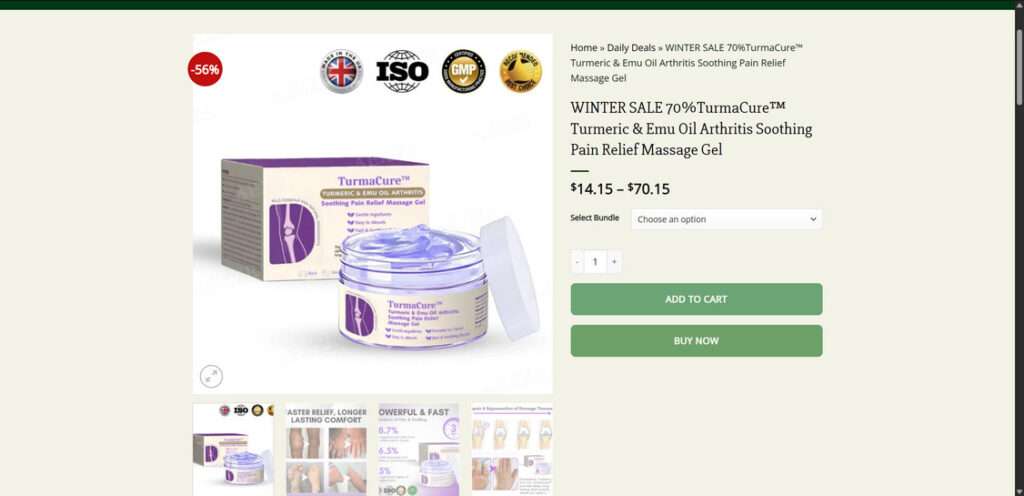
Scam Overview: Is TurmaCure Really What It Claims to Be?
TurmaCure is sold as a “natural cure” for arthritis, promising to reduce inflammation, eliminate joint pain, and even restore mobility. It claims to be backed by clinical studies, trusted by experts, and powered by seven proven ingredients like turmeric, emu oil, MSM, and glucosamine.
But here’s the catch: none of these claims are backed by verifiable science, medical endorsements, or third-party reviews. Worse, TurmaCure is promoted using the same deceptive tactics seen in dozens of previous online wellness scams.
Red Flags That Point to a Scam
- Fake Testimonials: Reviews feature names like Jessica Quinn or George Anderson, with emotional backstories that repeat word-for-word across multiple websites.
- No Scientific Sources: The website uses vague phrases like “clinically proven” without linking to real research or studies.
- Recycled Product Pages: Identical sales pages exist under different brand names and domains — a hallmark of rotating scam networks.
- No Transparent Company Info: There’s no real address, no known business behind the product, and customer service is either fake or unreachable.
- High-Pressure Sales Tactics: Timers, “only 3 left” stock warnings, and urgent discounts push people to buy fast without thinking.
While turmeric and emu oil do have anti-inflammatory properties, no gel can permanently cure arthritis or regrow joint cartilage, especially not within 3 days — a common claim in TurmaCure’s ads.
Different Names, Same Scam
TurmaCure is often sold under different brand names or through unverified sites. Some examples include:
- Oveallgo
- LOVILDS
- Fivifivgo
These clone stores pop up, run ads, make sales, then disappear — only to rebrand and repeat the process.
How the TurmaCure Scam Works
The scam follows a predictable formula designed to manipulate emotions and maximize conversions.
Step 1: Social Media Targeting
It starts with an ad on Facebook or Instagram. It’s usually a video showing someone applying the gel to a swollen joint, followed by a miraculous transformation. Captions might read:
- “This ancient gel healed my arthritis in 72 hours”
- “Doctors are stunned by this $29 miracle”
- “Big Pharma is trying to ban this arthritis breakthrough”
These emotionally charged headlines are designed to go viral and build instant curiosity.
Step 2: The Fake Storefront
Clicking the ad brings you to a high-converting product page. You’ll see:
- Stock images labeled as “verified buyers”
- Fabricated reviews and testimonials
- A “scientific” explanation of the product’s ingredients
- Claims of FDA registration and clinical approval (without proof)
The page also features a timer, fake inventory counters, and “limited time offers” to force fast decisions.
Step 3: Emotional Success Stories
Testimonials often feature fake names and dramatic stories: someone with lifelong joint pain finds TurmaCure and is pain-free within 3 days. These stories are written to build trust and bypass logic — but they’re not from real customers.
Step 4: Misleading Medical Claims
TurmaCure supposedly contains:
- Turmeric
- Emu Oil
- Glucosamine
- Chondroitin
- Arnica
- MSM
- Vitamin K2
While these ingredients are used in some health products, there’s no proof that applying them topically in small amounts provides the miraculous results TurmaCure promises.
The gel is not FDA approved. There are no published medical studies backing the formula. Yet the website implies medical legitimacy using phrases like “clinically proven” and “trusted by doctors.”
Step 5: The Checkout Trap
Once convinced, customers are funneled into a checkout system that:
- Often includes hidden recurring charges
- Lacks a clear return or refund policy
- May never send the actual product
- Offers no legitimate customer service or support
Many buyers report being charged more than expected or enrolled in monthly subscriptions without their knowledge.
Step 6: Ghosted Customer Support
Trying to cancel or get a refund? Good luck.
- Emails bounce
- Phone numbers go to voicemail or are fake
- Live chat doesn’t respond
- Return addresses are often invalid
Once they’ve got your money, they disappear — and you’re left with an overpriced gel (or nothing at all).
What To Do If You’ve Been Scammed by TurmaCure
1. Cancel the Payment Immediately
Contact your credit card provider or bank:
- Dispute the charge as fraudulent or deceptive
- Ask for a chargeback
- Block any future transactions from the merchant
2. Save All Communication and Screenshots
Document everything:
- Confirmation emails
- Product pages
- Advertisements
- Any tracking numbers (even if they don’t work)
This will help during chargebacks or when reporting the scam.
3. Report the Scam to Authorities
Help others avoid this trap by reporting the scam to:
- FTC: reportfraud.ftc.gov
- Better Business Bureau: bbb.org/scamtracker
- Internet Crime Complaint Center (IC3): www.ic3.gov
- Econsumer.gov for international victims
4. Monitor Your Bank and Identity
These scammers may misuse your data:
- Watch for unfamiliar charges
- Monitor your credit report
- Set fraud alerts through your bank or credit bureau
- Use tools like Credit Karma or Experian for free alerts
5. Leave a Public Review
Warn others by posting on:
- Reddit (r/scams or r/personalfinance)
- Trustpilot
- SiteJabber
- Facebook comments and scam forums
Real stories help expose fake success claims and lower the scam’s reach.
6. Speak With Your Doctor Before Using Unverified Gels
If you applied the gel and experienced skin irritation, discomfort, or allergic reactions, consult a medical professional immediately. It’s not uncommon for unregulated products to contain harsh or mislabeled ingredients.
Frequently Asked Questions (FAQ)
Is TurmaCure FDA approved?
No. TurmaCure is not approved by the FDA. While the website may imply medical credibility, the FDA does not review or approve over-the-counter gels like this for safety or effectiveness.
Does TurmaCure really work for arthritis pain?
There is no clinical or peer-reviewed evidence showing that TurmaCure provides the results it claims. While turmeric and emu oil have some anti-inflammatory properties, no topical gel can cure arthritis or reverse joint damage.
Are the reviews on TurmaCure websites real?
Most of the reviews found on TurmaCure product pages appear to be fake or heavily manipulated. Many testimonials use generic names and photos that cannot be verified and are repeated across different brand websites.
Why are there multiple brands selling the same product?
Scammers often rebrand the same product under different names like LOVILDS, ZestyMeadow, Fivifivgo, and Oveallgo to avoid negative press and continue scamming new buyers. This is a common tactic in fraudulent e-commerce.
What ingredients are in TurmaCure?
The listed ingredients include turmeric extract, emu oil, MSM, glucosamine, arnica, chondroitin, and vitamin K2. However, there is no transparency about ingredient concentrations or sourcing, and many products arrive without proper labeling.
Can TurmaCure cause side effects?
Some users report skin irritation, burning, or allergic reactions. Because the product is unregulated and inconsistently labeled, users should be cautious and consult a healthcare professional before use.
How do I get a refund for TurmaCure?
Most users report difficulty receiving refunds. If you purchased the product and were misled, your best option is to contact your bank or credit card company to request a chargeback.
Is TurmaCure a subscription scam?
Some customers report being unknowingly enrolled in recurring billing programs after buying TurmaCure. Always check the fine print before completing any purchase online.
What should I do if I was scammed?
Immediately contact your payment provider to dispute the charge. Save all records, report the scam to consumer protection agencies, and monitor your bank account for further unauthorized activity.
How can I report the TurmaCure scam?
You can report it to the FTC at reportfraud.ftc.gov, to the Better Business Bureau at bbb.org/scamtracker, and to the Internet Crime Complaint Center at ic3.gov. Publicly posting your experience on review sites can also help alert others.
The Bottom Line
TurmaCure Turmeric & Emu Oil Pain Relief Gel is not a breakthrough. It’s a cleverly marketed scam built around exaggerated claims, fake success stories, and fear-based urgency.
Here’s what we know:
- There’s no scientific backing for the miracle results TurmaCure promises
- The brand rotates between different names to dodge bad reviews
- Customer service is non-existent, and refund policies are rarely honored
- Real users report no results, unexpected charges, and unanswered complaints
If you’re experiencing joint pain, don’t trust miracle creams promoted on social media. Instead:
- Speak to your doctor or a licensed physical therapist
- Use clinically tested medications or therapies
- Be cautious of online health products that sound too good to be true — because they usually are

Join the discussion
0 commentsShare your experience or ask a question about this article.
Discussion
Start the conversation
Have a question or something useful to share? Add the first comment.