

A text arrives with a tempting promise: turn AI into an ATM, set it up once, and watch money reach your account on autopilot. No experience is required, but the remaining “spots” are supposedly disappearing within hours.
The destination looks like a polished income system. The danger is hidden at checkout, where the dream of effortless earnings can become stolen personal data and a recurring $19.93 charge.
Overview
An unexpected text sells income without explaining the work
The AI income text scam starts with a message promising fast, passive earnings powered by artificial intelligence. Examples use phrases such as “turn AI into your ATM,” “earn daily,” and “full autopilot,” while providing almost no verifiable description of the job or investment.
The message is deliberately short. It gives the recipient a financial outcome, a deadline, and a link, but leaves the company, compensation model, risks, qualifications, and legal terms unexplained.
The website manufactures proof and urgency
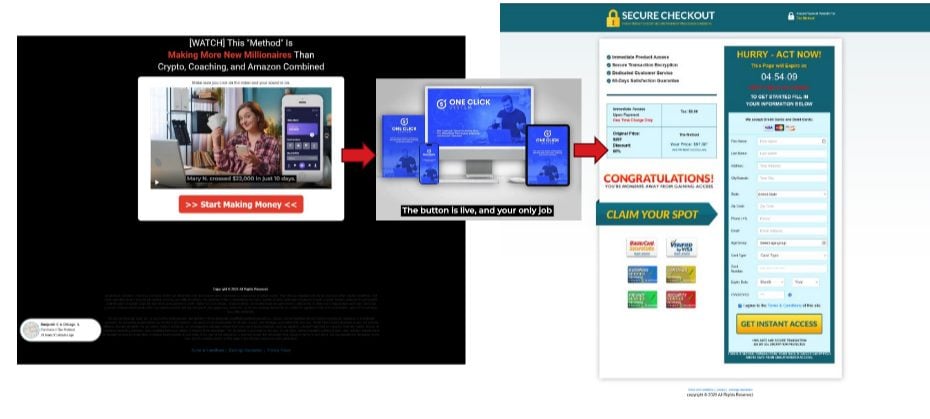
The link leads to a video sales page with earnings claims, enthusiastic testimonials, a countdown timer, security badges, and a button promising immediate access. The presentation is designed to keep the visitor moving forward instead of researching the operator.
In the campaign reviewed, fine print reportedly disclosed that most customers earn $0 and that some testimonials were performed by paid actors. Important language was difficult to read against the background.
A hidden $19.93 subscription is the real business model
The checkout collects a name, address, telephone number, and full card details. A preselected or poorly disclosed option can enroll the buyer in a $19.93 monthly subscription without the clear confirmation and cancellation path a customer would expect.
The advertised income may never materialize, but the billing information is immediately valuable. Recurring charges can continue until the cardholder notices the descriptor on a later statement and contacts the issuer.
- The offer arrives through an unsolicited text.
- AI is used as a buzzword, not a documented income method.
- Countdown timers and limited spots create artificial urgency.
- Paid or unverifiable testimonials provide false reassurance.
- Trust badges may be decorative images rather than verification.
- The checkout collects extensive personal and card information.
- A hidden option can create a $19.93 monthly charge.
- Terms, privacy, disclaimer, and cancellation links may be broken or obscured.
What the AI Income Texts Actually Say
Observed messages use compressed, high-pressure language. One version says time is up and claims AI can become an ATM within minutes. Another says only hours remain and promises to “flood” an account on autopilot.
The wording avoids measurable commitments. It does not identify an employer, explain how revenue is generated, state the expected working hours, name the AI platform, or describe who pays the participant.
That vagueness is useful to the sender. Recipients can project their own idea onto the offer, whether they imagine an AI trading bot, affiliate marketing, online stores, content automation, or a remote job.
“Autopilot” removes the need for a believable job
Real income requires a product, service, investment return, employment relationship, or other identifiable source of value. A claim that software produces money continuously should explain the customers, costs, risks, and legal entity behind it.
The scam page replaces that explanation with a video and a dashboard graphic. Screens that appear to show earnings are illustrations controlled by the seller, not audited bank records or verified customer results.
The countdown exists to block comparison
A timer makes the visitor feel that researching the company could destroy the opportunity. Reloading the page or opening it on another device may reset the supposed deadline, revealing that the urgency was programmed rather than real.
Legitimate work and investment offers provide time to review agreements, fees, risks, privacy practices, and cancellation terms. A decision that cannot survive a short pause should not receive a card number.
Why the Website Can Look Professionally Built
Scam funnels do not need to look broken. Templates can provide responsive layouts, video players, payment forms, testimonial cards, countdown widgets, and familiar security logos for very little cost.
A polished checkout proves only that someone assembled a checkout. It does not prove that the AI system exists, the earnings are typical, the testimonials are independent, or the company will honor a cancellation.
The same template can move between domains and brand names. When complaints or payment blocks accumulate, the operator can replace the logo and headline while keeping the video, checkout logic, and billing offer.
Security badges can be pictures rather than protections
Card logos and “secure checkout” seals may be static images. Clicking a genuine verification seal normally opens a provider-controlled page with information specific to the merchant or connection.
HTTPS protects data while it travels to the domain in the address bar. It cannot confirm that the merchant’s income claims are true or that recurring billing is clearly disclosed.
Testimonials can be purchased performances
A friendly presenter describing life-changing income can be an actor reading a script. Stock photographs, invented names, edited balance screenshots, and paid video testimonials can all appear in the same funnel.
Look for a complete identity, an independently verifiable profile, the precise product used, the time period, gross revenue, expenses, taxes, losses, and the relationship between the speaker and seller. Vague praise supplies emotion without evidence.
How the AI Income Text Scam Works
Step 1: An unsolicited text targets financial pressure
The campaign sends messages to large lists of phone numbers. The sender does not need to know whether the recipient is unemployed, behind on bills, or searching for a side income.
Promises of fast cash are likely to reach some people at a vulnerable moment. The message frames hesitation as the only obstacle between the recipient and an easier financial future.
Step 2: A short link hides the destination
The text may use a shortened or tracking link that does not reveal the final domain. Redirects let marketers measure clicks and can move visitors to different pages based on device, location, or campaign.
Do not expand the link by opening it on a personal phone. Use a reputable URL-checking service or have a security professional examine it safely if evidence must be preserved.
Step 3: A video introduces the “AI autopilot” system
The landing page uses a long presentation to turn a vague text into a larger story. AI is portrayed as a breakthrough that supposedly combines automation, online sales, cryptocurrency, coaching, or another popular income category.
The system may receive a brand name, but the core explanation remains incomplete. A button appears once the viewer has heard enough success claims to consider paying.
Step 4: Testimonials and badges lower resistance
Reviews describe rapid results while checkout seals imply that payment is safe. The visitor sees repeated reassurance without an independent source for either claim.
Fine print may contradict the main pitch by saying that examples are not typical, actors were used, or most participants earn nothing. Hiding a disclosure does not make the headline honest.
Step 5: A timer and limited spots force a fast choice
The website claims enrollment will close within minutes. Pop-ups may announce recent purchases, limited licenses, or an increase in price.
These elements are controlled by the page and can repeat for every visitor. They do not prove that inventory, enrollment, or a deadline exists outside the browser.
Step 6: The checkout harvests personal and card data
The form requests a full name, billing address, telephone number, email, card number, expiration date, and security code. That information can support charges and highly targeted follow-up scams.
A failed checkout does not guarantee the data was rejected. A page can receive form information before displaying an error or asking the visitor to try another card.
Step 7: A hidden choice creates a $19.93 monthly subscription
In the observed funnel, a prechecked or difficult-to-see option enrolled buyers in a $19.93 monthly plan. The recurring obligation was not given the prominence of the income promise.
FTC subscription guidance warns consumers to look for prechecked boxes, understand exactly what will be billed, and confirm how to cancel before submitting card information.
Step 8: Broken policies make cancellation harder
Links labeled Terms, Privacy Policy, or Disclaimer may lead nowhere. A confirmation email may not arrive, and the card statement can show a merchant descriptor unrelated to the brand on the landing page.
The customer then has no obvious account portal, company name, phone number, or written cancellation process. The scam has already converted one impulsive click into recurring billing and reusable personal data.
The $19.93 Charge Is Easy to Miss
A small monthly amount is less likely to trigger an immediate fraud alert than a large purchase. It can hide among streaming, cloud storage, mobile applications, and other routine subscriptions.
The first charge may use an unfamiliar descriptor that does not contain “AI” or the website’s brand. A cardholder searching email for the marketing name may find no receipt or cancellation instructions.
Review statements line by line. Search the exact descriptor, telephone number, amount, and date. Compare them with browser history and text messages from the day the offer was opened.
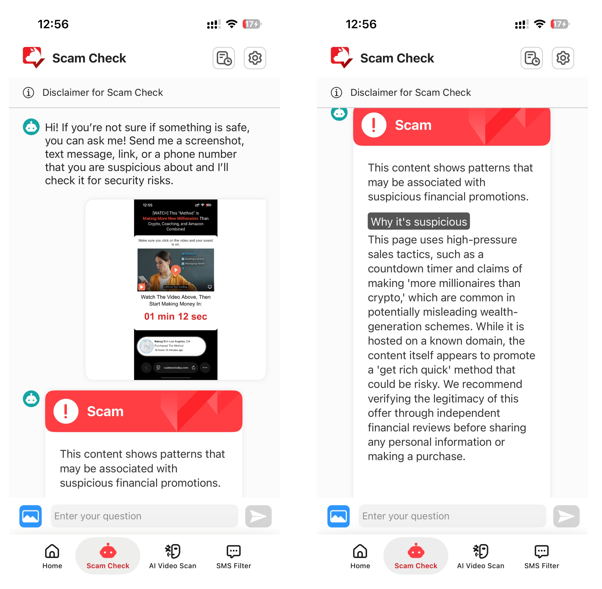
A detection result can support caution, but the billing evidence is the card statement. Record every charge, including the initial transaction and later $19.93 entries.
Send a written cancellation to every verified contact you can locate. State that authorization for future recurring charges is withdrawn and ask for confirmation, while avoiding new links sent by an unverified support agent.
If the merchant does not respond or continues billing, contact the card issuer. Explain that the recurring terms were hidden or not knowingly accepted and ask about replacing the card and blocking the merchant’s recurring payment token.
AI Is the Hook, Not Evidence of a Working System
AI tools can help with real work, but attaching the word to an offer does not create an income source. The seller must still explain the business model, customer demand, operating costs, risks, and what the purchaser is expected to do.
The FTC warns that fake side hustles often arrive through unexpected texts and promise large rewards for little effort. Legitimate work does not require an unexplained upfront payment to receive earnings.
Ask for typical net results after advertising, software, refunds, taxes, and subscription fees. A screenshot of gross sales or a presenter saying they became wealthy does not answer that question.
Company, Address, and Fulfillment Checks
The brand can disappear with the landing page
A program name, AI logo, and video presenter are not the legal company accepting payment. Compare the seller named at checkout with the receipt, card descriptor, terms, privacy notice, and any business registration.
If those names do not match or cannot be found, the buyer may not know who holds the personal data or who is responsible for the recurring charge.
No verified address means no accountable seller
A legitimate digital service should identify a service address and the jurisdiction governing its agreement. A contact form or generic email does not replace a verifiable company location.
Search any address independently. It may resolve to a virtual mailbox, shared suite, residential property, unrelated company, or fulfillment provider with no role in operating the income program.
Support may vanish when cancellation begins
Test the published support route before paying. Broken policy pages, unanswered emails, missing account portals, and telephone numbers that cannot identify the product are strong warnings.
After a charge, keep every cancellation message and delivery receipt. A verbal promise without a confirmation number or written response is difficult to prove.
The payment trail matters more than the AI story
Record the domain, redirect chain, checkout processor, merchant descriptor, charge amount, billing date, support contact, and cancellation terms. Those details remain useful when the marketing brand changes.
A seller that cannot explain the service, recurring amount, billing interval, refund rules, and cancellation method should not receive a card number.
Warning Signs of an AI Income Text Scam
- The message was unexpected and does not name a real employer.
- AI supposedly generates money with almost no work.
- The link uses a shortener or an unrelated domain.
- A countdown or limited-spots notice pressures immediate enrollment.
- The video delays a clear explanation of the business model.
- Testimonials cannot be independently verified.
- Fine print contradicts the headline earnings claims.
- A prechecked box authorizes recurring billing.
- The $19.93 monthly charge is visually buried.
- Terms, privacy, disclaimer, or cancellation links do not work.
- No legal company or verifiable address appears.
- The checkout asks for card data before providing a complete agreement.
What to Do if You Have Fallen Victim to This Scam
- Stop using the website. Do not submit another card, pay an activation fee, or buy an upgraded income package. Close the page after preserving the evidence you need.
- Save the complete trail. Capture the text, sender, short link, final domain, checkout, recurring terms, confirmation screen, merchant descriptor, dates, and every charge. Keep copies of all cancellation attempts.
- Cancel in writing. Send a clear request withdrawing authorization for the subscription and future charges. Ask for written confirmation and do not provide additional identity documents unless the recipient is verified.
- Call the card issuer. Use the number on the card or official app. Explain the hidden or unauthorized $19.93 recurring billing, dispute eligible charges, and ask whether the card or recurring merchant token should be replaced.
- Review every statement. Look for different amounts and descriptors, not only $19.93. Continue monitoring after cancellation because the campaign may use more than one billing name.
- Protect the personal data you entered. Change reused passwords, enable two-factor authentication, and watch for tailored job, investment, bank, delivery, and identity-verification scams using your name and telephone number.
- Scan the device. Use Malwarebytes to check for malicious downloads, browser extensions, credential stealers, or unwanted software. Use AdGuard to reduce malicious ads, tracking, and redirects leading to similar landing pages.
- Report the text. Use the phone’s Report Junk option and forward the message to 7726 (SPAM), which sends it to the wireless carrier for review. Do not reply to the sender first.
- File official reports. Report the campaign to the FTC. Use IdentityTheft.gov if sensitive identity information was exposed, and contact the FBI’s IC3 for significant online financial loss.
- Reject recovery offers. A person promising guaranteed refunds, deleted data, or recovered payments for another fee may be targeting victims from a shared lead list.
Frequently Asked Questions
Are the AI income text messages legitimate job offers?
The observed campaign was not a normal job offer. It used vague autopilot-income claims to send recipients to a sales funnel that collected card data and could create recurring charges.
What does the promised AI system actually do?
The page does not provide enough verifiable detail to establish a real income model. Videos, dashboards, and testimonials are marketing displays, not proof that customers earn money.
Why is there a $19.93 monthly charge?
In the reviewed funnel, a preselected or obscured option enrolled the buyer in a monthly subscription. Check the precise terms and card statement because the descriptor may differ from the website name.
Does a secure checkout badge make the offer safe?
No. A badge can be a static image, and HTTPS only encrypts the connection to the displayed domain. Neither proves the income claims, seller identity, or billing disclosure.
What if I entered my card but the payment failed?
Treat the card as exposed. Contact the issuer, monitor transactions, and explain that the information was entered into a deceptive income website. A failed screen does not prove the data was discarded.
How can I stop future AI income scam texts?
Report the message as junk, forward it to 7726, block the sender, and avoid opening its link. Filtering reduces repeat exposure, but rotating numbers mean careful verification is still necessary.
The Bottom Line
The AI income text scam turns financial pressure into a rushed visit to a polished sales page. AI, actors, timers, badges, and earnings screenshots create the appearance of a breakthrough while the checkout collects personal and payment information.
The most reliable result may be a hidden $19.93 monthly charge, not passive income. Ignore the text, verify any opportunity independently, and contact the card issuer quickly if you already entered payment details.








