

The photos show a sunlit home, the reviews sound reassuring, and the host has a reason why the best price is available only today. The address may even lead to a real property.
What the traveler cannot see is who copied the photographs, who controls the payment page, or whether the person sending friendly messages has ever had access to the home.
An Airbnb listing scam can look complete right up to the moment the guest arrives. The decisive clues usually appear earlier, when the “host” tries to move the conversation, deposit, or identity check somewhere Airbnb cannot protect.
Overview
The property can be real while the offer is fake
A criminal does not need to invent a convincing villa from scratch. Photographs, descriptions, amenity lists, neighborhood notes, and even virtual tours can be copied from a genuine Airbnb page, estate agent, hotel, or property manager.
The copied address may exist, which makes a map search appear to confirm the story. The fraud is in the claimed relationship: the person collecting money is not the owner, authorized host, or manager.
The FBI’s Internet Crime Complaint Center describes this exact rental pattern. Scammers duplicate legitimate property ads, replace the contact details, and ask prospective renters to send money to the supposed owner.
The fake host tries to own the conversation
The first messages can be polite and useful. The host answers questions, recommends local attractions, and may send a rental agreement. That effort is designed to make the contact feel more personal than a normal booking.
Then comes a reason to leave Airbnb. The host may claim that platform messages are delayed, WhatsApp is easier, a company email is required, or a direct booking avoids service fees.
Moving the conversation is not a harmless convenience. It removes the platform record that support teams can review and gives the operator space to introduce new links, payment instructions, phone numbers, and documents.
The final trap is a payment Airbnb never received
The victim may be sent to a polished checkout that resembles Airbnb or asked to transfer a refundable reservation deposit. The amount can feel plausible because it is lower than the full cost of the stay.
Once the payment leaves the real booking flow, a confirmation email proves only that the scammer generated an email. A PDF receipt, booking reference, QR code, or bank beneficiary name does not create a reservation inside Airbnb.
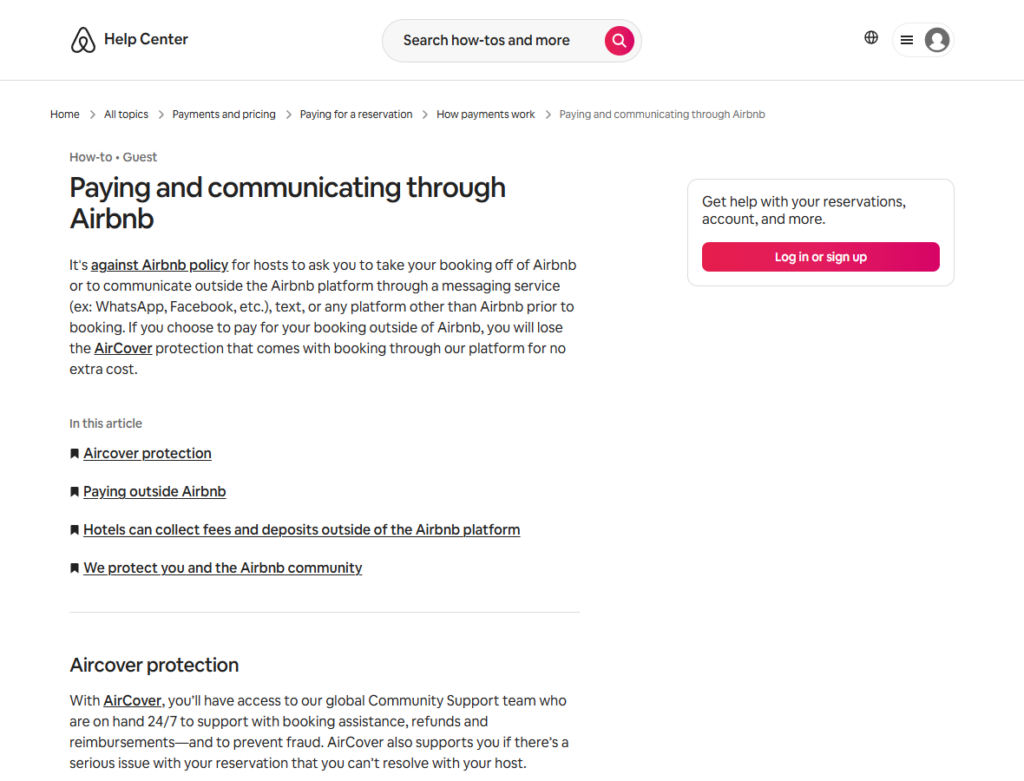
Airbnb’s payment guidance says hosts must not take a booking off the platform or move pre-booking communication to WhatsApp, Facebook, text, or another service. It also warns that paying outside Airbnb can mean losing AirCover protection.
Common warning signs include:
- The same photos appear under different host names, prices, or locations
- The nightly rate is far below comparable homes for the same dates
- A host asks to continue by WhatsApp, text, Telegram, or private email
- The listing becomes “unavailable,” but a direct booking is suddenly possible
- A link opens a domain that merely contains the word Airbnb
- Payment is requested by bank transfer, wire, cryptocurrency, gift card, or a person-to-person app
- The host wants passport, license, or card images before a real reservation exists
- A refundable deposit must be paid before the property can be viewed or verified
- The host cannot answer a property-specific question without delaying or changing the subject
- A countdown, second interested guest, or urgent travel deadline discourages checking
How the Airbnb Listing Scam Works
Step 1: A real home’s identity is copied
The operator begins with material that has already persuaded travelers. A genuine listing supplies professional photographs, room dimensions, check-in details, map context, reviews, and a believable price history.
That content can be reposted on social media, a classified site, a fake vacation-rental website, or a lookalike booking page. Sometimes the criminal creates a duplicate inside a legitimate marketplace using altered host details.
Reverse-image results may reveal the original property, but the scammer expects most people to stop after confirming that the house exists. Existence is only one check. Authority to rent it is the missing one.
Step 2: An unusually good opening creates attention
The fake listing may offer a premium home at an ordinary apartment price. The explanation could be a late cancellation, new-host promotion, owner-direct rate, family emergency, or an attempt to avoid platform fees.
A realistic price is also possible. Sophisticated operators know that an absurd discount attracts suspicion, so they undercut comparable listings just enough to become the most appealing option.
The calendar often shows scarce availability. When the desired dates happen to remain open, the traveler feels lucky and becomes more willing to follow a special booking process.
Step 3: The host builds trust with borrowed detail
Because the source listing contains genuine information, the operator can answer basic questions about bedrooms, parking, beaches, transit, or nearby restaurants. A stolen review may be repeated as a personal anecdote.
Fake identity material adds another layer. A profile photo can be copied from social media, a company name can be taken from a public register, and a passport image can belong to another victim.
A video call is not conclusive. The caller may avoid showing the property, blame a weak connection, or use prerecorded footage. The useful question is whether the identity, property, and payment recipient connect through independent records.
Step 4: A problem moves the booking off-platform
The operator needs to break the connection with Airbnb before asking for money. A common story says the listing was paused, the account is being verified, or Airbnb’s checkout cannot accept the traveler’s card.
Another version offers a direct-booking discount. The host says both sides save fees, while a private contract supposedly provides the same protection. The document may use Airbnb logos even though Airbnb is not a party to it.
Some victims first see the property on another site and receive a link said to be a “private Airbnb invitation.” The page can reproduce familiar branding, but its address is controlled by the sender.
Step 5: The copycat checkout collects money and identity data
A cloned page may ask the traveler to sign in, enter card details, or upload identification. Information can be transmitted to the operator as soon as each form is submitted, even if the final payment appears to fail.
The bank-transfer version supplies an account name and reference number. The beneficiary may be a money mule, an account opened with stolen identity, or a payment service that converts the funds before the victim realizes what happened.
Passport and license images create a second loss. They can be reused to open accounts, impersonate the traveler, or reassure the next victim. A scammer may even send one victim’s document to another as “proof” of honesty.
Step 6: A professional confirmation keeps the illusion alive
After payment, the victim receives a booking reference, address, check-in time, and instructions. A fake support agent may answer questions, and an online portal may continue to show the reservation as confirmed.
The delay helps the operator. Travelers often pay weeks or months before arrival, which gives the receiving accounts time to empty and the fake website time to disappear.
When another payment is possible, the host invents a security deposit, city tax, damage waiver, cleaning charge, or refundable key fee. Each new amount is smaller than abandoning the money already sent, so sunk-cost pressure keeps the victim engaged.
Step 7: Arrival exposes the person who was never the host
The address may belong to an innocent resident, a genuine guest already staying there, or a property that was never offered for those dates. The real owner may have no idea the photographs were copied.
By then, the fake host’s number is disconnected, the messaging account is deleted, or the operator claims a last-minute maintenance problem. A worse replacement may be offered to extract another payment or postpone a report.
If the booking does not appear inside the traveler’s real Airbnb account, Airbnb did not process it. A confirmation page reached through the scammer’s link cannot substitute for that independent account check.
How to Verify the Home Before You Book
Start from the official Airbnb app or type airbnb.com into the browser. Do not use the link supplied by a host, social advertisement, search ad, or email. Search for the property again from that clean starting point.
Compare more than the hero photo. Search several interior images with a reverse-image tool and note where they appeared first. The same kitchen on a property manager’s site under a different name deserves an explanation.
Search the full street address in quotation marks, then compare host names, phone numbers, company details, prices, and availability across results. The same home listed for sale, long-term rent, and short stays by unrelated people is a serious conflict.
Ask a question that requires current access: what is visible from the front door, where the parking permit is collected, or what changed recently in a pictured room. Do not reveal the answer inside the question.
Keep every pre-booking message in Airbnb. A legitimate host may have social media or a business site, but an Airbnb reservation should still be booked and paid through the platform unless a clearly disclosed policy exception applies.
Finally, open the real account directly and confirm the reservation, dates, total, and message thread there. If support is needed, reach it from the app or Help Center. Never call a number displayed only on the questionable page.
Company, Address, and Fulfillment Checks
The host profile must connect to the listing
A profile’s age, photograph, badges, and reviews are useful only when viewed on the genuine platform. Screenshots of those elements can be copied, and a link can lead to a lookalike profile on another domain.
Read the reviews in context. Look for detailed comments about the same home, host responses over time, and stays spread across plausible dates. Generic praise posted in a tight cluster provides weak evidence.
If a company manages the home, verify the company through its independently located website and registry record. Contact it using the number from that independent source, not the details supplied in the suspicious message.
The domain must be Airbnb, not Airbnb-shaped
A fake address may place Airbnb in a subdomain, add words such as secure or reservation, or replace a character. The important part is the registered domain immediately before the final suffix, not the logo or padlock.
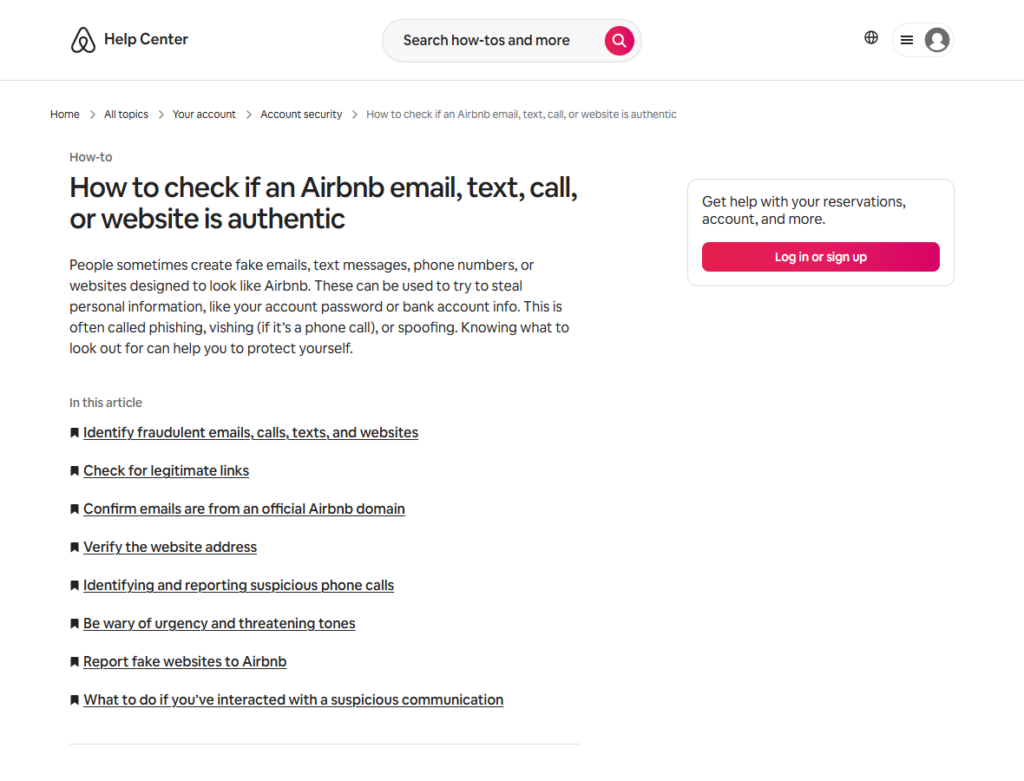
Airbnb’s authenticity guide says genuine links begin with airbnb.com or an official country-specific Airbnb address. It advises users to type the official address themselves when a message or website is uncertain.
The padlock shows that traffic to the current site is encrypted. It does not show that the site belongs to Airbnb, that the person owns the property, or that a reservation will be created.
The address must match ownership and availability
A map pin verifies geography, not permission. Compare the address with local property records where available, the owner’s or manager’s public identity, and other listings for the same home.
Call a resort or managed building through its official public number and ask whether the unit exists and whether the named host or company manages it. Do not rely on a reception number provided in the rental contract.
MalwareTips documented a related rental listing deposit scam in which urgency and a copied home are used to collect money before the victim can verify the property. The travel dates change, but the identity gap is the same.
Payment and check-in must remain traceable
The reservation should appear inside the account reached through the official app or site. Its price breakdown, cancellation rules, host conversation, and payment status should agree with what the traveler was promised.
Airbnb notes limited exceptions for some disclosed hotel fees and certain software-connected hosts. An exception should be visible in the listing or checkout before booking. It is not created by a private message after the traveler commits.
A legitimate check-in plan does not repair an untraceable payment. Lockbox codes, signed contracts, and driver details can all be fabricated. The booking record and payment destination matter first.
What to Do if You Have Fallen Victim to This Scam
- Stop sending money and messages. Do not pay a second deposit, city tax, release fee, or recovery charge. Save the conversation before blocking the operator because accounts and messages can vanish quickly.
- Contact the payment provider immediately. Tell the bank, card issuer, wire company, or payment app that the transaction funded a fraudulent vacation rental. Ask about a recall, reversal, dispute, card replacement, and monitoring. Speed matters.
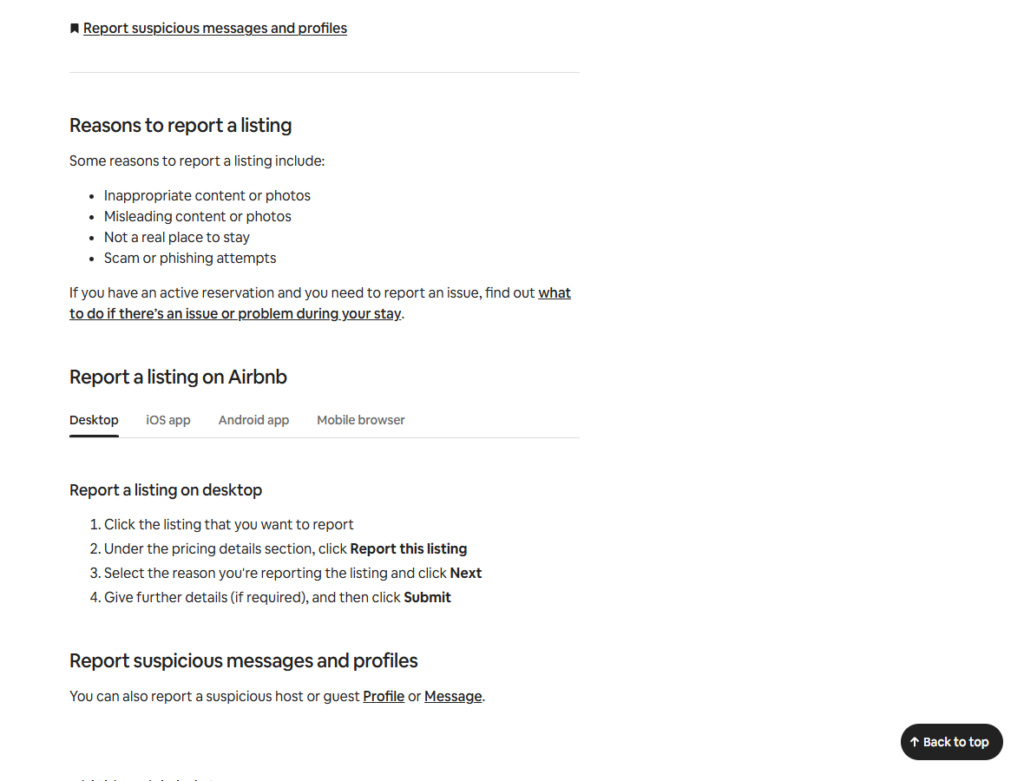
- Check the real Airbnb account. Open the official app or type airbnb.com yourself. If the reservation is absent, contact Airbnb through its Help Center and report the listing, profile, message, and lookalike website.
- Secure exposed accounts. Change any password entered on the fake page, starting with email and Airbnb. Replace reused passwords, enable multi-factor authentication, review login history, and remove unfamiliar sessions or recovery details.
- Protect identity documents. If a passport, license, selfie, or tax number was shared, contact the issuing authority and follow its identity-theft guidance. Watch for new accounts, verification messages, and credit activity you did not initiate.
- Check the device. Remove any app, browser extension, profile, or remote-access tool installed during the booking. Run a Malwarebytes scan, then change sensitive passwords from a different clean device if malware is found.
- Reduce repeat exposure. An ad blocker such as AdGuard can stop many malicious advertisements and known scam domains before they load. It cannot recover funds or make an unverified host legitimate.
- Preserve a complete evidence bundle. Keep URLs, screenshots, email headers, phone numbers, usernames, the supposed contract, beneficiary details, transaction references, and the genuine listing from which the images were copied.
- Report the fraud. Submit the fake listing to Airbnb, report the financial scam at ReportFraud.ftc.gov, and contact local police if money or identity documents were taken.
- Prepare alternate accommodation safely. If travel is imminent, contact the genuine platform or a verified hotel directly. Do not accept a replacement property or transport arranged by the scammer.
Frequently Asked Questions
Can an Airbnb listing show a real house and still be fake?
Yes. Scammers copy photographs, descriptions, addresses, and virtual tours from genuine listings. Confirming that the building exists does not prove the person collecting payment owns or manages it.
Is it safe to pay an Airbnb host by bank transfer?
A request to pay for an Airbnb reservation outside the official checkout is a major warning. Airbnb says off-platform booking payments are prohibited in ordinary cases and can remove platform protections. Verify any claimed exception through Airbnb itself.
Why would a host ask to use WhatsApp?
A genuine person may describe it as convenient, but pre-booking movement to WhatsApp also removes the platform record and monitoring. Keep the conversation in Airbnb and report pressure to leave it.
Does a verified listing guarantee every detail is accurate?
No. Airbnb says location verification helps confirm that a home is real, at the stated address, and accessible to the host, but it is not a guarantee that every listing detail or amenity is accurate.
How can I tell whether an Airbnb payment page is real?
Close the page and open Airbnb independently through the app or a manually typed airbnb.com address. A real pending booking or payment should appear in that account. Do not trust the padlock, logo, or a domain that merely includes the brand name.
Can I get back money sent to a fake host?
Recovery depends on the payment method, timing, and receiving institution. Contact the provider’s fraud team immediately. Card disputes may offer a route, while wires, cryptocurrency, gift cards, and person-to-person transfers are usually harder to reverse.
The Bottom Line
The Airbnb listing scam succeeds by borrowing a real home’s credibility and separating it from the real owner. Beautiful photographs, an accurate address, and a responsive host can all exist inside the same false story.
The safest checkpoint is simple: the conversation, reservation, and payment must agree inside the official Airbnb account you opened independently. If the host needs a different app, domain, or payment recipient, stop.
A real property is not enough. Until the host’s authority and the platform booking both check out, the traveler has found a house, not a reservation.








