

Consumers need to beware of a network of fraudulent websites using the “Alaskan King Crab” name and logo while scamming shoppers seeking discounted seafood. These sites will steal your money without ever shipping any products.
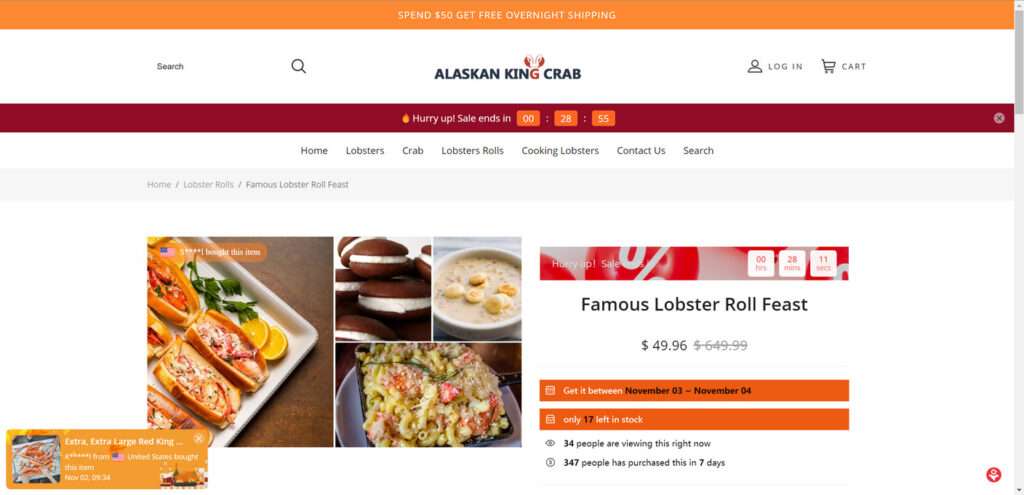
Overview of the “Alaskan King Crab” Shopping Scam Network
Numerous websites promoting huge discounts on crabs, lobsters, and seafood feature the “Alaskan King Crab” brand name and logo. Examples include AlaskanKingCrabShop.com, BuyAlaskanKingCrab.com, AKingCrabStore.com, and other variations.
At first glance, these sites appear to be legitimate online seafood markets selling Alaskan crab and lobster. However, in reality this network of sites is designed solely to defraud customers out of their money.
Here are some of the red flags common across these fraudulent “Alaskan King Crab” websites:
- Extreme discounts up to 90% off to lure in shoppers.
- Countdown timers create false urgency about “limited-time” deals.
- No business addresses, phone numbers, or adequate contact information.
- Legal policies and documents plagiarized from other websites.
- No transparency about site owners, operators, or managers.
- No evidence of real social media presences or signs of actual customers.
- All product photos seem stolen from other seafood sellers.
According to internet research, these scammy sites are likely part of an interconnected fraud network based out of China. This network runs countless sham shopping websites under different brand names with the sole intent of stealing money.
While the “Alaskan King Crab” sites may look convincing at first glance, they exhibit multiple clear indicators of being fraudulent operations established to scam trusting consumers.
How the “Alaskan King Crab” Shopping Scam Works
The deceitful fraudsters behind the network of “Alaskan King Crab” scam websites employ similar tricks to rip off customers across each site:
1. Lure Victims In Through Social Media Ads
The scammers aggressively run enticing social media ads promoting huge sitewide sales, limited-time deals, and unrealistic prices for Alaskan crab and lobster. These ads target seafood lovers with interests related to crab.
2. Build False Trust with Convincing Website Design
The polished website designs featuring the “Alaskan King Crab” branding help build a facade of legitimacy and trustworthiness that hooks visitors.
3. Hook Shoppers with Deceptive Discounts
Once on the sites, shoppers are bombarded with seemingly amazing discounts up to 90% off retail prices for king crab, snow crab, lobster tails, and more. This convinces visitors they are getting jaw-dropping deals.
4. String Along Victims with Fake Shipping Updates
After orders are placed, the sites provide misleading shipment tracking updates and delivery estimates that prolong the scam by keeping customers waiting patiently instead of demanding refunds immediately.
5. Make Up Elaborate Excuses for Delayed Orders
As the delivery window passes, the scammers send emails claiming weather, customs delays, and other issues have caused shipment problems. This extends the scam further.
6. Take Payments and Disappear
Eventually, with payments received the scammers cease all communication and disappear. No seafood or products ever arrive, since these are fake sites selling nothing.
7. Leave Customers Victimized
Shoppers are left empty-handed but still craving the seafood they ordered and paid for but will never receive. The scammers move on to steal from new victims attracted by their false ads.
This is the typical scam blueprint followed across the network of fraudulent “Alaskan King Crab” websites to rip off consumers using deception and broken promises.
Warning Signs of the “Alaskan King Crab” Shopping Scams
There are many red flags that expose these deceitful sites:
- No physical address or location provided, hiding where they truly operate from.
- No working customer service phone number to call with order issues.
- No live chat option to speak directly with real company representatives.
- Legal policies, terms, and documents are copied from unknown sources.
- No information about who owns, operates, or profits from these untrustworthy sites.
- No proof of real social media activity tied to these brands.
- No reasonable explanation for wildly unrealistic discounted pricing.
- Fake limited-time countdown timers to manufacture false urgency.
- Product images seem stolen from legitimate crab and seafood sellers.
- Misleading shipping timeframes and package tracking details after orders.
With so many clear warnings, these scammy “Alaskan King Crab” websites should be avoided completely.
How to Spot the “Alaskan King Crab” Scam on Facebook
The scammers heavily promote their fake “Alaskan King Crab” websites on Facebook. Watch for these signs:
- Ads using high-pressure tactics like “Going out of business sale!” or “Today only – 90% off Alaska King Crab!”
- Prices unreasonably low, like king crab clusters for $19.99/lb when typical prices are $30-60/lb.
- Outrageous deals like “Buy 3 pounds, Get 5 pounds free”.
- Images seem generic or stolen instead of unique photos.
- Links go to shady domains unrelated to known crab brands.
- No mentions of company history, location, practices, or ownership details.
- Comments seem astroturfed by fake accounts and lack real customer interactions.
- Ad targets seafood hashtags but seller has no subject authority.
Use extreme skepticism for Facebook ads promoting unbelievable Alaskan crab and seafood deals. Thoroughly vet unfamiliar brands making outrageous claims before purchasing.
How to Spot the “Alaskan King Crab” Scam on Instagram
Watch for these red flags when seeing cheap Alaskan crab deals promoted on Instagram:
- Lavish photos and videos of crab dishes with no verifiable sources.
- “DM us to order!” messages urging direct orders without protections.
- Vague claims about freshness and quality with no proof.
- Comments seem astroturfed using fake accounts.
- No evidence of real facilities, docks, catches, or employees.
- Links in bios go to shady domains unrelated to account username.
- No credentials shown for people in photos/videos.
- Literally zero signs of authentic interactions – just photos of crab dishes.
Use extreme scrutiny for Instagram accounts peddling premium Alaskan crab at unrealistic prices. Verify legitimacy through independent research before engaging.
How to Spot the “Alaskan King Crab” Scam on TikTok
Watch for these signs of potential scams when seeing cheap Alaskan crab deals promoted on TikTok:
- Videos focused on prices like “King Crab Legs just $16/lb – 90% off!” instead of educational content.
- High-pressure tactics like “Sell out fast!” and “24 hour sale!”
- Stock videos of crab dishes instead of unique content.
- Accounts with generic names commenting “Amazing Deal!” on posts.
- Links in bios/captions send to dubious domains unrelated to known brands.
- No signs of documented catches, real employees, facilities, vessels, etc.
- Videos blatantly stolen and reposted instead of original.
Use extreme caution and vetting for any TikTok accounts promoting unbelievable Alaskan crab deals using urgency and limited details.
What to Do If You Are a Victim of These “Alaskan King Crab” Scams
If you already placed an order and submitted payment information to any of these fraudulent “Alaskan King Crab” websites, take the following steps right away:
Immediately Contact Your Credit Card Company
Call your credit card provider and explain that you believe you have been scammed. Request to dispute the charges and have the payments reversed due to fraud. Provide transaction records showing payments to the specific scam website. Act quickly, as credit card companies have time limits on how long after transactions you can report fraud.
Place Fraud Alerts on Your Credit Reports
Contact one of the three major credit bureaus (Experian, Equifax, TransUnion) to place an initial 90-day fraud alert on your credit file. This warns lenders to take extra steps to verify your identity before issuing new credit. Also order free copies of your credit reports to check for any signs of suspicious activity. Scammers sometimes sell or misuse stolen payment information.
Monitor All Financial Accounts Closely
Carefully monitor your credit card statements, bank account activity, and other financial accounts for any unauthorized transactions related to potential stolen payment card details. Report any fraudulent charges or account activity immediately.
Change Any Reused Passwords
If you reused the same password on the scam website as other accounts, change your passwords right away. Assume your email and credentials are compromised. Enable two-factor authentication on accounts where possible for enhanced security going forward.
Submit Complaints to Relevant Authorities
File formal complaints detailing the scam with the FBI IC3 division, FTC, your state attorney general, and Better Business Bureau. Although you may not recoup losses, your information can help facilitate investigations and consumer alerts about these fraudulent sites.
Warn Others About These Scams
Post reviews and complaints warning people away from the specific “Alaskan King Crab” scam websites you encountered. Spread the word on social media platforms to make others aware of these deceitful sites and common tactics they use to defraud seafood lovers.
By taking swift action, you can limit damages and prevent additional issues from arising. While recovering lost funds will be very difficult, you can take steps to protect yourself from further harm. Remain vigilant for any signs of misuse of your personal or payment information
Frequently Asked Questions About the “Alaskan King Crab” Shopping Scams
Many consumers have questions regarding the network of deceitful websites using the “Alaskan King Crab” name and logo while scamming shoppers. Here are answers to some common FAQs about these scams.
Are these “Alaskan King Crab” websites legitimate?
No, these sites are completely fraudulent. They scam visitors by pretending to be legitimate Alaskan crab sellers using stolen branding. In reality, they will just take your money.
Where are these scammy “Alaskan King Crab” sites located?
The sites provide no verifiable addresses or locations. Scammers conceal identities and locations to avoid accountability. Despite branding implying ties to Alaska, these sites have no provable Alaskan connections.
Who runs and operates these fake “Alaskan King Crab” shopping sites?
The sites offer zero transparency about ownership, management, or profits. Scam websites hide such details to prevent victims from pursuing them legally. Available information suggests they originate from an interconnected scam network in China.
Why do these sites offer such unbelievable discounts on crab?
The unrealistic discounts like 90% off are meant to hook unsuspecting shoppers. In reality, Alaskan king crab costs far more at the wholesale level. These sites falsely claim low prices because they will never fulfill any orders.
Are there any real customer reviews for these websites?
No, there are no legitimate online customer reviews confirming receipt of actual orders from these brands. Any reviews seem fabricated. No major consumer forums mention these sites either, which indicates a lack of real customers.
What payment methods do these scam sites accept?
These sites tend to accept credit cards and PayPal to maximize scam revenue. Such options allow buyers to potentially reverse the charges by disputing fraudulent transactions. They avoid options with buyer protections.
Is my credit card info safe provided to these sites?
No, never trust these scam websites with any personal or payment information. Assume any data entered is compromised. Their sole purpose is stealing money, so they cannot be trusted to handle sensitive data either.
How can I get my money back if I ordered from these scams?
Immediately contact your credit card company to report fraud and dispute charges. Monitor your accounts for other unauthorized charges too. Submit official complaints to authorities. Unfortunately, recouping payments lost to these scams is very unlikely.
Consumers should avoid these deceitful “Alaskan King Crab” websites completely. Carefully vet unfamiliar sites, scrutinize unrealistic deals, and only buy from trusted sellers.
The Bottom Line – Avoid All “Alaskan King Crab” Scam Websites
This network of deceitful websites using the “Alaskan King Crab” brand name is entirely fraudulent, established simply to steal seafood lover’s money. Consumers should steer clear of these scam sites and their absurd discounted pricing.
The multiple red flags make it evident these are not legitimate retailers. Use extreme caution when searching for crab and lobster deals online, thoroughly research unfamiliar sites, and only order from reputable sellers. Avoid becoming another victim of the far-reaching “Alaskan King Crab” shopping scam network.

Join the discussion
0 commentsShare your experience or ask a question about this article.
Discussion
Start the conversation
Have a question or something useful to share? Add the first comment.