

A holiday video promises that one tiny favor can rescue the shopping budget. Answer a few questions, it says, and Amazon will cover the gifts.
The offer feels timely, cheerful, and surprisingly easy. Before following the link, however, shoppers need to understand who is really collecting their information.
Overview
The TikTok advertisement impersonates an Amazon promotion
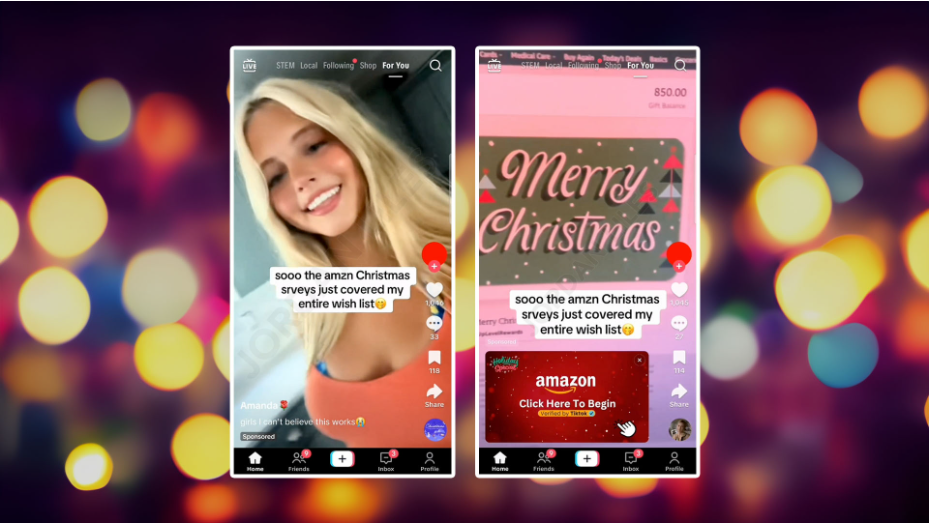
The campaign circulates through short videos labeled “Amazon Christmas Survey” or the misspelled “Amzn Christmas Srveys.” It promises gift cards worth $500, $750, or $850.
Some clips claim the survey covered an entire Christmas wish list. Others suggest a special seasonal program is rewarding ordinary shoppers for answering simple questions.
The videos are sponsored social-media advertisements, not announcements from Amazon. Familiar colors, packages, logos, and shopping imagery are used to create that mistaken impression.
The survey is only the first door
The first page asks easy questions about shopping habits or holiday spending. This low-effort interaction makes the promised reward feel close and earned.
Visitors are then moved through redirect domains such as dealzden.com, uplevelrewards.com, or reward4spot.com. Domains may change as individual ads disappear.
Later pages request contact details and may require multiple promotional offers. The simple Amazon survey has become a lead-generation and offer-completion funnel.
The real value is the visitor’s data and activity
Personal details can be sold, shared, or used for marketing. Completed trial offers and purchases can also generate affiliate commissions for the parties sending traffic.
The advertised Amazon reward creates the click, but Amazon does not control the journey. The visitor deals with separate websites, advertisers, and promotional terms.
- The ad uses Amazon recognition to attract attention.
- The destination is not an Amazon-owned survey page.
- The “quick survey” expands into personal-data collection.
- Qualification may depend on unrelated offers or purchases.
- Trial terms can create costs the TikTok clip never explains.
What the Fake Amazon Christmas Survey Promises
The most effective version does not ask for money immediately. It promises relief from a seasonal problem that almost every household understands.
A creator appears excited that the program paid for gifts. On-screen comments claim other participants received large balances after only a few minutes.
The reward amount changes between ads. That inconsistency matters because genuine national promotions publish stable eligibility rules, dates, sponsors, and prize descriptions.
Typos may also appear in labels. Misspelling “surveys” can help advertisers create fresh accounts and variations after earlier material receives complaints or moderation.
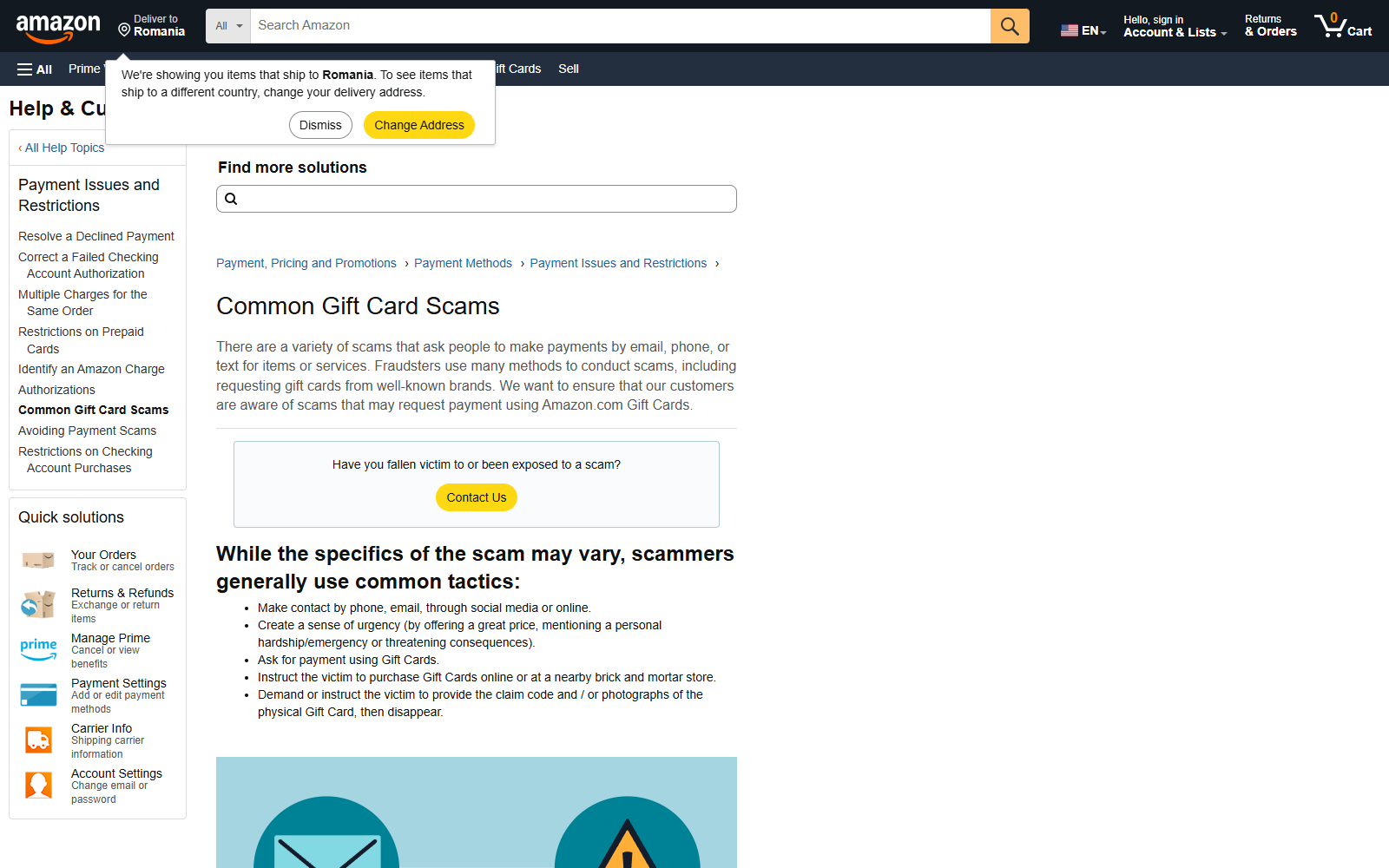
Amazon’s own scam guidance specifically identifies fake surveys offering gift cards while requesting personal or banking details. It advises customers to verify communications independently.
A real Amazon page uses an Amazon-controlled domain and provides rules that identify the sponsor. A logo placed on another domain does not create that relationship.
Do not judge the offer by how polished the first page looks. Follow the ownership, disclosures, and obligations attached to the actual destination.
The Difference Between a Survey and a Reward Funnel
A normal research survey asks questions, explains who is conducting it, describes data use, and clearly states whether compensation is guaranteed or based on a drawing.
A reward funnel uses the survey as an engagement device. After several harmless answers, it requests identifying information and introduces additional steps.
Those steps may include installing apps, starting trials, making purchases, sharing referral links, or completing a required number of offers across different levels.
Eligibility can depend on age, location, prior participation, accurate tracking, and strict deadlines. Missing one condition can prevent a claim after considerable time or spending.
The TikTok clip rarely explains that complexity. It compresses everything into “take a survey” because that message attracts more clicks than a full list of obligations.
That gap between the advertisement and the actual journey is the central deception. The user consents to one simple task but is steered into something materially different.
How the Amazon Christmas Survey Scam Works
Step 1: A festive TikTok video creates urgency
The ad appears during holiday shopping season, when gift expenses are already causing stress. Christmas music, Amazon packages, and a large reward amount make it emotionally relevant.
The creator may say the program just paid for a wish list. A sponsored label can be small enough that viewers process the clip like a personal recommendation.
Scarcity language suggests only a few survey spots remain. That pressure discourages the viewer from checking Amazon’s real website before clicking.
Step 2: Fake engagement supplies social proof
Comments underneath the video say the reward arrived, the balance worked, or the process took only minutes. Some accounts ask staged questions that receive reassuring replies.
These reactions are not reliable evidence. Advertisers can moderate comments, operate supporting accounts, reuse scripts, or display invented testimonials directly inside a landing page.
A genuine participant should be independently identifiable and discuss the full process, including required offers, spending, tracking, and claim verification.
Step 3: The click leaves TikTok and Amazon behind
The link opens a non-Amazon domain. It may redirect several times, allowing different affiliates and tracking systems to record the visitor.
Each redirect makes the operator harder to understand. The brand shown in the ad, the domain collecting data, and the company administering later offers may all differ.
Look at the address bar after every transition. If the promotion is supposedly Amazon’s, unexplained third-party domains require a clear and credible explanation.
Step 4: Easy questions create commitment
The first questions are intentionally simple. They may ask whether the visitor shops online, uses Amazon, or plans to buy holiday gifts.
Answering costs nothing, so continuing feels harmless. Behavioral researchers call this a commitment effect: completing small steps makes abandoning the process feel wasteful.
A progress indicator may imply the reward is nearly unlocked even when the expensive or intrusive requirements have not yet appeared.
Step 5: Personal information becomes the real entry fee
The page requests a name, address, email, phone number, birth date, or household details. This information is valuable even if no reward is ever claimed.
Marketing consent may allow calls, texts, and emails from multiple partners. The disclosure can sit beneath a bright button in smaller, less noticeable text.
Providing accurate contact data can trigger persistent promotions. Providing a primary email and phone number also gives future scammers better material for convincing follow-up messages.
Step 6: Partner offers introduce spending and subscriptions
Visitors may be told to complete several “deals” before qualifying. A deal can require a purchase, paid trial, app installation, credit check, or subscription enrollment.
The initial price may be low, while later renewals cost more. Separate merchants control these offers, so canceling one does not automatically cancel the others.
Tracking failures can also matter. If cookies are blocked, links are reopened, or a different device is used, the system may not credit completed activity.
Step 7: The reward remains conditional and difficult to claim
After time and money have been invested, the participant may face identity verification, documentation requests, waiting periods, or a claim deadline.
The large Amazon amount shown in the ad was never a simple payment for answering questions. It was the distant incentive attached to a complicated promotional process.
Some people stop before qualifying. The operators can still retain the lead data and commissions produced by the completed offers.
Company, Address, and Fulfillment Checks
Amazon is the impersonated brand, not the seller
The presence of Amazon colors, packages, or gift-card graphics does not show sponsorship. Verify the promotion through Amazon’s official app or manually typed website.
Amazon warns that fake surveys may request personal or banking information in exchange for gift cards. That description matches the core risk in this campaign.
The redirect domain may be only a traffic doorway
A short-lived domain can record the click and forward the visitor elsewhere. Its privacy policy may differ from the later reward administrator’s terms.
Save every domain in the chain. A screenshot of only the final page can miss the advertiser and affiliate that made the original promise.
The reward administrator must be identified precisely
Later pages have been connected with RewardZone USA, LLC and similar reward websites. That does not turn the TikTok ad into an Amazon program.
Read the current rules before providing data. Confirm required deal levels, time limits, geographic eligibility, verification, claim procedures, and every merchant involved.
No physical prize shipment solves the data problem
This campaign is mainly digital, so a warehouse check is less relevant than identifying who stores, shares, and monetizes the submitted information.
Review privacy language for marketing partners, lead buyers, telephone consent, and retention. A mailing address alone does not reveal how widely the data travels.
Warning Signs in the TikTok Ads
- The amount changes between $500, $750, and $850.
- The label contains odd abbreviations or spelling errors.
- The link does not open an Amazon-owned domain.
- The video shows reactions instead of official promotion rules.
- A countdown or limited-slot warning rushes the click.
- The survey requests extensive personal details before showing obligations.
- Unrelated trials and purchases appear after the initial questions.
- The reward remains conditional after the advertised task is complete.
A legitimate seasonal promotion should become clearer as you proceed. This one becomes more complicated, more intrusive, and less connected to Amazon.
Why the Same Reward Story Returns Every Holiday
The Christmas wording is seasonal, but the structure is evergreen. Similar funnels promise grocery cards, retailer rewards, product-testing jobs, stimulus payments, or birthday giveaways.
Only the wrapper changes. A familiar company supplies trust, a large reward supplies motivation, and a short task makes participation appear nearly effortless.
Holiday periods improve the pitch because people are spending more, searching for discounts, and sharing gift ideas through social platforms.
Advertisers can rapidly produce new clips with different creators, amounts, typos, and destinations. Removing one account does not remove the affiliate system behind it.
The safest defense is recognizing the structure instead of memorizing one domain. Domains are disposable, while the incentive model remains profitable.
Whenever a major retailer supposedly offers hundreds in value, locate official rules without using the ad link. Confirm the sponsor, dates, eligibility, odds, and obligations.
If those details appear only after personal data is submitted, the promotion has already reversed the normal order of informed consent.
What to Do if You Have Fallen Victim to This Scam
- Stop completing new offers. More purchases rarely rescue an already confusing reward claim. Do not spend further money simply because earlier steps consumed time.
- Save the complete route. Record the TikTok account, ad, link, redirect domains, final reward page, rules, consent text, confirmation messages, and merchant receipts.
- List every trial separately. Write down the merchant, date, amount, renewal date, cancellation method, and confirmation number for each offer you accepted.
- Cancel directly with each merchant. Do not assume leaving the reward page cancels subscriptions. Request written confirmation and keep screenshots of cancellation screens.
- Review card and payment accounts. Watch for small verification charges, renewals, unfamiliar descriptors, and multiple merchants. Ask the issuer about charges you did not authorize.
- Expect increased marketing. Block unwanted calls and texts. Be suspicious of follow-up messages that mention the survey, Amazon, or an unclaimed balance.
- Change exposed passwords. If you reused a password on any linked page, replace it everywhere and enable multifactor authentication on the email account.
- Scan the device. Run Malwarebytes if an offer required an app, extension, profile, or download. Remove unfamiliar software and revoke excessive permissions.
- Limit future redirects. AdGuard can reduce malicious ads and tracking requests, but still verify every promotion independently.
- Report the campaign. Report the ad to TikTok, impersonation to Amazon, deceptive marketing to the FTC, and suspicious charges to your payment provider.
Do not pay a stranger who claims to unlock the reward or recover your losses. Legitimate refunds do not require gift cards, cryptocurrency, or remote computer access.
If identity information was exposed, consider a fraud alert or credit freeze. Monitor the email account closely because it may become the target of convincing phishing.
Frequently Asked Questions
Is the Amazon Christmas Survey a real Amazon program?
The TikTok campaign examined here is not an Amazon program. Its links leave Amazon and lead into third-party data and promotional-offer funnels.
Will Amazon pay $750 for answering a few questions?
No evidence supports that simple promise. The large reward is attached to additional conditions, offers, and data collection that the short advertisement does not explain.
Why do the ads use different reward amounts?
Advertisers test multiple creatives and amounts to find the version that attracts the most clicks. A real promotion should publish one stable set of rules.
What happens after I submit my phone number?
You may receive marketing calls, texts, and emails from several partners, depending on the consent language. Save the page and revoke consent where possible.
Can partner trials charge me later?
Yes. A low-cost or free trial can renew under its own terms. Check every merchant separately and cancel before its stated deadline.
How can I verify a genuine Amazon promotion?
Open Amazon independently, check official messages and help pages, confirm the sponsor and rules, and never rely on a social-media link or copied logo.
The Bottom Line
The Amazon Christmas Survey ad sells an easy story: answer questions and let a trusted retailer pay for the holidays. The actual path is far more demanding.
It is a third-party reward funnel built around data, affiliate offers, and conditional eligibility. Close it before a cheerful holiday promise becomes months of charges and marketing.

Join the discussion
0 commentsShare your experience or ask a question about this article.
Discussion
Start the conversation
Have a question or something useful to share? Add the first comment.