

If you are seeing a “Attenzione! Il Suo computer personale è stato bloccato” notification within Internet Explorer, Firefox, Safari or Chrome, then you have redirected to a web page that contains a malicious javascript code. The “Attenzione! Il Suo computer personale è stato bloccato” message is basically just a web page containing a malicious javascript that does not allow you to close the browser window or switch to a different web page.
![[Image: Attenzione! Il Suo computer personale è stato bloccato virus]](http://malwaretips.com/blogs/wp-content/uploads/2014/01/attenzione-il-suo-computer-personale-e-stato-bloccato-virus.jpg "Attenzione! Il Suo computer personale è stato bloccato virus")
The “Attenzione! Il Suo computer personale è stato bloccato” virus will display a bogus notification that pretends to be from Arma dei Carabinieri and states that your computer has been blocked due to it being involved with the distribution of pornographic material, spam and copyrighted content.
It goes on to say that you need to pay a ransom of 100 Euro in order to get access to your files and computer again. In order to pay this ransom you need purchase a Ukash or Paysafecard voucher and submit it in the web browser. The malware’s authors prefer these payment services because transactions made through them cannot be reversed and are hard to trace.
If your computer is infected with the “Attenzione! Il Suo computer personale è stato bloccato” browser hijacker, this infection will display a localized webpage that covers the entire web browser of the infected computer and demands payment for the supposed possession of illicit material. The message displayed by this ransomware infection can be localized depending on the user’s location, with text written in the appropriate language.
The text of the “Attenzione! Il Suo computer personale è stato bloccato” web page is:
ATTENZIONE! Il Suo computer personale è stato bloccato per motivi di sicurezza per le seguenti ragioni.
Tutte le attività di questo computer sono stati registrati.
Tutti i file sono crittografati.Lei è accusato di visualizzazione / memorizzazione e / o distribuzione di materiale pornografico di contenuto proibito (pornografia infantile / bestialità / stupro, ecc.) Lei ha violato la Dichiarazione Universale sulla lotta contro la diffusione di materiale pedopornografico e accusato di un reato ai sensi dell’articolo 161 del Codice Penale della Repubblica Italiana.
L’articolo 161 del Codice Penale della Repubblica Italiana prevede come pena la privazione della libertà da 5 a 11 anni.
Inoltre, Lei è sospettato di aver violato la “Legge sul diritto d’autore e diritti connessi” (scaricamento della musica pirata, video, software senza licenza), e l’uso e/o la distribuzione di contenuti protetti dai diritto d’autore. In questo modo Lei è sospettato di aver violato l’articolo 148 del Codice Penale della Repubblica Italiana.
L’articolo 148 del Codice Penale della Repubblica Italiana prevede come pena una multa di 150-550 unità di base oppure la privazione della libertà da 3 a 7 anni.
Dal Suo computer personale è stato commesso un accesso non autorizzato all’informazione chiusa all’accesso pubblico ed all’informazione d’importanza statale nella rete Internet.
Lei poteva organizzare l’accesso non autorizzato deliberatamente per motivi di lucro, oppure l’accesso non autorizzato poteva avvenire senza la Suo conoscenza o il Suo consenso, siccome il Suo computer personale potrebbe essere infettato da software maligno. Così, Lei è sospettato, finchè l’investigazione sarà condotta, di indagare in violazione involontaria dell’articolo 215 del Codice Penale della Repubblica Italiana (“La legge sull’uso sconsiderato e negligente di computer/PC”).
L’articolo 215 del Codice Penale della Repubblica Italiana prevede come pena una multa di €100.000 e/o la privazione della libertà da 5 a 8 anni.
Anche nel corso dell’analisi delle informazioni memorizzate sul Suo computer personale, si è constatato che dal Suo PC in maniera regolare avvengono i mailing di spam di massa, i quali Lei ha volontariamente organizzato per motivi di lucro oppure i quali avvengono senza la Suo conoscenza o il Suo consenso, siccome il Suo computer personale potrebbe essere infettato da software maligno. Questi mailing distribuiscono software dannoso o materiali pornografici vietati. Così, Lei è sospettato, finchè l’investigazione sarà condotta, di indagare in violazione involontaria dell’articolo 301 del Codice Penale della Repubblica Italiana (“La legge sul combattimento dello spam e la diffusione di software dannoso (virus)”).
L’articolo 301 del Codice Penale della Repubblica Italiana prevede come pena una multa di €250.000 e la privazione della libertà fino a 5 anni.
Si prega di notare che i Suoi dati personali e la Sua locazione sono identificati e contro di Lei può essere iniziato un procedimento legale entro 96 ore della violazione ai sensi degli articoli del codice penale come descritto sopra. I materiali del procedimento penale saranno trasferiti alla corte.
Tuttavia, in conformità con le modifiche al Codice Penale della Repubblica Italiana dal 02 ottobre 2013 e la Dichiarazione dei Diritti Umani le Sue violazioni possono essere considerate involontarie (se tali violazioni sono state commesse da Lei per la prima volta), e Lei non sarà perseguiti. Questa condizione può essere soddisfatta mediante il pagamento della Sua multa al reddito dello Stato (a sostegno di progetti per la protezione del cyberspazio della rete Internet).
La multa deve essere pagata da Lei entro 48 ore dopo la violazione. Una volta che le 48 ore sono trascorse, per ulteriori 48 ore saranno raccolte automaticamente le informazioni complete su di Lei, e Lei te sarà perseguito.
La dimensione della Sua multa è 100€. La multa si può pagare con l’aiuto dei voucher PaySafeCard oppure Ukash.
Cyber criminals often updated the design of this lock screen, however you should always keep in mind that no law enforcement agency (eg: FBI, Department of Justice, Royal Canadian Mounted Police or Police Central e-crime Unit) will never lock down your computer or web browser.
The “Attenzione! Il Suo computer personale è stato bloccato” browser blocker is a scam, and you should ignore any alerts that this malicious software might generate.
Under no circumstance should you send a MoneyPak, Ukash or Paysafecard voucher to these cyber criminals, and if you have, you can should request a refund, stating that you are the victim of a computer virus and scam.
How to remove the “Attenzione! Il Suo computer personale è stato bloccato” virus (Removal Guide)
This page is a comprehensive guide, which will remove the “Attenzione! Il Suo computer personale è stato bloccato” infection from a Windows computer and an Apple Mac OS X machine. Please perform all the steps in the correct order. If you have any questions or doubt at any point, STOP and ask for our assistance.
How to Remove “Attenzione! Il Suo computer personale è stato bloccato” virus from a Windows PC
STEP 1: Remove “Attenzione! Il Suo computer personale è stato bloccato” browser hijacker from Internet Explorer, Firefox and Chrome
STEP 2: Remove “Attenzione! Il Suo computer personale è stato bloccato” virus with Malwarebytes Anti-Malware Free
STEP 3: Double-check for the “Attenzione! Il Suo computer personale è stato bloccato” infection with HitmanPro
STEP 1: Remove “Attenzione! Il Suo computer personale è stato bloccato” browser hijacker from Internet Explorer, Firefox and Chrome
- Open Task Manager by right-clicking the taskbar, and then clicking Start Task Manager. Alternatively to start the Windows Task Mager, you can press Ctrl+Alt+Del and click on Task Manager or simply press on Ctrl+Shift+Esc.
![[Image: Start Windows Task Manager]](//malwaretips.com/blogs/wp-content/uploads/2013/11/start-task-manager-windows-pc.jpg "Start Windows Task Manager")
- Click the Processes tab to see a list of all the processes that are currently running under your user account and a description of each process.
![[Image: Select the Process tab]](//malwaretips.com/blogs/wp-content/uploads/2013/11/show-processes-from-all-users-task-manager.jpg "Select the Process tab")
To view all of the processes currently running on the computer, click Show processes from all users. - Scroll through the list till you see your web browser’s process and left-click on it once so it becomes highlighted. Once you have selected the browser’s process, click on the End Process button as show in the picture below.
If you are using this browser: End this process: Internet Explorer iexplore.exe Chrome chrome.exe Safari Safari.exe SeaMonkey seamonkey.exe Opera opera.exe Firefox firefox.exe ![[Image: Search for iexplorer.exe, firefox.exe or chrome.exe]](//malwaretips.com/blogs/wp-content/uploads/2013/11/kill-malicious-process.jpg "Search for iexplorer.exe, firefox.exe or chrome.exe")
- When you click on the End Process button, Task Manager will ask you to confirm if you are sure you want to terminate it as shown in the image below.
![[Image: Kill the malicious process in Windows PC]](//malwaretips.com/blogs/wp-content/uploads/2013/11/end-malicious-process.jpg "Kill the malicious process in Windows PC")
At this point you should press the Yes button in order to kill the process. - Your browser window should now be closed. The next time you open your browser, do not allow the browser to open the last opened page.
![[Image: Start Windows Task Manager]](http://malwaretips.com/blogs/wp-content/uploads/2013/11/start-task-manager-windows-pc.jpg "Start Windows Task Manager")
![[Image: Select the Process tab]](http://malwaretips.com/blogs/wp-content/uploads/2013/11/show-processes-from-all-users-task-manager.jpg "Select the Process tab")
![[Image: Search for iexplorer.exe, firefox.exe or chrome.exe]](http://malwaretips.com/blogs/wp-content/uploads/2013/11/kill-malicious-process.jpg "Search for iexplorer.exe, firefox.exe or chrome.exe")
![[Image: Kill the malicious process in Windows PC]](http://malwaretips.com/blogs/wp-content/uploads/2013/11/end-malicious-process.jpg "Kill the malicious process in Windows PC")
STEP 2: Remove “Attenzione! Il Suo computer personale è stato bloccato” virus with Malwarebytes Anti-Malware Free
Malwarebytes Anti-Malware Free utilizes Malwarebytes powerful technology to detect and remove all traces of malware including worms, trojans, rootkits, rogues, dialers, spyware and more.
- You can download Malwarebytes Anti-Malware Free from the below link, then double-click on the icon named mbam-setup.exe to install this program.
Download MalwarebytesFree official installer. Your download starts right away. - When the installation begins, keep following the prompts in order to continue with the setup process, then at the last screen click on the Finish button.
![[Image: Malwarebytes Anti-Malware final installation screen]](//malwaretips.com/blogs/wp-content/uploads/2013/01/malwarebytes-installation.jpg "Malwarebytes Anti-Malware installation screen")
- On the Scanner tab, select Perform quick scan, and then click on the Scan button to start searching for “Attenzione! Il Suo computer personale è stato bloccato” malicious files.
![[Image: Malwarebytes Anti-Malware Quick Scan]](//malwaretips.com/blogs/wp-content/uploads/2013/01/malwarebytes-quick-scan.jpg "Run a Quick Scan with Malwarebytes Anti-Malware")
- Malwarebytes’ Anti-Malware will now start scanning your computer for “Attenzione! Il Suo computer personale è stato bloccato” virus as shown below.
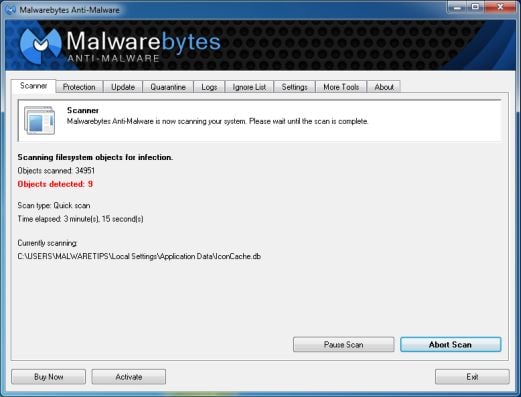
- When the Malwarebytes Anti-Malware scan has finished, click on the Show Results button.
![[Image: Malwarebytes Anti-Malware scan results]](//malwaretips.com/blogs/wp-content/uploads/2013/01/malwarebytes-scan-results.jpg "Malwarebytes when the system scan has completed")
- You will now be presented with a screen showing you the computer infections that Malwarebytes Anti-Malware has detected. Make sure that everything is Checked (ticked), then click on the Remove Selected button.
![[Image: Malwarebytes Anti-Malwar removing Attenzione! Il Suo computer personale è stato bloccato virus]](//malwaretips.com/blogs/wp-content/uploads/2013/01/malwarebytes-virus-removal.jpg "Malwarebytes Anti-Malwar removing Attenzione! Il Suo computer personale è stato bloccato virus")
![[Image: Malwarebytes Anti-Malware final installation screen]](http://malwaretips.com/blogs/wp-content/uploads/2013/01/malwarebytes-installation.jpg "Malwarebytes Anti-Malware installation screen")
![[Image: Malwarebytes Anti-Malware Quick Scan]](http://malwaretips.com/blogs/wp-content/uploads/2013/01/malwarebytes-quick-scan.jpg "Run a Quick Scan with Malwarebytes Anti-Malware")
![[Image: Malwarebytes Anti-Malware scan results]](http://malwaretips.com/blogs/wp-content/uploads/2013/01/malwarebytes-scan-results.jpg "Malwarebytes when the system scan has completed")
![[Image: Malwarebytes Anti-Malwar removing Attenzione! Il Suo computer personale è stato bloccato virus]](http://malwaretips.com/blogs/wp-content/uploads/2013/01/malwarebytes-virus-removal.jpg "Malwarebytes Anti-Malwar removing Attenzione! Il Suo computer personale è stato bloccato virus")
STEP 3: Double-check for the “Attenzione! Il Suo computer personale è stato bloccato” infection with HitmanPro
HitmanPro is a second opinion scanner, designed to rescue your computer from malware (viruses, trojans, rootkits, etc.) that have infected your computer despite all the security measures you have taken (such as anti virus software, firewalls, etc.).
- You can download HitmanPro from the below link:
Download HitmanProOfficial Sophos download. Free scan, free 30-day trial to remove threats. - Double-click on the file named HitmanPro.exe (for 32-bit versions of Windows) or HitmanPro_x64.exe (for 64-bit versions of Windows). When the program starts you will be presented with the start screen as shown below.
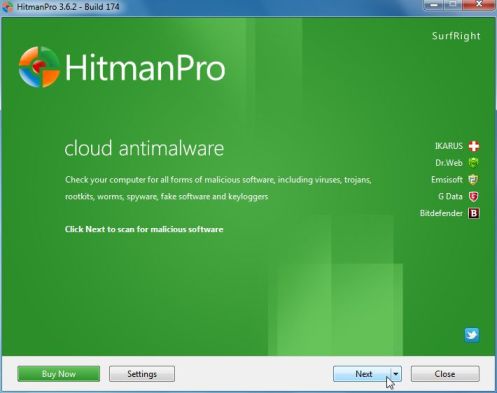 Click on the Next button, to install HitmanPro on your computer.
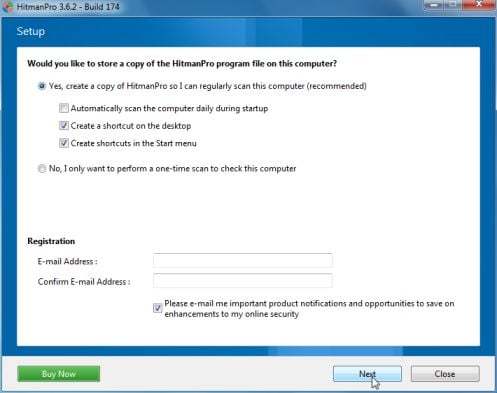
- HitmanPro will now begin to scan your computer for “Attenzione! Il Suo computer personale è stato bloccato” malicious files.
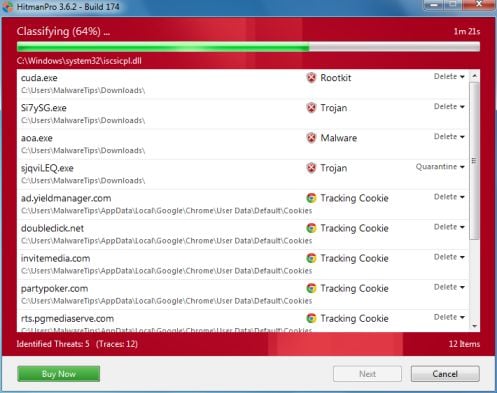
- When it has finished it will display a list of all the malware that the program found as shown in the image below. Click on the Next button, to remove the “Attenzione! Il Suo computer personale è stato bloccato” virus.
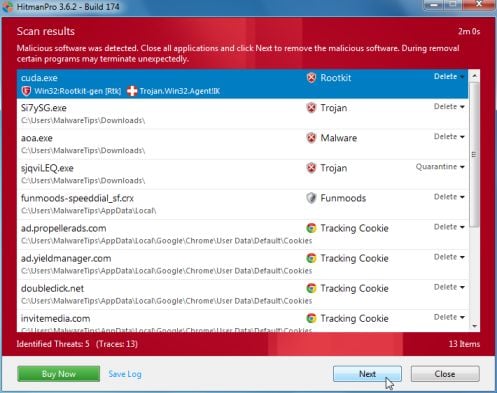
- Click on the Activate free license button to begin the free 30 days trial, and remove all the malicious files from your computer.
![[Image: HitmanPro 30 days activation button]](//malwaretips.com/blogs/wp-content/uploads/2012/11/hitmanpro-activation.jpg "HitmanPro free 30 days trial")
 Click on the Next button, to install HitmanPro on your computer.
![[Image: HitmanPro 30 days activation button]](http://malwaretips.com/blogs/wp-content/uploads/2012/11/hitmanpro-activation.jpg "HitmanPro free 30 days trial")
Your computer should now be free of “Attenzione! Il Suo computer personale è stato bloccato” infection. If your current anti-virus solution let this infection through, you may want to consider purchasing the PRO version of Malwarebytes Anti-Malware to protect against these types of threats in the future, and perform regular computer scans with HitmanPro.
How to Remove “Attenzione! Il Suo computer personale è stato bloccato” virus from an Apple Mac OS X
For years, Windows users have been plagued by ransomware demanding several hundred dollars to unlock their computers.
The bad guys know there is a growing market of Apple consumers who, for the most part, feel pretty safe about browsing the Internet on a Mac without the need for any security product.
Cyber-criminals, well known for not re-inventing the wheel, have ‘ported’ the latest ransomware to OS X, not by using some complicated exploit but rather leveraging the browser and its ‘restore from crash’ feature. The “Attenzione! Il Suo computer personale è stato bloccato” ransomware page is being pushed onto unsuspecting users browsing regular sites but in particular when searching for popular keywords.
To remove “Attenzione! Il Suo computer personale è stato bloccato” from your Apple MAC OS X browser you can follow any of below options.
OPTION 1: Remove “Attenzione! Il Suo computer personale è stato bloccato” malicious web page from Apple Mac OS X by resetting Safari to its default settings
OPTION 2: Remove “Attenzione! Il Suo computer personale è stato bloccato” browser hijacker Apple Mac OS X virus using Force Quit for your browser
OPTION 1: Remove “Attenzione! Il Suo computer personale è stato bloccato” malicious web page from Apple Mac OS X by resetting Safari to its default settings
To remove the “Attenzione! Il Suo computer personale è stato bloccato” browser hijacker from Safari, we will need to reset your browser to its default settings.
- Click on the Safari menu and then choose Reset Safari
![[Image: Select Reset Safari from the menu]](//malwaretips.com/blogs/wp-content/uploads/2013/07/Reset-Safari.png "Select Reset Safari from the menu")
- In the new windows, make sure all items are marked and click on the Reset button.
![[Image: Reset Safari to default settings]](//malwaretips.com/blogs/wp-content/uploads/2013/07/Reset-Safari-to-default-settings.png "Reset Safari to default settings")
![[Image: Select Reset Safari from the menu]](http://malwaretips.com/blogs/wp-content/uploads/2013/07/Reset-Safari.png "Select Reset Safari from the menu")
![[Image: Reset Safari to default settings]](http://malwaretips.com/blogs/wp-content/uploads/2013/07/Reset-Safari-to-default-settings.png "Reset Safari to default settings")
You can also watch this video on how to reset Safari to its default settings:
OPTION 2: Remove “Attenzione! Il Suo computer personale è stato bloccato” browser hijacker Apple Mac OS X virus using Force Quit for your browser
- Press Command + Option + Escape simultaneously. This will open the open the Force Quit Applications window.
![[Image: Press Command + Option + Escape to start Force Quit menu]](//malwaretips.com/blogs/wp-content/uploads/2013/07/Force-Quit-an-Application-in-Mac-OS-X-Step-1.jpg "Press Command + Option + Escape to start Force Quit menu")
- Select Safari, Chrome, Firefox or any other browser in which your are seeing the “Attenzione! Il Suo computer personale è stato bloccato” ransomware notification.
![[Image: Select Firefox, Chrome or Safari from Force Quit menu]](//malwaretips.com/blogs/wp-content/uploads/2013/07/Force-Quit-an-Application-in-Mac-OS-X-Step-2.jpg "Select Firefox, Chrome or Safari from Force Quit menu")
- Click the button that says “Force Quit“. This will forcefully end your browser program, thus removing the “Attenzione! Il Suo computer personale è stato bloccato” browser hijacker.
![[Image: Click on the Force Quit button to remove Attenzione! Il Suo computer personale è stato bloccato virus]](//malwaretips.com/blogs/wp-content/uploads/2013/07/Force-Quit-an-Application-in-Mac-OS-X-Step-3.jpg "Remove \"Attenzione! Il Suo computer personale è stato bloccato\" virus 1")
If you cannot switch from the unresponsive app, press Command + Option + Shift + Esc for three seconds to force it to quit. This key combination tells OS X to force quit the frontmost app.
![[Image: Press Command + Option + Escape to start Force Quit menu]](http://malwaretips.com/blogs/wp-content/uploads/2013/07/Force-Quit-an-Application-in-Mac-OS-X-Step-1.jpg "Press Command + Option + Escape to start Force Quit menu")
![[Image: Select Firefox, Chrome or Safari from Force Quit menu]](http://malwaretips.com/blogs/wp-content/uploads/2013/07/Force-Quit-an-Application-in-Mac-OS-X-Step-2.jpg "Select Firefox, Chrome or Safari from Force Quit menu")
![[Image: Click on the Force Quit button to remove Attenzione! Il Suo computer personale è stato bloccato virus]](http://malwaretips.com/blogs/wp-content/uploads/2013/07/Force-Quit-an-Application-in-Mac-OS-X-Step-3.jpg "Remove \"Attenzione! Il Suo computer personale è stato bloccato\" virus 1")
You can also watch this video on how to Force Quit a program on an Apple Mac OS X:
If you are still experiencing problems while trying to remove “Attenzione! Il Suo computer personale è stato bloccato” virus from your Windows or Apple MAC OS X machine, please start a new thread in our Malware Removal Assistance forum.








