


You’re trying to check an Aurum withdrawal, but the name turns up on a bot, an exchange and a card. The search results aren’t making things clearer.
Which name belongs on your paperwork? The answer starts with the service that actually received your money, not the newest name in the group chat.
Overview
New Zealand’s warning puts withdrawals in focus
The Financial Markets Authority says Aurum Foundation isn’t registered to provide financial services or products in New Zealand. It also received an investor’s report of a blocked withdrawal.
That report is a reason to act, not a tally of how many people lost money. The authority does not say every account encountered the same result.
The FMA also points to messages describing passive income and low-risk automated trades. An app can make trading look effortless without making the money inside it safe.
Do not send fresh money for a chance to retrieve an old balance. First establish whether you still control any assets and which service took the original payment.
The Aurum name shows up on different services
The New Zealand notice identifies products and operations associated with the Aurum name, including bots, Aurum Neyro, an exchange, cards and a token described as Aurum RWA.
It also names Ex-Ai and Zeus Ai pro. A person who only remembers the bot’s name should check it alongside the merchant or address on their own receipt.
A trading bot, a card program and a token can have different counterparties and different rights, even when they’re promoted beside one another.
Do not assume that a dashboard migration changes who owes you money. Keep original account and transfer records before accepting an explanation about a replacement product.
What you can independently check today
- Look up the exact provider and domain in your own regulator’s warning and authorization records.
- Separate money in an account you control from a figure displayed inside the investment dashboard.
- Match every transfer to its own date, recipient and reference before trying to calculate your outstanding balance.
The answer may come from several places. A block explorer can confirm a transfer took place, while your regulator can tell you whether the provider was authorized locally.
How the Aurum Investment Pitch Was Presented
Step 1: The invitation makes automated trading sound easy
New Zealand’s authority said it received reports of promotion through social media and personal networks. The offer could arrive through somebody a prospective investor already knew.
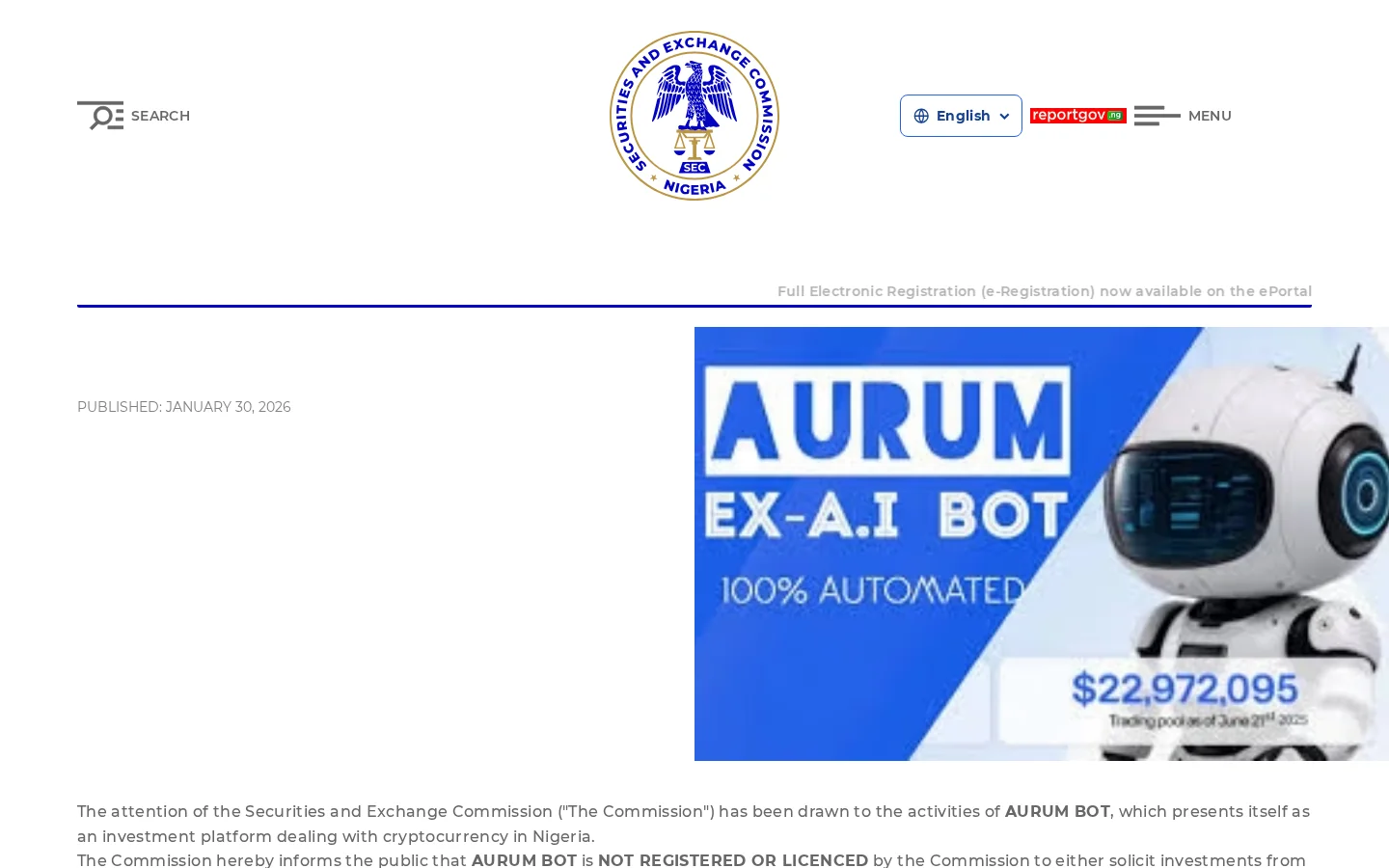
The bot branding presents the software as doing the work. The Nigerian regulator’s notice reproduces promotional imagery that describes an Aurum trading bot as fully automated.
Automated execution and dependable income aren’t the same thing. A program can place orders quickly and still lose money when the market moves against its positions.
Before putting weight on a performance claim, ask whose account generated it and how the result was validated. A pool figure printed on an image answers neither question.
Step 2: The platform offers several reasons to keep funds inside
One prospect may arrive for the bot, another for a card or exchange. Each needs an answer to the same practical question: who can release or move my money?
If you transfer assets to a wallet controlled by a provider, they aren’t in the same position as assets you hold under your own keys.
Do not confuse a withdrawal limit, a loyalty balance and a cryptocurrency balance. All can appear as numbers in an app, but they describe different things.
There is no reason to deposit a small test amount just to see the menu. You can ask for the exact product terms without giving up custody.
Step 3: A withdrawal request reveals what the balance is worth
One New Zealand investor told the authority they couldn’t withdraw. The report is specific to that investor, but it highlights the risk of treating credited profits as cash.
For your own account, preserve any withdrawal status, error message and support response. A promise in a chat room does not replace a bank credit or settled transfer.
If an approval appears without a transaction reference, ask for a reference through the existing verified channel. Don’t switch to a stranger who promises to accelerate the process.
Stop if anyone demands an extra payment to release funds. Whether the demand says audit, activation or recovery, you’re being asked to put more money at risk.
Why the Regulatory Warnings Are Not Interchangeable
New Zealand focused on local registration and risk claims
The Financial Markets Authority says the promotions may understate the risks of trading crypto assets. That concern is separate from the question of whether a website loads.
Check the permission for the service you’re offered, not a screenshot of business registration. A corporate registration alone does not authorize financial services.
The United Kingdom warned about the named firm and domain
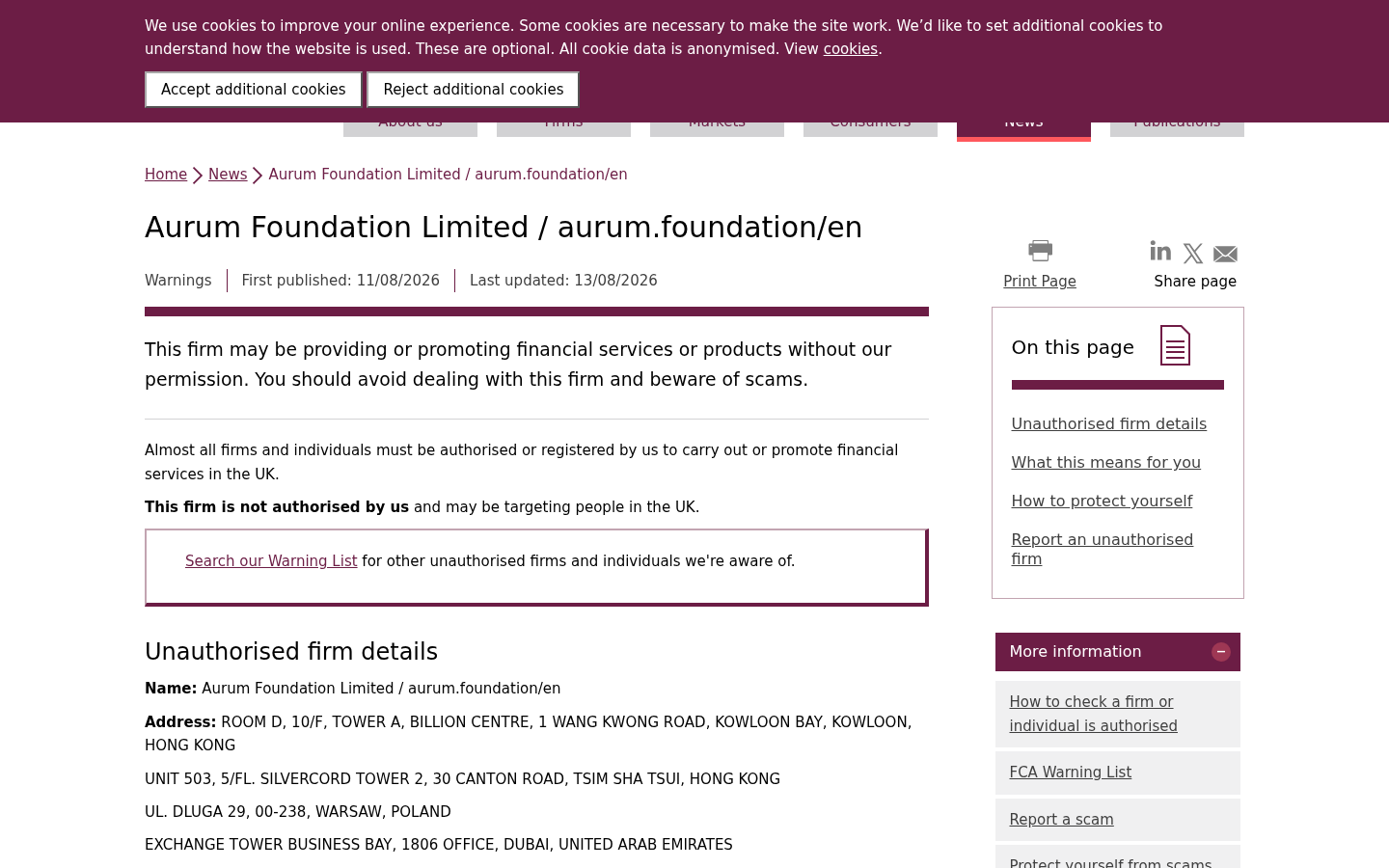
The Financial Conduct Authority warning identifies the domain aurum[.]foundation/en. It says Aurum Foundation Limited isn’t authorized and may be targeting people in the United Kingdom.
The FCA advises against dealing with the named firm. It also explains that people dealing with an unauthorized firm won’t have access to its usual ombudsman and compensation arrangements.
That doesn’t mean a bank can’t investigate an individual payment. It means you shouldn’t accept a promoter’s assurance that regulator-backed compensation covers the account.
Belgium and Nigeria described different offers and jurisdictions
Belgium’s Financial Services and Markets Authority included Aurum Foundation in a notice about crypto-asset service providers operating without authorization in Belgium.
The Nigerian SEC focused on Aurum Bot. It said the bot operation displayed characteristics commonly associated with Ponzi schemes and wasn’t licensed to solicit investments in its market.
These are public warnings from separate authorities. They do not establish one worldwide legal outcome or decide the claim of a person who put money in.
Who Appears on Your Contract and Transfer
Identify the exact counterparty before taking advice
Write down the contract’s business name, the platform name and the actual payment recipient. If the names differ, don’t erase the discrepancy by using only “Aurum” in your records.
Someone in a referral group may be able to explain who sent an invitation. They don’t automatically represent the company holding your funds.
An address in a warning is an identification clue
The FCA lists several addresses associated with the firm or its promotion. Read them as identifiers, not as validated offices where a visitor can collect money.
Do not mail identity documents to an address copied out of the warning. Ask the relevant regulator or your financial institution which official reporting route it accepts.
Some records are best obtained from outside the platform
If you used an exchange to send crypto, download the exchange confirmation while you still have access. A later screenshot of your Aurum balance cannot replace that record.
If a bank funded the exchange purchase but the exchange sent the crypto, note both steps. The bank and exchange may see different parts of the transaction.
A new brand is not evidence of a successful withdrawal
A card image, an invitation to a new bot or a new token doesn’t show assets have moved to you. Check what actually changed in the account you control.
If an announcement offers a replacement balance, retain the old statement and the new terms. A credit in a different unit is not the same as repayment.
How to Read a Withdrawal Record Before You Report It
Find where the last completed transfer actually landed
Start with the platform that funded the deposit. Its history should show the original debit and may show a transaction reference, the asset and the destination.
Then look at your own wallet or exchange for an incoming withdrawal. Confirm that the network and amount correspond to the request rather than an unrelated transfer.
If the sender supplies a transaction ID, search it through a trusted explorer for that network. Check the destination against the wallet address you expected to receive it.
An explorer may show that a transfer went somewhere. That only helps if you know whether it went to a destination you actually control.
Do not connect a wallet to an unfamiliar site to perform this lookup. A public transaction reference can be inspected without signing a transaction or proving ownership.
If the dashboard shows a red error and no reference exists, save both facts. Do not invent an on-chain transaction ID for a request that never left the site.
Describe the reported problem precisely
A delayed withdrawal is not automatically an account takeover. Check whether you still have account access, whether pending withdrawals appear and whether contact details unexpectedly changed.
If an exchange sent your deposit, distinguish the exchange’s completed debit from the provider’s later promise to pay you. One can be true without the other.
If the balance is in a token, keep its name and units alongside any cash estimate. The estimate can change even when no funds have moved.
For a reported card service, note whether you actually received a card and which company the card agreement identifies. Don’t infer that a marketing logo identifies your issuer.
The FMA warning notes reports about several products, not only one payment route. Naming your product and the reason for your report helps the authority distinguish them.
Make a note if a promoter showed you a registration from another country. The regulator can compare that document with the service and location you were actually offered.
Don’t let an offer to help change the transaction
Stop when getting help turns into opening a new trading account, sending a fee or approving a wallet request. None is necessary to preserve an existing receipt.
Save a copy of the new demand before leaving the chat. Write the sender’s name and the date beside it so the account isn’t lost in a screenshot collection.
If other people in your group are waiting, share the regulator link instead of circulating personal balances. They can compare the brand and protect their own records.
What to Do If You Sent Money to Aurum
-
Make a copy of the withdrawal record before changing anything. Save the account identifier, balance units, timestamps, approval or error text, and any later instructions.
Also keep the original invitation or referral message. Store it privately rather than posting screenshots that identify you and disclose the amount you put in.
-
Start with the institution that handled the actual payment. For a bank transfer, call your own bank through a known number and ask about tracing or recall.
For crypto sent from an exchange, open that exchange’s official support and provide the transaction ID, asset, network and destination. Recovery depends on what can still be reached.
-
Distinguish a provider transfer from a payment you made yourself. Tell support whether you approved the transaction, somebody accessed your account, or you aren’t sure.
Don’t give any support agent a recovery phrase or private key. Transaction hashes help identify transfers without granting access to the funds in your wallet.
-
Report in the jurisdiction where you were approached. In New Zealand, start with the FMA’s reporting route and keep the submission reference.
Give the regulator the exact brand, website and person who contacted you. If you’re outside New Zealand, use your local financial authority or police reporting channel.
-
Turn down follow-up offers that require a separate payment. No private message can guarantee that a crypto transfer will be reversed once it has settled.
If someone claims to represent the police or a regulator, look up the agency yourself. Don’t call a number or follow a link they provided to verify themselves.
Frequently Asked Questions
Is Aurum Foundation registered in New Zealand?
The FMA says it isn’t registered to provide financial products or services in New Zealand. That statement refers to the business identified in the FMA warning.
Do the regulators say every Aurum user lost money?
The New Zealand authority cites a report from an investor who couldn’t withdraw. Other regulators focus on authorization and features of the offer, not every individual outcome.
Does seeing a profit in the bot mean it’s mine to withdraw?
A dashboard figure is a claim about your account. Check for an actual completed bank payment or blockchain transfer to a destination you control.
Does a card or new account guarantee that my old balance will move?
A different account can come with separate terms and rights. Keep the original record and don’t treat a migration announcement as proof that you’ll receive money.
What number does an exchange need to identify my crypto transfer?
Find the transaction ID in your exchange withdrawal history. Include the asset, network, destination and date, but keep your private key and recovery phrase secret.
Should I pay to get an Aurum withdrawal escalated?
Do not risk more money to unlock an old balance. If a message asks for another transfer, preserve it and report it with the original records.
The Bottom Line
Don’t put fresh money into Aurum Foundation or an Aurum Bot offer covered by these warnings. An account balance and a bot’s income claim aren’t proof you can withdraw.
If you already paid, decline any paid recovery offer and keep the withdrawal records. Start with your bank or exchange and report the exact service you dealt with.

Join the discussion
0 commentsShare your experience or ask a question about this article.
Community experiences
Did this happen to you?
Your experience could help someone recognize the same scam. Submit a private report for our team to review.
I experienced this tooReports are reviewed before publication. Sharing publicly is always your choice.
Discussion
Start the conversation
Have a question or something useful to share? Add the first comment.