


An invitation to talk about a side business can feel more personal than an ad. Someone knows your name and thinks you have potential.
Once the conversation turns to Amway, a question matters more than the pitch. What would you have to sell before this starts paying you?
Overview
The case is about recruitment and the cost of doing business
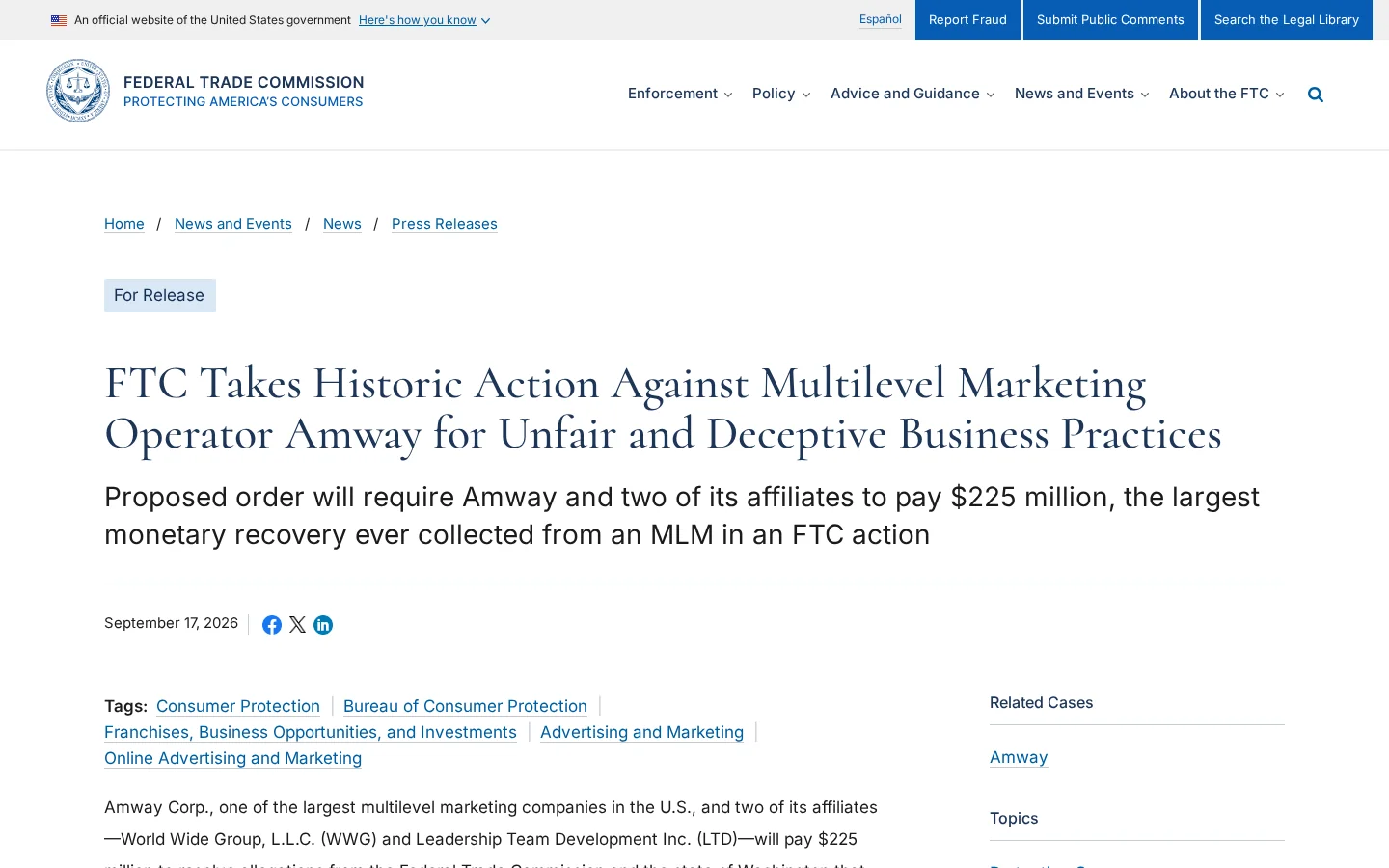
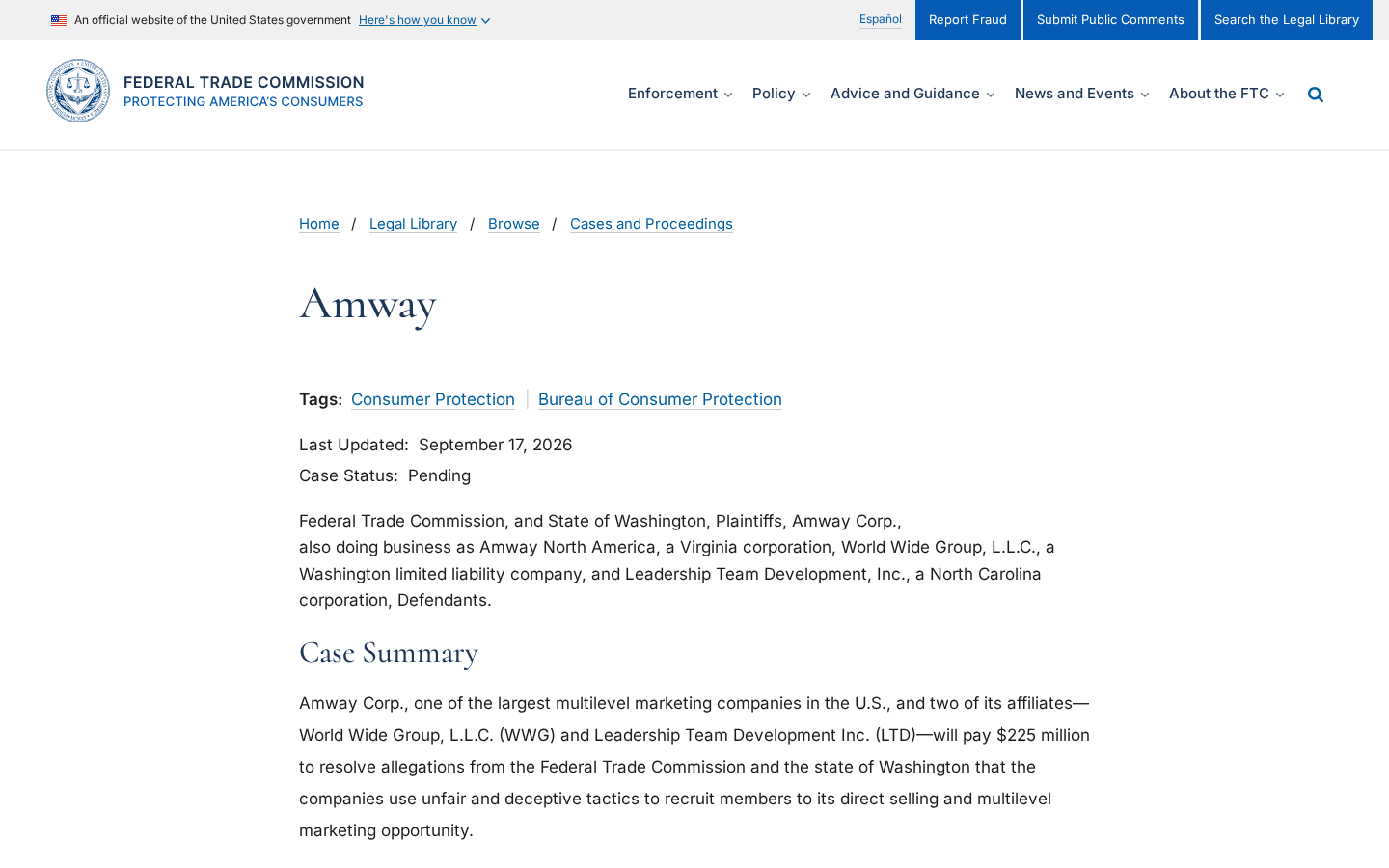
The FTC and Washington state brought a civil case against Amway Corp. and two affiliates, World Wide Group and Leadership Team Development, known as WWG and LTD.
The September announcement describes allegations about likely earnings, the pressure to buy inventory and the reporting of customer sales. It isn’t a finding about product safety.
Some prospects were allegedly told they could earn substantial income or replace their salary. The complaint says most people who joined through WWG or LTD after 2020 did worse.
Specifically, the agencies said most in that group spent more on products and training than they received from Amway. That comparison isn’t a breakdown of every seller’s retail income.
The $225 million settlement doesn’t open a claim form by itself
The FTC case page lists the complaint and an October order. It describes $225 million in total relief, not separate checks already available to all former participants.
The FTC said nearly all of the settlement would go toward redress for qualifying people recruited by WWG or LTD who lost money. It planned to announce instructions separately.
The defendants did not admit or deny the underlying allegations, except as specifically stated in the order. The obligations can still be enforced under the civil order.
Do not send an old account password to anyone who claims a settlement spreadsheet needs your login. Neither the headline number nor a familiar logo authenticates the request.
What to separate when you look at the offer
- Buying an item for personal use is different from signing up as an Independent Business Owner, or IBO.
- An actual sale to a customer is different from an inventory order or a purchase made to qualify for compensation.
- An earnings figure before product and training expenses isn’t a reliable estimate of what you’ll take home.
These distinctions matter even if you’re on good terms with your recruiter. Someone can genuinely like a product and still give you an incomplete picture of selling it.
How the Recruiting Pitch Can Turn Into an Inventory Bill
Step 1: A personal invitation makes the opportunity sound selective
The complaint says recruiting presentations sometimes promised access to business mentors and presented enrollment as an exclusive opportunity. The FTC said that exclusivity was overstated.
Mentoring has value when you can see what is offered and compare its cost with alternatives. An invitation alone cannot tell you how many paying customers you’ll find.
Ask for the material terms before attending another meeting. A seller should be able to tell you who charges for training, what the starter plan costs and what’s optional.
Step 2: A gross payment is held up as evidence of income
The FTC describes alleged earnings claims that included job replacement, early retirement and amounts exceeding $40,000 a year. Those claims aren’t a reasonable starting point for your budget.
Suppose you pay $300 for stock and actually collect $230 from customers. That’s $70 less than you spent before training or other costs enter the calculation.
If inventory remains at home, don’t count it as cash in your budget. Its value to the business depends on what you can sell or return.
For a useful earnings comparison, ask for typical net results after expenses. A bank deposit screenshot won’t show the purchase costs or the people who quit.
Step 3: Purchases and customer sales can be easy to confuse
The agencies allege that some participants were instructed to report sales they hadn’t made. Booking a nonexistent customer sale would make the opportunity appear more retail driven.
That difference is more than accounting. Compensation linked to inventory purchases can give a sponsor an incentive to promote orders even when demand for the stock is uncertain.
Keep proof of each actual customer payment and the price the customer agreed to pay. Do not sign a sales record for something nobody bought.
If someone tells you an invented receipt is harmless because you can sell the item later, don’t enter it. Your accounting should reflect what already happened.
Step 4: Training and other spending add to the break-even point
The lesson may be useful, but a workshop still costs money. Decide whether you’d purchase it independently of any promise that a mentor can turn you into a high earner.
Track course fees separately from products bought for resale. A decent margin on your first orders can disappear when training charges and travel come out of it.
The order addresses charges for new participants’ first-year training by approved providers. Check the applicable term and effective date before paying anyone who says a charge is required.
Who Charged You and Where to Find the Rules
Three named defendants do not mean one payment descriptor
Amway is the product company identified in the case. WWG and LTD were approved providers also named as defendants, not alternate spellings of Amway.
Someone who bought stock and signed up for training may have two receipts. Sort them by the entity shown and keep any different seller or billing names.
Do not send records to an address copied from a pleading
A legal filing may list attorneys, business offices or a court address. None of those is automatically a returns warehouse or an address for a consumer’s claim.
For physical inventory, use the verified return instructions that apply to your orders. Ask for the destination and whether your package needs authorization before you ship.
A training provider and a product seller can answer different questions
Identify which party charged for a subscription, event or coaching program. A response about unsold inventory doesn’t cancel a separately billed training membership.
Keep support replies with the corresponding receipt. If you escalate to a bank, explain what the charge bought and why you believe it should stop.
The settlement is not a label on a bottle
The filed order addresses the marketing plan and related conduct. It doesn’t determine whether a sealed product you bought is defective or whether you’ll like it.
If your concern is a retail item, focus on that order’s seller and return process. If you joined the business opportunity, keep the onboarding and recruitment paperwork too.
What the October Order Changes
The filed order requires a marketing plan that ties compensation more closely to eligible sales. The details matter more than a recruiter’s summary.
Under the order, eligible customer sales must account for at least 70% of monthly product volume to avoid the specified reduction. That’s a point-value measure, not a guaranteed margin.
Appendix A illustrates the calculation: if eligible sales account for 35% of the volume, only half the otherwise available business volume may be credited.
In other words, somebody can buy the same stock as before and receive a different credit under the revised rules. An old earnings example may no longer apply.
The order also calls for customer sales reporting, receipts and audits. It sets rules for people who falsify sales and for training before participants can recruit.
Some changes have an implementation period. If you currently participate, ask which written rules are in force for the month you are reconciling instead of relying on group messages.
There is no reason to stock up before you understand the terms. A credit formula cannot supply retail customers, and unsold items are not evidence of earnings.
The order distinguishes nationwide consumer relief from a separate $4 million payment to Washington. Treat the $225 million headline as the total, not the amount available for a single program.
Unsold products and settlement payments are separate
The order addresses qualifying inventory bought from Amway while someone was a participant. Its return provision covers unopened and unsold or currently marketable and unsold products within 12 months.
The provision calls for a full refund of qualifying costs, including tax and fees. It says Amway covers return shipping if it requires those items to be sent back.
Make a list by purchase date, product and condition. Mark items bought from another seller separately, and tell support which ones have been opened.
Ask the verified support channel whether your items qualify under the applicable rules and whether it issues a return label. Get the response before paying for shipping.
If an item is rejected after it’s shipped, the order says Amway is to return the product on request. Save the rejection and make the request in writing.
That doesn’t mean an event ticket or a subscription from a training provider belongs in the box. Keep those payments on their own lines when you seek help.
Compare customers with orders placed for points
The complaint describes recurring product orders known as DITTO. Check for a scheduled product order separately from training, event or website charges paid to another entity.
A scheduled purchase is useful for a product you independently want. It changes the calculation if you’re only buying it to reach a volume target.
If a recruiter says everyone should hit a target on day one, compare the new bill with what customers have actually ordered that month.
Review the latest statement and compare it with the next scheduled order. Cancel or change a schedule you don’t want before it becomes another shipment.
If your records show orders shipped to you and income from retail sales, keep both. Whatever the recruiter called the expense, the bank records show what you spent.
Save a copy of the membership terms before closing an account. It may help you explain whether a later charge was for stock, coaching or another service.
If you do receive a company notice about changes, compare it against the FTC case record. A real update is not an instruction to share banking credentials with a promoter.
What to Do If You Joined or Bought Inventory
-
Pause new commitments while you count the costs. List any recurring product, training and event payments, noting who bills each item and when it renews.
Put actual retail receipts and company payments in separate columns. That will show whether the arrangement made money before you decide what to cancel.
-
Get a written answer about returns before shipping anything. Send the verified seller the order number and describe the condition of the items you want to return.
Ask for the deadline, possible deductions and the correct destination. Keep tracking and proof of the package contents if a return is approved.
-
Cancel each separate recurring charge through its actual provider. Save the result and ask your bank or card issuer about later debits you did not authorize.
Do not report a payment as unauthorized simply because you later regretted it. Explain the charge, your cancellation date and the response you received.
-
Keep evidence that connects your loss to the alleged conduct. Save receipts, income claims, training fees and any message telling you how to report customer sales.
Note whether you enrolled through WWG, LTD or another route. That detail is more useful than trying to estimate a refund by dividing the total settlement.
-
Watch for refund instructions from the FTC itself. Use the case page or the agency’s refund directory, and ignore anyone selling a place in line.
Report an impersonation or misleading sales pitch through FTC ReportFraud. Keep the confirmation, but don’t mistake a report for enrollment in a settlement program.
Frequently Asked Questions
Did Amway admit the allegations in the case?
The filed order says the defendants neither admit nor deny the allegations, except as specified in the document. The civil settlement still imposes obligations.
Can anyone who bought an Amway product receive a settlement refund?
The FTC describes redress for harmed IBOs recruited by the two named training affiliates. An ordinary retail receipt doesn’t put you in that group by itself.
Does the 70% figure mean my profit margin is 70%?
The rule measures the share of monthly product volume from eligible customer sales for compensation purposes. Net profit depends on actual cash received and expenses paid.
Should I pay someone to file an Amway claim for me?
Do not pay someone who contacts you to sell access to FTC redress. Use the agency’s own listing to verify that a process exists first.
Is WWG an abbreviation for Amway itself?
WWG stands for World Wide Group, one of the approved providers named in the case. Leadership Team Development is the other named affiliate.
Can I count products I plan to sell later as completed sales?
A planned sale is not a completed transaction. Keep your inventory separate from orders that have actually been paid for by an eligible customer.
The Bottom Line
Don’t join on the strength of the earnings pitch described in this case. Ask what ordinary participants keep after costs, and do not buy inventory to satisfy a recruiter.
If you’re already out money, keep your payment records, stop unwanted recurring charges and verify any settlement notice with the FTC. An upfront refund fee is not part of it.

Join the discussion
0 commentsShare your experience or ask a question about this article.
Community experiences
Did this happen to you?
Your experience could help someone recognize the same scam. Submit a private report for our team to review.
I experienced this tooReports are reviewed before publication. Sharing publicly is always your choice.
Discussion
Start the conversation
Have a question or something useful to share? Add the first comment.