


A screenshot of a profitable trade can make a monthly course fee look small. It helps if the person posting it seems to live the life you want.
Years after those posts first circulated, people are finding another big number attached to IM Mastery Academy. This one comes from a federal court case.
Overview
The same case covers several names
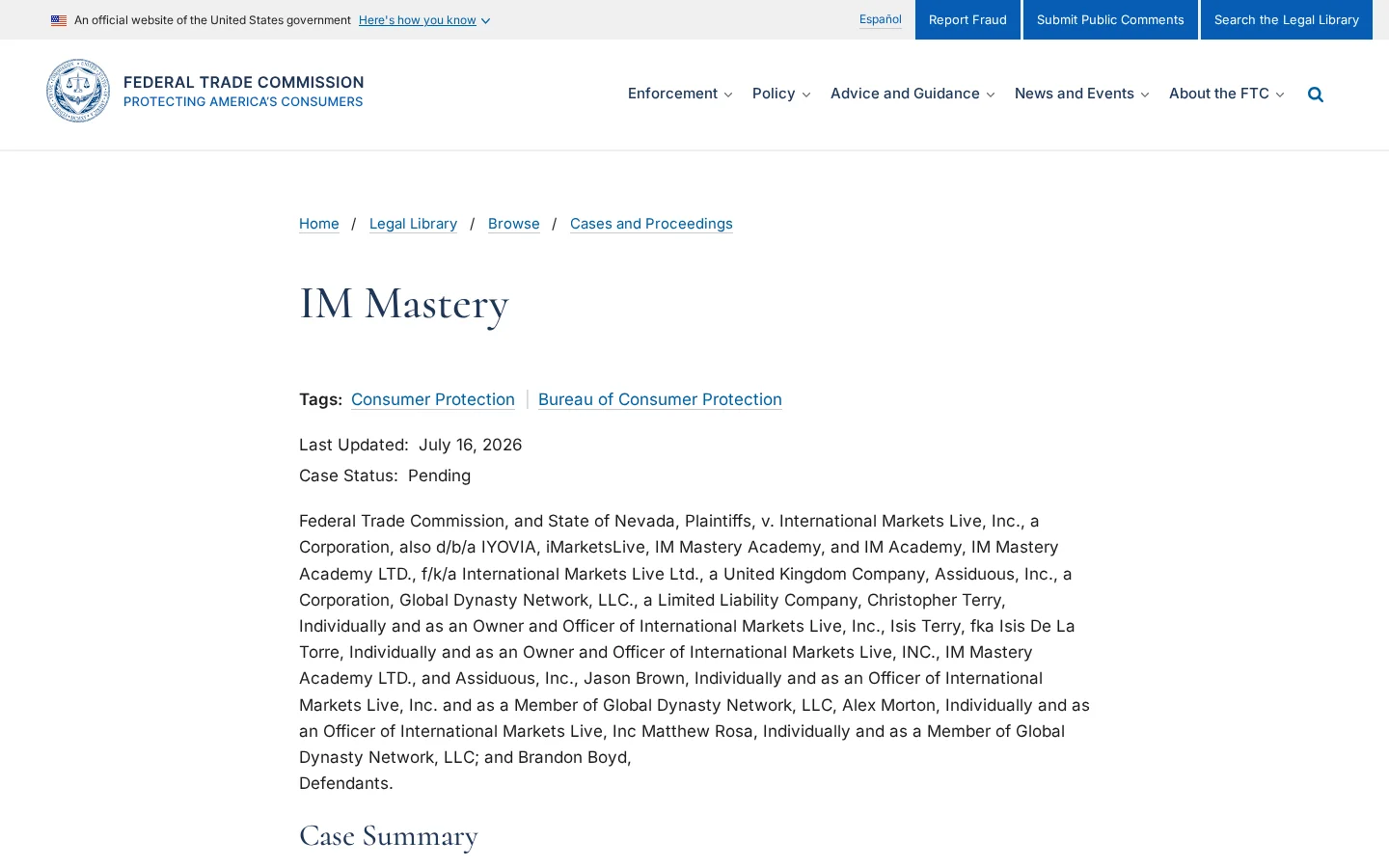
Someone who remembers signing up for iMarketsLive may not recognize IYOVIA. The FTC’s case page ties both names, along with IM Academy and IM Mastery Academy, to International Markets Live.
In May 2025, the FTC and Nevada accused the operation of using false or unsupported earnings claims to sell financial training and a business opportunity.
The allegations cover two distinct ways customers were told they could earn: by trading after buying instruction, or by earning commissions for marketing the programs to others.
Neither path starts with money in your pocket. The upfront question for a prospective member was how much they would spend before finding out whether it worked.
A monetary judgment is not the refund pool
A June 2026 stipulated order in the civil case sets a $795.8 million judgment for the lead defendants. That figure does not represent money already available to distribute.
In its settlement announcement, the agency described nearly $90 million in assets to be surrendered by the lead defendants. Separate defendant settlements had their own terms.
This distinction matters when a social post claims the government has released hundreds of millions for immediate individual claims. The number on a judgment doesn’t establish the distribution date.
The case page is the place to start. The filings concern civil orders, and they don’t announce a criminal conviction or a check for each former subscriber.
What former subscribers should keep
- Keep the invoice, statement charge and the name the subscription used when you bought it.
- Separate course fees, amounts paid to a trading platform, and any commissions actually received.
- Keep dated cancellation requests, seller replies and the social post or pitch that brought you in.
A payment record can connect your purchase to the legal case. A promoter’s screenshot of a great trade, by contrast, can’t show what happened in your account.
How the IM Mastery Academy Pitch Worked
Step 1: Income appeared before the price
The FTC’s original case announcement describes social posts showing supposed successful trades. The agency said sellers also portrayed travel and expensive purchases as results of the opportunity.
According to the complaint, some posts targeted college communities. The pitch made high income sound attainable early in life, without a long track record in finance.
A real photo of a car doesn’t explain how someone paid for it. Ask for the denominator behind an earnings claim: what did the ordinary paying participant net?
One profitable day or one successful salesperson leaves out all the subscribers who paid without ever producing a similar result. Ask what happened to those buyers too.
Step 2: The sales conversation moved to paid training
The regulators described prospective customers responding to a post, then attending a sales event or taking a phone call. Programs could cost as much as $400 per month.
A monthly charge is real even if a trading result is hypothetical. Six charges at that advertised upper price would cost $2,400 before any separate trading losses.
The complaint also questioned the background of certain people presented as educators. Selling a service and demonstrating sustained, independently verified trading ability are different qualifications.
Buyers considering a similar pitch can ask for the syllabus, the teacher’s experience and the total price in writing. If the seller only discusses upside, don’t enroll.
Step 3: Selling the membership became a second way to earn
The opportunity did not stop at training. The regulators alleged that the company used earnings claims to persuade people to market those training services as multilevel marketers.
That creates a distinction a sales presentation can blur. The person praising the class may have a commission incentive even if their own trading results are ordinary.
Ask whether a claim counts commissions as trading profits. If it does, those profits tell you nothing about whether the lessons helped the promoter trade successfully.
The FTC said few people earned meaningful amounts as MLM participants. It also said a majority of training customers stopped paying within the first month.
The regulator gave two figures from company data: 60% stopped paying within one month and 90% stopped within six months. Those are retention figures, not individual trading histories.
Customers can stop paying for different reasons. The numbers don’t show why every person left, but they matter when deciding whether a success story represents the typical subscriber.
Step 4: The recurring bill could outlast the original pitch
A subscriber who no longer watches training videos can still be charged if an account renews. Stopping use and stopping billing are separate events.
The lead defendants’ civil order addresses negative-option billing. Among other requirements, it calls for informed consent before covered charges and a simple way to cancel.
That provision doesn’t mean each former subscriber experienced an unwanted renewal. Look at your actual charge dates and the cancellation terms that applied to your account.
If a statement still shows recurring debits, keep a written cancellation confirmation and ask the payment provider how to handle any charge that follows it.
Who Sold the Program and What the Court Order Covers
Match the business name to your own receipt
A presentation may use one name, while a receipt shows another. Search both the commercial label and the legal entity listed on the FTC case page.
International Markets Live was named in the case with several business names. That is a documented link between those brands, not permission to assume all trading schools are connected.
Asset locations are not customer support addresses
The FTC’s asset list included homes and undeveloped lots in several locations. Don’t mail your old account records to a street address taken from that list.
A real property mentioned in a civil filing isn’t a claim center. Use the official docket or the government’s published contact instructions to find the next step.
A sales contact is not a refund administrator
The person who received a commission for bringing you in may be the only contact you remember. That doesn’t give them authority to collect money for a settlement.
If a former recruiter offers help, ask for an official source you can find independently. Don’t send an identity document or bank statement to a private group.
Names on other orders have separate terms
The case summary records different agreements involving the main defendants and other individuals and companies. Read the parties on the order before assigning that order’s terms to anyone.
July 2026 brings a separate timeline entry for relief defendants. The word “settlement” on two documents doesn’t mean the same legal obligations apply to everyone named.
What the Settlement Actually Changes
The court order listed on June 3 is different from the proposal the agency announced in May. Use the entered order when checking what restrictions apply.
The FTC says the lead agreement bans covered defendants from selling trading training and investment opportunities. It also restricts unsupported earnings claims and addresses telemarketing and renewal disclosures.
The asset transfers include more than cash. An item can be identified for surrender without there being money from its sale ready to send out.
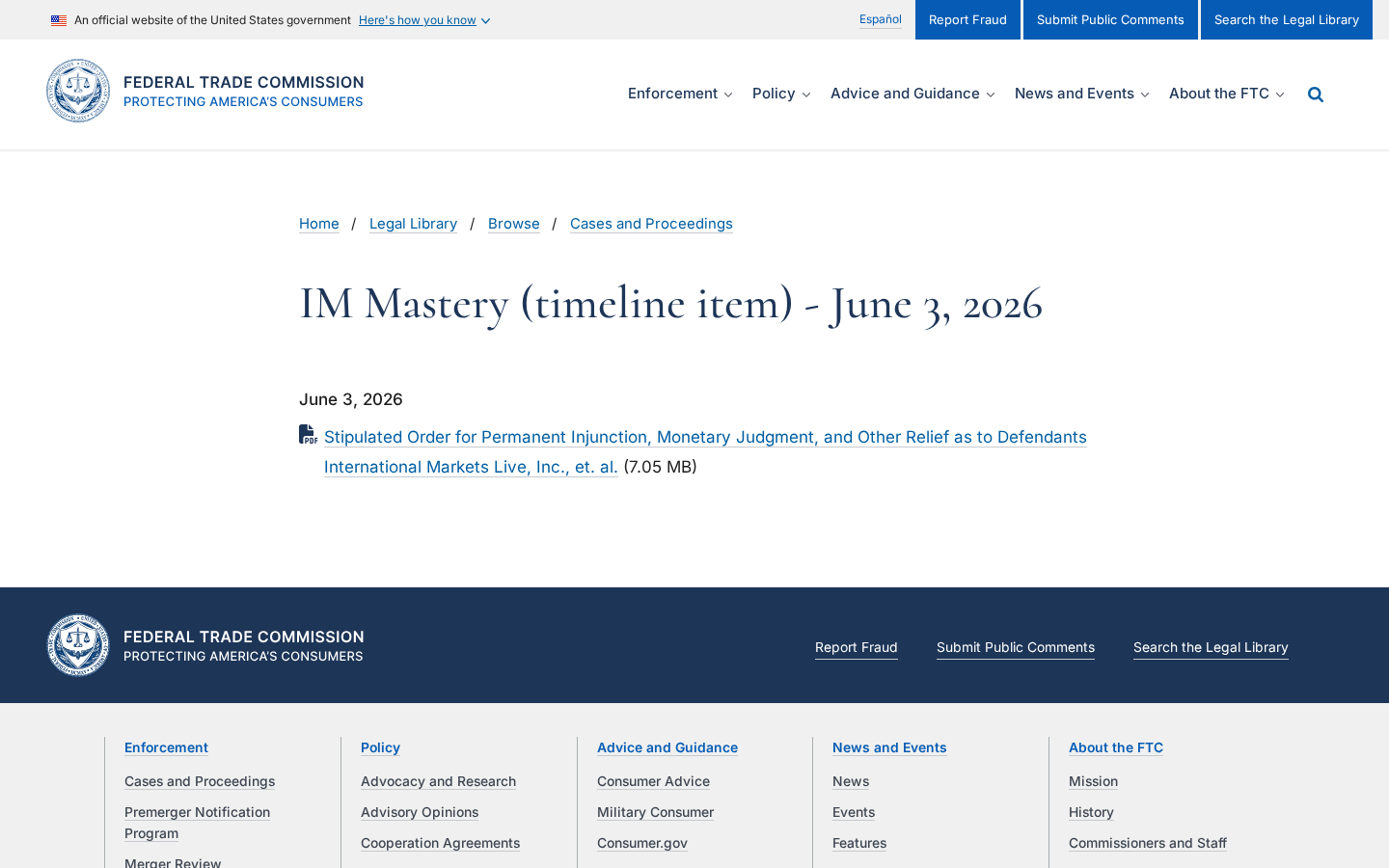
The FTC settlement announcement explains that much of the judgment is suspended after specified transfers, with the full amount potentially due if financial disclosures were false.
Quoted sales figures, judgments and estimated asset values are different measures. Adding those numbers doesn’t tell a former member how much the agency can collect or distribute.
Do not rely on a private countdown or a paid enrollment link. For an actual government refund, look for a case-specific notice and any published directions.
If you lost money on a trade you placed yourself, record it separately from the fee charged for a course. A single total makes it harder to explain what happened.
Why expensive assets show up in a consumer case
The FTC listed eight homes, 13 lots and 19 vehicles among the assets in the lead agreement. A yacht and jewelry also appeared in the announcement.
Those items are relevant because the settlement relies on transferring property, not just writing a check. Estimated value is not necessarily what an asset eventually brings in.
There were payments or obligations in other agreements too. The FTC expected the asset value and monetary judgments paid by other defendants together to exceed $100 million.
Do not subtract that estimate from your own losses or treat it as a formula for relief. The payout process, if announced, will explain which losses count.
What an earnings claim should show you before you pay
Ask what the course actually teaches, then separate the training from the proposed income. Learning to read a chart is not the same as producing a profit.
For trading claims, ask whether the results show real trades or practice trades, what time period they cover, and whether losses and transaction costs are included.
For recruitment claims, ask whether a result includes bonuses from signing up others. You cannot use a recruiter’s commission to estimate what you might earn by trading.
A seller should also be able to explain what happens after the trial or introductory term. Ask when charges start, what they cost and how you stop renewal.
If you can’t get the answers in writing, skip the offer. You don’t need to sign in or sit through a sales event to deserve clear terms.
Don’t fund a trading account just to find out whether you like a course. Those are two separate financial decisions even when the salesperson presents them together.
If the pitch came from a friend, keep their original message in the file rather than asking them to reconstruct what they told you months ago.
What to Do If You Paid for IM Mastery Academy
-
Find the oldest receipt and the most recent charge. Start with your inbox and bank activity, using each brand name you actually remember.
Write down the merchant descriptor, payment method and amounts. Save document copies rather than depending on a course dashboard that may no longer be available.
-
Stop current charges through channels you can verify. If access remains available, find the subscription settings and follow the cancellation steps displayed for your account.
Save the confirmation with your payment records. If another charge arrives, explain the situation to your bank and ask what can be stopped or disputed.
-
Make the financial record readable to somebody unfamiliar with the pitch. Show course costs, separate investment transfers, refunds and any actual earnings on different lines.
Include the original offer and the date you enrolled. A timeline is more useful than screenshots organized only by the names of the people who sold you the service.
-
Follow the FTC case page and report what happened. Use the official ReportFraud portal to describe the seller, the claims and your payment history.
Keep the confirmation for your records. A report makes your experience available to enforcers, but it is not a claim award or a promise of a refund.
-
Treat a request for refund money as a warning. Don’t pay a processing fee, supply financial credentials or give a private intermediary access to your records.
If a payment notice arrives later, verify it through the FTC’s refund directory independently. A real order number copied into an email does not authenticate the sender.
Frequently Asked Questions
Is IYOVIA the same name as iMarketsLive?
The names aren’t the same, but the FTC lists both as business names used by International Markets Live in its case against IM Mastery Academy.
Does the $795.8 million judgment mean refunds are going out now?
The judgment covers money and relief under the court order, while distribution requires a separately announced process. Check the official case record for changes.
Did the civil settlement result in a criminal conviction?
The orders discussed here resolve civil allegations involving specified parties. A stipulated civil judgment is not a criminal verdict and should not be described as one.
Does a screenshot of one profitable trade prove the training works?
It shows a claimed outcome, not what happened to an ordinary customer after fees and losses. You need separate, representative records to evaluate that claim.
Can I use the same process for course fees and trading losses?
The charge from a school and a trade executed through a separate account may involve different records, parties and remedies. Give each its own folder or file.
Should I trust somebody selling access to the settlement?
Don’t pay for access to the FTC refund process. Verify announcements through the government and decline requests to send private account data to former recruiters.
The Bottom Line
Don’t buy trading training or an earnings opportunity tied to this pitch. The FTC documented the case against the operation, and the lead defendants are subject to a civil order.
If you already paid, preserve the receipts, deal with any current charges through your bank, and consult the FTC case page for real developments instead of private offers.

Join the discussion
0 commentsShare your experience or ask a question about this article.
Community experiences
Did this happen to you?
Your experience could help someone recognize the same scam. Submit a private report for our team to review.
I experienced this tooReports are reviewed before publication. Sharing publicly is always your choice.
Discussion
Start the conversation
Have a question or something useful to share? Add the first comment.