


The payments stopped, but the person you trusted still had an explanation. A different account, they said, could be the way to get your money back.
That was a consequential moment for some Win On Wealth investors. It helps to look at the old promise and the new demand as separate decisions.
Overview
The SEC says the original money went to Inventis
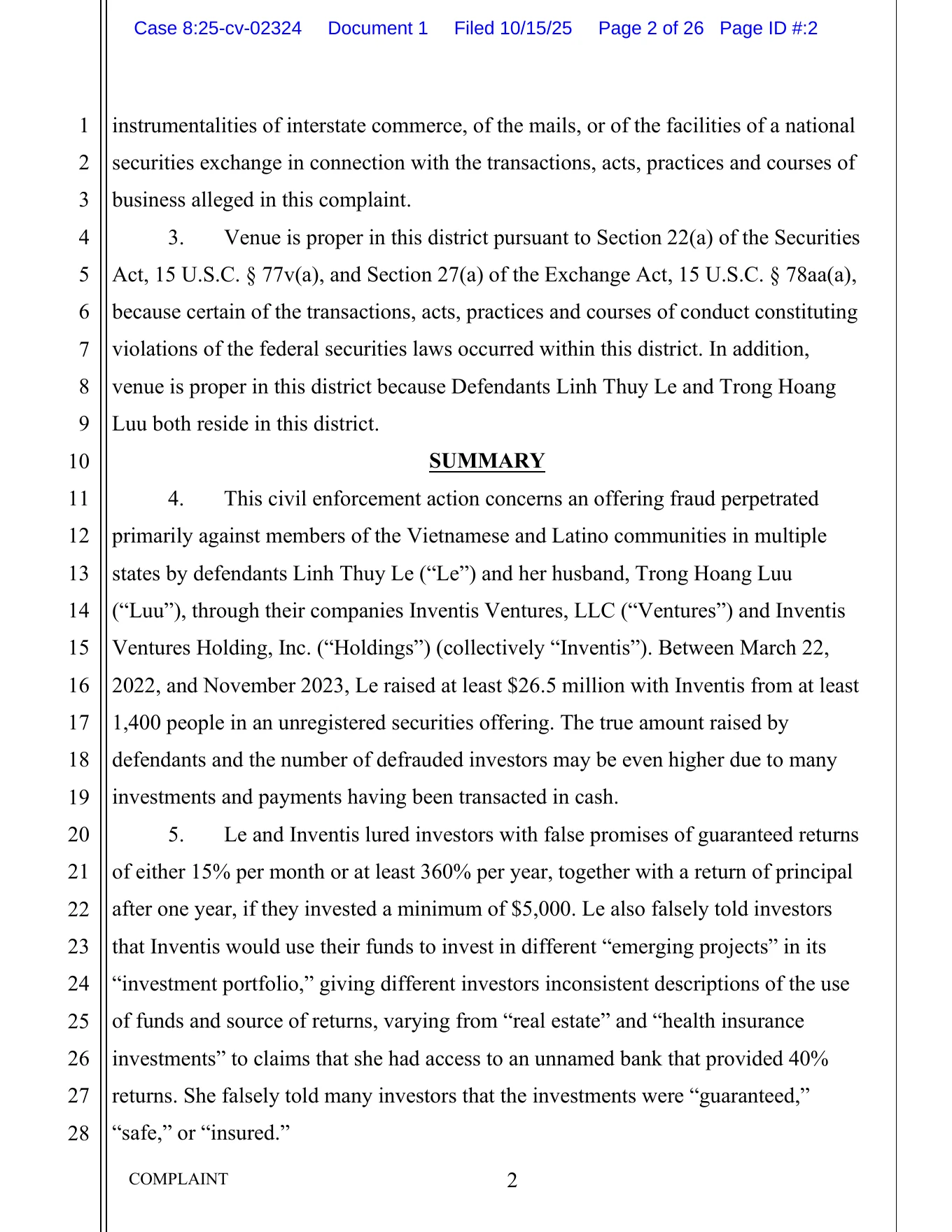
The SEC’s release says Linh Thuy Le and Trong Hoang Luu allegedly raised at least $26.6 million from at least 1,400 people through Inventis Ventures.
The SEC describes an unregistered offering and payments it characterizes as Ponzi-like. Its allegations concern what people were promised and how the money was actually used.
The complaint page above uses a lower minimum of $26.5 million raised. The later public release uses at least $26.6 million, and neither is a distribution figure.
Win On Wealth appears in the complaint as a related company and a website used to promote Inventis. The name on your paperwork might not match the name you remember.
Not everyone heard the same terms. The agency identifies one pitch with a $5,000 minimum, promised 15% monthly returns and principal back after a year.
The second offer was not a payout
The agency says the payment problems started around September 2023. Some checks bounced, and the company eventually stopped paying investors altogether, according to the complaint.
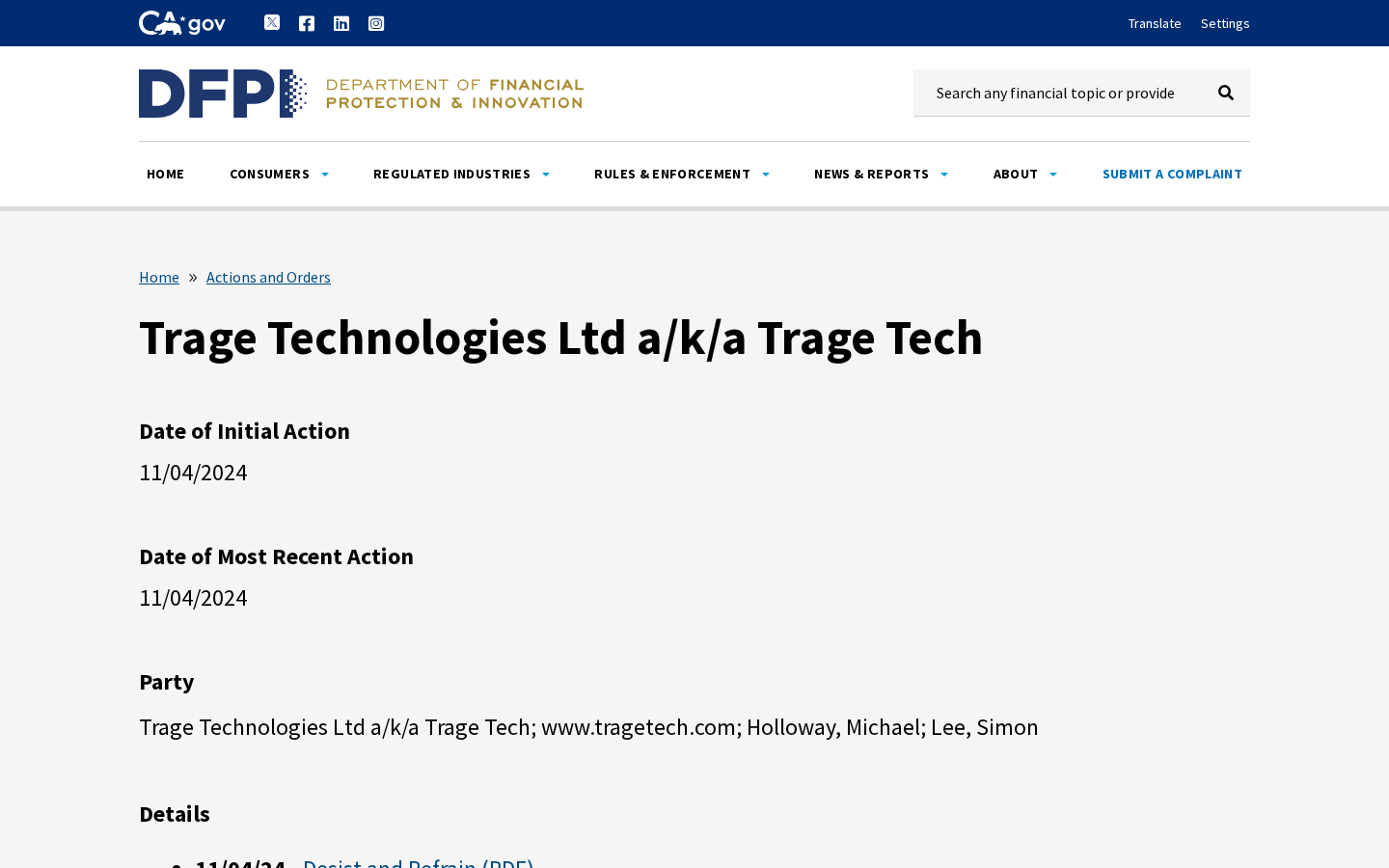
The SEC says people were later steered toward other businesses as a way to recover their money. One was Trage Technologies, which was separately named in state orders.
Funding a new account is an entirely separate transaction. Even if the offer mentions your old balance, it is not a return of that balance.
The California and Texas records about Trage are separate from the federal Inventis case. They don’t mean the government asked investors to fund the new accounts.
Keep the transactions in the right order
- Identify the initial note, investment agreement or payment, and who received it.
- List checks that cleared, checks that bounced and amounts promised but never received.
- Keep any later request to open or fund a different account with the name of the sender.
Recording those three parts separately makes it easier to explain what you paid, what was returned and whether somebody tried to draw you into another deal.
How the Win On Wealth Pitch Unfolded
Step 1: A high return is presented as ordinary monthly income
The SEC alleges at least some prospects were offered 15% a month, as well as repayment of their original investment after a year.
On a $5,000 principal, 15% is $750 for one month. Twelve equal payments would add up to $9,000 before the promised return of principal.
That example simply illustrates the promise, without compound interest. It doesn’t estimate possible earnings, and it certainly doesn’t establish that the business had money to pay them.
The SEC says investors heard different explanations for how the operation would generate the returns. Examples in its release include real estate and an unnamed bank.
Calling money guaranteed does not say who guarantees it. Without a verifiable source of funds and enforceable backing, the promise is only as good as whoever made it.
Step 2: A signed agreement makes the offer look more secure
Some agreements were described as loans. A document using the word “loan” still needs an identified borrower, real backing where claimed, and a credible source of repayment.
The SEC’s complaint says the instruments were not collateralized or insured. It also says people depended on Inventis to deploy their money rather than investing it themselves.
A note that promises your capital back is not a bank deposit. A signature can create a written obligation, but it cannot create the funds to satisfy it.
Read the names on the note and the transfer separately. If the payee doesn’t match the borrower, preserve the explanation you were given at the time.
Step 3: Early payments can persuade people to stay in
Someone who receives a check can point to real money in a bank account. The question is whether that check came from profits or from money newer participants supplied.
The SEC alleges Inventis paid earlier investors using funds from other investors. It also says money went to referral payments and to the defendants’ personal benefit.
That is the allegation behind the agency’s Ponzi-like description. It is not enough to compare screenshots from two investors without knowing where their checks were funded.
If you received a payment before other checks bounced, record both. You don’t need to hide the money you recovered to show that another amount remains unpaid.
Step 4: A separate deposit is pitched as the way out
The SEC alleges that investors heard explanations about bank audits and compliance problems after payments failed. Those explanations held out the possibility that distributions would resume.
Its complaint describes requests to fund accounts at Apex Bank and later at Trage Technologies. The request allegedly linked a fresh payment to the release of old money.
According to the SEC, one investor was told the promised Inventis payments would only go to the Trage account if they left the funds there without withdrawing.
That condition would stop the investor from testing whether the promised balance could be taken out. An actual refund shouldn’t depend on you leaving new money with a different company.
The California regulator separately issued a desist and refrain order involving Trage. The Texas record also identifies an emergency order involving Trage and other parties.
These orders are separate actions involving the second platform. They help explain why following the alleged referral was a new risk, not a neutral administrative requirement.
Who Appears in the Records and What the Judgments Mean
Win On Wealth and Inventis aren’t generic search terms
Use the federal case number 8:25-cv-02324 to confirm you have the correct matter. The SEC complaint identifies Wow Win on Wealth as a California company formed in 2022.
When writing a report, refer to the issuer on your own contract rather than trying to merge every entity in the complaint into the same recipient.
A corporate address is not a place to collect money
The filings identify entities and describe offices and financial activity. They do not make any street address in the complaint a consumer refund location.
Do not give a former promoter your checkbook or go to an address someone posts in a recovery group. Your bank and the authorities need records, not another deposit.
A consent judgment is not the same as a criminal verdict
In February 2026, the court entered consent judgments in the SEC case. These were civil orders involving Le and Luu, not a determination of guilt in a criminal trial.
The filed judgment against Luu imposes lasting restrictions. It leaves monetary relief to be determined on a motion rather than announcing a payment to investors.
The document has a limited admission provision for bankruptcy discharge. That condition is not a reason to describe the separate criminal case as if it had been decided.
Past payments cannot authenticate a recovery offer
A sender can know the name of the original business without holding funds or authority. That applies even if their message includes the amount you paid.
Check a claimed public program using the agency’s own website. A link supplied by the person selling recovery is not independent confirmation of their role.
How to Separate Your Investment Loss From a Second Payment
Start with the payments you can verify
Open the statement for the account you used to pay. If you can’t find the transfer by the program name, search by the amount and approximate date instead.
Compare what the bank calls the recipient with what you remember seeing at the presentation. Add a note about any apparent difference instead of guessing which is correct.
Next, enter only funds that cleared. If you received three checks and two bounced, record the three separate check numbers without adding all three to your returned money.
For example, a $5,000 investment followed by a single cleared $750 check leaves $4,250 of original cash not returned. That is a bookkeeping example, not a damages calculation.
The amount a contract promised and the amount that cleared are different things. Keep both if they help describe the offer, but don’t call the difference an approved claim.
Put the alleged recovery referral on its own page
Save the original message and note who offered the new account, what they said it would do and when it arrived.
Find the payment record for the new destination, if you used it. For an exchange transfer, save the asset, network and transaction ID as well as the amount.
Do not assign the new transfer to the original company without evidence. You can describe the reason you made it without guessing which person received the money.
If you didn’t make the new payment, say so. A bank can review a transfer you made, while a regulator can consider the request as evidence even without payment.
Do not contact an address from a years-old forum post just to obtain proof. Retrieve existing account records from the institutions you used, then ask what else they need.
Know what the federal case has and hasn’t established
The SEC’s complaint refers to about $16.5 million in purported returns and about $1.5 million in referral fees. Both figures describe alleged flows, not a total available for repayments.
The civil release uses a rounded fundraising figure, not a judicial determination of total investor losses. Keep that figure separate from whatever happened to your money.
A private lawsuit, a government case and a state enforcement order can all appear in one search. Check the parties and caption before relying on a filing.
A consent judgment can bar future conduct while leaving room for a later decision about monetary relief. Don’t treat it as an instruction to open a bank account.
If the same promoter sent both invitations, note the link in your report. That’s more useful than making the new transaction fit the exact name of the earlier offer.
Keep the documents in their original formats and send copies where needed. A renamed screenshot should still be traceable to the bank entry or message it came from.
What to Do If You Paid Win On Wealth or Inventis
-
Do not fund a new account to retrieve the old one. Preserve the request and keep the payment destination private except when reporting it to the proper channel.
If somebody gives you a countdown, don’t let it change your decision. An urgent deadline does not establish that the sender controls a legitimate fund.
-
Assemble your record of cash actually in and out. Put deposits, cleared payments and returned checks on separate lines, with each date and reference.
Record the balance the seller claimed separately. This helps a bank or investigator distinguish money lost from interest you were promised but did not receive.
-
Ask the institution that moved your money what is possible. Use the number on your bank statement or card, then ask for the department that handles fraud.
Provide any returned-check notice and details about newer payments first. A transfer made years ago may not have the same options as a payment you just authorized.
-
File a tip about the investment through an official channel. Use the SEC tip or complaint page and identify the federal case if it matches your agreement.
For an internet-enabled fraud report, you can also use IC3. Keep any confirmation number with the documents, but don’t assume a report opens a reimbursement claim.
-
Report a second transfer as a separate event. If you funded a company after being told it would repay Inventis, record both the request and the new recipient.
Tell the institution whether you transferred cash or crypto and whether the payment was authorized. Accurate details give support a better starting point than a general description.
Frequently Asked Questions
Was the 15% figure an annual rate?
The SEC’s example describes 15% per month, with principal promised back after one year. Don’t confuse the monthly promise with a yearly return.
Does a note called a loan make the offer safe?
A borrower still needs a credible way to pay. The SEC says the agreements it describes did not come with collateral or insurance.
Did the SEC file a criminal case?
The SEC filed a civil action. Its release identifies a separate criminal proceeding brought by federal prosecutors, which is not resolved by the civil consent judgments.
Can Trage Technologies release my old balance?
The SEC describes a request to fund Trage as part of an alleged follow-on pitch. Don’t send money to Trage or another provider to unlock prior funds.
What if some of the interest checks cleared?
Include the amounts that actually arrived in your records. A cleared check tells you a payment happened, not what generated the money or whether more payments will follow.
Is there an SEC payment application in the judgment?
The consent judgment discussed here sets restrictions and provides for possible monetary relief later. It doesn’t direct investors to pay someone or submit an application for a check.
The Bottom Line
Don’t send another payment to recover money from Win On Wealth or Inventis. The SEC’s case describes exactly that pivot, and the newer transfer can mean a separate loss.
If you already paid, keep the note, returned checks and later requests together. Give the real payment details to your bank and report through the official regulators.

Join the discussion
0 commentsShare your experience or ask a question about this article.
Community experiences
Did this happen to you?
Your experience could help someone recognize the same scam. Submit a private report for our team to review.
I experienced this tooReports are reviewed before publication. Sharing publicly is always your choice.
Discussion
Start the conversation
Have a question or something useful to share? Add the first comment.