


A stranger says you called them about a warranty or an unpaid bill. They can see your number in their call log, but you never made the call.
That mismatch is worth checking without assuming your phone was hacked. Start by finding out whether your line still works and whether your carrier recorded any unexpected activity.
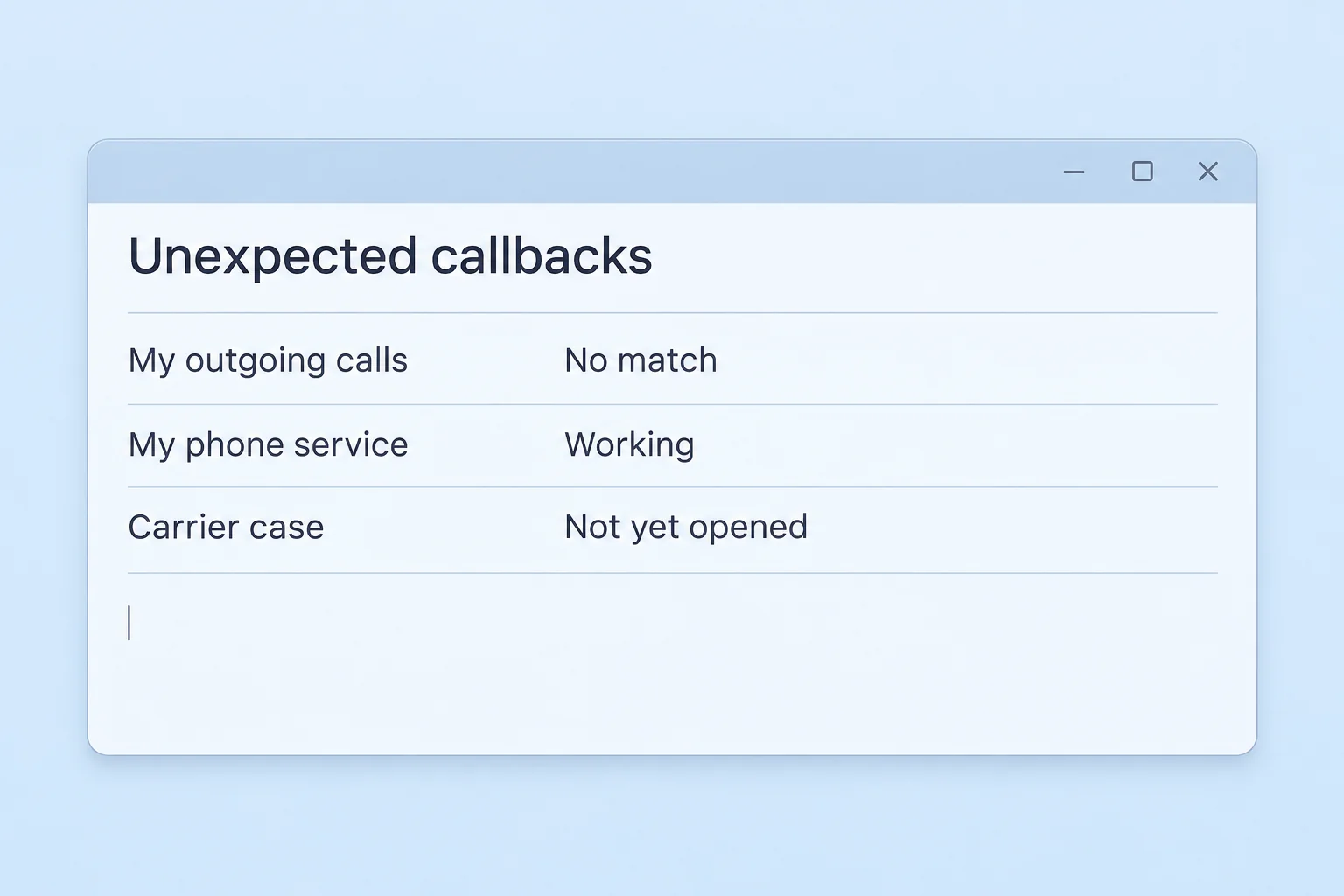
Overview
The number on a screen isn’t the same as the line that called
The FTC’s caller ID guidance explains that a caller can make another number appear in the recipient’s display. The number owner may learn about it only when someone calls back.
A screenshot from a stranger shows what that person’s phone displayed. It doesn’t show that your handset or carrier account originated the call.
Check three separate records
A burst of callbacks is a reason to check, not a complete diagnosis. The safe starting point is a quick comparison rather than a change of phone number.
- Look for a matching outgoing call at the reported time, including on any linked work or calling app you actually use.
- Check whether a person you trust can call your regular number and reach you through normal service.
- Look for an unexpected SIM activation, transfer request, or account change in your real carrier account.
Loss of service changes the priority
If your phone went out of service unexpectedly and a carrier notice mentions an unfamiliar activation or transfer, contact the carrier promptly from another device.
The FTC’s SIM swap warning describes loss of calls, texts, and data as possible signs of a hijacked line. A local outage can cause similar symptoms without an account takeover.
What to Do When People Say You Called Them
- Don’t argue with callers or share your personal details. If someone leaves a clear voicemail, save the time and the basic claim without returning calls to unknown numbers.
- Check your outgoing calls around that time. If you have a family line or business calling service, check the relevant line rather than assuming every call appears on one handset.
- Ask a trusted contact to call your number and confirm they reached you. Compare your service status with carrier notices that you can see through the real account.
- Contact your carrier through a saved app, bill, or verified support page. Ask about SIM changes, line transfers, outgoing activity, and any available call-label review.
- If appropriate, open the FCC’s unwanted calls complaint guide. Select Unwanted Calls/Texts, then My Own Number Is Being Spoofed. Save the submission reference with your callback notes.
If you cannot receive calls or texts, borrow a trusted phone to contact the carrier rather than waiting for a reply to the affected number.
You can be direct with someone who reached you by mistake: explain that you didn’t make the call, and tell them to verify any request with the organization supposedly involved.
What a Callback Can and Cannot Tell You
Suppose two people tell you a warranty message showed your number. If neither time appears in your outgoing calls and the carrier finds no matching activity, spoofing is plausible.
It isn’t necessary to learn how the caller made their display look that way to take useful action.
Your concern is whether the real line and account remained under your control.
If a callback includes a screenshot, write down the displayed date and time. A caller in another time zone may be describing the same moment using a different clock.
Don’t ask for the stranger’s full name, account number, or home address. The information useful to your carrier is the time, displayed number, and broad purpose of the reported call.
Sometimes someone dialed a similar number by mistake or called a former owner’s number. A single unexplained callback may not justify changing security settings on a working line.
Look for normal explanations before escalating a trace request
If your team uses an outgoing business number, see whether a colleague or answering service called around that time.
A shared company number can be legitimate even if your device didn’t dial.
A personal phone might also have a calling app or connected device that uses a separate history. Check actual services you authorized, not every possible program you could install.
If the reported call matches work you recognize, explain the discrepancy through your normal process. If nobody recognizes it, keep the time and check the carrier account.
If your carrier can’t share full outbound records online, ask what it can verify. A missing entry in a handset’s recent calls isn’t the same as a carrier’s determination.
Rule out a new scam using the callback as an excuse
A person who calls back could genuinely be confused. Someone might also invent a complaint to pressure you into sharing your name, payment details, or a verification code.
If they ask you to visit a website or pay to stop calls, end the conversation. You don’t need to verify someone else’s story by accepting a new payment request.
Don’t download a number tracker offered in a text. A legitimate caller ID problem is something to discuss through your carrier and the relevant reporting route.
When to Treat the Phone Line as a Possible Takeover
A carrier alert about a change you didn’t request matters more than an angry callback. Open your existing carrier app or go to the site you already use.
Check the affected line for a new device, SIM activation, number transfer, password change, or unexpected new account user. Labels vary, so ask support if an item isn’t visible.
If the line recently lost service, tell support whether calls, texts, or mobile data stopped. Give the time and distinguish the affected number from any other lines on the account.
Ask which change the carrier sees and whether it can reverse an unauthorized transfer or activation. Request confirmation when your own device is receiving calls and texts again.
If your number was transferred without permission, secure email and financial accounts that rely on its codes. Start with the accounts most important to password recovery and payments.
Ask those institutions to review changes, sign-ins, and activity during the period you lost control. Don’t assume the carrier reopening your line automatically ends every session elsewhere.
A normal service test isn’t a permanent all-clear
A successful call tells you the line is working at that moment. It doesn’t settle a pending transfer notice or explain an unfamiliar login to the carrier account.
If you are unsure whether a replacement device was authorized, compare with other account members before removing anything. Don’t disconnect a legitimate family or work device by mistake.
If you only lost service in one location, check whether people nearby with the same provider had a problem. A network or coverage issue can explain temporary failures.
Use the verified carrier account to set a security PIN or transfer protection if offered and appropriate.
Those measures protect the account; they can’t prevent a third party displaying your number.
Our guide to a call that displays your own number covers the different situation where that unusual call came directly to your phone.
Protect Real Calls Without Racing to Change the Number
If you depend on the line for work, ask a trusted customer or colleague whether your legitimate test call was blocked or labeled as spam.
Obtain the exact label and provider if possible.
That report is more useful than checking a random number lookup and assuming all customers see the same warning. Ask the carrier where it handles mistaken labeling or blocking.
If the label comes from an app or another provider, verify its official correction process. Don’t give an unknown reputation service control of your number or account to remove it.
For a business line, alert reception and staff who handle calls. Give a consistent explanation that doesn’t name a suspected person or publish private details about reporters.
Notify people most likely to trust an unexpected request from your number, especially someone who handles your invoices or finances. Use an established channel, not a link in a callback.
A brief voicemail note may help while reports are active. Make it clear you aren’t making the calls and that nobody should share money or codes in response.
Decide whether a number change would solve the problem you have
Before requesting a replacement number, list accounts that use the current one for sign-in or recovery. Add any medical, work, banking, or school contacts that need continuity.
Ask the carrier whether there are narrower options for callbacks, spam labels, or actual account protection.
A new number can cause disruption without addressing the reason the old one was displayed.
If the issue involves threats or targeted harassment, preserve the messages and ask the carrier or appropriate authorities about your options. Don’t keep a line merely to investigate someone yourself.
If changing it is the right decision, verify account recovery before giving it up. Check that important people can reach the replacement after the change.
Save a Timeline the Carrier Can Use
Group callbacks by date, time and what someone reported seeing. Mark a time as approximate when it comes from memory rather than a call log.
Record when your line worked and what the carrier confirmed about known changes. Keep unverified claims separate so you don’t describe a screenshot as an authenticated call record.
Save the case reference and names of the teams involved. When it helps, report fraudulent payment demands through FTC ReportFraud as well as reporting spoofing to the FCC.
If someone says they sent money, tell them to contact their own bank or provider and report the incident. Don’t collect their account details to file a report for them.
When reports stop, retain the timeline for any outstanding case. There is no reliable timetable you can read from the first callback, so don’t promise callers a specific end date.
Make the carrier call about the right problem
Start with what changed on your side: unexpected return calls, any service outage, and any carrier alert. Ask the representative to put those facts in the case before troubleshooting.
If the representative says the line is active, ask whether that confirms only its current status or whether they also checked recent device changes and transfer requests.
Ask where to submit a sample call time or a screenshot with unrelated information removed. Not every provider accepts the same records or can investigate caller ID shown elsewhere.
If the problem is a label on your real outgoing calls, ask to speak with the team handling call labels or blocking. That isn’t the same as changing your PIN.
Work through two common outcomes
Suppose your regular calls and texts work, and carrier support sees no unauthorized account changes. Preserve your callback records and report the caller ID misuse without claiming an account takeover.
Suppose instead that a transfer notice arrived before your line stopped receiving calls.
Use another trusted connection to reach the carrier, and let your email provider know if recovery access may be affected.
The second situation doesn’t prove that every callback is connected to the transfer. Give the carrier separate times for the callbacks, the service interruption, and the account notice.
When the affected number belongs to a team
Ask a single person to track callbacks and case references. Staff shouldn’t share details with strangers or assume another employee authorized a payment request.
Coordinate any customer notice through the business’s existing channels. Give people a way to verify current invoices and support requests without sending payment data to an unverified number.
Frequently Asked Questions
Does a callback mean the stranger has access to my phone?
No, because the caller ID can display your number without control of your line. Check service and carrier activity if you notice more than unexpected callbacks.
Can I prove what happened from my recent calls alone?
No, because your handset’s log is only one record. Check connected services you use and ask the carrier about suspicious activity or changes on the account.
Does a spoofed number automatically mean a SIM swap?
Caller ID spoofing and a SIM swap affect different things. Unexpected loss of service, a new SIM notice, or an unauthorized transfer is a reason to contact the carrier urgently.
Can I report the misuse before finding the real caller?
Yes, you can report that your own number may be spoofed and include the details you have. You don’t need to identify the actual caller first.
Can a carrier PIN stop someone displaying my number?
It can help protect authorized account changes if your provider offers that control. It does not decide which number a stranger can try to display.
Should I change my number after an unfounded complaint?
Check the available evidence and carrier options first. If you decide to change numbers, update account recovery methods and critical contacts before giving up the old number.
The Bottom Line
If callers report calls you didn’t make, compare the times, test your real line, and ask the carrier what it recorded.
Report likely spoofing without treating callbacks as proof of hacking.
If service suddenly stops or a transfer appears, move faster. Contact the carrier from a trusted device and separately protect the accounts that use your phone number for recovery.

Join the discussion
0 commentsShare your experience or ask a question about this article.
Community experiences
Did this happen to you?
Your experience could help someone recognize the same scam. Submit a private report for our team to review.
I experienced this tooReports are reviewed before publication. Sharing publicly is always your choice.
Discussion
Start the conversation
Have a question or something useful to share? Add the first comment.