


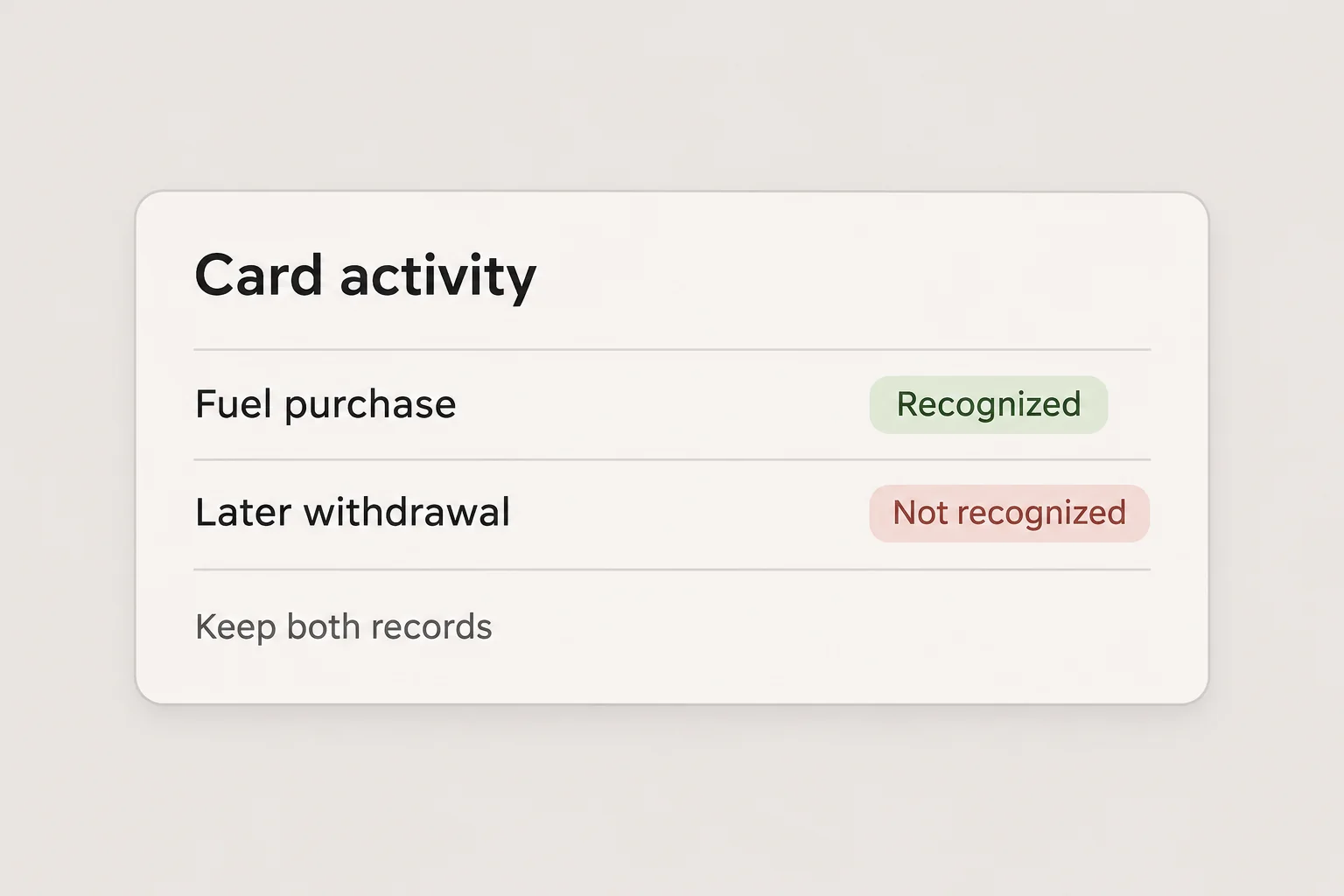
The fuel purchase is yours, but the cash withdrawal that appeared later isn’t. You remember using a card reader outside the store and wonder whether the two transactions are linked.
You can report the unauthorized withdrawal without proving how someone obtained the card details. Keep the genuine receipt, the suspicious entry, and your recollection of the terminal separate.
Overview
A skipped reader and a disputed transaction need different responses
If a reader looks altered and you haven’t used it, choose another way to pay and tell the location operator. That doesn’t establish anyone used your card.
If an unfamiliar transaction appears, act on the account first. A merchant can inspect equipment, but your issuer is the party that can protect your card and open a dispute.
Preserve the two records that tell different stories
The original sale tells you where you used the card. The unfamiliar entry tells the issuer what you report as unauthorized.
- Keep the receipt or date and location of your legitimate purchase.
- Record the unfamiliar transaction, including the status and amount your account shows.
- Describe any suspected terminal without asserting it caused the loss.
Some unfamiliar entries are not fraudulent charges
A station can request a temporary authorization that differs from the final sale amount. Compare the merchant, dates, and receipt through the genuine issuer app.
An explanation about a hold should not delay a report about an unrelated withdrawal you didn’t make. Ask your issuer if a record is unclear.
What to Do If You Suspect Card Skimming
- Leave a reader that appears tampered with without opening it. If you already used it, note the time, store, and reader location or pump number where safe.
- Check the correct card or account through your regular issuer app. Record the amount, merchant descriptor, and whether each unfamiliar entry is pending or posted.
- Contact the issuer using its trusted app or the number on your card. Report any unrecognized transaction immediately and ask what restrictions or replacement steps it recommends.
- Tell the station, retailer, or ATM operator about a specific physical concern. Give enough information to identify the reader without sharing your PIN or full card number.
- Save the issuer’s case number and its instructions for written follow-up. If appropriate in the US, also report suspected skimming to FBI IC3.
You don’t need to find a hidden device, ask a cashier for camera footage, or confront the business before reporting a charge. Give your issuer the facts you already have.
If you hold the card but the account shows an unauthorized payment, tell the issuer both. Unauthorized use can happen even when a physical card hasn’t gone missing.
Compare the Receipt With What Your Account Actually Shows
Open your issuer app directly and select the correct card. A digital wallet purchase might show under the card linked to that wallet rather than under another account.
Match the genuine sale by merchant, date, and total. The posting date can differ from the time on the receipt, so note both instead of treating that difference as proof.
Look at the merchant label carefully. Parent companies and billing names can be different from the storefront, but a similar name doesn’t make every transaction yours.
If the entry is a temporary fuel authorization, compare it with the eventual sale and ask the issuer how the hold is handled. Don’t dispute the receipt amount automatically.
If you see a separate cash withdrawal or unrelated purchase you did not make, report it right away.
It isn’t another version of the same hold just because it appeared nearby.
Give the issuer a useful distinction
Tell the issuer which transaction you recognize, where you made it, and which one you dispute. Then describe whether you swiped, inserted, or tapped, if you remember.
Say whether you entered a PIN, whether the device returned the card promptly, and whether you noticed damage or an unexpected prompt. Make clear when you don’t know.
If another authorized user has a card on the account, check whether they recognize the transaction. Don’t postpone reporting when they can’t be reached and the risk seems immediate.
Look for other unfamiliar entries, including small ones. Report the ones that aren’t yours rather than asking the issuer to reverse every charge from that day.
If the account shows only a pending entry
Ask whether it is an authorization, a withdrawal, or something else. You can flag suspected compromise even if the formal dispute process requires the transaction to post.
Ask the issuer what confirmation you should watch for and when to follow up. If it tells you to wait for posting, confirm whether it can protect the card meantime.
If the entry falls away and your recognized purchase appears correctly, save that explanation if you already opened a case. Keep investigating any other genuine mismatch.
How Physical Card Skimming Differs From a False Checkout Page
The FBI describes skimming as unlawful capture of card information or PIN entry at equipment such as fuel pumps, ATMs, and payment terminals.
A later unauthorized transaction doesn’t identify where the card information came from. The last place you used your card may be relevant, but there can be other sources.
Physical skimming does not require a shopper to install anything on a phone or computer.
Do not reset your devices or pay for a cleanup based on the disputed transaction alone.
If an online checkout, phishing message, device installation, or login was also involved, tell the issuer about that separately. It may point to another kind of account exposure.
Our overview of card skimming at payment readers explains the broader mechanism. This guide focuses on evidence and decisions after a particular card use.
Why an intact exterior doesn’t settle the question
The FTC’s fuel pump guidance recommends checking for an open or visibly altered panel and using an alternative if something looks wrong.
A panel can look ordinary from the outside even if a reader has been compromised. Treat a suspicious appearance as a reason to avoid a terminal, not a reliable detector.
If something is loose, mismatched, or damaged, don’t pull it apart to find out why. Notify staff or the operator and use a different terminal or pay inside.
At an ATM, don’t leave your card or cash behind if someone claiming to work there suddenly offers assistance. Step away and call the actual bank or machine operator.
Where accepted, tap instead of swiping at the pump, as the FBI advises. If you enter a PIN, shield the keypad even if you cannot see anything unusual.
Work Through the Issuer’s Response Without Missing a Step
A lock in the account app can be a useful immediate measure if available. It is not a fraud report, and the issuer still needs to know what happened.
Ask if the card should be replaced and whether you should get a new PIN. The issuer can explain whether existing digital wallet credentials or linked cards need attention.
Find out which transaction types remain possible while the card is locked. Don’t rely on a generic promise that the app toggle blocks all future activity.
The FTC explains how to report lost or stolen card information. Get the deadline and follow-up requirements from your issuer for the card and account involved.
If the issuer requires a written statement, use the approved channel. Include the genuine charge and disputed item as distinct entries and keep a copy of what you submitted.
Ask whether any credit is temporary, when the issuer will contact you again, and whether more documentation is needed. An investigation reference and a refund aren’t the same thing.
Keep bills working after a card replacement
Identify necessary subscriptions or bills attached to the old card. Update them through the verified merchants or issuer instructions when replacement details are available.
Don’t send a photo of the new card to anyone who calls about the old one. A follow-up caller who knows your case number still needs independent verification.
Check the replacement card and original account again after the changes. Report new unexplained activity separately and attach the previous case number when it helps.
If the Terminal Kept the Card or Didn’t Dispense Cash
If you tried to withdraw your own money but the machine didn’t deliver it, that is a separate issue from a withdrawal you never requested.
Tell the issuer which event you are reporting.
Save the receipt if one printed, including any statement that the request failed. Record how much you received, if any, without reusing the machine to reproduce the problem.
An ATM operator may direct you to your card issuer for the missing cash claim. Keep both case references if the machine operator also creates a separate record.
If the machine retained your card, call your card issuer promptly through a verified channel. Do not enter your PIN again because someone nearby says it will return the card.
If you see a number pasted onto the machine and can’t verify it, don’t use it for account details. Use your existing banking app or an independently verified number instead.
What to capture at a fuel pump before you leave safely
Write down the station address and pump number if they are visible. Keep the date, local time, and receipt without taking a photograph of anyone else’s payment.
If someone else is using the terminal, report the concern to staff rather than interrupting that person with an accusation. Let the location’s staff decide how to secure the equipment.
If you didn’t notice anything unusual before paying, say so.
The station can investigate more effectively with the correct location and time than with an unsupported claim that equipment was tampered with.
If you cannot go back safely or find the pump number, report the account problem anyway. An incomplete description of the terminal isn’t a reason to delay that call.
A Worked Example: One Purchase and Two Other Entries
Imagine your receipt says you bought $43 of fuel. Your issuer app shows that sale plus a higher pending amount from the same merchant and an unknown cash withdrawal.
Ask about the pending amount and whether it relates to the sale.
Give the issuer the details of the unknown withdrawal separately, so it isn’t mistaken for a second fuel transaction.
If the station cannot explain the cash withdrawal, that isn’t surprising. Its sale receipt cannot show what happened on an unrelated machine or account.
Keep the answer you get for each entry. If one turns out to be a hold and one remains unauthorized, don’t let the explanation for the first close the second.
Report facts without making the claim harder to understand
Use one list of disputed items and one of recognized transactions. State which card or account was involved when you have more than one.
If the same card was used online that afternoon, mention it. Don’t insist the station was responsible simply because its purchase came before the unexpected entry.
If the bank gets back to you through an unexpected call, don’t read a verification code aloud. Return to the app or call the number you already used.
If the disputed item affects rent or another scheduled payment, ask the issuer what available balance or replacement timeline to expect. Don’t count on a credit until it appears.
An adjuster may ask for the date you noticed the problem, not just the transaction date. Keep both entries in the notes so you can answer with confidence.
If you are helping a relative, let them speak for the account unless you have authority. Do not post their receipt or card information when asking others for help.
Frequently Asked Questions
Do I have to know where my card was skimmed?
You can dispute an unauthorized transaction without proving the source. Give the issuer the facts you know and describe a suspected reader as a possibility rather than a confirmed cause.
Is a larger pending fuel amount proof of skimming?
No, because a temporary authorization can differ from the purchase amount. Ask the issuer about the pending entry and report separate unauthorized activity without waiting.
If I tapped my card, am I guaranteed safe?
The FBI recommends tap at the pump where supported, but it doesn’t eliminate all payment fraud. Continue to review transactions and promptly report anything you didn’t authorize.
Should I report a suspected terminal if I never paid at it?
Yes, you can tell the operator where it is and what you noticed. Don’t test it with your card or try to remove anything from the equipment.
Is locking the card the same as disputing an unauthorized purchase?
Locking can restrict activity, depending on the issuer. Still contact the issuer to report the specific transaction and ask what it needs to investigate.
Should I contact the station or my card issuer first?
If you see unauthorized activity, contact the issuer immediately. The location operator can inspect its equipment, but it can’t secure your payment account or open the issuer’s case.
The Bottom Line
Walk away from a reader that seems altered and report the location. If an unauthorized transaction appears, don’t wait to prove skimming before contacting your card issuer.
Save the receipt from the charge you recognize and the details of the one you don’t. Ask your issuer how to secure the card and document the dispute.

Join the discussion
0 commentsShare your experience or ask a question about this article.
Community experiences
Did this happen to you?
Your experience could help someone recognize the same scam. Submit a private report for our team to review.
I experienced this tooReports are reviewed before publication. Sharing publicly is always your choice.
Discussion
Start the conversation
Have a question or something useful to share? Add the first comment.