

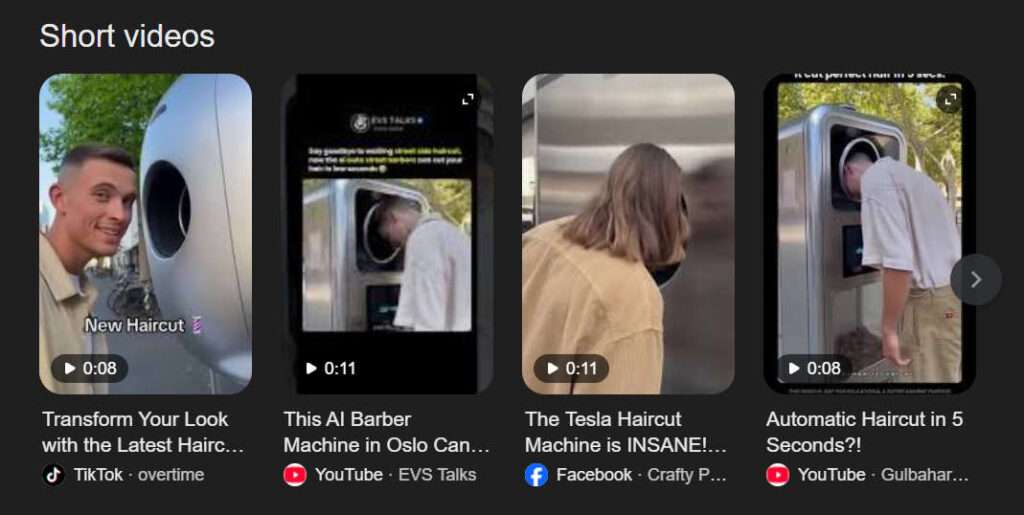
Across TikTok, YouTube Shorts, and Facebook Reels, millions of people have seen videos of a futuristic automatic hair cutting machine. In these clips, a person walks up to a shiny device, chooses a hairstyle on a touchscreen, inserts their head into a circular opening, and walks out with a perfect fade or clean buzz cut in seconds.
The videos look so real that viewers worldwide began asking the same question:
Is the automatic hair cutting machine real or fake?
In this article, we break down how the viral videos were made, whether the machine actually exists, and why so many people believed this invention might replace barbers overnight.
The Viral Videos: A Machine That Cuts Hair in Seconds
The videos show a sleek, metallic machine resembling a futuristic appliance or a sci-fi beauty pod. The process appears simple:
- The user selects a hairstyle (taper fade, buzz cut, crew cut).
- They place their head into the padded circular opening.
- A few flashes and subtle noises occur inside the machine.
- The person pulls their head out with a perfectly trimmed haircut.
Some clips even show piles of cut hair falling into a tray beneath the device, implying that the machine is doing real cutting inside.
The visuals are polished, clean, and seemingly believable, especially for people who assume the footage is filmed in cutting-edge cities like Oslo or Tokyo.
But the truth is far more digital.
The Automatic Hair Cutting Machine Is Completely Fake
The viral videos do not show a real machine.
There is no functioning device that can cut hair automatically in five seconds on a sidewalk.
All the popular clips circulating online were created using AI video tools, CGI rendering, and clever editing, not real-world engineering.
These videos come from creators who specialize in AI-generated concept technology, including pages like Gulbahar Technical, Crafty Projects, and other digital artist accounts that frequently post fictional gadgets designed to go viral.
The creators often include small disclaimers in their captions such as:
“This video is for entertainment and educational purposes only.”
How You Can Tell the Videos Are AI-Generated
At first glance, the videos look impressive. But slowing them down or watching carefully reveals multiple signs of AI manipulation and digitial compositing:
1. Hair Behavior Looks Unnatural
In real haircuts, hair moves, shifts, and falls unpredictably.
In the videos, the hair:
- Falls in perfect clumps
- Shows no natural rebound
- Reacts in ways that mimic AI artifacts
The motion is too smooth to be real.
2. The Cutting Process Has No Real Tools
Inside the machine, there are no visible blades, scissors, robotics, or sensors.
No mechanical movement can be seen because the “cutting” is digital animation, not real hardware.
3. Before-and-After Shots Are Too Perfect
Real barbers take time to blend fades and align hairlines.
The transitions in the viral videos happen instantly, a red flag for digital editing.
4. The Machine Itself Has No Practical Openings or Safety Features
A real automatic grooming device would need:
- Sensors
- Cameras
- Emergency stops
- Guards
- Blade housings
- Ventilation
- Sanitization systems
None of these appear in the prop device shown.
5. Facial Distortion and Background Glitches
At times, the user’s head or the background shifts strangely, showing classic deepfake or AI video warping issues.
Why So Many People Believed the Machine Was Real
Automatic hair cutting machines look futuristic, and the concept feels believable in a world full of self-driving cars, AI assistants, and robot vacuums.
Several factors made people fall for it:
- The machine design looks professional and industrial.
- The process looks quick and efficient.
- The setting appears to be a public tech demonstration.
- The videos are filmed with cinematic quality.
- AI-generated haircuts look cleaner than real haircuts.
This combination creates a powerful illusion of realism.
Do Real Automatic Haircut Machines Exist?
Experimental attempts
There have been early attempts to create helmet-style hair cutting devices.
One such patent describes a motorized dome with rotating trimmers and embedded safety sensors.
However:
- These prototypes are slow
- They are extremely loud
- They require supervision
- They produce uneven or unsafe results
No model has ever reached commercial viability.
Robotic barbers
Robotic arms have been developed in research labs to trim or shave hair, but they require:
- Human assistance
- Mapping systems
- Patient positioning
- Slow, cautious motions
None can produce a fade or taper automatically.
Smart grooming devices
We do have:
- Self-trimming men’s grooming pods
- Robotic shavers
- Precision beard trimmers
But none are capable of a full haircut without a human barber present.
Conclusion
Despite massive progress in robotics and AI, no working automatic haircut machine exists today.
Why AI Creators Make These Types of Videos
AI concept creators post fictional tech because:
- The videos go viral quickly.
- They attract millions of views and followers.
- People want to believe that futuristic machines already exist.
- The creators can then promote their courses and tutorials on making AI videos.
Futuristic tech content is one of the fastest-growing categories on TikTok and YouTube.
The Bottom Line
The Automatic Hair Cutting Machine featured in viral videos is not real.
It is an AI-generated concept, not a working invention, not a prototype, and not an upcoming product.
There is currently no machine on the market capable of cutting hair perfectly in seconds with full automation.
The videos are impressive digital illusions, but they do not reflect the real capabilities of today’s robotics or grooming technology. Barbers are not being replaced by street-corner haircut machines anytime soon.
If you see future clips of similar “insta-haircut” devices, it’s safe to assume the internet is trying to fool you again.








