

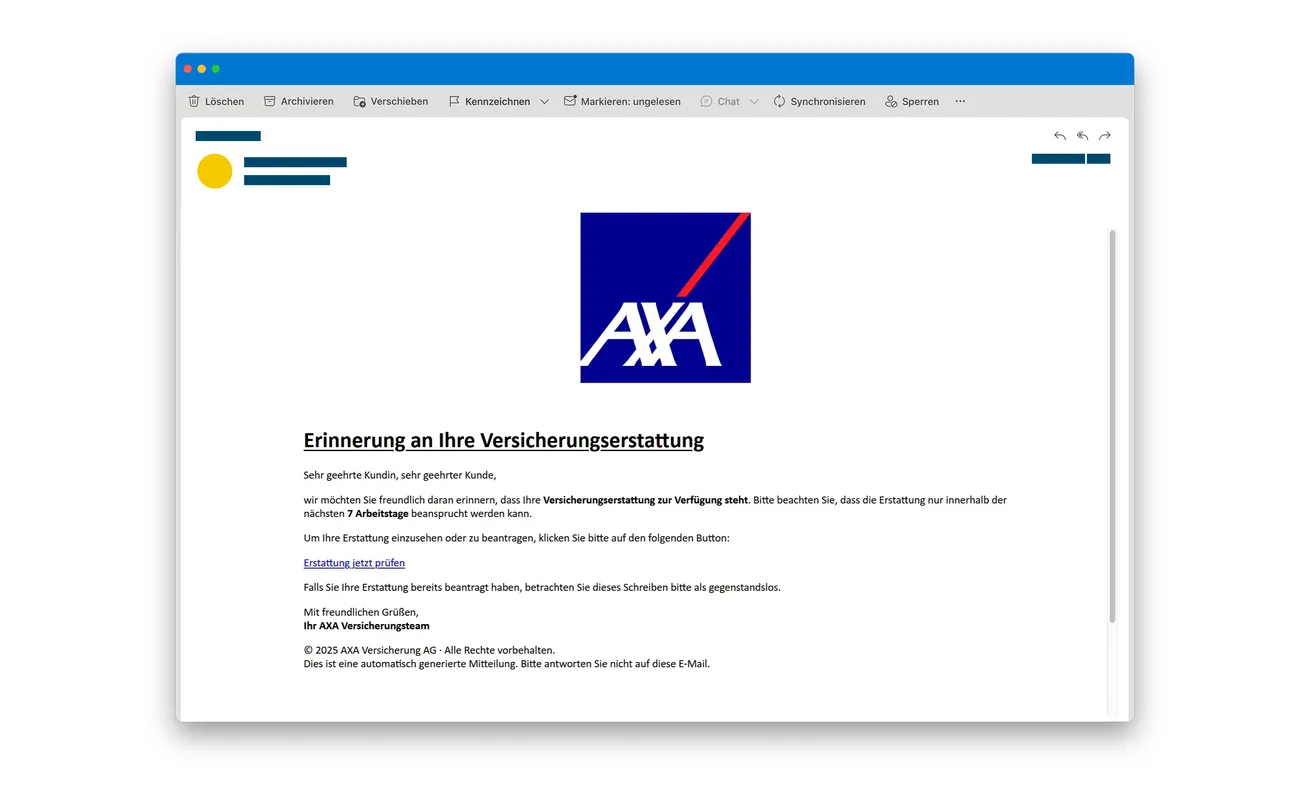
An AXA email says an insurance refund is waiting, but there isn’t much time left to claim it. The reminder looks like unfinished paperwork.
If you’ve recently paid a premium or handled a claim, it’s easy to wonder what you missed. Before following the instructions, look at the whole request.
Overview
The refund reminder borrows a real insurer’s identity
The AXA refund email scam impersonates the insurance company. It tells recipients that money remains available and directs them to a website to complete the process.
AXA is a legitimate insurer. The warning concerns criminals using its name, not a finding that the company’s insurance or genuine refunds are fraudulent.
The original message above claims seven working days remain. That is the email’s pressure tactic, not a deadline verified against the recipient’s policy.
Police traced the request to a counterfeit collection page
Swiss police describe the fake refund campaign and its collection of login credentials, personal information and card details.
Some victims also receive follow-up requests for authentication codes. A conversation that starts with apparently welcome news can therefore reach a real account or payment approval.
You don’t need to prove the sender’s real identity before refusing this route. The documented refund process is a phishing imitation.
Your insurance question and your card’s security need separate answers
A genuine claim might still be pending. Check it through your existing AXA account or established contact rather than letting this email define what is owed.
- Leave the reminder’s refund button alone.
- Open myAXA independently to review existing documents or claim information.
- Change an exposed password through the real service.
- Tell the card issuer about payment details or approvals already supplied.
- Reject follow-up code requests, even if the caller knows about the refund.
Why a Reminder Can Be More Convincing Than a Surprise Prize
Insurance involves enough paperwork that a missing reimbursement doesn’t sound impossible. A premium adjustment, an invoice or an old claim can make the subject feel familiar.
The email doesn’t need to explain those possibilities accurately. It relies on you supplying a plausible explanation from your own recent experience.
Calling the message a reminder adds another nudge. It implies the matter has already been checked and that you simply haven’t finished your part.
That can shift the question from “Is anyone really sending me money?” to “Which box do I need to complete?” The second question suits the phisher.
The short deadline makes a routine administrative task feel easy to lose. You might act between other errands rather than opening your existing policy records.
None of that means you were selected because someone knows your insurance history. A familiar brand and a broad refund story can reach the right person by chance.
If you’re not an AXA customer, the mismatch is useful. If you are one, membership doesn’t authenticate a message that arrived unexpectedly.
The safest check isn’t remembering whether a refund seems plausible. It’s finding that refund through a route the unexpected sender doesn’t control.
How the AXA Refund Email Scam Works
Step 1: The message presents a payout as unfinished business
The sender adopts AXA’s identity and says a reimbursement remains available. Its branding makes the instruction resemble ordinary customer correspondence.
A logo can be copied into an email without access to an insurer’s systems. It identifies the brand being impersonated, not the person operating the message.
The seven-working-day claim encourages a quick response. Don’t add that deadline to your calendar as if an insurer had confirmed it.
Nor should you reply with your policy number to help the sender find your case. That would give an unknown correspondent more convincing material.
Step 2: A refund button leads away from your established account
The link takes the recipient to an imitation site rather than resolving the question inside a customer route they already trust.
A polished landing page can make this transition feel seamless. The same name, colors and reassuring wording carry the story across the click.
The form’s owner matters more than its appearance. If you reached it through an unexpected reminder, check the refund inside your existing AXA account instead.
A padlock doesn’t settle that issue. It can indicate an encrypted connection to the very site collecting the information dishonestly.
Don’t enter a test password to see whether the page recognizes you. A fake form doesn’t have to reject an incorrect answer honestly.
Step 3: The promised refund becomes a request for account and card information
Police identify login credentials, personal details and credit-card information among the targets. Each category creates a different problem if supplied.
A password can expose the associated account. Reusing it elsewhere can extend the problem beyond insurance, particularly if the same email address identifies other accounts.
Card information creates a payment-security issue even though the email promises incoming money. The refund heading doesn’t limit what someone might attempt with those details.
Personal information can make later messages more believable. A caller repeating your name or address hasn’t thereby proved that they work for the insurer.
A page may ask for these details in several screens. Don’t assume information remains private until the final confirmation or a successful receipt.
If you already entered something, describe the fields to the appropriate provider. “I clicked a link” understates an incident where credentials or payment information were submitted.
Step 4: A follow-up tries to turn information into authorization
Police warn that some cases continue through SMS or other messages requesting additional authentication codes. This isn’t an inevitable stage in every recipient’s experience.
The request may sound like the last step needed to release the reimbursement. That explanation comes from the same unverified process.
Read any genuine bank or account prompt for its actual purpose. It may concern a login or transaction rather than the refund described by the stranger.
Don’t relay a code, approve an unexpected sign-in or confirm a payment to make the reminder disappear. Stop and contact the provider independently.
If a code was shared, say so promptly. A password exposure and an approved action are different events, and support needs to know about both.
Checking the Sender Without Getting Pulled Back Into the Email
Start with an existing customer route
AXA’s official myAXA information explains access to customer documents, invoices and claim information. Use your established app or independently opened account.
Look for the claim or correspondence you already know about. If you need help, obtain the contact route from the genuine website or your existing insurance documents.
Ask a specific question: is there a reimbursement associated with my policy? You don’t need to use the suspicious form to ask it.
Absence of a familiar document doesn’t justify returning to the email. Take uncertainty to the real insurer rather than to the party claiming money is waiting.
Inspect addresses as clues, not a complete authentication test
Expanding the sender field can reveal an address unrelated to the displayed company name. The name shown in the inbox is particularly easy to imitate.
A familiar-looking address still isn’t enough on its own. Email fields, copied signatures and links need more than visual resemblance to earn trust.
On a phone, link inspection can be awkward. There’s no requirement to hold or tap a suspicious button just to investigate it.
Closing the message and navigating independently avoids that problem altogether. You can preserve the original for reporting without using its contact details.
Don’t let a realistic footer do the checking for you
A street address, copyright line or customer-service label can be copied from genuine material. It doesn’t connect the form to a particular refund.
Likewise, knowing a real employee’s name wouldn’t authorize a stranger to collect your password. Judge the requested action through the genuine service.
The campaign warning doesn’t identify every sender or destination that might reuse the story. An unfamiliar version isn’t safe merely because its spelling differs.
When a Shared Policy Makes the Message Harder to Place
Insurance paperwork isn’t always handled by the person who receives an email. A partner, broker or colleague may normally deal with the policy.
Ask that person through your usual conversation whether a genuine reimbursement is expected. Don’t ask the unknown sender to explain the household’s insurance arrangements.
If another policyholder recognizes the subject, that still doesn’t validate this particular refund link. Compare their existing documents with the genuine account information.
Keep medical records and claim attachments out of that comparison unless the real insurer requests them through an established secure channel.
A phishing report doesn’t need your full claim file. Share enough to identify the impersonation without exposing unrelated health or family information.
For employer-managed insurance, notify the person responsible rather than paying or submitting company details on their behalf. They can check through the existing business relationship.
Make sure everyone understands the card issue is separate. A family member confirming a real claim can’t make an exposed card safe.
If the Page Says the Refund Failed
An error can leave you thinking the attempt never completed. That is a poor measure of whether a form received information.
Don’t try a second card or a different account password to fix the process. Each retry could disclose something new.
Instead, write down what happened in order: the email, the information entered, any code requested and any bank notification that followed.
Include whether you only viewed a screen, typed into a field or pressed a submission button. If you aren’t sure, tell support that too.
Keep actual banking activity separate from the website’s status message. Your issuer can investigate authorizations; the fake refund page can’t clear the card.
A genuine refund question can wait for the insurer’s answer while you protect exposed payment details. Those tasks don’t have to happen in sequence.
What to Do if You Have Fallen Victim to This Scam
-
Break contact with the refund process. Close the site and stop answering the sender. Decline requests to finish by SMS, chat or telephone.
If you only read the email, report it as phishing and remove it. Receiving the message alone doesn’t mean your AXA account was accessed.
-
Protect the card before waiting for a charge. Contact its issuer using the banking app or the number printed on your own card.
Explain that a fake insurance-refund page collected card information. Ask about blocking or replacing it and checking attempted authorizations.
Mention any confirmation code or banking approval separately. Give the issuer the actual amount and merchant displayed, if you saw them.
-
Reset exposed login credentials. Reach the real service independently, change the password and review available account-security settings.
Change that password anywhere else you reused it. Prioritize your email account if it shared the same credentials, because recovery messages may pass through it.
If access is blocked or account details changed, use AXA’s genuine account-help route. Don’t accept a recovery link from the original sender.
-
Review transactions and account changes. Check genuine statements and notifications rather than trusting the refund page’s success or failure message.
Flag unfamiliar activity promptly and ask the provider about its reporting deadlines. Keep the incident reference and instructions for any dispute.
Be accurate about what you approved and what you didn’t. Reimbursement depends on the circumstances and provider process, not promises in a scam article.
-
Keep a useful, private evidence record. Save the email, sender address, destination and approximate interaction time without repeatedly opening the suspect site.
Capture relevant bank alerts separately. Hide full card details, passwords and authentication codes before sharing screenshots with anyone other than an appropriate secure provider channel.
-
Report the impersonation through real channels. Notify AXA using independently obtained contacts. If money was lost or information misused, contact police as well.
State that the company was impersonated. Don’t describe an unverified refund as an actual payment AXA failed to send.
-
Expect convincing follow-up approaches. Someone may refer to the refund, exposed information or your concern about the first message.
Verify every new contact independently. Don’t pay a recovery fee or share another code because the person says they can undo the original incident.
Tell affected household members if a shared insurance account or card was involved. They need a clear warning, not a forwarded active refund link.
Frequently Asked Questions
Is AXA itself running this refund scam?
No. The documented campaign impersonates AXA. Its fraudulent message and collection site must be distinguished from the insurer and genuine customer services.
Does being an AXA customer make the email legitimate?
No. A broad phishing message can reach real customers. Check a potential reimbursement through your established account or independently verified AXA contact.
Is the seven-working-day deadline real?
It’s a claim in the fraudulent email. Don’t treat it as a verified insurance deadline or rush into the linked form.
Should I share an SMS code to receive the money?
Not with this sender. Some follow-ups seek authentication codes that could support account access or financial activity rather than release a refund.
What if the site showed an error after I entered details?
Assume the information may have been collected. Contact the issuer or account provider according to what you supplied; don’t troubleshoot the fake refund.
Who should I call first after entering my card?
Your card issuer should handle payment protection promptly. AXA can separately check genuine insurance correspondence and receive your impersonation report.
The Bottom Line
Don’t claim money through the AXA refund email scam. The reminder steers you into a counterfeit process collecting sensitive account and payment information.
If you’ve responded, secure the exposed card or login now. Check any real reimbursement through AXA independently, without returning to the email’s button.

Join the discussion
0 commentsShare your experience or ask a question about this article.
Discussion
Start the conversation
Have a question or something useful to share? Add the first comment.