

Axiominflux.com is a fraudulent cryptocurrency trading and investment platform that has been actively targeting victims through popular social media sites like Telegram, WhatsApp, Facebook, Instagram and TikTok.
This in-depth article will provide an overview of how the Axiominflux scam operates, detail the tactics they use to exploit victims, and offer guidance on what to do if you have fallen prey to this insidious scheme.
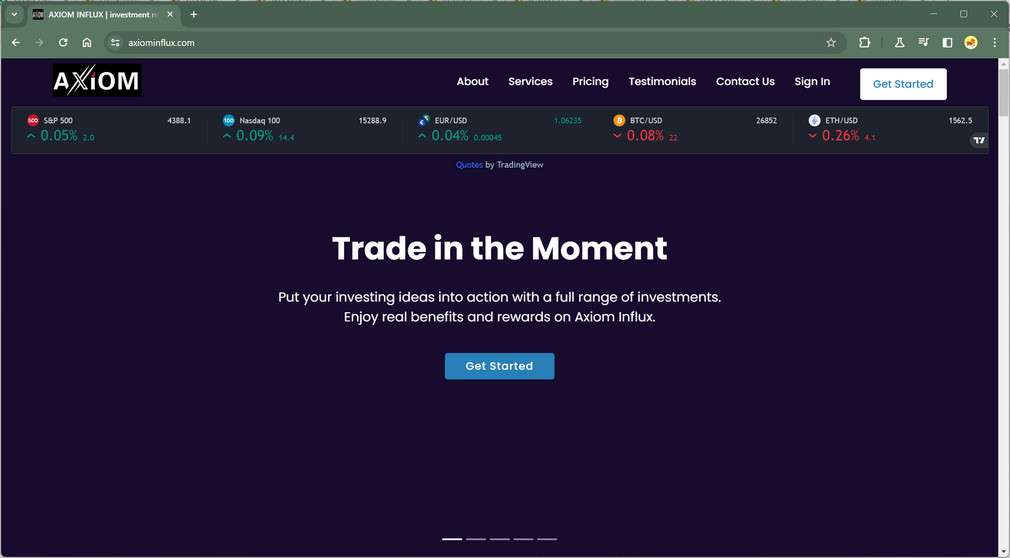
Overview of the Axiominflux.com Scam
Axiominflux purports to be a cryptocurrency trading and investment company that promises lucrative returns for those who subscribe to their “trading models” and pay exorbitant fees upfront. However, Axiominflux exhibits numerous red flags that indicate it is nothing more than an elaborate scam designed to steal money from unsuspecting victims.
Here are some of the reasons why Axiominflux should be avoided at all costs:
- Not Registered or Regulated By Any Financial Authority – Axiominflux is not registered or regulated by any financial authority such as the UK’s Financial Conduct Authority (FCA) or any other reputable regulatory body. This lack of oversight allows them to operate outside the law and puts users’ money at serious risk.
- Nigerian Domain Registration – According to WhoIs domain lookup records, Axiominflux.com was registered in Nigeria. Nigeria has become infamous as a hub for internet scams and cybercrime. The Nigerian domain is a huge red flag.
- Outlandish Claims of Guaranteed Profits – Axiominflux promises absurdly high and unrealistic returns for those who pay for their expensive trading models. For example, they claim users can make over $5,000 per week with little effort. These guarantees of easy money are always indicative of a scam.
- Aggressive Social Media Marketing – A major aspect of Axiominflux’s scam operation is aggressively marketing itself and recruiting new victims through social media platforms like Facebook, Instagram, TikTok, Telegram and WhatsApp. They rely on slick ads and false promises of riches to lure in unsuspecting users.
- Push Victims To Purchase Useless “Mining Packages” – A key tactic is aggressively upselling victims to purchase nonsensical cryptocurrency “mining packages” which they claim will earn users guaranteed profits. However, these packages provide no actual value and are a way to steal more money.
With an understanding of how the scam operates on a high level, let’s explore in-depth exactly how Axiominflux ensnares its victims and extracts money from them.
How the Axiominflux.com Scam Works
The Axiominflux scam is well-orchestrated and utilizes sly psychological tricks and social engineering to take advantage of unsuspecting people who are new to cryptocurrency investing. Here is an outline of how their scam unfolds in step-by-step fashion:
1. Luring Victims In with Social Media Promotions
The starting point for Axiominflux finding new victims is promoting itself aggressively on major social media networks. They run ads and posts that promise outrageous returns for investing and trading cryptocurrency. For example, promotions along the lines of “Earn $5,000 per week with our crypto trading system!” are common.
These social media ads and posts are designed to entice people who know little about crypto investing but are attracted to the idea of easy money. The social media aspect gives Axiominflux access to millions of potential victims.
2. Directing Victims to Slick WebsitesPACKED with Promises of Riches
When a victim clicks on one of their social media ads or posts, they are brought to the Axiominflux website. The site has been carefully designed to further instill trust in potential victims and perpetuate the illusion that real profits can be earned.
The site contains falsely attributed testimonials of people who claim they earned huge sums using Axiominflux’s services. There are videos showing expensive cars and mansions – implying these are the types of riches you can make by paying Axiominflux.
In reality, all of these promotional materials have been fabricated to dupe visitors. But to an untrained eye, it establishes credibility and makes the unbelievable profits they promote seem attainable.
3. Pushing Users to Sign Up for an Account and Buy a Trading Package
If a visitor appears intrigued by the hype and claims on the website, they will be pressured to register for an account. At this point, an aggressive sales pitch begins to get the user to deposit funds and purchase one of Axiominflux’s trading packages.
They offer different tiered trading packages, with the amounts ranging from a few hundred dollars all the way up to $50,000. The more expensive packages promise greater returns. The sales tactics involve misrepresenting potential profits and applying high pressure tactics to get the user to purchase the most expensive package possible.
All of the money deposited is instantly lost, as no actual cryptocurrency trading takes place. The false promises are merely a facade to steal the victim’s money.
4. Upselling Worthless Crypto Mining Packages
Once a user makes their first purchase, Axiominflux bombards them with offers to buy cryptocurrency mining packages. They claim that buying these exclusive mining slots will generate tremendous passive income through crypto mining.
In reality, these packages do not exist and provide absolutely 0 value. There is no mining facility, no mining equipment, and no mining actually taking place. It is an entirely fictional product meant to extract more money from those already caught in the scam.
The mining packages can cost hundreds or thousands of dollars. Persuasive sales reps apply maximum pressure to get victims to purchase the expensive add-ons. Any funds spent on these fake mining products are lost for good.
5. Vanishing Act Once Victim is Out of Money
Axiominflux will string victims along under false pretenses for as long as possible, continuing to promise big profits just around the corner. But inevitably there comes a point where the well runs dry and the victim does not have any more money to spend on packages.
Once Axiominflux realizes no more funds will be forthcoming, they immediately become impossible to reach. Any ability to access your account or support from the company abruptly ceases. Poof – Axiominflux disappears just as quickly as they first promised you untold riches.
The victim is left confused and outraged, but by then it is too late – Axiominflux has moved on to perpetrate the scam on other unsuspecting people.
What to Do if You Are a Victim of the Axiominflux.com Scam
If you have fallen prey to the duplicitous tactics of Axiominflux and parted with your money, here are the steps you should take right away:
1. Stop Sending Them Money
If you have not provided your full amount of available funds yet, cease sending them any more money immediately. Stop all communications and interaction with their “account managers” who will pressure you to spend more. Recognize that any funds already provided are likely gone forever.
2. Report Axiominflux to Authorities
File a scam report about Axiominflux with regulatory bodies in your jurisdiction, such as the FCA if you are in the UK. Additionally, file reports with the FBI Internet Crime Complaint Center (IC3) and the Federal Trade Commission. Provide all relevant details on how the scam occurred and who participated from their organization.
3. Gather All Evidence of Your Interactions
Collect screenshots, chat logs, receipts, bank statements, and any other evidence that shows your dealings with Axiominflux. This information can help authorities in pursuing actions against them. Keep digital and hard copies safely stored away in multiple places.
4. Notify Your Bank
Contact your bank and any other financial institutions used to send money to Axiominflux. Alert them that you were the victim of fraud. See if any transactions can be halted or reversed. Ask them to block any future debits from Axiominflux as well.
5. Change Account Passwords
Change the passwords on the accounts that you used to interact with Axiominflux. Doing so protects against them using your info to log into other websites or services. Enable multi-factor authentication wherever possible for increased security.
6. Warn Friends and Family
Let your friends and family know about the Axiominflux scam to prevent them from also being victimized. Share this article and other reports that expose their fraudulent operations. Post warnings about Axiominflux online to help get the word out.
7. Consult With an Attorney
Schedule a consultation with an attorney that specializes in cases of online fraud and misrepresentation. They can review your situation and determine if any legal recourse is possible to help recover lost funds. An attorney can also assist with reporting Axiominflux to government agencies.
8. Seek Emotional Support
The betrayal and financial loss from this scam can take a psychological toll. Lean on trusted friends and family for emotional support during this difficult situation. Speaking with a counselor or therapist can also provide professional assistance in dealing with grief, anger and sadness.
While the sting of the Axiominflux scam will linger, taking these proactive steps can help you gain closure, prevent the crooks from claiming additional victims, and potentially assist with recovering partial losses. Do not suffer in silence – take action to protect yourself and strike back against such unethical fraudsters.
Frequently Asked Questions about the Axiominflux Scam
What is Axiominflux?
Axiominflux poses as a cryptocurrency investment and trading company, but in reality it is an elaborate scam operation run out of Nigeria. Its sole purpose is to defraud users out of money through false promises, high-pressure sales tactics, and nonexistent products.
How does the scam work?
Axiominflux relies on social media ads and posts promising unrealistic profits to lure in victims. Their website continues the deception with fake testimonials and claims of wealth. Victims are pushed to open accounts, deposit funds, and purchase fake trading packages or mining slots. Once the money is extracted, Axiominflux disappears.
What tactics do they use against victims?
High-pressure sales reps push victims to purchase expensive packages costing thousands, even if they can’t afford it. Victims are bombarded with upsells for worthless mining packages. Any doubts are met with assurances of huge impending profits. Once depleted, victims are cut off completely.
Are there any real services provided?
No, there is no actual cryptocurrency trading or mining occurring. The services exist purely to collect payment from victims by maintaining an elaborate illusion. The victim’s money is stolen the moment they deposit it.
How can I spot this scam?
Huge red flags include unrealistic guaranteed profits, a Nigerian domain, aggressive social media marketing, no regulatory licenses, mining packages, and refusing to provide detailed information on their company.
I already paid them money, what should I do?
Immediately cease all contact, notify relevant authorities, dispute transactions if possible, and warn others about the scam. Consult a lawyer about legal options and be wary of “recovery scams” who claim they can get your money back for an upfront fee.
Is it possible to get my money back?
Unfortunately it is very rare to fully recover money lost in scams like this. However, reporting them can assist with shutting them down to prevent future victims. Some funds may be reclaimed depending on how you paid them.
Who can I contact for help?
You should report Axiominflux to authorities like the FCA, FBI, FTC, and IC3. Speaking with a lawyer familiar with online fraud can provide guidance. Therapists can also give emotional support for dealing with the aftermath.
How can I avoid falling for similar scams?
Be skeptical of unsolicited investment opportunities, especially via social media. Research companies thoroughly and check for proper registration and licensing. Beware of pressure to act fast or promises that seem too good to be true. If in doubt, avoid.
The Bottom Line on the Axiominflux Scam
Axiominflux is an offensive cryptocurrency investment scam that establishes false credibility through social media marketing and fake promises of guaranteed profits. They lure in victims by promoting get rich quick schemes, directing them to deceitful websites, and applying high pressure sales tactics to steal money.
Once payments are extracted, Axiominflux disappears for good, leaving victims outraged and financially damaged. If you have fallen prey to this scam, immediately cease all engagement, report them to authorities, and take preventative measures to avoid being victimized again.
With cryptocurrency gaining mainstream adoption, criminals are finding new avenues to perpetrate fraud under the guise of crypto investing opportunities. Avoid falling into traps like the Axiominflux scam by being wary of unbelievable returns, checking for proper regulation and registration, looking out for red flags, and never sending payments to unverified people or entities promising riches.
Carefully researching any crypto-related investment and using extreme caution is essential. Seeking guidance from qualified financial advisors can also help steer you towards legitimate opportunities while avoiding scams like Axiominflux that are hunting for unsuspecting targets.

Join the discussion
0 commentsShare your experience or ask a question about this article.
Discussion
Start the conversation
Have a question or something useful to share? Add the first comment.