


A text says your bank points expire tomorrow. A watch looks like a fair trade for points you might otherwise lose, and the delivery fee seems small.
Australian journalist Caitlin Cassidy thought she was covering postage. The next time she checked her account, she found an ATM withdrawal in another city.
Overview
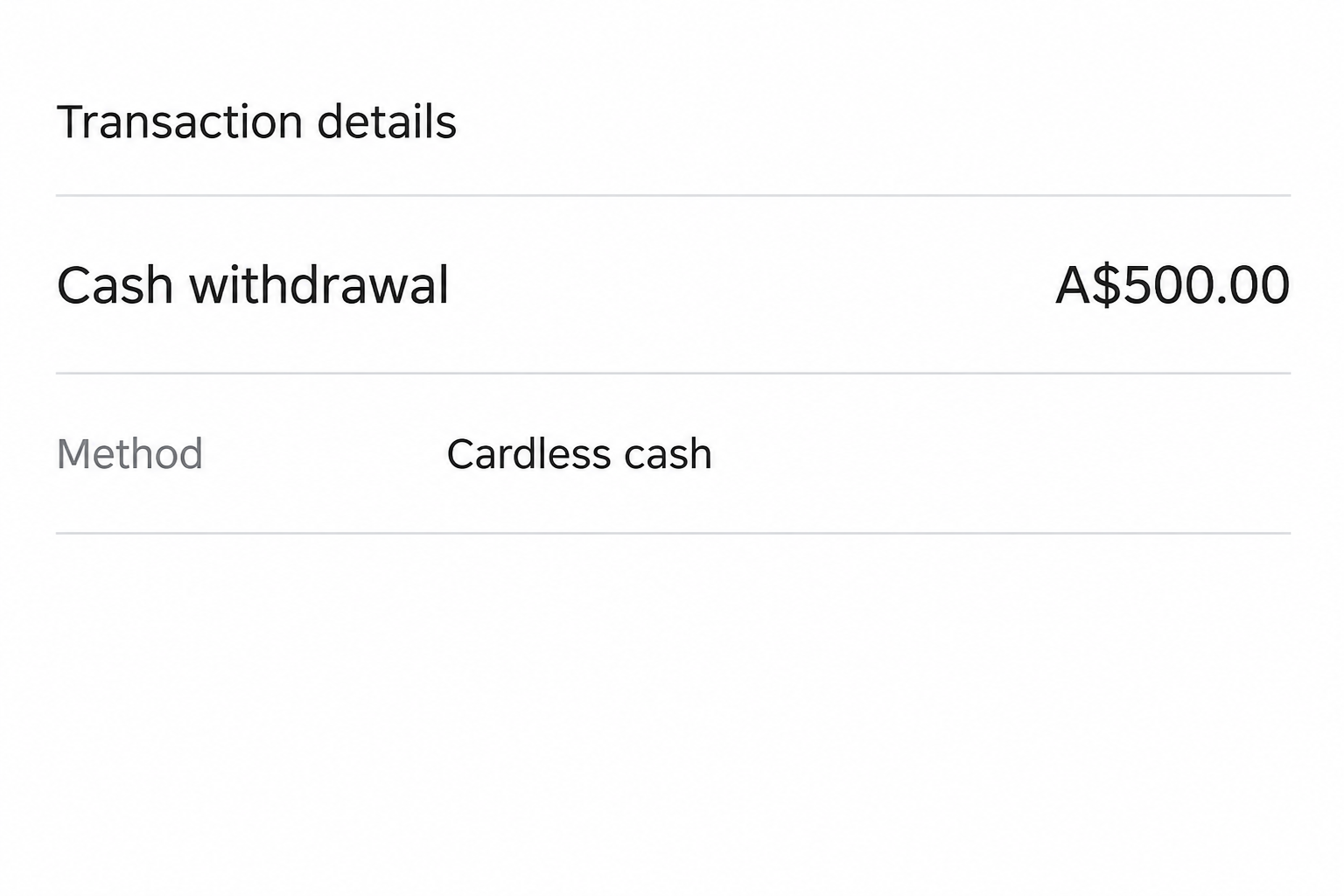
An A$2.99 delivery prompt ended in an A$500 withdrawal
A bank rewards cardless cash scam can prompt an approval you didn’t intend to make. That approval can appear in your bank’s genuine app.
In her first-person account for The Guardian, Cassidy said a text claimed her bank points would expire the next day. The link led to a lookalike bank site.
She chose a watch and was prompted for her banking credentials. She believed an approval in her banking app was for A$2.99 in shipping.
Cassidy later found an A$500 ATM withdrawal in Melbourne while she was on the south coast of New South Wales. Her article describes it as a cardless cash transaction.
Her bank refunded the money and replaced her cards. The account doesn’t identify the bank or reproduce the exact app prompt, so don’t assume all banks show the same wording.
A cash withdrawal isn’t an ordinary card purchase
Cardless cash is a way some banks allow customers to withdraw money without physically presenting a card. Not every bank offers it, and the exact controls can differ.
That distinction matters when you see cash withdrawal on a statement. The ATM activity can be unfamiliar even though your bank card never left your possession.
Australia’s Moneysmart guidance includes urgent expiry texts among bank scam examples. The stolen money in Cassidy’s case involved an ATM transaction, not simply missing points.
Three details to compare before approving anything
- The request you started, such as checking or redeeming a verified balance.
- The action the bank names in its own alert, along with the amount and destination if shown.
- The transaction the bank records, which may not be what a web page described.
A fake site can call a prompt postage, but the label on that site doesn’t change what you may be authorizing. If you’re unsure, decline and speak to the bank.
How the Bank Rewards Cardless Cash Scam Works
Step 1: A short deadline makes the points feel like money you’re about to lose
Cassidy received the message on vacation. It gave a specific points total and a near deadline, even though she didn’t remember a bank program with an annual expiry.
A precise balance can look like something only the bank would know. It still needs to match what you see when you access the genuine account on your own.
The ACCC’s loyalty points warning documents similar messages across several kinds of programs. It recommends checking directly rather than using the link in the message.
Checking costs little, even when the deadline turns out to be real. If the program exists, its regular app or website is where to look for the offer.
Step 2: The page looks like a rewards catalog
In Cassidy’s account, the page used familiar colors and type. It offered watches, speakers and other items, so browsing it felt more like shopping than dealing with a bank alert.
A rewards catalog can be made to look familiar without belonging to your bank. HTTPS or a professionally designed page doesn’t establish who controls it.
Don’t try a second item to test the page. Compare the offer with the one shown in your genuine banking app or verified site.
If a catalog suddenly asks for the login you use for everyday banking, stop. A changed screen and a small delivery amount don’t make that request safer.
Step 3: The apparent postage becomes a banking action
Cassidy said she entered banking credentials and made an approval she understood as shipping. The case doesn’t show the app screen, so there is no exact safe-or-unsafe phrase to memorize.
Read the bank’s alert itself, especially if it names an action different from the one on the page. An unfamiliar cash, sign-in or device request should not be accepted.
Even if you opened the installed app rather than a fake app, the approval may still authorize something you didn’t initiate. Genuine software isn’t a guarantee about the request.
If the alert doesn’t explain the action, decline it. Reach your bank from inside the app or using a verified number.
Step 4: The transaction is noticed after the rewards page is gone
Cassidy spotted an ATM withdrawal that didn’t fit her location or activity. That record gave the bank something specific to investigate beyond the appearance of the scam text.
Look at completed and pending activity if you can reach the real account safely. Note what the statement calls the entry, not just the amount that looks wrong.
A missing card isn’t a prerequisite for reporting cash activity. Tell the bank you didn’t make the withdrawal, and separately explain whether you approved anything during the earlier interaction.
If you don’t see a transaction yet, reporting an unexpected approval can still help. The bank may have activity that isn’t immediately visible in your statement.
How to Respond to the Prompt Without Losing Access
Check rewards outside the text thread
Open the banking app from its usual icon or use the bank’s official site. Look for the balance and genuine terms without interacting with the expiry text.
One example is CommBank’s own security alerts, which describe phishing messages about points expiring. That is an example of a documented lure, not identification of Cassidy’s bank.
If a separate retailer manages your points, open its official account instead. Don’t disclose bank credentials to check a retailer’s points balance.
Treat a mismatch as a stop signal
Compare the type of transaction first. A purchase, a cash withdrawal, a new sign-in and a device registration don’t all mean the same thing, even if the notification looks similar.
The amount is another useful check, but a matching amount doesn’t guarantee the action is safe. An account change can matter even when there’s no payment amount.
Don’t keep trying when a page says an approval failed. Leave the page, open the real account separately and check whether anything unfamiliar was recorded.
If you spot cash activity, ask about account controls too
Freezing a card may limit certain card purchases. Depending on the bank, it might not secure an active account session or stop someone using another way to access the balance.
Ask what controls apply to your account, including unfamiliar sign-ins and any payment or withdrawal features you didn’t use. Let the bank tell you which steps to take first.
If money left an account linked to your card, identify the account. Describe the entry rather than assuming it was a card charge.
What Your Bank Needs to Know About the Withdrawal
Preserve the difference between the two amounts
Write down the postage amount you thought you were approving and the cash amount you later saw. Give the bank both figures so it can look for separate events.
A screenshot may show what the text or page promised. The activity screen can establish what your account recorded. Preserve each if it’s already available without reopening the suspicious link.
If you can’t remember the exact wording in the app, say so. An approximate time and a description of what you saw are more useful than a reconstructed quote.
Describe where you were without guessing where the other person was
Note where you were when you used the app. If your statement names an ATM elsewhere, include its location without speculating about who was there.
If you were traveling, tell the bank when you noticed the entry. You may have seen the fake reward text one day and found the withdrawal several days later.
You can report what happened even if you didn’t keep the page or text. Start with the transaction you do not recognize and add any details you can verify afterward.
Ask whether the issue is contained before resuming normal use
If a cash withdrawal and card purchase both look unfamiliar, report them separately. That’s clearer than grouping everything under the delivery fee from the fake website.
A stable balance doesn’t mean your account is secure. Ask whether the bank has reset access or still needs you to do anything.
If the bank blocks your access, ask how it will notify you when it’s restored. Don’t use a new text link to reactivate it.
Keep the original case number for any follow-up. That lets the bank connect new activity to your first report without relying on an incoming message.
What to Do If You Have Fallen Victim to This Scam
Leave the redemption page and decline any further requests
Stop entering information and close the page. If you only received the text, mark it as spam or report it through your phone’s messaging tools.
Don’t reopen the link to get a better screenshot. Save the original text and any screenshots you already have, taking care not to share passwords or security codes.
Reach the bank through its official app or number
Explain what you entered, what you approved and the transaction you didn’t make. Use a contact from your card, statement or the banking app, not the text.
If you see cash activity, tell the bank whether you recognize the ATM or were in a different location. Ask what it can secure immediately and request a case number.
Ask the bank to distinguish the approval from the withdrawal
Tell the bank you believed the action was for delivery, if that’s what happened. Ask it to review the ATM entry and the sequence of sign-ins or approvals.
Give the bank the actual times and amounts rather than guessing. Don’t claim the card went missing if it didn’t, and don’t wait for the transaction to settle before reporting.
Secure credentials and verify which controls were reset
Follow the bank’s instructions on restoring access from a trusted device. Ask whether it removed unfamiliar sessions or devices and whether it needs to change the card.
If you reused the exposed password on another service, replace it there too. Secure the email account linked to banking if you believe its credentials were exposed.
Report the phishing and follow up on the dispute
Scamwatch’s bank impersonation guidance explains where Australians can report it. If the bank opens a dispute, keep the fraud reference and supply the evidence it asks for.
A fraud report and a reimbursement decision are separate. Ask the bank how to challenge its decision if you disagree, and reject unexpected offers to recover money for a fee.
Frequently Asked Questions
Are all rewards expiry messages fake?
Some legitimate schemes have expiry rules. An unexpected message isn’t the right place to verify them, especially if it asks for a banking password or a new approval.
Find the real rewards page from your usual account. Compare the balance and terms there before deciding whether you need to do anything.
Does a genuine banking notification mean the website is safe?
A genuine notification means the bank is asking about an action. It does not tell you the website that sent you there was trustworthy.
Read the request on its own terms. If you didn’t start that action, don’t approve it based on the explanation on another screen.
Can money leave at an ATM if I still have my card?
Some banks support cash withdrawals without a card. Seeing a cardless entry doesn’t by itself explain how someone gained access or what sort of confirmation took place.
Tell the bank you still have the physical card and don’t recognize the withdrawal. That detail helps it look at the right activity.
What if I only opened the link?
Opening the page isn’t the same as giving it a password or accepting an approval. Close it, don’t return to it, and check whether you shared anything before it closed.
If your bank sends an unexpected alert afterward, use a separate contact. Explain how far you went and let the bank advise what needs securing.
Should I replace my card after a cash withdrawal?
Ask the bank what to replace or reset. The answer can depend on whether the person obtained a card number, your account login or approval for another action.
Canceling a card won’t explain a withdrawal or replace a fraud report. Make sure the bank knows what appears on your statement.
Will the bank give the money back?
Cassidy reported receiving a refund, but that doesn’t settle a different customer’s claim. Outcomes depend on the transaction, the facts and the protections that apply.
Keep the case reference and request the bank’s decision in writing. If the dispute remains unresolved, AFCA explains which banking complaints it can consider.
The Bottom Line
Don’t approve a bank request to save points or pay postage unless you know exactly what the bank is asking you to do and you started the action yourself.
If you entered banking details or see an unfamiliar cash withdrawal, use your bank’s verified fraud route immediately. Report the transaction even if you still have your card.

Join the discussion
0 commentsShare your experience or ask a question about this article.
Community experiences
Did this happen to you?
Your experience could help someone recognize the same scam. Submit a private report for our team to review.
I experienced this tooReports are reviewed before publication. Sharing publicly is always your choice.
Discussion
Start the conversation
Have a question or something useful to share? Add the first comment.