


You file a trademark application, then an email arrives from someone claiming to be your assigned examiner. Another fee supposedly stands between you and progress.
The message knows enough about the application to sound convincing. Before paying, check whether the person contacting you belongs to the actual filing process.
Overview
A false examiner uses a real application as the starting point
The fake USPTO examiner email scam impersonates the United States Patent and Trademark Office. It uses application details to make an unexpected request for information or fees plausible.
The sender may claim your filing cannot move forward until another requirement is completed. An official-sounding title makes the demand feel connected to your recent application.
Real trademark procedures can involve fees and correspondence, which is why the correct response is verification through official records, rather than assuming every request is false.
The USPTO confirms this impersonation pattern
The agency’s scam guidance describes impersonated examiners, personalized emails, fake message chains, and demands for unnecessary fees or sensitive information.
It also warns that criminals use publicly available details. A correct trademark name, application number, or employee name does not establish that the sender is genuine.
This article concerns false government correspondence. It does not label every private trademark service, attorney, or additional legitimate filing requirement a scam.
The application record gives you an independent checking route
Use the official Trademark Status and Document Retrieval system, known as TSDR, to inspect your application’s status and documents. Reach it through the genuine USPTO website.
- Only received the email: preserve it and verify the claimed requirement independently before responding.
- Shared payment information or sent money: contact the financial institution promptly about the actual exposure.
- Shared a USPTO account password: secure the account and ask the agency about unauthorized access or changes.
- Found a real filing deadline: address it through the genuine process while reporting the separate impersonation.
Why the Email Knows Your Trademark Details
A trademark filing can make information available through public records. Someone seeking victims can use those records to construct a message that feels specifically addressed to you.
The correct application number can therefore be part of the lure. It is not equivalent to a private fact that only your real examiner could know.
Someone who recently filed may also be unfamiliar with the next step. That creates room for a stranger to invent a procedure that sounds administrative.
Do not assume the timing proves an agency data breach. Public availability already gives the impersonator a possible source for basic application information.
A real employee’s name adds another borrowed detail. Verify the contact against official records rather than accepting the signature as evidence that the employee sent the message.
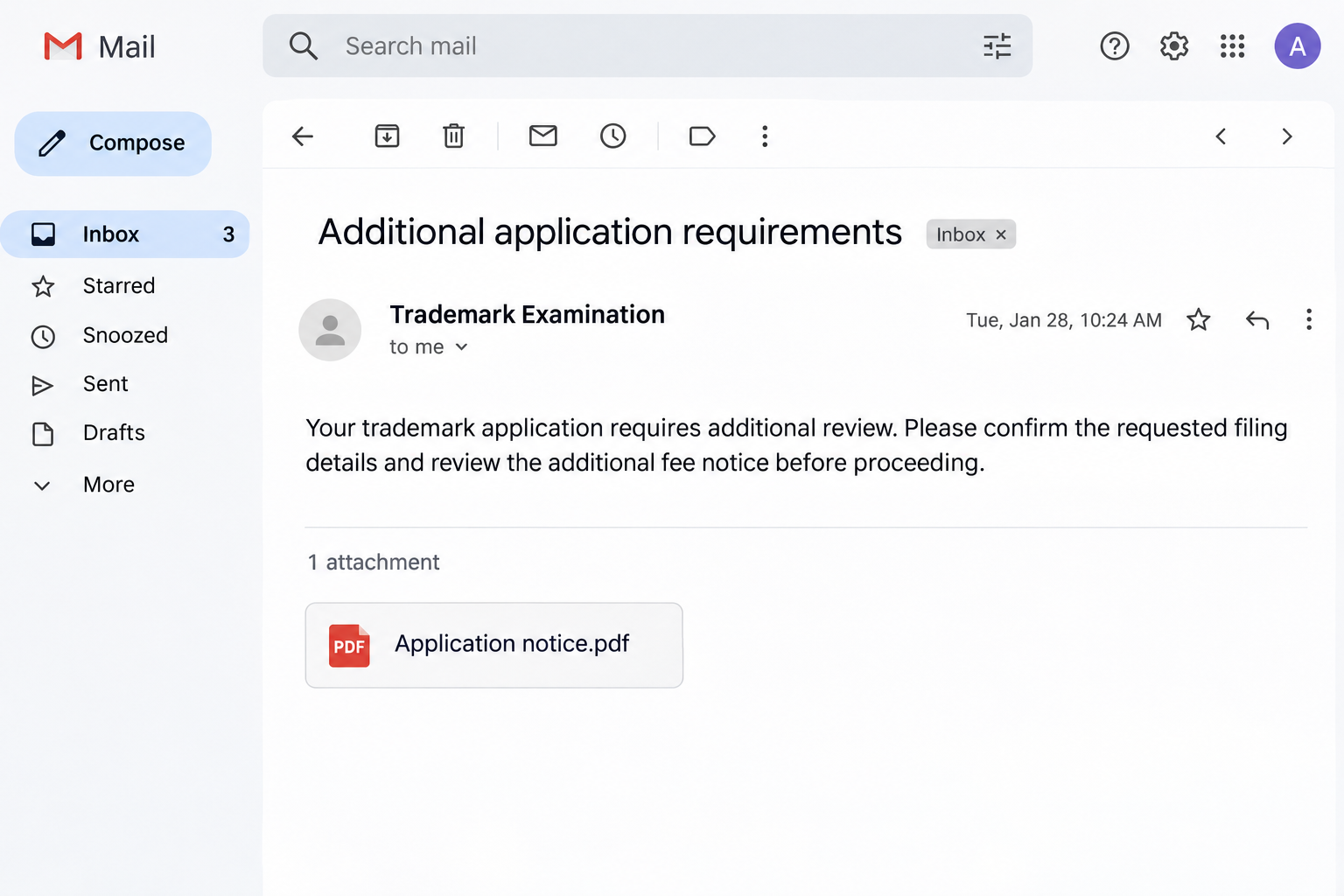
The opening image is an illustrative reconstruction of the additional-requirement lure. It is not a genuine USPTO notice or an authentic message from a named examiner.
How the Fake USPTO Examiner Email Scam Works
Step 1: The message attaches itself to an existing filing
The sender refers to a trademark application or registration that already matters to the recipient. The request can therefore resemble expected correspondence rather than unrelated advertising.
It may include an application identifier, trademark wording, or other filing information. Those details make the message look relevant without authenticating its origin.
Check the actual record before accepting the claimed role. A person describing themselves as assigned attorney has not established that an examiner was assigned.
Step 2: An invented requirement creates pressure to act
The sender says a fee, form, or additional service is necessary before the application can continue. The threat may involve delay, abandonment, or lost rights.
These consequences sound serious because genuine trademark matters can have deadlines. The fraud depends on treating the stranger’s request as the source of those obligations.
Do not guess whether an extra classification or filing fee sounds reasonable. Look for the corresponding genuine document and confirm any requirement through the agency’s process.
An actual filing issue needs attention, but it does not make a separate payment link authentic. Keep those two decisions separate while checking.
Step 3: A lookalike address or copied email chain supplies apparent credibility
One reported message used a sender domain formatted as gov.uspto[.]live. The word gov appeared at the beginning, while the address still did not belong to uspto.gov.
Read the whole domain rather than a reassuring fragment. A left-hand label containing gov cannot turn an unrelated address into the government’s actual domain.
The USPTO also warns about fabricated or forwarded message chains appearing to involve a real examiner. A pasted conversation should not replace checking the genuine record.
Even a familiar-looking sender deserves independent verification when the request involves payment or secrets. Displayed identities and email text can be misleading.
Step 4: The recipient is directed toward payment or sensitive disclosure
The email may request payment details, personal information, documents, or a response through its own link. That keeps the next stage within the impersonator’s chosen route.
Do not send card information or a USPTO password in reply. The agency specifically warns against disclosing personal or payment information through unsolicited contact.
Use official forms and payment routes reached independently for any verified requirement. A sender’s promise to complete the work does not authenticate the destination.
If someone claims to represent you, their request for your personal account password deserves scrutiny. The USPTO says an attorney uses their own account to file for clients.
Step 5: Further contact can exploit apparent urgency or real alerts
The agency describes scammers who arrange legitimate USPTO subscription alerts, then call and reference those alerts. The real email makes the unrelated caller seem more credible.
A genuine alert is still only an alert. It does not establish that the person who calls afterward works for the agency or may collect payment.
Do not authenticate one communication using another event the sender can arrange. Return to your actual application record and independently established agency contacts.
If further demands arrive after you paid, stop and report the sequence. Another payment cannot retroactively establish that the original person was authorized.
Check the Requirement Through TSDR Before Paying
Start from the genuine USPTO website and open TSDR. Locate your own application using its actual identifying information.
Review the status and the Documents tab for the communication being claimed. The agency’s scam guidance says official office actions and information or payment requests appear there.
Compare the document’s substance, date, and assigned contact with the message. Do not stop at matching the trademark name or application number.
If you have a recent genuine office action, use the contact information in that record to verify questionable correspondence. Avoid the telephone number supplied only by the suspicious email.
If no examiner has been assigned, use the Trademark Assistance Center through the genuine USPTO site. Ask whether the specific communication or requirement belongs to your case.
Check any verified fee against official trademark fee information and the document governing your filing.
Do not rely on a stranger’s quoted amount or an older internet example as your fee schedule. Requirements and amounts can depend on the actual filing.
If you already have an attorney, contact them through your established details. Ask about the genuine document without allowing the email sender to replace that relationship.
A Real Deadline and a Fake Payment Demand Can Coexist
Finding a fraudulent message does not automatically settle the status of your application. Your genuine record may still contain an action requiring a timely response.
Likewise, finding a real requirement does not validate every message mentioning it. A fraudster can refer to public filing activity while supplying a different payment destination.
Keep a separate note of what the agency actually requires and what the suspicious sender requested. That helps your attorney or agency staff identify the mismatch.
Do not delete every filing email or abandon monitoring because the inbox became confusing. Establish a reliable routine for checking the official application record.
For legal decisions about a genuine filing, use the agency’s procedures and your qualified adviser. A person threatening immediate payment should not determine your response strategy.
What to Do if You Have Fallen Victim to This Scam
-
Stop using the sender’s links and payment instructions. Preserve the original email, including the full address, reply destination, attachment names, and any subsequent exchange.
Do not send more information to cancel the supposed service. An impersonator’s promise to reverse a charge is another claim requiring independent verification.
-
Contact the financial institution promptly if money or payment details were exposed. Explain that someone impersonating a government examiner induced the transaction or disclosure.
Provide the actual amount, transaction date, destination, and payment method. Ask about the relevant blocking, replacement, recall, or dispute options without assuming recovery is guaranteed.
Keep the institution’s case reference and any evidence it requests. Financial reporting should not wait for the email sender to admit the request was false.
-
Secure a USPTO account whose password was shared. Use the genuine account-recovery controls and contact agency support about suspected unauthorized access.
Review application correspondence details and other changes with the appropriate support or adviser. A password change alone does not explain or reverse a filing already submitted.
Replace reused credentials on other affected services where relevant. Keep new passwords and verification codes away from anyone offering to repair the incident privately.
-
Verify the genuine application status separately. Open TSDR through the official route and check for actual correspondence, deadlines, and unexpected changes.
If a real office action exists, contact the assigned examiner using that record or consult your established attorney. Do not let the scam distract from legitimate requirements.
Record the document you used for verification. It helps explain why the suspicious email’s supposed fee or contact did not match the official process.
-
Keep genuine filing documents separate from suspicious attachments. This helps your adviser identify the real requirement without mistaking the impersonator’s paperwork for agency correspondence.
-
Report the impersonation to the USPTO. The agency lists TMScams@uspto.gov for trademark scam reports, including spoofed websites and other suspected impersonation.
Provide the original message and relevant details through the agency’s stated process. Do not include account passwords or card-security codes in a report.
If the message borrows a real examiner’s identity, describe that impersonation carefully. The named employee may be another person whose identity was misused.
-
Document any identity exposure or online-fraud loss. Use the official reporting services appropriate to your location and the kind of information involved.
United States users can consult IdentityTheft.gov for identity-theft recovery guidance and IC3 for reporting online fraud.
Keep report references together with financial and agency correspondence. These records help with follow-up but do not themselves guarantee reimbursement or repair a trademark filing.
-
Warn anyone who handles your filing payments. Explain which message was fraudulent and establish how future agency fees will be independently checked.
Reject unsolicited offers to recover the payment or fix the application for another urgent fee. Continue through established institutional and professional contacts.
Give Your Business a Simple Verification Routine
Decide who checks the application record and who approves a payment. A clear arrangement prevents an alarming email from becoming an immediate invoice instruction.
Keep your application number, established attorney contact, and official account route accessible. There should be no need to locate them through a new sender’s message.
If a colleague receives the request first, ask them to preserve it without replying. Compare it with the genuine record before discussing payment details.
Keep private service offers separate from government requirements. A commercial proposal is not an official fee merely because it mentions your trademark application.
You can consider a legitimate service on its merits without accepting a false claim of government authority. That distinction protects both your filing and your payment decisions.
Frequently Asked Questions
How did the sender know my application number?
The USPTO warns that scammers use publicly available filing information. A correct number makes the message relevant but does not authenticate the person contacting you.
Does gov.uspto.live belong to the USPTO?
That address is under uspto[.]live, rather than uspto.gov. A gov label at the beginning does not make an unrelated domain an official government address.
Are all additional trademark fees fraudulent?
Genuine procedures can require fees or further action. Confirm the requirement through TSDR, official fee information, and independently reached agency staff or your established attorney.
Where should I check an alleged office action?
Use the official TSDR record and its Documents tab. Compare the genuine communication and contact details with the request that arrived in your inbox.
Should I give an attorney my personal USPTO password?
The USPTO warns against sharing that password, including with someone helping you file. A representing attorney uses their own account for the appropriate filings.
What if I already paid the false examiner?
Contact the financial institution promptly, preserve the payment instructions, and report the impersonation. Check the genuine filing separately so any real requirement still receives attention.
The Bottom Line
Do not pay a supposed USPTO examiner through an unverified email demand. Check the actual application record and independently confirm any genuine requirement before acting.
If you already paid or shared credentials, contact the financial institution and secure the affected access. Report the impersonation while protecting the legitimate filing process.

Join the discussion
0 commentsShare your experience or ask a question about this article.
Community experiences
Did this happen to you?
Your experience could help someone recognize the same scam. Submit a private report for our team to review.
I experienced this tooReports are reviewed before publication. Sharing publicly is always your choice.
Discussion
Start the conversation
Have a question or something useful to share? Add the first comment.