

The name was deliberately ridiculous and had never been used in real life. It existed only on one BetOnline account, alongside the owner’s actual phone number.
Then a fake Bank of America caller used that exact alias while pretending to investigate fraud.
Overview
A nonsense name became a serious data clue
The person had opened a BetOnline account the previous year, placed one sports bet, and stopped using the service. The account contained a made-up name and email, but the cell number was real.
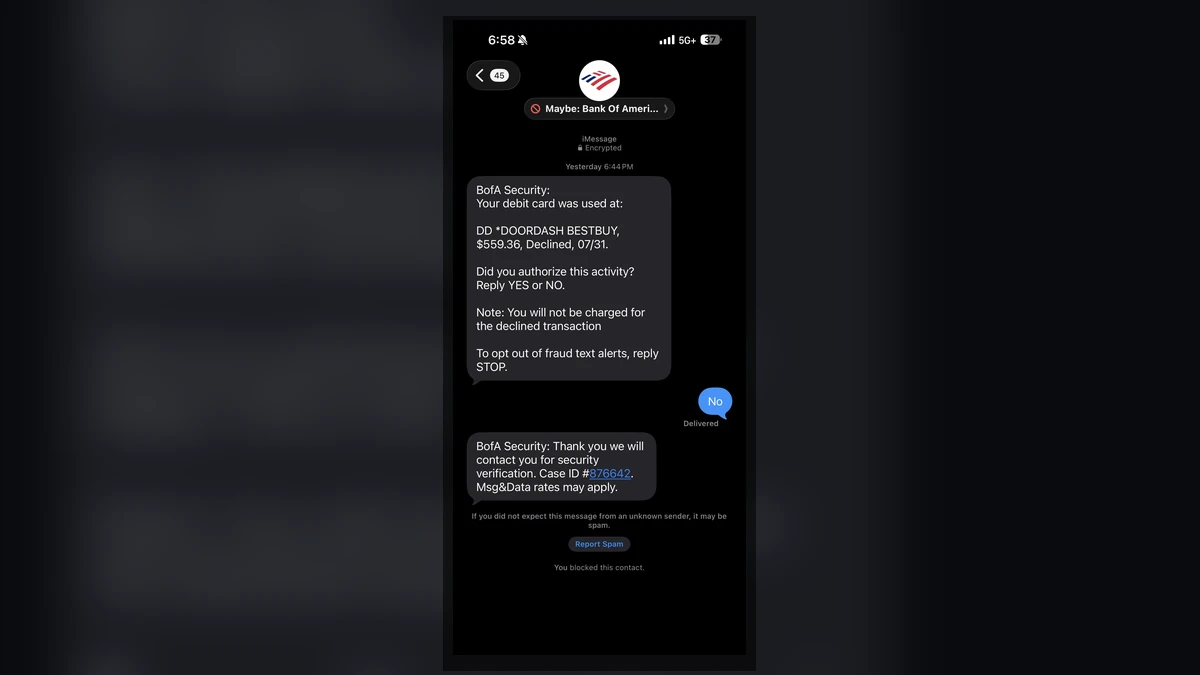
Later, a message claiming to be a Bank of America fraud alert arrived. The recipient replied “no,” and a supposed bank fraud specialist called about two minutes later.
During that call, the person was asked to confirm the unusual BetOnline alias. Because it had apparently been used nowhere else, the match felt far too specific to be a random guess.
The match is meaningful, but it does not identify the leak
The narrow conclusion is strong: the fake bank operation possessed, or had access to, a record connecting the strange alias with the real phone number.
The route remains unknown. The pairing could have passed through an account provider, vendor, affiliate, payment system, marketing chain, device, email inbox, data broker, or criminal compromise.
That distinction matters. The detail should not be dismissed, but it also cannot support a public accusation that one named company sold or lost the data.
The private fact made the bank impersonation believable
The caller did not need the correct legal name. A private and memorable alias worked even better because only someone with privileged access seemed capable of knowing it.
Bank impersonators often use a true detail to support a false conclusion: “I know this about you, therefore I work for your bank.” The logic feels persuasive in the moment.
The warning signs in this contact were clear:
- An unexpected BofA text arrived outside a verified bank session.
- A reply was followed almost immediately by a phone call.
- The caller relied on an unusual name rather than secure authentication.
- The name belonged to an unrelated betting account, not the bank.
- Possession of data was treated as proof of employment.
- No independent channel connected the call to Bank of America.
- The original route of the alias-and-phone pairing was unproven.
- Continuing could have exposed codes, credentials, or money.
What the One-Use Alias Really Proves
A unique alias acts like a marker. When someone uses a different name or email for each account, later messages can reveal that one label moved into a new context.
Here, the marker was unusually clean. The strange name reportedly existed only on BetOnline, and that account also held the real mobile number. The fake bank caller knew both.
This is more significant than receiving generic gambling spam after visiting a betting site. The caller was not merely guessing an interest; the caller used the exact identity attached to the number.
What the clue cannot show is provenance. Information entered on one website may flow through identity checks, payment processors, support systems, analytics, marketing affiliates, and cloud vendors.
The user side also matters. A compromised inbox, infected device, browser extension, password manager, or exported contact record could expose the same pairing.
No public forensic report, breach notice, vendor log, database sample, or account audit identifies the route. The data may have been stolen, sold, shared, merged, or captured elsewhere.
How the BetOnline Alias Scam Works
Step 1: A name-and-number record reaches the operation
The callers begin with a phone number connected to a name or alias. The record may originate in a commercial lead chain, compromised account, data theft, malicious device, or unauthorized disclosure.
A complete identity is unnecessary. One unusual field can do more persuasive work than ten common details.
Step 2: A fake bank text tests the target
The message mentions a declined charge, suspicious purchase, locked card, or transfer. It asks for a simple reply or provides a number to call.
Responding confirms the number is active and that bank-security language gets attention. It can also trigger a human call while concern is still fresh.
Step 3: A caller continues the same story
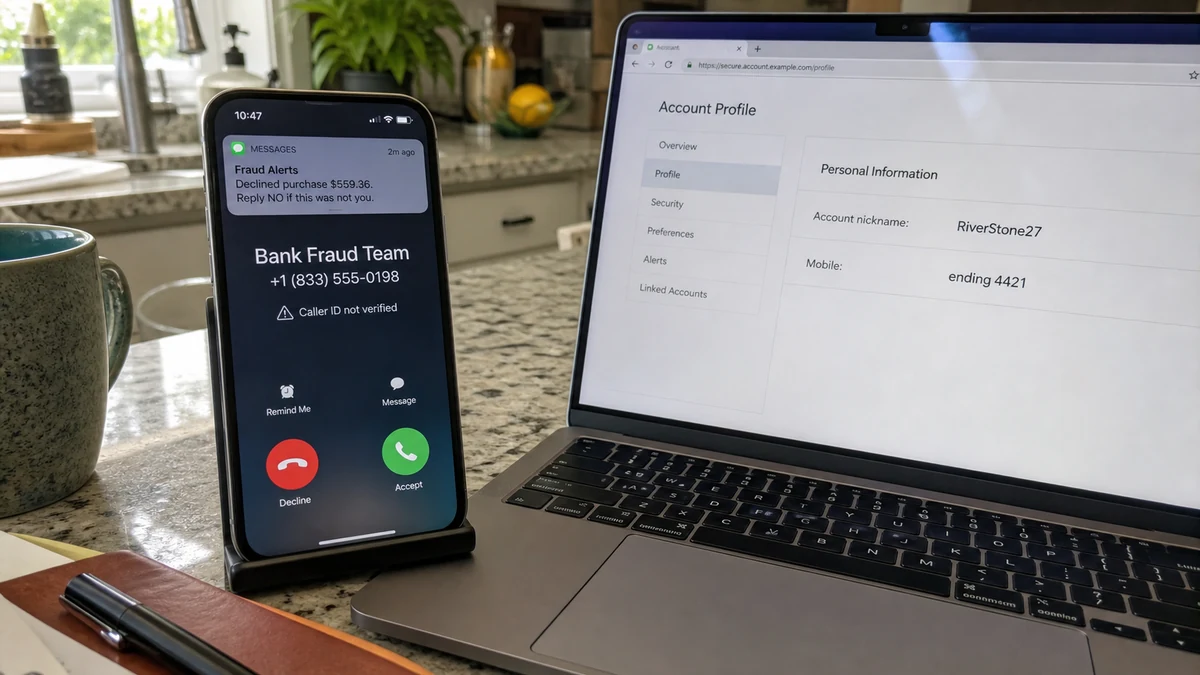
The follow-up voice claims to work in Bank of America’s fraud department. Caller ID may display the bank or a copied official number.
The text and call appear to be two parts of a coordinated banking system. In reality, they can be two stages of the same script.
Step 4: The alias becomes the trust test
The caller asks whether the recipient is the person named in the record. Hearing a strange private alias can feel more convincing than hearing an ordinary real name.
The target may correct the name, explain that it came from betting, or volunteer the legal identity. Every reaction enriches the original record.
Step 5: “Security” questions fill in the blanks
The supposed agent may request a ZIP code, card digits, Social Security fragment, bank username, or one-time passcode. Each question is presented as protection.
Combined with the original data, those answers can support password resets, account recovery, SIM attacks, or more convincing future calls.
Step 6: The fraud alert becomes a money request
The victim may be told to send a Zelle payment to a safe account, install remote-access software, move savings, or approve a transfer.
Bank of America’s impersonation warning says the bank will not request a password, verification code, or transfer to resolve a fraud claim.
Step 7: The enriched profile returns later
Even when no money moves, the caller may confirm the real name, bank relationship, betting context, and willingness to answer. That improved profile can be reused or sold.
A second caller may mention both the alias and the failed BofA call while claiming to investigate the first scam. Accurate history still does not prove authority.
Why This Does Not Prove a BetOnline Breach
The obvious explanation is tempting: the data was entered on one service, so that service must have exposed it. That is possible, but the visible clue does not close the chain.
Online accounts depend on other businesses. Payments, identity checks, marketing, fraud screening, analytics, and customer support may each place data inside a separate system.
Data brokers can also merge records. One file may identify a betting interest, while another connects a phone number to a profile. The combined record may not have existed in either original dataset.
Criminals enrich weak records themselves. When a target corrects an alias or explains where it came from, the caller learns both the legal name and the context.
None of those possibilities clears or implicates a specific company. They explain why the precise statement is “the pairing appeared in a fake bank call,” not “this company sold it.”
Contact BetOnline through a verified support route and ask for an account-security review. Request information about sessions, profile changes, connected processors, and any relevant security notice.
If a company investigation, regulator, or breach notification later identifies the route, the conclusion can change. Until then, attribution remains open.
Why Correct Personal Data Defeats Skepticism
People expect scam calls to get details wrong. A correct alias, balance, address, card fragment, or recent purchase breaks that expectation and makes the rest of the story feel credible.
The caller wants the target to mistake knowledge for permission. But a criminal can possess accurate information while having no relationship with the bank being impersonated.
Real banks authenticate customers inside systems they control. An incoming caller who recites data is trying to make the customer authenticate the stranger.
End the contact and open the bank app yourself. Check whether the transaction exists and whether a secure message confirms the alert.
Our guide to the fake BofA attempted-transaction alert explains how the same text-to-call sequence can progress into theft of a one-time code.
Bank of America’s official reporting page says suspicious texts can be forwarded to abuse@bofa.com. Reach the page independently rather than through the incoming message.
How to Investigate the Alias Safely
Write down every place the alias was used. Include the account email, real phone number, payment method, browser profile, onboarding date, and any identity documents submitted.
Search email for the alias. Welcome messages, payment confirmations, support tickets, and marketing mail may reveal other systems that processed the same details.
Review the BetOnline account from a clean device. Check active sessions, profile information, messages, payment instruments, and recent changes. Replace any reused password.
Inspect email forwarding rules, recovery addresses, connected apps, and devices. An inbox compromise can reveal unique account labels without any public breach.
Preserve the fake BofA text before blocking it. Record whether it arrived through SMS or iMessage, the sender, timestamp, wording, link, and follow-up call number.
Report unwanted calls and texts through the FCC complaint route. Forward scam texts to 7726 where the carrier supports it.
Add a mobile-carrier account PIN and port lock if available. A phone number paired with identity data can be useful in a SIM-swap attempt.
Do not publish full phone numbers, account identifiers, or uncensored screenshots. Evidence should help investigators without improving the profile criminals already hold.
What Else May Be Exposed
The confirmed overlap is the alias and phone number. The original account may also contain an email, address, date of birth, payment history, device information, or identity-verification material.
The fake caller’s possession of those other fields has not been established. Respond proportionally, but stay alert for signs that the record is larger.
Watch for password reset messages, bank codes, and login alerts. A code arriving during another call may mean the criminal is attempting account access in real time.
Review cards connected to the betting account for small tests and unauthorized transactions. Absence of a charge does not rule out attempts to enter another account.
If identification was uploaded during onboarding, ask the service which security contact handles possible exposure and what protections are available.
Warn close contacts that the alias is not a verified identity. A criminal may use it in messages to relatives while claiming to know something private about the victim.
If the caller learned the real name during the conversation, consider the record enriched. Future calls may use both identities to appear connected to a genuine investigation.
Company, Address, and Fulfillment Checks
BetOnline is context, not a proven origin
The alias was reportedly used for a BetOnline account, but no forensic record identifies BetOnline or a named vendor as the disclosure route.
Bank of America was being impersonated
The BofA fraud language and caller ID did not establish employment. The real bank can confirm alerts only through its official app and contact channels.
The incoming number was not a business address
Caller ID can be spoofed and internet numbers can be temporary. A legitimate organization has a verifiable legal identity outside the message that arrived.
No account-protection service was fulfilled
The caller provided no authenticated bank case, secure message, or documented remedy. Real fraud resolution appears inside the bank account, not only in a phone promise.
What to Do if You Have Fallen Victim to This Scam
- End the call. Do not answer more identity or security questions.
- Contact Bank of America independently. Use the number on the card or statement and ask whether the alert was genuine.
- Secure the bank account. Change exposed credentials, revoke sessions, and report any code or transfer you approved.
- Review the BetOnline account. Check profile details, sessions, messages, and payment methods through the verified website.
- Preserve the alias trail. Save the original account record, fake text, call time, number, and exact wording.
- Notify the service. Request an account-security review without claiming a breach that has not been confirmed.
- Protect the phone number. Add a carrier PIN or port lock and watch for unexpected SIM changes.
- Monitor financial activity. Look for test charges, new payees, password resets, and profile changes.
- Report the impersonation. Forward the text to BofA and 7726, and report it to the FTC or FCC.
- Run a full Malwarebytes scan. Check devices if you opened a link or suspect a malicious extension or information stealer.
- Use AdGuard as a preventive layer. It may block known phishing pages, but it cannot reveal where the alias came from.
- Ignore paid leak investigators. Do not pay anyone promising to identify the data route or guarantee a settlement.
Frequently Asked Questions
Does the alias prove BetOnline was breached?
No. It proves that a scam caller had the alias-and-number pairing. A service, vendor, device, inbox, broker, or another route could be involved.
Why did the caller use the fake name?
The unusual name acted as a trust test. Recognition made the caller appear to hold privileged information and encouraged further disclosure.
Did replying “no” expose the alias?
The pairing appears to have existed beforehand. The reply likely confirmed the number was active and may have triggered the fast follow-up call.
Can Bank of America send real fraud alerts?
Yes. Verify any alert inside the official app or by calling the number on the card, never through contact details supplied in the message.
Should the person change the alias?
Secure the account and password first. A new alias may reduce future correlation, but it cannot retrieve an older record already copied elsewhere.
Should the company be accused publicly?
Report and preserve the facts. Public attribution should wait for evidence that identifies the responsible system, vendor, or disclosure route.
The Bottom Line
The bizarre BetOnline alias mattered because it was unique and tied to a real phone number. Its use in a fake BofA call strongly suggests that the pairing traveled beyond its expected context.
It does not reveal the route by itself. Treat accurate personal data as a clue to investigate, never as proof that a caller represents the bank. Hang up and verify every alert through a channel you control.

Join the discussion
0 commentsShare your experience or ask a question about this article.
Discussion
Start the conversation
Have a question or something useful to share? Add the first comment.