

A new wave of oral health ads is spreading online, all built around the same hook: a “Pine Tree Sap Recipe” that supposedly transforms your gums and breath fast.
The branding and product name may change, but the structure behind these pages stays remarkably consistent.
This article breaks down the pattern, the red flags to watch for, and what to do if you already bought after seeing one of these offers.
Scam Overview
The “Pine Tree Sap Recipe” pitch is rarely just a quirky wellness tip.
In many cases, it is the hook for a supplement funnel.
The goal is not to teach you a home remedy. The goal is to move you through a sequence that ends with a checkout page for a dental supplement, commonly sold as drops, capsules, or gummies.
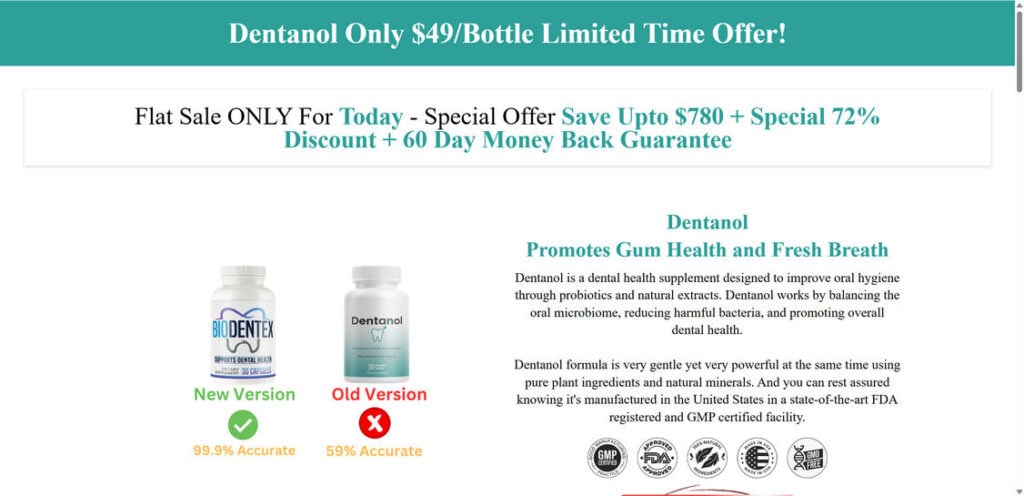
Dentanol is promoted as a dental health supplement designed to improve oral hygiene through probiotics and natural extracts. The marketing often claims Dentanol works by balancing the oral microbiome, reducing harmful bacteria, and promoting overall dental health.
You may also see claims like:
- Promotes gum health and fresh breath
- Gentle but powerful formula
- Pure plant ingredients and natural minerals
- Manufactured in the United States
- Made in a “state-of-the-art FDA registered” facility
- “GMP certified” manufacturing
Those phrases can sound reassuring, especially if you are dealing with gum inflammation, sensitivity, or embarrassment about breath.
But the biggest issue is not that a supplement exists.
The issue is how it is being sold.
The Pine Tree Sap Recipe is usually bait
The “recipe” angle is designed to trigger a specific reaction:
“This is simple. This is natural. This is something I can do tonight.”
That reaction creates attention and hope.
The funnel then stretches that hope into a story, delays the promised instructions, and nudges you toward the product as the real solution.
If the recipe were truly the main point, it would be presented clearly:
- exact ingredients
- exact amounts
- safe preparation steps
- real limitations and warnings
- who should not use it
- what outcomes are realistic
Instead, many of these pages keep it vague and emotional.
They offer just enough detail to keep you watching, but not enough to give you a real, usable remedy.
That is a classic bait-and-switch pattern.
Why oral health makes people vulnerable to this format
Dental problems are stressful for a few reasons:
- They are visible and social. Bad breath and gum issues cause embarrassment.
- They can be painful and expensive.
- People fear procedures.
- Many feel they have “tried everything” and still struggle.
A funnel that promises a natural, simple fix exploits those pressures.
It often frames the viewer as a victim of hidden causes, such as:
- “bad bacteria controlling your mouth”
- “a silent oral infection nobody detects”
- “a toxic biofilm”
- “modern toothpaste makes it worse”
- “a hidden cause dentists ignore”
These claims are designed to create doubt about normal dental care, then insert the supplement as the “missing piece.”
The credibility signals are often stronger than the evidence
Dentanol promotions frequently lean on credibility markers that feel official:
- “oral microbiome” language
- “probiotics” and “balancing bacteria”
- “plant minerals” and “natural extracts”
- manufacturing claims like “FDA registered facility” and “GMP certified”
Some of these concepts are real in a general sense.
The problem is the leap from “this sounds scientific” to “therefore this bottle will fix your gums quickly.”
A supplement can be manufactured in a compliant facility and still be marketed deceptively.
A supplement can include probiotics and still have no proven effect on gum disease.
A supplement can use “oral microbiome” wording and still rely on hype rather than independent clinical support.
The words “FDA registered” and “GMP certified” are often used as trust shortcuts
This is a major trap point for readers.
Many funnels imply that “FDA registered facility” means the product is FDA approved.
Those are not the same thing.
For supplements, manufacturing and facility registrations are compliance-related concepts. They do not automatically mean:
- the product is approved to treat disease
- the product’s marketing claims are validated
- the product’s effects are proven the way prescription drugs are proven
The funnel often relies on the viewer misunderstanding these distinctions.
That does not mean every manufacturing claim is false.
It means the claims are used as persuasion, especially when there is no transparent, verifiable evidence about results.
The “gentle yet powerful” framing is designed to reduce skepticism
Another common persuasion technique is the “perfect balance” pitch:
- safe but fast
- gentle but powerful
- natural but works like a medical breakthrough
- easy but life-changing
Real health products rarely live in that fantasy zone.
When a supplement is presented as both extremely gentle and extremely powerful, it is usually marketing language meant to make the buyer feel safe while still expecting dramatic results.
Many of these funnels are built for speed, not truth
The Pine Tree Sap Recipe operation often includes:
- urgency headlines
- “tap to listen” or long video presentations
- fake scarcity like “limited stock”
- “people watching now” counters
- huge discounts that reset every refresh
- testimonial-heavy pages with vague identities
- checkout flows that push bundles and upsells
This is not how normal dental products are typically sold.
It is how aggressive affiliate funnels are built.
Why the same story appears across different dental supplement names
The Pine Tree Sap Recipe pitch is modular.
If complaints rise or ad accounts get flagged, operators can quickly:
- change the domain name
- replace Dentanol with another label
- swap the bottle image
- adjust the voiceover
- relaunch the same funnel again
That is why you will see nearly identical “oral microbiome miracle” pages selling different products.
The story is the engine.
The product is interchangeable.
The biggest takeaway
If a page hooks you with a Pine Tree Sap Recipe, but refuses to give you a clear, practical remedy and instead funnels you toward a supplement checkout, you are not reading a helpful health article.
You are moving through a conversion script.
Next, we will break down the typical funnel step by step so you can recognize it quickly, even when the product name changes.
How The Scam Works
The Pine Tree Sap Recipe scam-style campaign usually follows a predictable sequence.
Once you see the structure, you start noticing the same bones under dozens of different supplement brands.
Step 1: The scroll-stopping ad triggers embarrassment and urgency
Most people encounter this through paid ads.
The creative is designed to hit common oral-health insecurities:
- bleeding gums
- “morning breath” that never improves
- a bad taste in the mouth
- teeth that feel sensitive
- fear of losing teeth
- shame about close conversations
The wording is often emotionally loaded.
You might see language that feels like a warning:
- “Dentists won’t tell you this”
- “Your mouth is under attack”
- “Do this tonight”
- “Stop gum decay now”
- “One weird natural trick”
This is not education. It is an emotional trigger.
Step 2: The click lands on an advertorial disguised as health content
After clicking, you often land on a page that looks like an article or special report.
Common signs:
- big headline with “breakthrough” energy
- a story about a discovery
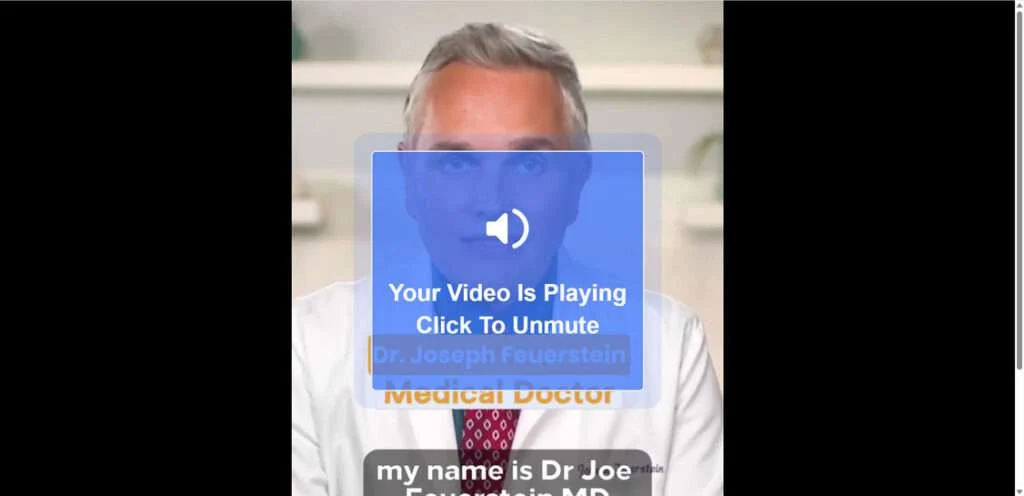
- a “researcher” or “doctor” figure
- pseudo-news formatting
- a video embedded high on the page
This is an advertorial. It is advertising designed to feel like editorial content.
The purpose is to lower your guard.
Step 3: The Pine Tree Sap Recipe is teased, not delivered
This is the bait stage.
The page implies you are about to learn a simple recipe.
But instead of giving you clear steps, it does one of these:
- forces you into a long video
- keeps repeating that the secret is coming
- offers vague references without practical details
- “explains” why you need the product first
If a recipe is truly valuable, it can be written in 10 lines.
When it is not delivered, that is usually intentional.
Step 4: A long-form video reframes your problem into a hidden “root cause”
The video usually shifts focus from symptoms to a dramatic root-cause story, such as:
- “harmful bacteria are sabotaging your mouth”
- “your oral microbiome is imbalanced”
- “a biofilm layer is feeding infection”
- “modern diets create the perfect storm”
- “your toothpaste is not reaching the real problem”
Some of these concepts are loosely related to oral health.
The scam-style leap is the certainty and the speed.
The video often speaks as if the cause is universally true for all viewers, and the solution is universally the same.
That is how you know you are in marketing mode.
Step 5: The “natural solution” quietly becomes a product
At some point, the promised recipe becomes symbolic.
The page hints that pine tree sap or an extract is important, then pivots:
“This is why the formula works.”
Now the bottle appears.
Dentanol is positioned as the real solution, with promises like:
- balances the oral microbiome
- reduces harmful bacteria
- supports gum health
- freshens breath
- works gently but powerfully
The viewer is no longer chasing a recipe.
They are being guided into a purchase.
Step 6: Authority claims and compliance badges stack up
To reduce doubt, the page adds credibility signals:
- “probiotic blend”
- “natural extracts”
- “pure plant ingredients”
- “natural minerals”
- “made in the USA”
- “FDA registered facility”
- “GMP certified”
This is the trust stack.
It is designed to make you feel like the product is medically validated.
But in many funnels, there is little independent, product-specific evidence presented outside the sales page itself.
Step 7: The funnel uses urgency to prevent research
Now the pressure starts.
You might see:
- countdown timers
- “limited inventory”
- “today only” discounts
- popups showing purchases
- “people watching” counters
These are conversion tools.
Their job is to keep you from opening a new tab.
A legitimate product does not need you to panic-buy.
Step 8: Bundle pricing nudges you to spend more up front
Most of these funnels offer tiers:
- 1 bottle at a high price
- 3 bottles as “most popular”
- 6 bottles as “best value”
Sometimes there is a “protocol” narrative that implies you need multiple months to see results.
This is a common tactic in supplement funnels because it increases revenue before the buyer can evaluate effectiveness.
Step 9: Checkout design increases the risk of confusion
This is where many people report problems.
Common issues include:
- pre-selected quantities
- add-ons that look recommended but feel mandatory
- upsell pages that look like order confirmation
- fine print that mentions subscriptions or continuity programs
- a merchant descriptor on the bank statement that does not match the product name
This is how a buyer thinks they ordered one item but later sees a larger total or repeat charges.
Step 10: Support friction makes refunds hard
After purchase, many scam-style funnels rely on friction:
- slow email-only support
- unclear return addresses
- strict windows
- “restocking fees”
- endless back-and-forth
Even when a product arrives, refunds can become frustrating.
This is why many people label these offers scams, even when a bottle shows up.
The pattern you should remember
The core structure is simple:
- Hook you with a recipe or secret trick
- Delay the actual instructions
- Build fear and urgency
- Introduce a bottle as the real fix
- Push bundles and fast checkout
- Make refunds slow and hard
Once you learn this pattern, you start seeing it everywhere.
What To Do If You Have Fallen Victim to This Scam
If you bought Dentanol or a similar supplement after seeing the Pine Tree Sap Recipe pitch, you still have options.
The best approach is calm and practical.
1) Save your evidence immediately
Create a folder and save:
- screenshots of the ad (if available)
- the landing page URL
- screenshots of the pricing and bundles
- your confirmation email
- your receipt and order number
- screenshots of your bank or card statement
Documentation is your leverage if you need a dispute.
2) Check for subscription or continuity billing
Look for words like:
- autoship
- membership
- monthly program
- continuity
- recurring
Then monitor for:
- a second charge days or weeks later
- repeat charges around the same day each month
- shipping charges you do not recognize
If you see repeat billing, act quickly.
3) Contact the seller in writing
Send an email that includes:
- your full name
- the email used for the order
- your order number
- a clear request to cancel any subscription and stop future charges
- a request for written confirmation
Keep it short and direct.
Save any reply.
4) Contact your bank or card provider if billing looks wrong
Ask your bank or card issuer:
- whether you can dispute the charge
- how to block future charges from the same merchant
- whether replacing the card is recommended if repeat charges appear
If you see unauthorized charges, escalation is often the fastest way to stop the problem.
5) Monitor your statements for at least 60 days
Set a reminder and watch for:
- delayed charges
- new merchant names
- “membership” style fees
- repeated shipping charges
Many people stop checking too early.
Do not.
6) Do not use supplement marketing as a substitute for dental care
If you have:
- gum bleeding
- swelling
- persistent bad breath
- tooth mobility
- pain
- pus or abscess signs
Those are worth a dental evaluation.
Supplements do not replace cleanings, periodontal care, or treatment plans when gum disease is present.
7) If you had side effects, stop and seek guidance
Even “natural” products can cause reactions.
If you experienced symptoms after taking a supplement, stop using it and seek guidance from a qualified healthcare professional.
This matters if you have allergies, take prescription medications, or have chronic conditions.
8) Report the ad
Report the ad on the platform where you saw it.
Use categories such as:
- misleading claims
- scam
- impersonation
- deceptive business practices
Reporting helps platforms identify patterns.
9) Tighten security if you shared personal information
If the checkout felt suspicious, consider:
- changing passwords if you reuse them
- enabling 2-factor authentication on your email
- watching for phishing emails pretending to be “support”
- monitoring accounts for unusual activity
10) If the product arrives and you want a refund, document everything
Take photos of:
- the packaging
- the label
- the shipping box
- any inserts with return terms
Request a refund in writing and save all correspondence.
If the seller delays or refuses, your documentation supports a payment dispute.
The Bottom Line
The Pine Tree Sap Recipe scam-style dental supplement ads are built around a familiar funnel: hook you with a simple home trick, delay the promised solution, then swap it for a bottle sold with urgency, credibility theater, and high-pressure checkout tactics.
Dentanol and other suplements is marketed with appealing claims like oral microbiome balance, probiotics, natural extracts, and manufacturing phrases like “FDA registered facility” and “GMP certified.” Those phrases can sound official, but they are not the same as independent proof that a supplement will fix gum disease or eliminate chronic bad breath.
If you already purchased, focus on protection: save evidence, watch for repeat charges, cancel in writing, and escalate through your bank if billing looks deceptive.
Most importantly, learn the pattern.
These campaigns often reappear under new product names with the same script, the same urgency, and the same promise that a simple secret will solve a complex problem.
FAQ
What is the Pine Tree Sap Recipe scam?
It is a marketing funnel that teases a simple home “recipe,” delays the real instructions, then pivots to selling an overpriced dental supplement using urgency and authority-style claims.
Is Dentanol proven to cure gum disease or eliminate bad breath?
No credible proof is typically provided in these funnels. If the only “evidence” is on the sales page, treat the claims as marketing, not independent validation.
What does “FDA registered facility” actually mean?
It usually refers to the facility status, not FDA approval of the supplement to treat disease. It is often used as a trust shortcut in ads.
Why do these pages use probiotics and “oral microbiome” language?
Because it sounds scientific and persuasive. It does not automatically mean the product works as promised or is supported by strong clinical evidence.
What should I do if I was charged more than expected or see repeat billing?
Save screenshots and receipts, email the seller to cancel in writing, and contact your card provider to dispute unauthorized charges and block future billing if needed.








