

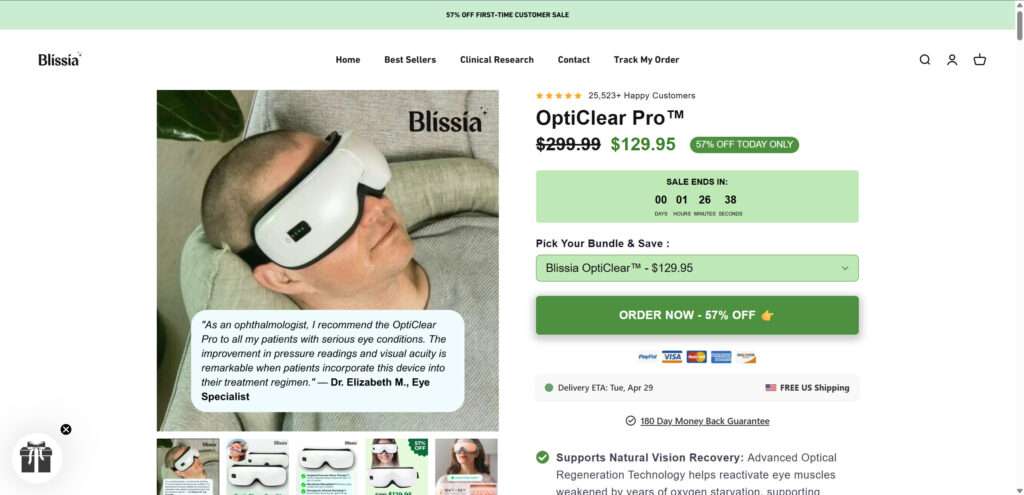
Imagine a device that promises to reverse serious eye conditions like glaucoma and cataracts without surgery, glasses, or medication. The Blissia OptiClear Pro claims to do just that, using “Advanced Optical Regeneration Technology.” Marketed as a revolutionary, FDA-registered eye massager, it boasts endorsements from a supposed Dr. James Patterson and testimonials from thousands of satisfied customers. But is this device truly a breakthrough in vision care, or is it a cleverly disguised scam preying on those desperate for better eyesight?
Scam Overview
The Blissia OptiClear Pro is advertised as a medical-grade device capable of treating a range of eye conditions, including:
- Glaucoma
- Cataracts
- Age-related Macular Degeneration (AMD)
- Blurry vision
- Night driving difficulties
- Eye strain from screen use
The device claims to work by restoring blood flow to eye muscles, reactivating natural focusing abilities, and strengthening eye muscles naturally. It promises noticeable improvements in vision clarity, reduced strain, and greater independence in just 15 minutes a day.
Questionable Claims and Practices
Despite these grand promises, several red flags suggest that the Blissia OptiClear Pro may not be the miracle device it purports to be:
- Misleading “FDA Registered” Claim: The product is marketed as “FDA-registered,” implying a level of approval and endorsement that it may not have. The FDA does not “register” medical devices in the way the term is used in the marketing materials.
- Fake Authority Figure: The device is endorsed by a “Dr. James Patterson,” a supposed renowned vision specialist. However, there is no verifiable information about this individual, raising doubts about his existence and credibility.
- Unsubstantiated Clinical Claims: The marketing materials reference studies and clinical trials that supposedly demonstrate the device’s effectiveness. However, these studies are not cited or linked, making it impossible to verify their authenticity.
- Stock Images and Testimonials: The website uses generic stock images and testimonials that lack verifiable details, such as full names or locations, making it difficult to confirm their legitimacy.
- Exaggerated Success Rates: Claims that “87% of participants experienced significant vision improvement within 3-4 weeks” are presented without any supporting evidence or context.
- Pressure Tactics: The website employs urgency tactics, such as limited-time offers and countdown timers, to pressure consumers into making quick purchasing decisions.
- Lack of Transparency: There is minimal information about the company behind the product, including its physical address, customer service contacts, or return policies.
The Dropshipping Model
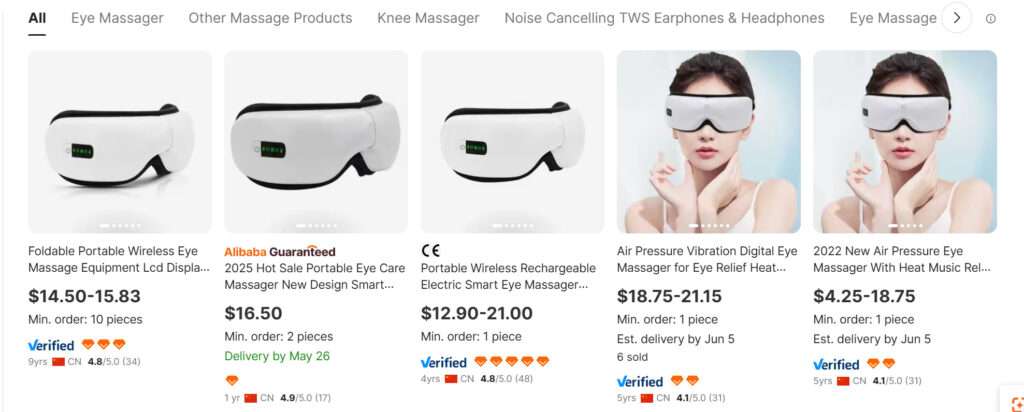
Further investigation reveals that the Blissia OptiClear Pro is likely a generic eye massager sourced from low-cost suppliers and rebranded with exaggerated claims. Similar devices can be found on various online marketplaces for a fraction of the price. This suggests a dropshipping model, where the seller does not hold inventory but instead purchases the product from a third party after receiving an order.
How the Scam Works
Step 1: Creating a Convincing Online Presence
The scammers set up a professional-looking website with sleek design, persuasive copy, and high-quality images. They use medical jargon and references to lend credibility to the product. The inclusion of a supposed medical professional, “Dr. James Patterson,” adds an air of authority.
Step 2: Leveraging Social Proof and Testimonials
The website features numerous testimonials from satisfied customers, complete with before-and-after photos and glowing reviews. These testimonials are often fabricated or taken from stock photo libraries, making them difficult to verify.
Step 3: Employing Urgency and Scarcity Tactics
To prompt immediate purchases, the website uses countdown timers, limited-time offers, and claims of low stock availability. These tactics create a sense of urgency, pressuring consumers to buy without thoroughly researching the product.
Step 4: Utilizing Paid Advertisements and Influencer Marketing
The scammers invest in targeted online advertisements and may even collaborate with influencers to promote the product. These promotions often highlight the device’s supposed benefits and limited availability.
Step 5: Processing Orders Through a Dropshipping Model
Once an order is placed, the seller purchases the generic eye massager from a third-party supplier, often at a significantly lower cost. The product is then shipped directly to the customer, sometimes with delays or issues in delivery.
Step 6: Providing Minimal Customer Support
After the purchase, customers may find it difficult to contact the company for support or refunds. The lack of transparent contact information and responsive customer service further complicates the situation.
What to Do If You’ve Fallen Victim to This Scam
If you suspect that you’ve been scammed by the Blissia OptiClear Pro or a similar product, take the following steps:
- Contact Your Payment Provider: Immediately reach out to your bank or credit card company to report the fraudulent transaction. They may be able to reverse the charge or provide further assistance.
- Report the Scam to Authorities: File a complaint with your local consumer protection agency or the appropriate regulatory body. In the United States, you can report scams to the Federal Trade Commission (FTC) at reportfraud.ftc.gov.
- Leave Reviews and Warnings: Share your experience on consumer review platforms and social media to warn others about the scam. Your feedback can help prevent others from falling victim.
- Monitor Your Financial Accounts: Keep a close eye on your bank and credit card statements for any unauthorized charges. Report any suspicious activity promptly to your financial institution.
- Initiate a Chargeback
If you paid via credit card or PayPal, you may be eligible for a chargeback. This is essentially a reversal of the transaction if the product was misrepresented, defective, or never arrived. Be sure to act quickly, as chargebacks typically have a limited time window (usually 60–120 days). - Request a Refund in Writing
Email the seller with a formal refund request. Keep records of your communication, including dates, times, and responses. Even if the company is unresponsive, this documentation can support your case with your bank or credit card issuer. - Check for Identity Theft
If you provided personal information during your purchase (such as your address, phone number, or payment details), consider monitoring your credit for signs of identity theft or fraud. - File a Complaint with the Better Business Bureau (BBB)
Though the company may not be accredited, filing a BBB complaint can increase visibility around shady practices and push the seller to resolve the issue. - Educate Yourself and Others
Stay informed about common online scams. Educating yourself and sharing your experience can help build awareness and protect others from falling for similar tactics.
Frequently Asked Questions (FAQ) About the Blissia OptiClear Pro Scam
What is the Blissia OptiClear Pro?
The Blissia OptiClear Pro is a device marketed as a medical-grade eye massager that claims to reverse serious eye conditions such as glaucoma, cataracts, and macular degeneration using “Advanced Optical Regeneration Technology.”
Is the Blissia OptiClear Pro FDA-approved?
No, despite claims on their website, the device is not FDA-approved in the way most consumers interpret it. “FDA-registered” does not mean it has undergone clinical trials or received FDA endorsement as a treatment for medical conditions.
Does the OptiClear Pro really cure eye diseases?
There is no scientific evidence or peer-reviewed research supporting the claim that the OptiClear Pro can cure or reverse serious eye diseases. These claims are misleading and medically unsupported.
Who is Dr. James Patterson, the supposed vision specialist endorsing the product?
There is no verifiable evidence that Dr. James Patterson is a real licensed ophthalmologist. No academic credentials, publications, or medical affiliations are linked to this name, suggesting the figure is fictional.
Why are similar devices available much cheaper online?
The OptiClear Pro appears to be a generic eye massager sourced from manufacturers in China and resold at a highly inflated price. Identical or similar models can be found on Alibaba for as little as $12 to $20.
Is this a dropshipping scam?
Yes, the Blissia OptiClear Pro operation follows a typical dropshipping model where the seller acts as a middleman, purchasing cheap massagers after receiving your order, then reselling them under a misleading brand narrative.
Can this product harm my eyes?
While most generic eye massagers are unlikely to cause harm when used as directed, using one in place of actual medical treatment for a serious condition like glaucoma could delay necessary care and worsen your condition. Always consult an eye care professional before using any device for medical purposes.
What should I do if I already bought one?
If you feel misled by the claims, you should contact your credit card provider or PayPal to request a chargeback. You should also report the scam to the FTC, leave reviews warning others, and monitor your bank account for any suspicious charges.
Is there a money-back guarantee?
Although the website claims a “180-day money-back guarantee,” many customers report difficulties reaching the seller or successfully obtaining refunds. This promise may be more marketing than reality.
Why is this product still being advertised?
Scam products often continue to circulate through paid ads and social media even after being reported. These operations frequently change website names and marketing strategies to stay ahead of takedowns and consumer warnings.
Are there any real alternatives for improving vision?
Yes, but they involve working with licensed eye care professionals. Vision improvement generally requires proper diagnosis, corrective lenses, surgery, or medically supervised therapies—none of which can be replaced by an unproven massager.
The Bottom Line
The Blissia OptiClear Pro presents itself as a groundbreaking vision correction device, but closer inspection reveals a carefully orchestrated scam. From exaggerated medical claims to the use of fake experts and pressure-selling tactics, every aspect of the product is designed to mislead and exploit consumers.
While the idea of reversing eye disease without medical intervention is appealing, it’s vital to remain skeptical of products that promise miracle cures—especially when they are backed by unverifiable science and anonymous “doctors.”
If you’ve already fallen victim to this scam, you’re not alone. Many others have been deceived by similar dropshipping operations that inflate prices, invent credentials, and prey on vulnerability.
By understanding how the scam works and taking immediate steps to report and recover, you can not only protect yourself but also help prevent others from being misled.
Final Thought
Technology may one day provide advanced tools to support vision health, but until then, trust only reputable sources, licensed eye care professionals, and peer-reviewed science. If something sounds too good to be true—especially in health and wellness—it usually is.

Join the discussion
0 commentsShare your experience or ask a question about this article.
Discussion
Start the conversation
Have a question or something useful to share? Add the first comment.