

“Activate your Brain Song and unlock instant memory power in just 10 seconds!” — sounds like a dream, doesn’t it? A slick online ad, a glowing promise, and an irresistible price tag of just $39. But before you reach for your credit card, take a moment to dig a little deeper. In this article, we expose the truth behind The Brain Song for Memory and its so-called “10-Second Brain Hack.” What seems like a revolutionary product is, in fact, part of a well-disguised scam preying on vulnerable individuals seeking cognitive improvement.
Let’s unravel how this scam works, who is behind it, and what you can do if you’ve been duped.
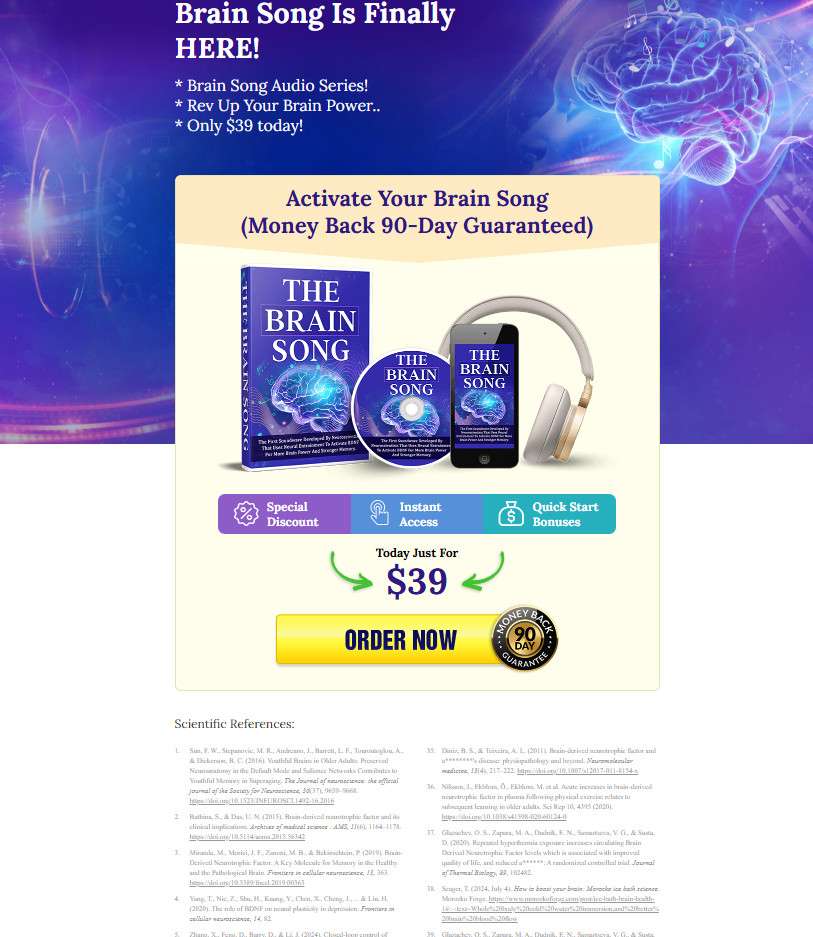
Scam Overview
The Brain Song scam has been circulating online for some time, often marketed as a groundbreaking discovery that stimulates brain health using a 10-second audio sequence. The product page makes a bold set of promises:
- Instant improvement in memory and focus
- Activation of BDNF (brain-derived neurotrophic factor), labeled as the “memory protein”
- Proven science backing its effectiveness
- 90-day money-back guarantee
While the claims may sound scientifically plausible, a closer examination reveals a different story.
Red Flags Everywhere
1. Exaggerated Scientific Claims
The scam heavily references terms like BDNF and brain plasticity, linking them to elite institutions such as Stanford and Boston University. However, no actual scientific studies are cited or linked. When you look up these institutions and their research, nothing remotely resembling this product exists.
2. Dubious Credentials
Titles such as “NASA-trained doctor” are thrown around without providing names, licenses, or even basic bios. In legitimate medical or scientific communities, credentials are transparent and verifiable. Here, they are pure fiction.
3. Fake Authority and Misleading Comparisons
The website attempts to manufacture authority by mimicking the design of scientific websites and referencing reputable universities. The style is nearly identical to previous scams like “The Genius Wave,” which was flagged by cybersecurity experts as a fraud.
4. Generic Product Format
The Brain Song comes in a familiar trifecta: an eBook, an audio file, and a mobile-friendly app. This is the exact same model used by multiple known scams in the cognitive enhancement niche. It’s generic, repurposed content with no verifiable creator or source.
5. Psychological Manipulation
The sales page uses urgency tactics like “Only $39 today!” and “limited time offer” to rush users into making a purchase. Phrases like “rev up your brain power” are emotionally charged but scientifically hollow.
6. No Real Contact Info
Besides the flashy sales page, there’s often no clear way to contact customer support. If you try to ask for a refund, you’re often met with automated responses or no reply at all.
7. Copy-Paste Reviews
The testimonials are suspiciously generic. Reverse image searches often reveal that the photos used are stock images, and the “reviews” can be found word-for-word on other scam sites.
A Familiar Blueprint
Scams like this follow a known formula: make grandiose claims, link them to legitimate science, offer low-cost entry, and disappear when challenged. “The Brain Song” is not unique; it’s just the latest iteration of an old con with a new name.
How The Scam Works (Step-by-Step)
Step 1: Eye-Catching Ads and Clickbait Headlines
The scam begins with flashy Facebook ads, YouTube pre-rolls, and email newsletters promising a quick mental fix. Headlines like “NASA-trained Doctor Reveals 10-Second Brain Hack” are specifically engineered to spark curiosity and trust.
Step 2: Fake Authority and Pseudoscience
Once users click through, they land on a sales page that mimics a credible publication. The page is littered with buzzwords like “BDNF,” “neuroplasticity,” and “cognitive reprogramming.” These terms are used out of context to create a scientific illusion.
Step 3: Emotional Appeal and Urgency Tactics
Users are told that brain health is declining fast and this product is the only thing that can help. A timer may appear, adding false urgency, claiming the special offer ends soon. You’re urged to act quickly or miss out.
Step 4: The Transaction
The payment page offers the product for $39, bundled with vague “bonuses” like meditation guides or focus-enhancing playlists. A 90-day money-back guarantee is prominently displayed to reduce risk perception.
Step 5: The Product Delivery
Buyers receive access to:
- A PDF eBook filled with generic health tips
- Audio files claiming to emit brain-enhancing frequencies
- Access via a basic app with poor user experience
None of the content is original or backed by any legitimate science.
Step 6: Failed Refund Process
When users realize the product doesn’t work, they attempt to request a refund. But the process is intentionally vague. Emails go unanswered, and there’s no phone number or live chat.
Step 7: Data Harvesting and Upselling
Even worse, your information is stored and potentially sold to other shady marketers. After the purchase, you might receive emails pitching similar “brain hacks” or other wellness scams.
Step 8: Vanishing Act
Eventually, the sales page disappears, and the scammers rebrand under a new name with a slightly altered product. The scam restarts with a fresh round of ads and a new target audience.
What to Do If You Have Fallen Victim to This Scam
If you bought The Brain Song or a similar product and suspect you’ve been scammed, take the following steps immediately:
1. Request a Refund (Even If It Fails)
Send a detailed email requesting your refund as promised in the 90-day guarantee. Use the email address provided during purchase, and keep records of all communication.
2. Contact Your Bank or Credit Card Company
Dispute the transaction as a scam or unauthorized charge. Explain the situation and provide screenshots, emails, and purchase confirmations.
3. Report to Consumer Protection Agencies
- FTC (Federal Trade Commission): reportfraud.ftc.gov
- Better Business Bureau (BBB): bbb.org
- Internet Crime Complaint Center (IC3): ic3.gov
4. Leave a Review on Scam Reporting Sites
Warn others by posting your experience on:
5. Protect Your Information
If you shared personal details, watch for signs of identity theft. Consider a credit monitoring service if you provided sensitive information.
6. Block Further Communication
Unsubscribe from all emails and block any follow-up offers. These are likely other scams targeting the same customer base.
What is The Brain Song for Memory?
The Brain Song for Memory is an online product marketed as a 10-second audio hack that claims to boost brain function, improve memory, and activate the BDNF “memory protein.” It typically includes an eBook, audio files, and a mobile app.
Is The Brain Song legitimate?
No, it is not. Despite claiming to be backed by science and associated with prestigious institutions like Stanford, there is no evidence or legitimate research supporting the product. It uses fake credentials, misleading claims, and pseudoscience to lure buyers.
Does listening to the Brain Song audio actually improve memory or focus?
There is no scientific evidence that a short audio file can improve memory, activate BDNF, or provide any measurable cognitive benefits. Brain health requires consistent habits such as proper nutrition, sleep, exercise, and mental stimulation.
Why do people fall for this scam?
The scam uses persuasive language, fake reviews, urgency tactics, and false authority to build trust quickly. It preys on individuals looking for easy solutions to memory loss or brain fog, particularly older adults or those with cognitive concerns.
What happens after you buy The Brain Song?
Buyers typically receive generic digital content and vague audio files that offer no real value. Attempts to contact customer service or get a refund often go unanswered, and personal information may be shared with other marketers.
Can I get my money back after buying it?
You may be able to recover your money by contacting your bank or credit card provider to dispute the charge. The website claims to offer a 90-day money-back guarantee, but most users report difficulties getting a refund directly from the seller.
Is The Brain Song related to other scams?
Yes. The Brain Song follows the same structure and design as other cognitive improvement scams, such as “The Genius Wave.” These scams often recycle the same content under different names.
What should I do if I already purchased it?
Immediately request a refund, contact your bank to dispute the charge, report the scam to authorities like the FTC, and monitor your accounts for suspicious activity. Also, block any further communication from the source.
How can I avoid similar scams in the future?
Be skeptical of health products promising fast, miraculous results. Look for verifiable scientific studies, check reviews on independent platforms, and avoid sites that don’t list real contact information or legitimate credentials.
The Bottom Line
The Brain Song for Memory is not a miracle brain hack. It’s a calculated scam designed to extract money and personal data by exploiting people’s desire for cognitive enhancement. There is no scientific proof a 10-second audio can activate BDNF or transform your mental clarity overnight. True brain health comes from consistent habits — not magic audio files.
If you’ve been affected, take action quickly. And remember, when something sounds too good to be true, especially online, it almost always is.

Join the discussion
4 commentsShare your experience or ask a question about this article.
Discussion
BRIAN JOHNSON BRAIN SONG COGNITIVE ENHANCEMENT: THIS WAS SUCH A SCAM. I WASTED THE TIME TO WADE THROUGH THE PROPAGANDA AND THOUGHT IT WOULD BE LIKE AN APPLE PROGRAM I HAD IN THE EARLY DAYS BUT LOST ALONG THE WAY. ONCE I PAID THE SPECIAL RATE OF $39 PLUS TAX, THEY TOLD ME IT COULD CAUSE DELETERIOUS DAMAGE TO MY BRAIN AND THEN WANTED TO SELL ME A FIX FOR $97. I ASKED TO HAVE MY ORDER CANCELLED, DECLINED THE ADD-ON, AND THEY WERE THEN TRYING TO SELL ME A COOKBOOK. RUN DON’T WALK IF YOU GET AN EMAIL ABOUT THIS PRODUCT.
In reply to MARY EHRMIN
Mary, the sequence you describe is the whole scheme: a long video you cannot skip, a discounted entry price, then a scare – in this case a claim that the product could damage your brain – followed by a $97 fix and a cookbook. That is a funnel, not a product. Cancelling and declining the add-ons was the right call. If the $39 charge is still on your statement, dispute it with your card issuer as misrepresented, and watch for further charges under a different trading name. Reporting it at reportfraud.ftc.gov helps, since it is the volume of complaints that gets these funnels shut down.
Always be aware of outlandish claims for a quick fix.
The quick fix here is your money filling their pockets.
In reply to Rob
Exactly. When an ad promises a dramatic “instant” result, it’s usually selling urgency, not a real solution. The best defense is slowing down, verifying the domain, and checking refund terms before paying.