

Brain Honey is being promoted through online videos that claim Bill Gates discovered or backed a “cocoa and honey protocol” for memory loss, dementia, brain fog, or Alzheimer’s disease.
The pitch sounds emotional, urgent, and strangely believable at first. It often uses deepfake-style celebrity clips, fake medical claims, and a simple “natural recipe” hook to make viewers feel like they are watching a real breakthrough.
But the pattern behind Brain Honey is not a medical discovery. It is a supplement funnel designed to turn fear into a purchase.
This article breaks down how the Brain Honey scam works, why the Bill Gates claims are unreliable, what red flags to watch for, and what to do if you already bought.

Scam Overview
Brain Honey is marketed as a memory and brain support supplement, usually tied to a supposed “cocoa and honey protocol.” The ads often claim this simple natural method can help reverse memory loss, improve brain function, or even address dementia and Alzheimer’s disease.
That is where the red flags begin.
Memory loss is not a casual wellness issue. Alzheimer’s disease and dementia are serious medical conditions that require qualified evaluation and care. The FDA warns that fake Alzheimer’s cures are commonly sold online, often falsely labeled as dietary supplements, and that these products may waste money, interfere with medications, and delay proper care.
Brain Honey-style ads exploit the emotional weight of these conditions.
They are not just selling a product. They are selling hope to people who may be scared, confused, or caring for someone they love.
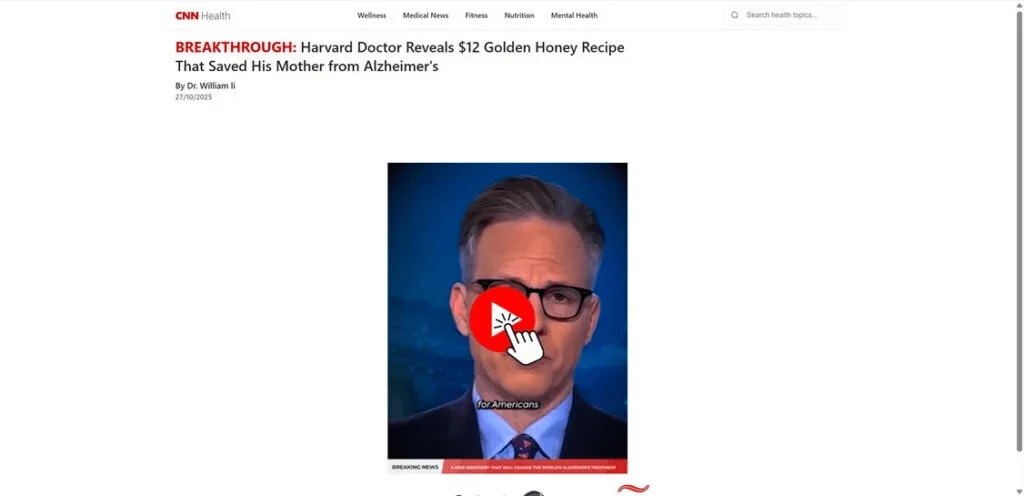
The Bill Gates angle is used to create instant trust
One of the biggest hooks in this campaign is the use of Bill Gates.
Some ads suggest Gates discovered the cocoa and honey protocol. Others imply he funded the research, personally recommends it, or was connected to a breakthrough involving memory loss.
That is a classic fake endorsement tactic. The reason scammers use his name is simple: recognition.
Bill Gates is associated with technology, philanthropy, medical research funding, and global health initiatives. Even if someone does not know the details, the name alone can make a claim feel more credible.
That is exactly what the scam needs.
It does not need proof. It needs the feeling of proof.
The cocoa and honey “protocol” is bait
The phrase “cocoa and honey protocol” is carefully chosen.
It sounds natural. It sounds affordable. It sounds like something you could make at home.
That lowers resistance.
People are more likely to click on a “honey protocol” than a random pill ad. A recipe sounds safe. A kitchen trick sounds harmless. Cocoa and honey feel familiar, comforting, and non-threatening.
But in many of these campaigns, the protocol is not clearly provided in a practical, transparent way.
Instead, the ad usually does this:
- Teases a simple recipe
- Claims doctors or scientists are shocked
- Pushes a long video
- Delays the actual instructions
- Introduces a supplement as the “real” solution
- Sends the viewer to a checkout page
That is the bait-and-switch.
The bait is the cocoa and honey recipe.
The switch is Brain Honey or another memory supplement.
The scam uses AI-generated and deepfake-style content
Modern supplement scams are much harder to spot than old banner ads.
Many now use AI-generated voices, manipulated clips, and fake celebrity endorsements that can appear realistic on a phone screen.
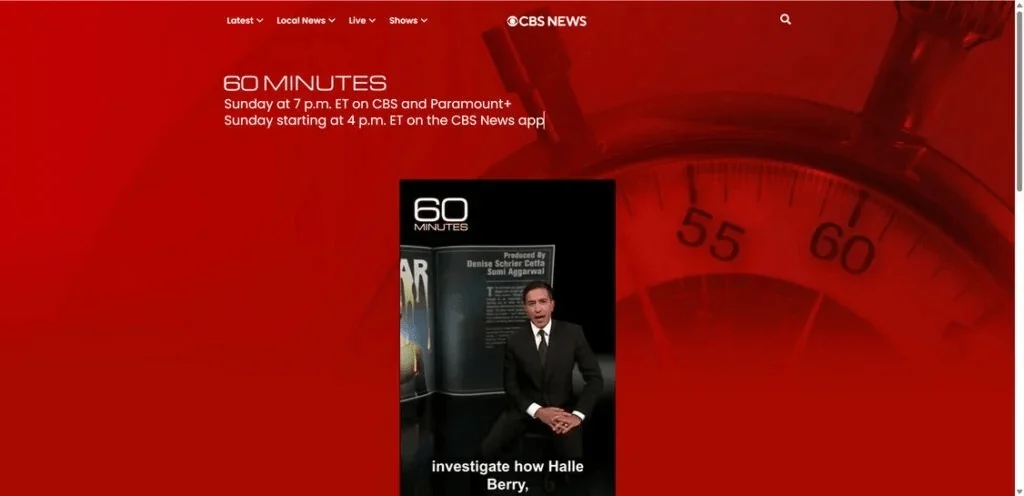
The FTC warns that scammers are using fake celebrity and influencer endorsements, including doctored video and audio that can seem real, to sell products and generate profits. The FTC specifically advises consumers to pause, research the endorsement independently, and resist pressure to buy quickly.
That warning fits Brain Honey perfectly.
If a video appears to show Bill Gates talking about a cocoa and honey brain formula, that does not mean the clip is real. It may be edited, AI-generated, taken out of context, or entirely fabricated.
A familiar face in a video is no longer proof.
The Alzheimer’s and dementia claims are especially dangerous
Brain Honey ads often go beyond vague “brain support” language.
They may imply the product can help with:
- Alzheimer’s disease
- Dementia
- Memory loss
- Brain fog
- Cognitive decline
- Plaque buildup
- “Brain toxins”
- Age-related forgetfulness
These claims are emotionally powerful because people want hope.
But the FDA warns that companies selling fake Alzheimer’s treatments rely on implausible claims, such as reversing mental decline or curing Alzheimer’s disease. The FDA also states that no cure or treatment has been shown to stop or reverse the progression of Alzheimer’s disease.
That does not mean there is no legitimate research.
It means a random online supplement funnel should not be treated as medical evidence.
The Alzheimer’s Association also warns that dietary supplements and products claiming to help Alzheimer’s or dementia are a major problem area, because these products are not FDA approved and little is known about their effectiveness, quality, and safety.
The fake “science” is designed to sound convincing
Brain Honey pages often use medical-sounding language to create authority.
You may see claims about:
- Brain plaque
- Inflammation
- Mitochondria
- Neurotoxins
- Blood flow
- Synapses
- Cognitive pathways
- Memory receptors
- “Rebuilding” the brain
Some of those words exist in real science.
The problem is how scam funnels use them.
They take complex medical concepts and turn them into a simple story:
“One hidden cause explains everything, and this bottle fixes it.”
That is not how Alzheimer’s disease, dementia, or cognitive decline works.
Real medical research is cautious. It includes limitations, data, peer review, safety monitoring, and clinical context. Scam pages use certainty, urgency, and emotional storytelling.
The product name can change
Brain Honey may be one name attached to this campaign, but these funnels often rotate through many names.
The same basic scam can be relaunched as:
- Memory drops
- Brain capsules
- Cognitive gummies
- Honey brain formula
- Cocoa brain protocol
- Dementia support supplement
- Neuro support blend
The product label is replaceable.
The funnel is the real asset.
That is why you should not focus only on whether “Brain Honey” is the exact bottle in one ad. Focus on the pattern.
If a page uses fake celebrity authority, promises impossible memory results, delays a “natural recipe,” then pushes a supplement checkout, the risk is high no matter what name is printed on the bottle.
How The Scam Works
Step 1: The ad targets fear and hope
The scam usually starts with a short video ad on Facebook, Instagram, YouTube, TikTok, or a display ad network.
The ad may mention:
- Forgetfulness
- Dementia
- Alzheimer’s
- Brain fog
- “Senior memory loss”
- A family member who “got their memory back”
- A shocking discovery involving Bill Gates
The emotional hook is simple.
It makes the viewer think, “What if this could help me or someone I love?”
That is a powerful starting point, especially for families dealing with cognitive decline.
Step 2: Bill Gates is used as the authority trigger
The ad may show or imply Bill Gates through:
- A fake interview clip
- A headline with his name
- A manipulated voiceover
- A photo placed beside the product
- A story about him funding or discovering the protocol
This is not random.
Scammers use famous names because people trust them faster than anonymous sellers.
Step 3: The click leads to a fake report page
After clicking, users are often sent to a page that looks like a news report, health article, or “special presentation.”
Common signs include:
- A dramatic headline
- A date stamp to appear current
- A vague author name
- A video player with “tap to listen”
- Comments that look staged
- “As seen on” style credibility cues
- Buttons that all lead to the same checkout
This format is called an advertorial.
It is advertising disguised as editorial content.
The goal is to make the reader feel like they are consuming trusted information instead of being sold something.
Step 4: The cocoa and honey protocol is teased but not clearly explained
The viewer came for the protocol.
But instead of clear instructions, the page usually stretches the story.
It may say:
- “Watch this before it disappears”
- “Doctors do not want this shared”
- “This discovery shocked researchers”
- “Stay until the end to learn the exact method”
That delay is intentional.
The longer someone watches, the more invested they become. By the time the product appears, the viewer may already feel emotionally committed to the story.
Step 5: A scary “root cause” story is introduced
Next, the video usually claims memory loss has a hidden cause that mainstream medicine ignores.
Common claims include:
- Toxins attacking the brain
- Plaque that can be flushed away
- Brain inflammation that can be reversed quickly
- A missing nutrient that explains everything
- A blocked pathway that can be “reactivated”
This story is designed to make a complex medical issue feel simple.
That simplicity is comforting, but it is also misleading.
Cognitive decline has many possible causes, and some memory problems require urgent medical evaluation. A sales page cannot diagnose or treat that.
Step 6: The recipe becomes a product pitch
At this stage, the bait-and-switch becomes clear.
The cocoa and honey protocol is no longer the main focus.
Instead, the page introduces Brain Honey or a similar supplement as the “concentrated” solution.
The message becomes:
“You could try the recipe, but this formula gives you the real active compounds in the right amount.”
That is the monetization point.
You came for a home remedy.
You are now being sold bottles.
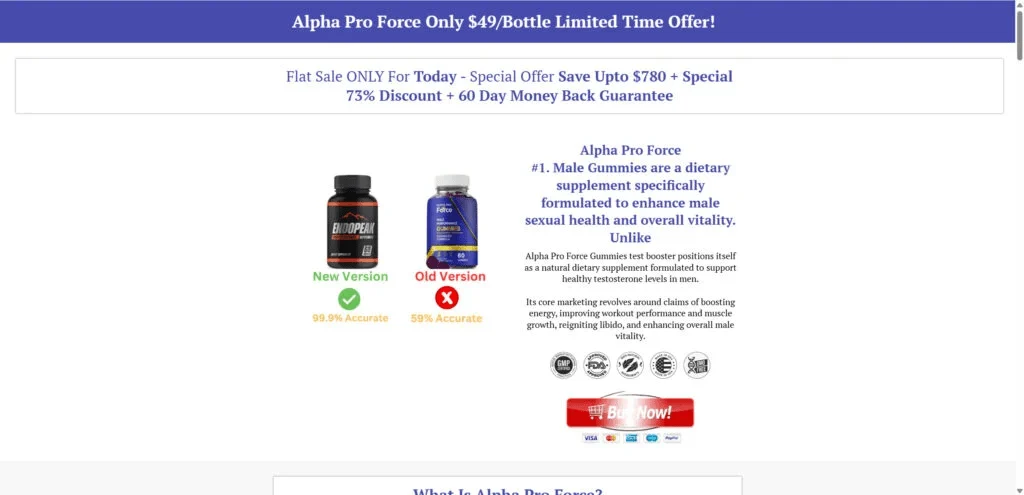
Step 7: Trust badges and official-sounding claims appear
Near the order section, the page may show badges like:
- Made in the USA
- FDA registered facility
- GMP certified
- Lab tested
- Doctor recommended
- Clinically proven
- Natural ingredients
These phrases are designed to reduce hesitation.
But they do not prove that the product treats memory loss, dementia, or Alzheimer’s disease.
The FDA has taken action against companies illegally selling products, many labeled as dietary supplements, that claimed to prevent, treat, or cure Alzheimer’s disease and other serious conditions. The FDA says these products have not been reviewed and are not proven safe or effective for those diseases.
Step 8: Urgency pushes the buyer toward checkout
The offer page often uses pressure tactics such as:
- Countdown timers
- Limited stock warnings
- “Discount ends today”
- “Only a few bottles left”
- Popups claiming recent purchases
- “People watching now” counters
These tools are not proof of demand.
They are conversion devices.
Their purpose is to stop you from pausing, searching, or asking a doctor.
Step 9: Bundles and refill programs increase the cost
The checkout may push:
- 1 bottle at a high price
- 3 bottles as the recommended package
- 6 bottles as the best value
- Extra “brain boost” add-ons
- Monthly refill subscriptions
This is where many people get hurt financially.
They may think they are placing a one-time order, but later discover a higher total, multiple bottles, or recurring charges.
Step 10: Refunds become difficult
After the purchase, many scam-style supplement operations become hard to deal with.
Common problems include:
- Email-only support
- Slow replies
- No clear return address
- Partial refund offers
- Cancellation requests ignored
- Refills continuing after cancellation attempts
This is why people often say returns are impossible.
The sales path is fast.
The refund path is slow.
What To Do If You Bought Brain Honey
If you purchased Brain Honey or a similar supplement after seeing a Bill Gates cocoa and honey protocol ad, take these steps quickly.
1) Save evidence immediately
Screenshot everything you can still access:
- The ad
- The video page
- The fake article
- The product page
- The checkout total
- The terms and conditions
- The confirmation email
- Your bank or card statement
Scam pages can disappear or change quickly.
2) Check for subscription language
Search your confirmation email and the seller’s terms for words like:
- Subscription
- Refill
- Autoship
- Monthly
- Continuity
- Membership
- Next shipment
If you see any of these, act fast.
3) Email the seller to cancel in writing
Send a short, direct message.
Include:
- Your full name
- The email used to order
- Your order number
- A clear request to cancel all subscriptions or refills
- A clear demand that no future charges be made
- A request for written confirmation
Keep the email as evidence.
4) Contact your bank or credit card provider
If you were charged more than expected, or if you see repeat charges, contact your card issuer.
Ask about:
- Disputing the transaction
- Blocking future charges from the merchant
- Replacing your card if rebilling continues
- Filing the charge as deceptive or unauthorized if appropriate
Do not wait if a second charge appears.
5) Monitor statements for at least 60 days
Watch for:
- Repeat billing
- Small test charges
- Unfamiliar merchant names
- Shipping fees
- New supplement charges
Some refill subscriptions do not appear immediately.
6) Do not delay medical care
If you or a family member is experiencing memory loss, confusion, personality changes, or worsening cognitive symptoms, speak with a qualified healthcare professional.
7) Stop using the product if you feel unwell
If you took the supplement and experienced side effects, stop using it and seek medical advice.
This is especially important if you take medications, have chronic health issues, or are caring for an older adult who may be more vulnerable to interactions.
8) Report the fake endorsement
Report the ad on the platform where you saw it.
Use categories like:
- Scam
- Fake celebrity endorsement
- Misleading health claim
- Impersonation
- Deceptive product
You can also report fake celebrity endorsement scams to the FTC.
The Bottom Line
Brain Honey is being promoted through a familiar scam-style supplement funnel that uses Bill Gates’ name, a “cocoa and honey protocol,” and emotional memory-loss claims to push people toward a product purchase.
The biggest warning signs are clear: fake celebrity authority, deepfake-style videos, claims about Alzheimer’s or dementia, vague science language, urgency tactics, and checkout terms that may lead to unexpected charges or unwanted refills.
If you already bought, focus on protection: save evidence, cancel in writing, monitor your card statement, and contact your bank quickly if charges look deceptive.
FAQ
What is Brain Honey?
Brain Honey is being promoted as a memory or brain support supplement, often tied to a supposed “cocoa and honey protocol.” The marketing usually targets people worried about memory loss, brain fog, dementia, or Alzheimer’s disease.
Is Bill Gates really connected to Brain Honey?
No credible evidence supports that claim. These campaigns often use Bill Gates’ name, image, or AI-style videos to create false trust and make the product seem more legitimate.
Can a cocoa and honey protocol reverse Alzheimer’s or dementia?
No. Claims that a simple honey recipe or supplement can reverse Alzheimer’s, dementia, or serious memory decline are major red flags. These conditions require qualified medical evaluation and care.
Why do the ads use Bill Gates’ name?
Because familiar names create instant credibility. Scammers use public figures to make viewers feel the product is backed by someone important, even when no real endorsement exists.
Are the Brain Honey videos real?
Many of these ads use deepfake-style clips, AI voiceovers, edited videos, or fake news-style layouts. A video that looks convincing is not proof that the endorsement is real.
What is the “cocoa and honey protocol”?
It is usually a bait hook. The ads tease a simple natural recipe, then redirect viewers toward buying Brain Honey or similar supplements instead of giving clear, trustworthy medical information.
What are the biggest red flags?
Fake Bill Gates endorsements, Alzheimer’s cure claims, “watch before it’s removed” warnings, fake news pages, vague science language, countdown timers, and pressure to buy multi-bottle packages.
Can Brain Honey cause billing problems?
Many scam-style supplement funnels use confusing checkout flows, upsells, and refill subscription terms. Buyers may end up with more bottles than expected or recurring charges they did not clearly approve.
What should I do if I already bought Brain Honey?
Save screenshots and receipts, check for refill or autoship terms, email the seller to cancel in writing, monitor your card statement, and contact your bank if charges look unauthorized.
Should I use Brain Honey instead of medical care?
No. Do not rely on a supplement ad for memory loss, dementia, or Alzheimer’s concerns. New or worsening memory symptoms should be discussed with a qualified healthcare professional.









Why is this garbage still for sale? Where is the Federal Government when its citizens are being defrauded?
The short answer is jurisdiction and speed. The FTC and FDA can act on deceptive health advertising, but the operators dissolve one brand and relaunch the next within weeks, usually behind offshore shells and rented payment processors, so enforcement lands on an empty company while the ad keeps running under a new name. Prosecutions do happen, they just arrive long after the money has moved. In the meantime the two things that genuinely help are reporting the advert to the platform serving it and filing at reportfraud.ftc.gov, because case-building depends on complaint volume.
Is there any kind of process in place to reimburse those of us who have been scammed?
There is no single fund that pays scam victims back, unfortunately, but there are three real routes and they are worth trying in this order.
The first and by far the most effective is your bank or card issuer: dispute the charge as not as described or unauthorised, usually possible for up to 120 days, and for subscriptions ask for a new card number so it cannot rebill. Second, when regulators do win a case against one of these sellers they distribute money to the people who complained – the FTC lists open payouts at ftc.gov/refunds, and that only reaches you if your complaint is on file, so filing at reportfraud.ftc.gov and with your state Attorney General genuinely matters. Third, if you paid by bank transfer or crypto rather than card, report it at ic3.gov quickly, as fast reporting is occasionally what allows funds to be frozen.
One warning: anyone who contacts you offering to recover your money for a fee, or any “fund recovery” website, is a second scam aimed at people who lost money the first time. Nobody legitimate charges upfront to get your refund.
Why in hell does Gates allow this false claim using his name to exist
Hi James, scammers often use famous names without permission.
In many of these ads, the celebrity endorsement is fake, AI-edited, or taken out of context. The fact that Bill Gates appears in an ad does not mean he approved it, funded it, or has any connection to the product.