

BrainLive is being promoted online as a memory and brain-support supplement, often through dramatic advertisements about memory loss, dementia, Alzheimer’s disease, and supposedly overlooked causes of cognitive decline.
What makes this campaign particularly concerning is not simply the supplement itself. BrainLive appears across numerous promotional websites and affiliate-driven sales funnels, meaning the page convincing you to buy may not be operated by the company actually processing your order.
That distinction matters.
Because once you enter these funnels, the bigger risk may not be just whether the supplement works. Buyers also need to watch for confusing bundle offers, more bottles than expected, aggressive upsells, and possible refill or continuity subscriptions that could lead to additional charges later.

BrainLive Overview: This Looks More Like an Affiliate Marketing Machine
BrainLive is generally presented as a natural supplement designed to support memory, mental clarity, focus, and healthy brain function.
Some advertisements go much further.
They may surround the product with stories about Alzheimer’s disease, dementia, brain plaques, inflammation, toxins, or some newly discovered cause of memory deterioration. The pitch frequently suggests that conventional medicine has overlooked something important and that a surprisingly simple ingredient or formula may offer the answer.
That is the first reason to be skeptical.
Serious neurological diseases are enormously complicated. When an advertisement compresses that complexity into a dramatic story followed by a supplement checkout button, consumers should recognize what they are looking at: a sales funnel.
And BrainLive does not appear to be promoted through just one simple storefront.

BrainLive Is Being Pushed Through Multiple Affiliate Websites
One of the biggest issues with this type of supplement campaign is the affiliate structure behind it.
You may encounter BrainLive through one website today and an entirely different website tomorrow. Some pages resemble health blogs. Others look like news stories, medical reports, product reviews, or personal testimonials.
The URLs can change while the offer remains essentially the same.
This happens because affiliates can promote the product independently and receive a commission when visitors purchase through their links. In practical terms, the person or website persuading you to buy BrainLive may simply be a marketer whose primary financial incentive is getting you through the checkout.
That can explain why some promotional pages are dramatically more aggressive than a conventional product page.
An affiliate does not necessarily need you to understand every detail about the product. They need you to click.
Once the affiliate sends you into the sales funnel, another company may handle the checkout, fulfillment, customer support, billing, or future refill offers.
That fragmented setup can create a serious problem if something goes wrong.
If you later discover an unexpected charge, receive additional bottles, or want a refund, you may find yourself asking a surprisingly basic question:
Who exactly did I buy this from?
The website that convinced you to purchase may not be the company appearing on your credit card statement.
The “Secret Memory Recipe” Is Usually the Bait
Many memory supplement campaigns begin with an irresistible-sounding discovery.
It might be described as a cheap honey recipe, a nighttime ritual, an unusual plant, a forgotten ingredient, or a discovery allegedly connected to a prestigious university or respected physician.
The concept is clever because the visitor initially believes they are about to learn something useful for free.
But the promised recipe often becomes secondary.
Instead of simply telling you what the supposed discovery is, the page stretches the explanation across an advertorial or lengthy video presentation.
You are told there is something important coming.
You are encouraged to keep watching.
More frightening information about memory loss is introduced.
Then a solution appears.
And, conveniently, that solution is available in a bottle.
The original curiosity hook has now transformed into a purchase decision.
Fake-Looking News and Medical Authority Can Make the Pitch Feel More Credible
Another common feature of these campaigns is what could be called credibility theater.
A promotional page can look remarkably similar to a legitimate medical or news website without actually being independent journalism.
You may see familiar-looking layouts, doctor photographs, medical graphics, prestigious university references, television-style screenshots, health-news formatting, dramatic headlines, or logos associated with recognizable organizations.
None of that automatically proves endorsement.
A Harvard reference does not mean Harvard tested the product.
A photograph of somebody wearing a white coat does not establish medical credentials.
A page designed to resemble a news article does not make it journalism.
The simplest test is to leave the sales funnel completely and independently search for the claimed endorsement, doctor, study, television appearance, or institutional connection.
If the only evidence leads back to websites promoting the supplement, the credibility loop is being generated by the marketing itself.
The Alzheimer’s and Dementia Angle Is Especially Aggressive
Memory decline is an extraordinarily effective marketing topic because the emotional stakes are so high.
People fear losing their independence.
Adult children worry about aging parents.
Someone who has started forgetting names or appointments may already be anxious that something serious is happening.
A good advertiser understands that emotional pressure.
An aggressive advertiser exploits it.
That is why these funnels frequently introduce frightening concepts before presenting the product. They may discuss brain deterioration, plaque accumulation, toxins, inflammation, impaired circulation, mitochondrial damage, insulin resistance, or other scientific-sounding mechanisms.
Some of those concepts are legitimate areas of medical research.
The problem is the leap that follows.
A complicated scientific discussion suddenly becomes a remarkably simple purchasing conclusion:
Buy this supplement.
That is not how reliable medical evidence works.
Scientific terminology can make advertising sound sophisticated without proving that the specific finished product produces the extraordinary results being implied.
The Checkout May Be the Biggest Risk
Even consumers who understand that supplement advertising can be exaggerated may underestimate what happens at checkout.
This is where affiliate-driven direct-response funnels can become particularly aggressive.
A visitor may believe they are purchasing one bottle, only to encounter package selectors, recommended protocols, discounted multi-bottle options, bonus bottles, upsells, refill offers, or additional products before the transaction is complete.
Sometimes the pricing presentation makes the largest package visually dominant.
Sometimes the advertised price refers to the cost per bottle when purchasing several bottles rather than the total amount charged.
That distinction can turn what looked like a modest purchase into a significantly larger credit card transaction.
You Could Receive More Bottles Than You Thought You Ordered
One of the most important things to verify before submitting payment is the actual quantity.
Do not rely on the headline price.
Do not rely on the large number displayed next to the bottle.
Look at the final order summary.
A funnel may promote something like a “recommended supply,” “90-day protocol,” “best value package,” or “maximum savings option.” These packages are deliberately designed to make purchasing multiple bottles seem like the logical choice.
A consumer who clicks quickly may believe they selected one bottle when the checkout is actually configured for three, six, or another bundled quantity.
If the final total is substantially higher than expected, stop immediately.
Do not assume the difference will somehow disappear after checkout.
Watch Closely for Refill and Subscription Language
There is another risk that deserves even more attention: continuity billing.
Some supplement offers include optional or less-obvious refill programs that can result in future shipments and charges.
The wording does not always scream “SUBSCRIPTION.”
Instead, look for terms such as:
“autoship”
“monthly delivery”
“continuity”
“preferred customer”
“membership”
“automatic refill”
“next shipment”
“replenishment program”
or similar language.
A customer may believe the transaction is finished after the initial order while the seller considers authorization to continue sending products and charging the card.
That is why reading the terms around the payment button is essential.
If BrainLive appears on numerous affiliate sites, the terms presented through one funnel may also differ from what another affiliate is promoting.
Do not assume every BrainLive advertisement leads to an identical checkout.
Unexpected Refill Charges Can Be More Serious Than the Original Purchase
The first transaction may only be the beginning of the problem.
Imagine ordering what you believe is one discounted bottle. A month later another package appears. Then another charge shows up on the card.
At that point, consumers may discover they were placed into some form of recurring order or refill arrangement.
Stopping it can become more difficult if the charge appears under an unfamiliar merchant descriptor or if the affiliate page that originally promoted the product contains little useful customer-service information.
This is why anyone who purchases through this type of funnel should monitor their card statements afterward rather than assuming the matter is finished when the first package arrives.
How the BrainLive Affiliate Funnel Works
The entire process is usually far more sophisticated than simply showing you a bottle and asking whether you want to buy it.
Step 1: An Emotional Advertisement Gets Your Attention
Everything begins with an ad.
The advertisement may appear on Facebook, YouTube, Instagram, TikTok, a display advertising network, or another website.
Instead of leading with an ordinary supplement pitch, the ad often targets fear and curiosity.
You might be warned about a hidden cause of memory loss or told that an unusual discovery could change what you know about dementia.
That emotional opening is important because people who are worried act differently from people calmly comparing products.
The funnel wants urgency before skepticism has time to catch up.
Step 2: You Are Sent to an Affiliate Advertorial
Instead of arriving on a normal product page, you may land on something that resembles editorial content.
This can be a supposed health article, personal success story, doctor interview, investigative report, or medical-news feature.
The page spends considerable time building the problem before mentioning the product.
That is deliberate.
By the time BrainLive appears, the visitor has already been exposed to a carefully constructed narrative explaining why conventional solutions supposedly fail and why this particular discovery is different.
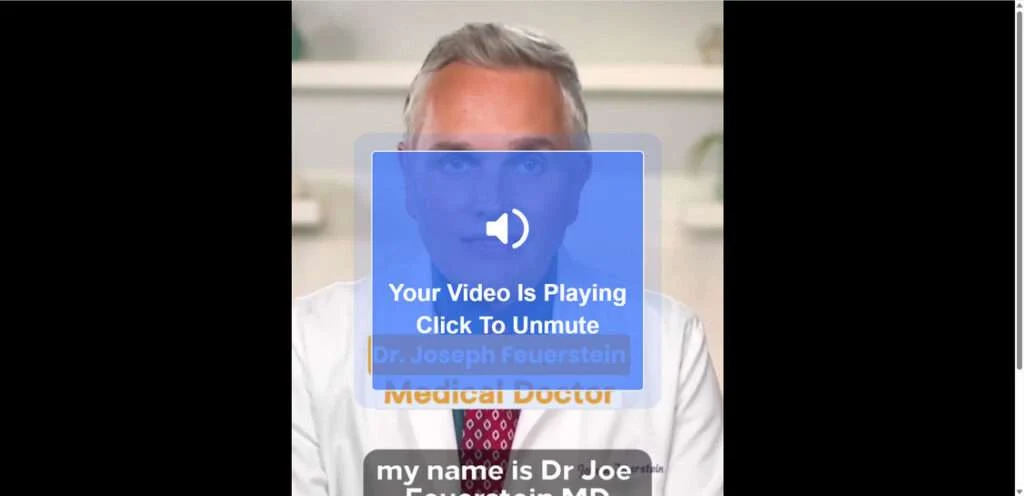
Step 3: A Long Video Keeps You Inside the Funnel
Some campaigns use an extended video sales letter.
The structure is remarkably predictable.
First comes a frightening problem.
Then a hidden cause.
Then an explanation for why most people have supposedly never heard about it.
Then a discovery.
Then testimonials or scientific-looking graphics.
And finally, the product.
The presentation may feel educational, but its destination is still a checkout page.
Step 4: The Funnel Builds Borrowed Credibility
Once the visitor is emotionally invested, the page may introduce impressive-sounding credibility signals.
You might see claims involving doctors, clinical research, American manufacturing, prestigious institutions, scientific breakthroughs, laboratories, GMP facilities, regulatory standards, or patented ingredients.
These claims need to be individually verified.
Logos and badges are extremely easy to display.
Independent evidence is much harder to produce.
Step 5: Urgency Pushes You Toward Checkout
Next comes pressure.
The price may supposedly expire soon.
Inventory may appear limited.
A countdown timer may start running.
The page may tell you that dozens of people are currently viewing the offer or that another customer just purchased several bottles.
Whether those messages are meaningful or simply conversion tools, they serve the same psychological purpose:
Make the visitor buy before reconsidering.
Step 6: The One-Bottle Purchase Becomes a Bundle
Now the pricing psychology begins.
One bottle may look intentionally expensive.
Three bottles suddenly seem more reasonable.
Six bottles are presented as the smartest deal.
The page may explain that results require several months of consistent use, conveniently making the largest bundle sound necessary rather than optional.
This can dramatically increase the transaction value produced by each affiliate referral.
Step 7: Upsells produced by each affiliate referral.
Step 8: Upsells produced by each affiliate referral.
Step 9: Upsells Keep Appearing
After you enter payment details, the funnel may not be finished.
You could encounter additional supplements, upgraded packages, digital programs, expedited shipping, extra bottles, or other offers.
Some funnels use large confirmation-style buttons that make an upsell page feel like another required checkout step.
Read every screen carefully.
Never assume you must accept another offer to complete the purchase you already made.
Step 10: A Refill Offer May Create Future Billing
This is the stage buyers should watch particularly closely.
Some offers may introduce automatic shipment or continuity options.
If the language is unclear, do not proceed until you know whether the purchase is genuinely one-time.
A small discount is not worth unintentionally authorizing recurring charges.
Screenshot the final terms before paying.
Step 11: The Affiliate Disappears From the Picture
After the purchase, the promotional website has essentially completed its job.
The affiliate generated the sale.
Now you may be dealing with a different business for shipping and yet another name on your credit card statement.
If you later want to cancel, the slick article that persuaded you to buy may provide very little assistance.
This is one of the fundamental problems with sprawling affiliate campaigns: accountability becomes much harder for consumers to follow.
What to Do If You Already Bought BrainLive
1. Check Exactly What You Were Charged
Open your banking or credit card app and compare the transaction with what you believed you were purchasing.
Do not just check whether a charge exists.
Check the amount.
If you expected one bottle and were charged for a large package, document it immediately.
2. Read the Order Confirmation Carefully
Your confirmation email may reveal details that were easy to miss during checkout.
Look at the quantity, total price, shipping charges, merchant name, and any language about future deliveries.
Search specifically for terms such as autoship, refill, recurring, subscription, continuity, membership, next order, and automatic delivery.
3. Cancel Any Refill or Continuity Program in Writing
If you discover anything suggesting recurring billing, contact the seller immediately.
State clearly that you are canceling any subscription, autoship, membership, refill, or continuity program associated with the order and that you do not authorize additional charges.
Ask for written confirmation.
Keep everything.
4. Save Screenshots and Emails
Preserve the advertisement if possible, along with the affiliate page, checkout page, final price, confirmation screen, emails, terms and conditions, and card statement.
Web pages can disappear or change.
Evidence becomes extremely useful if you later need to challenge a transaction.
5. Watch Your Card for Future Charges
Do not stop monitoring after the first shipment arrives.
Check subsequent statements for additional charges, especially around the same date during the following weeks or months.
Also remember that another charge may not necessarily appear as “BrainLive.”
The merchant descriptor could be different.
6. Contact Your Card Issuer if You See Unauthorized Billing
If additional transactions appear that you did not knowingly authorize, contact your bank or card provider.
Explain what happened and ask what options are available for disputing the transaction and preventing further billing from the merchant.
If repeated unauthorized transactions continue, ask whether replacing the card is appropriate.
7. Do Not Use Supplement Advertising as Medical Advice
If you or somebody in your family is experiencing new, worsening, or significant memory problems, a supplement advertorial should not replace proper medical evaluation.
This is particularly important when the marketing involves Alzheimer’s disease or dementia.
Likewise, anyone taking prescription medication should check with a doctor or pharmacist before adding new supplements because ingredients can interact with medications or existing medical conditions.
Why This Marketing Model Keeps Reappearing
BrainLive is ultimately just one product name inside a much larger direct-response marketing ecosystem.
The important thing to understand is the machinery behind it.
An affiliate can launch a new advertisement.
Another domain can host the advertorial.
Another page can host the video.
Another processor can handle payment.
The bottle can remain essentially the same while the story, website, advertisement, and promotional angle change repeatedly.
That makes individual domain names less important than recognizing the pattern.
When you see a supposedly groundbreaking medical discovery leading through a dramatic advertorial, lengthy video, huge discount, multi-bottle package, countdown timer, and complicated checkout, you should immediately slow down.
The funnel is engineered to prevent exactly that.
The Bottom Line
BrainLive is being sold through the kind of aggressive affiliate marketing structure that deserves substantial caution.
Multiple websites can promote the same product, and the affiliate convincing you to purchase may not be the company that ultimately processes your payment or handles your customer-service request.
More importantly, buyers should pay extremely close attention to the checkout.
Verify the number of bottles.
Verify the total price rather than the advertised per-bottle price.
Reject unnecessary upsells.
Read the terms around refill programs.
And make absolutely certain you are authorizing a one-time transaction if that is what you intend to purchase.
The biggest mistake is assuming that clicking “Buy” means you are simply ordering one bottle.
In an aggressive supplement funnel, that single click can potentially become a multi-bottle package, additional upsells, or future refill charges if you do not carefully inspect what you are agreeing to.
When a supplement needs fake-news-style storytelling, exaggerated medical promises, affiliate advertorials, manufactured urgency, and a complicated sales funnel to convince consumers, skepticism is not unreasonable.
It is essential.
FAQ
Is BrainLive a scam?
BrainLive is promoted through marketing funnels that contain several characteristics consumers commonly associate with aggressive supplement sales campaigns, including dramatic health claims, advertorial-style pages, affiliate promotions, urgency tactics, bundles, and potentially confusing checkout structures. Rather than relying on the advertisement, evaluate the exact seller, terms, ingredients, billing conditions, and independent evidence before purchasing.
Why are there so many different websites promoting BrainLive?
Affiliate marketing is one likely reason. Affiliates can operate their own advertisements, advertorials, review pages, and landing pages while directing buyers toward a central offer or checkout. They generally receive compensation when their traffic generates a sale.
Is the BrainLive website I found the official website?
Do not assume that every website promoting BrainLive is the actual seller. A page may belong to an affiliate whose role is simply generating sales. Check the checkout terms, company information, privacy policy, return policy, and merchant details before entering payment information.
Can I accidentally order several bottles?
That is a risk worth watching for. Supplement funnels frequently emphasize three- or six-bottle packages and may advertise a low per-bottle price while charging the entire bundle at checkout. Always verify the quantity and final total immediately before submitting payment.
Could BrainLive sign me up for automatic refills?
Check the exact offer you are purchasing. Any terms referring to autoship, automatic delivery, refill programs, continuity, memberships, or future shipments deserve careful attention. Do not assume an order is one-time unless the checkout terms make that clear.
What should I do if additional BrainLive bottles arrive?
Check your order confirmation and payment history first. Determine whether you accidentally purchased a larger bundle or were enrolled in some form of refill program. Contact the seller in writing, cancel future shipments if applicable, and preserve the correspondence.
What should I do if BrainLive charges my card again?
Document the transaction and contact the seller to cancel any recurring arrangement. If you did not knowingly authorize the additional charge, contact your bank or card provider and ask about disputing it and preventing future transactions.
Why does the price look lower until checkout?
A prominently advertised amount can represent the price per bottle when purchasing a larger package rather than the total transaction. Always look for the complete order total before paying.
Are BrainLive testimonials proof that the supplement works?
Testimonials are marketing material, not the same thing as controlled clinical evidence. Individual experiences also cannot demonstrate how a product will perform for another person.
Are claims involving Harvard, doctors, or medical news automatically legitimate?
No. References to universities, physicians, medical publications, television programs, or scientific terminology should be independently verified outside the sales funnel. A logo, photograph, or institution name displayed on an advertisement does not itself establish endorsement.
Is BrainLive FDA approved?
Dietary supplements are not approved by the FDA in the same way prescription drugs are. Consumers should be skeptical of advertising that creates the impression that a supplement has received the type of FDA approval associated with an approved medicine.
Should I buy BrainLive for someone with memory problems?
A person experiencing meaningful, new, or worsening cognitive symptoms should receive appropriate medical evaluation rather than relying on an online supplement advertisement. This is particularly important when symptoms could relate to dementia, medication effects, neurological conditions, or other health problems.
What is the biggest BrainLive red flag?
It is the combination of factors rather than any single advertisement: dramatic disease-related messaging, affiliate websites, borrowed medical authority, long sales presentations, urgency, multi-bottle bundles, upsells, and potential confusion around future billing.
The safest approach is simple: ignore the urgency, read the checkout slowly, and never authorize a purchase until you know exactly how many bottles you are buying, exactly how much you will be charged, and whether the transaction includes any future refills.








