

Sorelle Tanning Drops have exploded across social media, promising users a glowing, sun-kissed tan simply by adding a few drops to their favorite drink. It sounds like the ultimate shortcut to a golden complexion — no sun, no streaks, no self-tanner mess. But is this miracle in a bottle too good to be true?
In this in-depth review, we break down everything you need to know about Sorelle Tanning Drops: what they are, how they work, what the science says, real customer feedback, and whether this product delivers on its bold claims. Spoiler: the answer isn’t as glowing as you might expect.
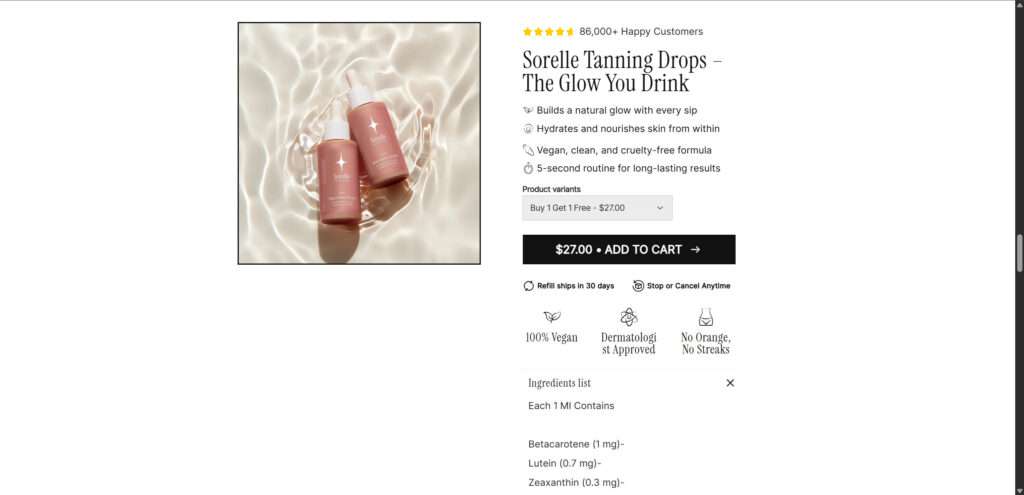
What Are Sorelle Tanning Drops?
Sorelle Tanning Drops are marketed as a vegan, clean beauty supplement designed to give your skin a natural-looking tan without sun exposure. You’re instructed to mix the drops into a drink daily — and supposedly, over time, your skin will develop a warm, bronzed glow.
Product Highlights:
- Drinkable tanning supplement
- Claims to stimulate melanin production
- No UV exposure required
- Vegan, cruelty-free, dermatologist-approved
- Hydrates skin from within
Key Ingredients:
Each 1ml serving contains:
- Beta-Carotene (1 mg) – A pigment found in carrots and other vegetables
- Lutein & Zeaxanthin – Antioxidants for eye and skin health
- L-Tyrosine (6 mg) – An amino acid linked to melanin production
- Ascorbic Acid (Vitamin C) – Skin brightening and antioxidant properties
- Vitamin B6, B12, A & E – Skin-supporting vitamins
- Copper Gluconate – Plays a role in melanin synthesis
- Iron Amino Acid Chelate – Supports overall health and pigmentation
Claims Made By Sorelle:
- No orange tones or streaks
- A natural glow from within
- Safe, effective, and long-lasting
- No need for tanning beds or sun exposure
- 86,000+ happy customers
But what do these claims really mean — and can the science back them up?
How Does It Supposedly Work?
The company behind Sorelle claims that their product boosts melanin production through its blend of vitamins and amino acids. Melanin is the pigment that gives skin its color and is typically stimulated by UV rays from the sun or tanning beds.
The Science of Tanning:
A UV tan reflects skin damage, not a safe protective routine. The AAD recommends avoiding tanning beds and protecting skin with shade, clothing and sunscreen.
Ingredient Function vs. Hype:
- Beta-Carotene can turn skin yellow-orange at high intakes, according to NIH guidance. This does not establish Sorelle’s results or safety.
- L-Tyrosine is a precursor to melanin, but there’s little evidence that taking it orally leads to increased melanin without sun exposure.
- Vitamins A, C, E, and B Complex support skin health, but they don’t directly cause tanning.
Conclusion on Mechanism:
Oral pigments can change skin color without UV. That does not establish a predictable Sorelle result, product safety or protection against sunlight.
User Reviews: What Real Customers Are Saying
We scoured Trustpilot, Reddit, and beauty forums to uncover genuine feedback from people who’ve tried Sorelle Tanning Drops.
Positive Reviews:
Some users reported a slight improvement in skin tone after consistent use for several weeks. Others noted that their skin looked healthier and had a subtle glow.
“I’ve been using Sorelle for 4 weeks and my skin does look brighter — not tan, but definitely more alive.” – Trustpilot reviewer
Negative Reviews:
However, a significant number of users felt misled by the marketing. Complaints ranged from lack of results to difficulty contacting customer service.
“No difference in my skin tone even after finishing the bottle. Waste of money.” – Reddit user
“They promise a tan but it’s more like expensive vitamin drops. Also, no email or phone number to reach them. Red flag.” – Trustpilot review
Before-and-After Photos:
Many of the before-and-after photos on Sorelle’s site appear to be heavily edited or sourced from stock photo websites. This raises concerns about the authenticity of their marketing material.
Red Flags: What You Should Know Before Buying
1. Lack of Scientific Backing
Evidence that a pigment affects skin color is not evidence that Sorelle works. The actual formula needs product-specific support for its claimed results and safety.
2. Topical DHA Is Not an Oral Ingredient
The FDA permits DHA for external coloring, not ingestion; no tanning pills are approved. Neither statement verifies Sorelle’s ingredients, effectiveness or safety.
3. No Transparent Contact Info
The official website doesn’t list a phone number, physical address, or direct email. Instead, there’s only a generic contact form — which is a common tactic in questionable e-commerce sites.
4. Vague Testimonials and Stock Images
User testimonials are either untraceable or include reused imagery from unrelated skincare promotions. Authentic user-generated content is noticeably lacking.
5. 30-Day Return Policy Caveat
While a money-back guarantee sounds reassuring, customer feedback suggests that returns and refunds are difficult to process.
Sunless Color and Sun Protection
For a tanned appearance without deliberately exposing your skin to UV, consider an external self-tanner used as directed. Continue sun protection afterward.
1. Topical Self-Tanners
- Formulated with DHA
- Visible results in hours
- Available in lotions, mousses, and sprays
2. Bronzing Serums with Skincare Benefits
- Dual function: hydrate and bronze
- Customizable glow
- Follow the product’s instructions before mixing with moisturizer
3. Gradual Tanning Moisturizers
- Buildable color
- Low maintenance
- No patchiness when applied evenly
4. Daily Sun Protection
- Do not deliberately tan outdoors or use tanning beds.
- Use shade, protective clothing and broad-spectrum, water-resistant SPF30+ sunscreen on exposed skin. Sunscreen does not make UV tanning safe.
Final Verdict: Sorelle Tanning Drops — Miracle or Marketing Hype?
Sorelle Tanning Drops may sound like a dream come true, but the science — and the reviews — just don’t support the dramatic claims. A pigment-related change does not establish this formula’s results or safety.
Oral pigments can affect appearance without a UV tan. Ingredient names do not establish a finished product’s safety or effectiveness. When combined with misleading marketing tactics and vague customer service, the red flags become hard to ignore.
Bottom Line:
Do not deliberately tan in the sun or a tanning bed. If you want a tanned appearance, consider an external self-tanner and keep using sun protection.
Final Thoughts: The Glow Within — Or Just a Gimmick?
In the world of beauty supplements, hype often outpaces results. Pigment research does not establish Sorelle’s results or an unidentified bottle’s safety. Before buying into the latest viral sensation, ask yourself: does this pass the reality check?
For most consumers, glowing skin starts with healthy habits, proper skincare, and smart sun safety — not miracle drops.
Thinking of trying Sorelle or another beauty supplement? Always consult a healthcare provider first, especially if you have skin conditions or allergies.

Join the discussion
0 commentsShare your experience or ask a question about this article.
Discussion
Start the conversation
Have a question or something useful to share? Add the first comment.