

With so many weight loss supplements popping up every day, it’s hard to know which ones are truly effective and which are nothing more than expensive scams. Slimjaro, marketed as a “natural metabolism booster,” promises rapid fat loss without exercise or dietary changes. Sounds too good to be true? That’s because it probably is.
In this article, we’ll break down exactly how the Slimjaro scheme operates, the tactics used to mislead consumers, and what you should do if you’ve already been affected. If you’re thinking of buying Slimjaro or have already placed an order, keep reading — the truth might save your wallet, your time, and your health.
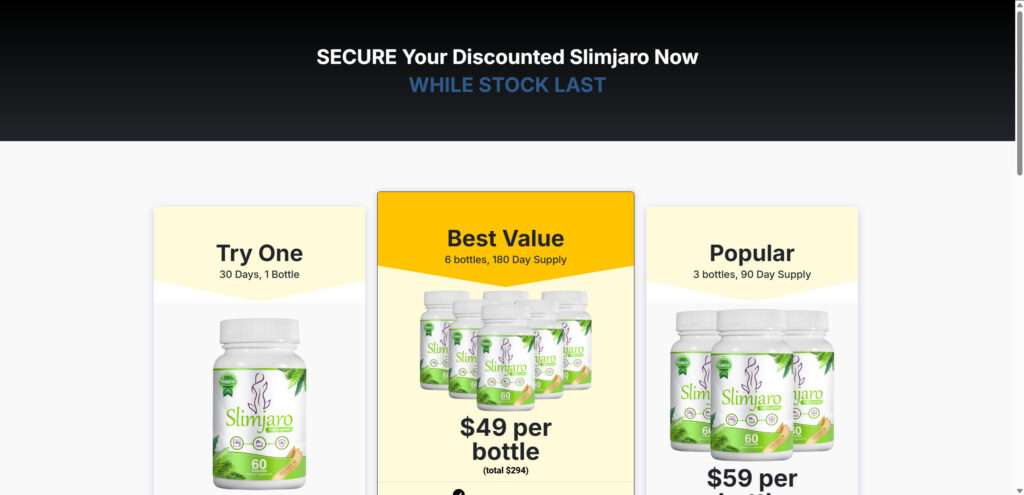
What Is Slimjaro and Why It’s Problematic
Slimjaro is marketed as an all-natural weight loss supplement that supposedly increases metabolism, improves digestion, reduces stress-related fat gain, and delivers noticeable weight loss without requiring diet or exercise. It’s sold through a flashy landing page filled with wellness buzzwords, glowing testimonials, and a lot of fine print. But under the surface, Slimjaro raises multiple red flags that suggest it’s not just ineffective — it’s potentially deceptive.
Unrealistic Weight Loss Claims
Slimjaro claims users can “lose stubborn fat fast,” “drop several pounds in weeks,” and “reset their metabolism” — all without changing their eating habits or exercise routines. These are classic scam signals.
No scientifically valid weight loss plan can guarantee dramatic results without lifestyle changes. Any product that claims otherwise is either exaggerating or outright lying.
Lack of Clinical Evidence
Despite marketing phrases like “doctor recommended” and “backed by science,” Slimjaro’s website provides no links to peer-reviewed studies, independent clinical trials, or real-world user testing. The so-called “science” behind the product is vague at best and unsubstantiated at worst.
Common ingredients like ashwagandha, green tea extract, or apple cider vinegar may offer minor benefits in some contexts, but no credible research supports the extreme claims made by Slimjaro.
Misleading Claims About FDA Approval
Slimjaro frequently references being “FDA Approved” or “made in FDA-registered facilities.”
Let’s be clear: The FDA does not approve dietary supplements.
This type of misleading language is a tactic often used to give users a false sense of legitimacy. While a facility may be registered with the FDA, that does not mean the product itself is FDA evaluated, tested, or approved.
No Presence on Trusted Retailers
Another warning sign is that Slimjaro is missing from platforms like Amazon, Walmart, CVS, or any major supplement retailer. Instead, it’s sold exclusively through its own website, using aggressive marketing funnels.
Why? Because major platforms enforce stricter regulations for claims, ingredients, and return policies. Scammy products often avoid mainstream retailers for this exact reason.
Vague Company Information
Try finding details about the actual company behind Slimjaro, and you’ll come up empty. No address, no phone number, no transparent “About Us” page, and no accountability. The website is filled with marketing fluff but contains no real business information.
Legitimate companies are transparent about who they are. Slimjaro isn’t — and that’s a huge red flag.
How the Slimjaro Scam Works: Step-by-Step Breakdown
To fully understand the Slimjaro operation, it’s important to look at the scam as a multi-stage funnel. Here’s how unsuspecting consumers are tricked into spending money on a product that doesn’t deliver.
Step 1: Aggressive Clickbait Advertising
Slimjaro ads are promoted heavily on Facebook, Instagram, and low-quality affiliate websites. These ads feature exaggerated before-and-after photos, fake news headlines, and phrases like:
- “Moms over 40 are melting fat with this kitchen secret!”
- “Doctors hate this one weird trick!”
- “Lose belly fat fast — no gym needed!”
These ads are designed to trigger emotional reactions — curiosity, hope, urgency — so that users click through without thinking.
Step 2: Fake Testimonials and Deepfake Videos
Once users land on the site, they’re bombarded with fake testimonials. Some websites even include AI-generated voices or deepfake-style videos of “experts” giving glowing reviews. Others recycle stock photos labeled as real customers.
In many cases, these testimonials are entirely fabricated or reused from other scam sites with only the product name changed.
Step 3: Pressure and Urgency Tactics
Slimjaro uses classic psychological pressure tactics:
- “Only 3 bottles left!”
- “Offer expires in 10 minutes!”
- “Last chance to claim your free bonus bottle!”
These fake scarcity tactics push consumers to act quickly without doing research or reading the fine print.
Step 4: Misleading Pricing and Subscription Traps
What appears to be a one-time purchase often turns into an auto-renewing subscription. Many users report being charged multiple times without consent.
Unless consumers catch that line, they unknowingly enroll in a billing cycle that’s nearly impossible to cancel.
Step 5: Questionable Ingredients and Lack of Transparency
Slimjaro’s ingredients list is either extremely vague or completely absent. Even when ingredients are listed, there’s no clear dosage information, no manufacturing standards, and no third-party testing.
This poses serious health risks. Some users have reported nausea, bloating, or digestive issues after taking the product — and there’s no way to know what’s really in it.
Step 6: No Refund, No Customer Support
Trying to get your money back? Don’t count on it.
Most users find that:
- Customer service emails bounce or go unanswered
- Phone numbers are fake or disconnected
- Refunds are denied or stalled with endless excuses
By the time users realize they’ve been scammed, it’s often too late.
What to Do If You’ve Fallen Victim to the Slimjaro Scam
If you’ve already purchased Slimjaro or suspect you’ve been enrolled in a subscription plan, take immediate action. Here’s what to do:
1. Contact Your Bank or Credit Card Provider
- Request a chargeback for unauthorized transactions
- Flag recurring charges
- Block future charges from the vendor
2. Report the Scam
- FTC Complaint Assistant: https://reportfraud.ftc.gov
- Better Business Bureau: https://www.bbb.org/scamtracker
- Internet Crime Complaint Center (IC3): https://www.ic3.gov
3. Cancel Any Active Subscriptions
- Check your email for any order confirmations or login info
- Use that info to cancel if possible (but don’t expect a reply)
- If cancellation fails, request a new debit/credit card from your bank
4. Change Your Passwords
- If you created an account using your email, change the password immediately
- Use a password manager for added security
5. Warn Others
- Leave honest reviews on Trustpilot, Reddit, or consumer protection sites
- Share your experience on social media to help protect others
6. Consult Your Doctor
- If you’ve taken Slimjaro and feel unwell, speak to a healthcare provider
- Bring the bottle (if you received it) to your appointment
- Don’t mix unknown supplements with existing medications
7. Monitor for Identity Theft
- Use AnnualCreditReport.com to check for unusual activity
- Consider placing a fraud alert with the credit bureaus (Experian, TransUnion, Equifax)
The Bottom Line
Slimjaro is just another scam in a long line of shady weight loss products making big promises with zero evidence. The product hides behind clever marketing, fake testimonials, urgency tactics, and deceptive billing practices to lure in unsuspecting customers.
If you’re serious about losing weight, there’s no magic pill — and definitely no liquid drop that can replace real, evidence-based health care.
Stay informed. Do your research. And if it sounds too good to be true, it almost always is.
Frequently Asked Questions (FAQ) About Slimjaro
❓ Is Slimjaro a legitimate weight loss supplement?
No. Slimjaro is not backed by scientific evidence or regulatory approval. Its marketing relies heavily on misleading claims and fake testimonials.
Does the FDA approve Slimjaro?
No. The FDA does not approve dietary supplements like Slimjaro. Any claim suggesting FDA approval is intentionally misleading.
Are there any clinical studies supporting Slimjaro?
None. Slimjaro provides no links to peer-reviewed studies or clinical trials to support its weight loss claims.
Is Slimjaro safe to use?
There is no verified safety information. Some users have reported digestive discomfort. Always consult a doctor before taking any unverified supplement.
Can Slimjaro really help with weight loss
No credible evidence supports Slimjaro’s effectiveness. Real weight loss requires proper nutrition, exercise, and medical support — not miracle drops.
What are the risks of using Slimjaro
Potential risks include unknown side effects, recurring charges, data misuse, and health complications due to undisclosed ingredients.
What should I do if I already ordered Slimjaro?
Contact your bank to dispute the charge, report the scam to authorities, and monitor your accounts for fraudulent activity.

Join the discussion
0 commentsShare your experience or ask a question about this article.
Discussion
Start the conversation
Have a question or something useful to share? Add the first comment.