

Everyone wants that perfect, golden glow—but without the risks of UV damage or expensive spray tans. That’s where Cartiva Tanning Drops come in, promising a natural-looking tan using only a few drops a day. But are these drops a revolutionary skincare breakthrough or just another dropshipping scam hidden behind glossy marketing?
In this in-depth, unbiased review, we break down everything you need to know—from ingredients and user experiences to hidden red flags and whether this product is worth your money.
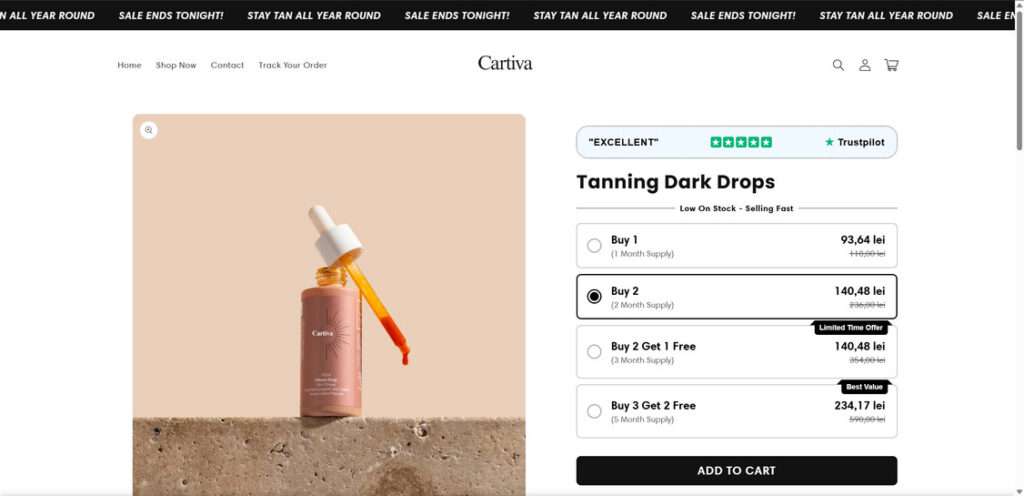
What Are Cartiva Tanning Drops?
Cartiva Tanning Dark Drops are marketed as a natural alternative to sunbathing or tanning beds. According to their website, the product contains 100% natural ingredients and works by boosting your skin’s natural melanin production. Here’s a quick look at the key claims:
- 100% Natural Ingredients
- Boosts Melanin Naturally
- Maintain Year-Round Glow
- Vegan & Cruelty-Free
They’re sold for $24.99 USD, with the brand pushing a minimalist, wellness-forward aesthetic.
How Are You Supposed to Use It?
Cartiva Tanning Drops are designed to be mixed with your daily moisturizer or lotion. Users are instructed to apply the mixture evenly across the skin, preferably after showering. The product claims visible results within 24–48 hours and deeper results over two weeks with consistent daily use.
According to Cartiva:
- 92% of users noticed a deeper tan within 2 weeks
- 90% claimed the tan lasted longer with consistent use
- 88% said it was easy to use and worked on all skin types
Sounds great on paper—but is there truth behind these numbers?
The Marketing vs. The Reality
Red Flag #1: Recycled Product Images
Several images on the Cartiva site appear to be taken from stock photo libraries or copied from other skincare brands. Some visuals are heavily edited, and reverse image searches suggest they might not belong to Cartiva at all. This practice is common among dropshipping stores trying to appear more credible than they are.
Red Flag #2: Missing Business Information
A legitimate brand typically has clear contact details, including a phone number, physical address, and direct email support. Cartiva offers only a vague contact form. There’s no way to verify the company’s location or even reach them if something goes wrong.
Even more concerning, the site lacks:
- A proper “About Us” section
- Clear terms and conditions
- A return/refund policy
- Verified third-party reviews
These are minimum requirements for any trustworthy eCommerce brand.
Red Flag #3: Suspicious Domain History
A WHOIS domain lookup reveals that shopcartiva.com was registered very recently, with no real online footprint or past brand history. For a beauty brand, this lack of online presence is a massive warning sign.
What Are Real Customers Saying?
We scoured TikTok, Reddit, and product review platforms for honest customer feedback. Here’s what we found:
Positive Feedback (Minority)
- A few TikTok influencers show off glowing results.
- Some users say it gave them a subtle tan after consistent daily use.
- A handful of reviews claim it’s a convenient alternative to sunbathing.
But most of these are either unverified or potentially sponsored. The majority opinion tells a different story.
Negative Feedback (Majority)
- Shipping Issues: Dozens of users report never receiving their orders. Tracking numbers stay in “pre-shipment” status for weeks.
- Zero Results: Many customers saw no visible tan even after using it daily for 2+ weeks.
- Disappearing Orders: Some say their orders vanished from the system after payment.
- Misleading Advertising: Reports claim the promotional videos were stolen from other brands.
- Poor Customer Support: Attempts to contact Cartiva went unanswered for most people.
In short, the customer experience is riddled with inconsistencies, false advertising, and a total lack of transparency.
What Ingredients Are in Cartiva Tanning Drops?
The website claims the drops are made with natural ingredients, but nowhere do they list a full ingredient breakdown. This is a big issue if you have sensitive skin, allergies, or simply want to know what you’re putting on your body.
Transparency is essential in skincare, and Cartiva falls short in this department.
Is Cartiva Just a Dropshipping Product?
All signs point to yes. The hallmarks of a dropshipping operation are clear:
- Generic product with rebranded packaging
- Inconsistent delivery timelines
- Lack of brand identity or history
- Over-reliance on influencer marketing
Many customers allege the exact same product can be found on Alibaba or other bulk supplier websites for a fraction of the price. Cartiva may simply be reselling a white-labeled tanning formula with inflated promises and pricing.
Better Alternatives Worth Trying
If you’re looking for safe, effective, and trustworthy tanning solutions, here are some tried-and-true alternatives:
Tanologist Self-Tan Drops
- Widely reviewed on Ulta, Amazon, and Sephora
- Offers a customizable glow
- Transparent ingredients list
Isle of Paradise Tanning Drops
- Vegan, cruelty-free
- Available in multiple shades
- Backed by thousands of verified reviews
St. Tropez Self Tan Purity Bronzing Water
- From a well-known brand
- Light, tropical scent and easy to apply
These options are widely available, backed by customer reviews, and come from reputable companies.
Final Verdict: Is Cartiva a Scam?
While the product may contain real ingredients and offer mild results for a few users, there are too many red flags to ignore. Between questionable marketing, poor customer service, product inconsistencies, and a lack of transparency, Cartiva Tanning Drops are likely not worth your money.
Verdict: Not Recommended.
If you want a reliable, effective tanning product, stick to well-known brands with a track record of safety, transparency, and customer satisfaction.
Takeaway: Don’t Let the Glow Fool You
Getting that sun-kissed look shouldn’t come at the cost of your time, money, or trust. While the promise of an easy, natural tan is tempting, Cartiva’s practices suggest it’s more hype than help.
Before hitting “Add to Cart,” do your research, read real reviews, and always be wary of products that seem too good to be true—because they often are.

Reviews & discussion
0 commentsShare a firsthand experience, or ask a question.
Community reviews
Cartiva Tanning Drops
Moderated reader experiences, not an editorial verdict.
Start the conversation
Have a question or something useful to share? Add the first comment.