Beware Of Buy 1 Get 1 Free ‘Clearance Sale’ Scam Websites

Many shady websites promote tempting “Buy 1 Get 1 Free ‘Clearance Sale’” offers to scam customers. These fraudulent sites bait people in with Buy 1 Get 1 Free ‘Clearance Sale’ deals, only to never deliver products or steal personal information.

These fake clearance sale websites prominently tout limited-time specials like “Buy 1 Get 1 Free ‘Clearance Sale’” along with other promotions. But it’s simply a deceitful ploy they use before ripping people off.
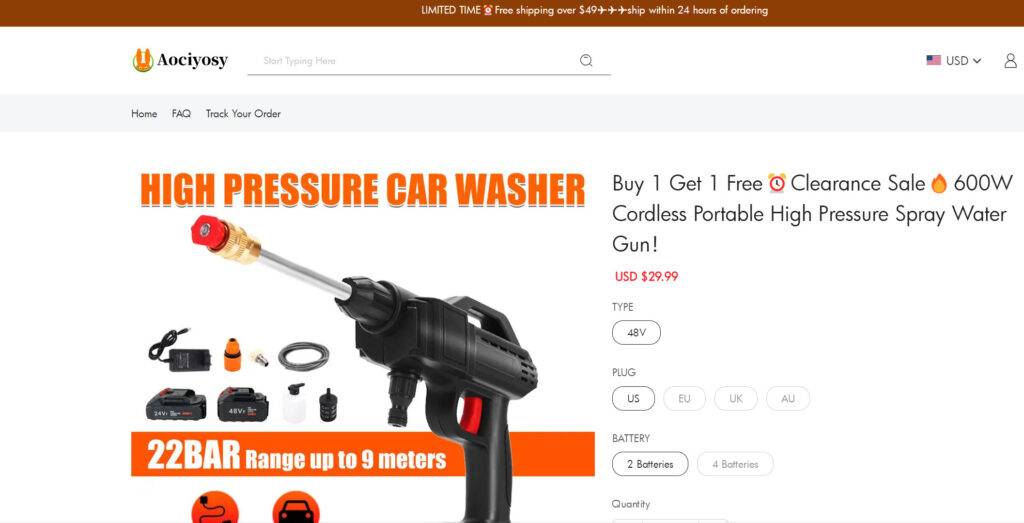
Buy 1 Get 1 Free 'Clearance Sale' Scams

How the Scam Buy 1 Get 1 Free ‘Clearance Sale’ Sites Work

The scam websites are designed to appear as legitimate online stores having apparel, tech, or jewelry clearance sales with deep discounts.

They look professional with product photos, categories, shopping carts, and checkout forms. They also use sales countdown timers to create urgency around the Buy 1 Get 1 Free ‘Clearance Sale’ event.

But upon closer inspection, numerous red flags appear:

  • No business registration, contact info, addresses, or phone numbers. Just an email address.
  • Domain names slightly altered from real brands by adding minor words or letters.
  • Terrible grammar, spelling errors, repetitive or nonsensical text.
  • Fake, overly positive customer reviews that seem suspicious.
  • Non-working social media links.
  • Requests for unsafe payment methods like bank transfer or gift cards.

When customers order through these sites, their money is stolen. Or they receive low-quality knockoffs. Some sites steal credit card info for fraud too. The Buy 1 Get 1 Free ‘Clearance Sale’ promos are solely a scam tactic.

How to Spot the Fake Buy 1 Get 1 Free ‘Clearance Sale’ Sites

However, there are ways to identify these shady Buy 1 Get 1 Free ‘Clearance Sale’ websites:

  • Search online for the site name and words like “scam” or “review” to uncover warnings.
  • Verify any provided contact information. Email addresses should match the domain.
  • Check for the Secure Socket Layer (SSL) icon during checkout, ensuring encryption protection.
  • Look up physical addresses in Google Maps. Fake ones won’t be accurate businesses.
  • Price match high-ticket items. Deebly discounted items are a red flag.
  • Reverse image search product photos. Matching results on other sites indicates a fraud.
  • Test social media links to confirm they work and match the website content.
  • Beware sites only offering payment methods with no buyer protection.

What to Do if Scammed by a Fake Buy 1 Get 1 Free ‘Clearance Sale’ Website

If you ordered through one of these shady websites and never got your items, take these steps:

  • Quickly contact your bank or credit card company to report fraudulent charges and cancel any recurring payments.
  • Monitor financial accounts closely for unauthorized charges and dispute them promptly.
  • Check credit reports for any opened accounts you did not authorize and resolve them.
  • File an official internet crime complaint at IC3.gov regarding the scam website.
  • Leave online reviews detailing your experience to warn other consumers.
  • Notify mail carriers if you suspect package theft or forwarding fraud.
  • Contact your local consumer protection agency for assistance and to alert them to the scam.
  • Reset all account passwords in case any were compromised on the fake site.

Avoiding Buy 1 Get 1 Free ‘Clearance Sale’ Scams

The lure of snagging a free item is compelling. But stay vigilant against schemes using Buy 1 Get 1 Free ‘Clearance Sale’ deals to ultimately defraud people. Protect yourself by:

  • Only shopping with trusted, familiar online retailers.
  • Researching unfamiliar sites thoroughly before buying.
  • Confirming professional contact information.
  • Using credit cards for purchase protection and fraud disputes.
  • Ensuring sites have secure checkout protocols.
  • Reporting any scams you come across to help others avoid them.

Staying informed is the best way to steer clear of clearance sale scammers and their deceitful Buy 1 Get 1 Free ‘Clearance Sale’ ploys. Be a smart online consumer and only shop with reputable sellers.

10 Rules to Avoid Online Scams

Here are 10 practical safety rules to help you avoid malware, online shopping scams, crypto scams, and other online fraud. Each tip includes a quick “if you already got hit” action.

  1. Stop and verify before you click, log in, download, or pay.

    warning sign

    Most scams win by creating urgency. Verify using a trusted method: type the website address yourself, use the official app, or call a known number (not the one in the message).

    If you already clicked: close the page, do not enter passwords, and run a malware scan.

  2. Keep your operating system, browser, and apps updated.

    updates guide

    Updates patch security holes used by malware and malicious ads. Turn on automatic updates where possible.

    If you saw a scary “update now” pop-up: close it and update only through your device settings or the official app store.

  3. Use layered protection: antivirus plus an ad blocker.

    shield guide

    Antivirus helps block malware. An ad blocker reduces scam redirects, phishing pages, and malvertising.

    If your browser is acting weird: remove unknown extensions, reset the browser, then run a full scan.

  4. Install apps, software, and extensions only from official sources.

    install guide

    Avoid cracked software, “keygens,” and random downloads. During installs, choose Custom/Advanced and decline bundled offers you do not recognize.

    If you already installed something suspicious: uninstall it, restart, and scan again.

  5. Treat links and attachments as untrusted by default.

    cursor sign

    Phishing often impersonates delivery services, banks, and popular brands. If it is unexpected, do not open attachments or log in through the message.

    If you entered credentials: change the password immediately and enable 2FA.

  6. Shop safely: research the store, then pay with protection.

    trojan horse

    Be cautious with brand-new stores, “closing sale” stories, and prices that make no sense. Prefer credit cards or PayPal for dispute options. Avoid wire transfers, gift cards, and crypto payments.

    If you already paid: contact your card issuer or PayPal quickly to dispute the transaction.

  7. Crypto rule: never pay a “fee” to withdraw or recover money.

    lock sign

    Common patterns include fake profits, then “tax,” “gas,” or “verification” fees. Another is a “recovery agent” who demands upfront crypto.

    If you already sent crypto: stop paying, save evidence (wallet addresses, TXIDs, chats), and report the scam to the platform used.

  8. Secure your accounts with unique passwords and 2FA (start with email).

    lock sign

    Use a password manager and unique passwords for every account. Enable 2FA using an authenticator app when possible.

    If you suspect an account takeover: change passwords, sign out of all devices, and review recent logins and recovery settings.

  9. Back up important files and keep one backup offline.

    backup sign

    Backups protect you from ransomware and device failure. Keep at least one backup on an external drive that is not always connected.

    If you suspect infection: do not connect backup drives until the system is clean.

  10. If you think you are a victim: stop losses, document evidence, and escalate fast.

    warning sign

    Move quickly. Speed matters for disputes, account recovery, and limiting damage.

    • Stop payments and contact: do not send more money or respond to the scammer.
    • Call your bank or card issuer: block transactions, replace the card if needed, and start a dispute or chargeback.
    • Secure your email first: change the email password, enable 2FA, and remove unfamiliar recovery options.
    • Secure other accounts: change passwords, enable 2FA, and log out of all sessions.
    • Scan your device: remove suspicious apps or extensions, then run a full malware scan.
    • Save evidence: screenshots, emails, order pages, tracking pages, wallet addresses, TXIDs, and chat logs.
    • Report it: to the payment provider, marketplace, social platform, exchange, or wallet service involved.

These rules are intentionally simple. Most online losses happen when decisions are rushed. Slow down, verify independently, and use payment methods and account controls that give you recourse.

Previous

Remove Puredualnose.live Pop-up Ads [Virus Removal Guide]

Next

Remove ElectroLink From Mac [Virus Removal Guide]