

The caller sounds calm, knows the bank’s name, and says they’re trying to stop fraud. Your first instinct may be to help them secure the account.
A Capital One fraud call scam puts that instinct to work. The warning deserves a check, but the person delivering it shouldn’t decide how you verify it.
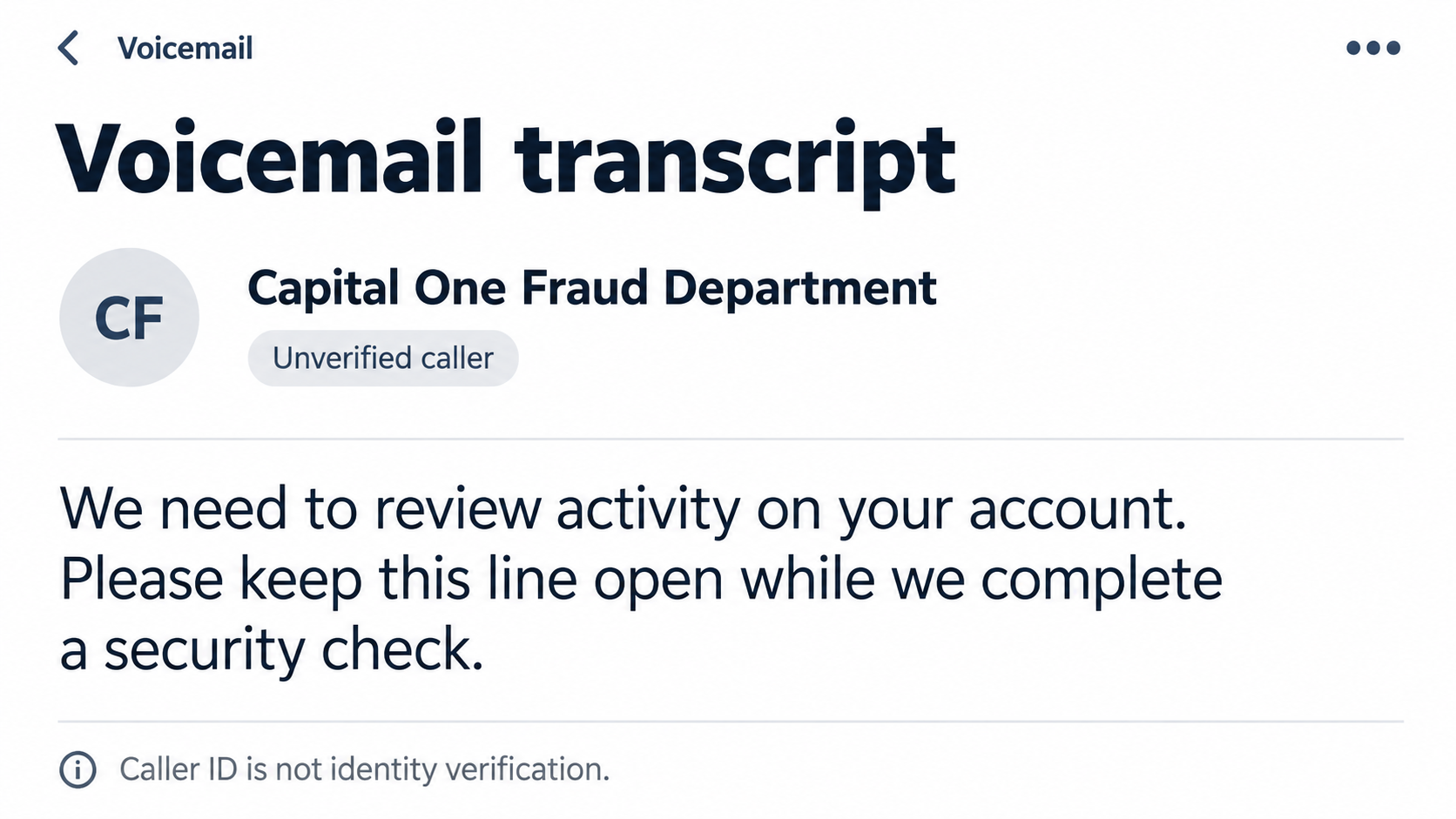
Overview
The impersonator offers protection, not an obvious prize
This scam involves a caller pretending to represent Capital One’s fraud department. The caller may describe suspicious activity and offer to prevent a loss.
The supposed security check can become a request for credentials, verification codes, remote access, or a transfer to a destination the caller controls.
Capital One is a real bank. The problem is the impersonation and the unsafe instruction, not the fact that banks investigate fraud or contact customers.
A genuine alert can concern a real problem. You can check it safely by ending the incoming conversation and contacting the bank through independently trusted information.
A familiar caller ID can be misleading
The bank’s name or a recognizable telephone number may appear on your screen. That display cannot establish who is speaking.
Capital One’s scam guidance specifically warns about spoofed calling numbers. It advises hanging up and using the contact number on the customer’s card when in doubt.
This also means a displayed bank number should not be publicly accused of belonging to criminals. The number may have been copied into the caller-ID presentation.
The useful question is whether you reached the institution yourself, not whether an incoming call looked familiar.
The requested action reveals the immediate risk
A conversation about a purchase can sound reasonable until the caller asks you to authorize something unrelated. Keep the proposed action separate from the reassuring explanation.
- A code request: may help the caller complete an account or payment action.
- A “safe account” transfer: moves money instead of merely reviewing suspected fraud.
- A software request: can give an unknown person access to your device or screen.
- A secrecy instruction: discourages the independent help that could interrupt the call.
Don’t comply because the caller has correctly named a bank or guessed a transaction. End the contact before making decisions about access or money.
Why a Fake Fraud Call Can Sound So Convincing
The story matches something banks really do
People expect their issuer to monitor card activity. A call about a suspicious transaction therefore arrives with a believable explanation already built in.
The impersonator doesn’t need an elaborate introduction. They can begin with a concern you would normally want to resolve and position themselves as the helpful person.
That makes rejecting the caller feel like rejecting protection. In reality, calling the bank yourself is a way to obtain protection without trusting the unknown contact.
You are not required to settle the matter on the first call. A careful pause is appropriate even when the underlying concern turns out to be genuine.
Accurate details are not a complete identity check
A caller may know a name, telephone number, or part of an account reference. Those details can feel more persuasive than a generic warning.
Their source may be unclear. Information you recognize can come from earlier disclosures, public records, or another interaction; it doesn’t authenticate the person repeating it.
Don’t answer additional questions to test how much the caller knows. Each answer can supply something missing from their story.
If a transaction is mentioned, write down the claim and check it with the bank independently. A plausible detail should support a question, not an automatic approval.
The caller may try to keep you away from other help
Instructions to stay on the line or avoid contacting a branch can prevent you from hearing a different explanation.
A claim that ordinary bank staff are involved in the fraud is especially dangerous. It attempts to make the impersonator the only person you can trust.
You don’t need to argue about that claim. Stop the conversation and reach the institution through a route the caller did not supply.
If you’re overwhelmed, ask a trusted person to sit with you while you call. Support can help you explain the sequence without returning to the impersonator.
How the Capital One Fraud Call Scam Works
Step 1: The incoming contact creates an apparent emergency
The contact may be a live call or a message asking you to return a call. It claims to concern the fraud department or account security.
The opening problem might be an unfamiliar purchase, suspicious access, or a supposedly threatened balance. The account event has not yet been independently confirmed.
An incoming call is not automatically a scam, but it is not an independently verified banking channel either. That distinction gives you a straightforward next step.
End the contact and use your established bank route. Do not replace that check with redialing the incoming number or following the voicemail’s callback instructions.
Step 2: The caller turns a claim into apparent authority
The speaker presents themselves as the person responsible for preventing the loss. A professional tone and a familiar department name can make cooperation feel routine.
They may offer a reference number or describe a security procedure. A number can help the real bank examine the claim, but its existence doesn’t verify the caller.
Don’t supply a complete password or PIN to continue the conversation. The caller’s reassuring explanation cannot make an unnecessary disclosure safe.
It is also reasonable to refuse screen sharing. Your bank account and personal device contain information unrelated to checking a single disputed transaction.
Step 3: A code or approval is relabeled as protection
The caller may claim a code is needed to cancel fraud or confirm that you own the account. Meanwhile, an unrelated action can be waiting for authorization.
A message sent by the real institution may describe a sign-in, reset, or payment. Read that purpose rather than accepting the caller’s version.
The FTC’s verification-code warning explains how bank impersonators use a claimed account problem to seek codes. Don’t share one with an incoming caller.
This is different from entering a code into an independently opened, genuine service for an action you initiated. Context matters; an unknown caller shouldn’t direct authentication.
If an approval isn’t for something you intended to do, decline it and contact the bank yourself. A fraud warning should not force you to approve another event.
Step 4: The “fix” can move money or expose the device
Another version asks for a transfer to a supposed protected account. A recipient you did not independently establish should not become the destination for your savings.
The transfer may be described as temporary or reversible. That description does not change the fact that money is leaving your control.
A caller might instead direct you to install software, open a link, or allow remote support. Those requests create a separate device or credential exposure.
Stop before completing the action. If it already happened, record whether you sent money yourself, shared information, or gave someone access to act.
Tell the bank what you did, not just what the caller called it. A transfer, a shared code, and remote access need different attention.
Step 5: Reassurance delays the independent report
The caller may say the account is now safe, a transfer will return shortly, or a case is under confidential review. That can discourage immediate follow-up.
Don’t wait for a promised callback if you suspect exposure. The real bank needs your account of what happened before another instruction arrives.
Write down the time and the actions while they are fresh. If you’re unsure whether a code approved access or payment, tell the bank exactly what the message said.
The purpose of a report is containment and investigation. You don’t need to determine the caller’s real name or trace a spoofed number first.
How to Check the Claim Without Returning to the Caller
Choose a contact route outside the warning
Use the trusted bank app, the number printed on your card, or contact information reached through the institution’s official site.
Capital One’s security information provides an independent starting point. Don’t use a search result merely because its advertisement repeats “fraud department.”
Explain that you received a suspicious incoming call and want to check the account. That avoids treating the caller’s reference number as an established bank case.
If you don’t have an account, don’t create one or provide identity documents to resolve the alleged alert. Report the impersonation through the legitimate institution instead.
Compare the actual account activity
Review transactions, account notices, and recent changes through the real service. Ask about entries you do not understand rather than making a transfer to “test” the account.
A pending authorization isn’t always a completed charge. A merchant descriptor may also differ from its storefront name, so let the bank help identify unclear activity.
At the same time, don’t dismiss a withdrawal you never requested because the caller said it was protective. Your actual intent matters.
Keep the suspicious call separate from any genuine fraud event the bank discovers. Finding a real problem does not retroactively authenticate the original caller.
Use precise language during the report
Explain whether you provided a username, password, PIN, card number, code, or approval. Avoid summarizing everything as “I gave them my details.”
Also specify whether you installed an app or made a payment yourself. The bank may need to address different risks from the same conversation.
Don’t alter the story to make the transaction sound unauthorized if you actually sent it under deception. Accurate facts are essential to assessing available remedies.
What to Do if You Have Fallen Victim to This Scam
Act through the real bank and payment provider. The right response depends on the actions taken, not the caller’s final reassurance.
-
End the impersonator’s contact. Hang up and stop replying to follow-up messages. Don’t accept instructions to keep the line open for an investigation.
If you need support, involve a trusted person. Don’t ask the caller which relative or bank employee is safe to consult.
-
Reach Capital One independently and explain the exposure. Describe the call, when it occurred, and what information or permissions you supplied.
Ask the real fraud team about account restrictions, card replacement, session review, and any pending transfers. A simple password reset may not cover everything.
-
Report money movement immediately. Give the amount, destination, payment method, and transaction reference. Explain whether you authorized the payment under false instructions.
The FTC’s scam-response guidance recommends asking the relevant provider about reversal or recovery. Availability depends on the payment and circumstances.
-
Replace exposed secrets through secure channels. Follow the bank’s process for passwords or PINs. Change a reused password on other services as well.
Tell the bank about any code or approval separately. The purpose shown in the message can help identify what the caller was trying to complete.
-
Deal with remote access before resuming sensitive activity. Disconnect an actively controlled device and use another trusted device to contact the bank.
If software or an extension was installed, Malwarebytes can help inspect unwanted software. A scan doesn’t undo a transfer or independently revoke every account session.
-
Add relevant protection without relying on it alone. If the call involved a link, AdGuard can help block some known phishing or malicious-ad destinations.
It cannot authenticate an incoming voice call, and new sites may not yet be listed. Independent bank contact remains necessary.
-
Keep the evidence and notify the bank about impersonation. Save voicemail, screenshots, displayed numbers, messages, and payment receipts without posting confidential account data.
Capital One’s suspicious-communications form is an official reporting route. It doesn’t replace urgent contact about an affected account or payment.
-
Follow the real institution’s review through to completion. Keep the case reference, written instructions, and relevant deadlines. Review subsequent activity and report unexplained changes.
If a U.S. consumer-finance complaint remains unresolved, the CFPB complaint service provides another official channel. It doesn’t promise a particular reimbursement result.
After the Call: Avoiding a Second Loss
A recovery offer can repeat the same trust problem
Someone may claim they can retrieve the money for an upfront charge. The promise can feel attractive precisely because the first loss is upsetting.
Don’t let a new stranger become the authority on your bank case. Verify any claimed representative through the institution or official process they say they represent.
The FTC’s recovery-scam explanation describes fees demanded for supposed refunds. Paying another fee is not a substitute for the provider’s genuine review.
Write down the remaining questions
Ask whether the old card number remains usable, whether account access was revoked, and what to do about already pending activity.
Keep that list with the case reference. You’ll have concrete questions for the next representative instead of checking the balance and hoping everything is resolved.
Be wary of another incoming caller who knows the case’s details. Knowing about the first contact still doesn’t establish authority to handle the next one.
Warn others without spreading a false number accusation
Tell family members about the code or transfer request, not simply the displayed caller ID. That helps them recognize the mechanism when a different number appears.
A legitimate bank number can be spoofed. Labeling it a criminal’s number may make people distrust a useful independent contact route.
Share the safe response: end the incoming contact, use the real bank channel, and describe the requested action before authorizing anything.
Frequently Asked Questions
Can Capital One’s real number appear on a scam call?
Yes. Caller-ID spoofing can imitate a familiar number. It does not establish that the genuine bank placed the call.
Does every unexpected fraud call mean a scam?
No. Banks can send genuine alerts. You can verify one by ending the incoming conversation and reaching the institution independently.
Should I read a security code to the incoming caller?
No. Don’t let an unverified caller direct authentication. Use a genuine service independently for actions you intended to initiate.
Is transferring money to a safe account a normal response?
Don’t move funds to a caller-supplied destination for protection. Ask the real bank to assess the account through its established fraud procedure.
Will security software recover money I transferred?
No. Software may help assess a device exposure. Payment recovery belongs with the bank or payment provider and depends on the actual circumstances.
What if I answered but shared nothing?
Answering alone doesn’t establish a takeover. Check any plausible account concern independently, avoid further disclosure, and report suspicious communications where appropriate.
The Bottom Line
Don’t complete the Capital One fraud call scam’s security check. Caller ID and a reassuring explanation don’t authorize a code request, device access, or protective transfer.
If you already complied, contact the real bank promptly and describe each action. Stop relying on the caller’s promises and contain the actual account or payment exposure.








