

A supplement promising fresher breath and stronger gums can sound appealing when dental problems keep coming back. Dentolyn wraps that promise in reassuring language.
Before a bottle joins your bathroom shelf, there’s more to consider than the glowing reviews. The details behind those promises deserve a closer look.
Overview
What Dentolyn Is Being Sold For
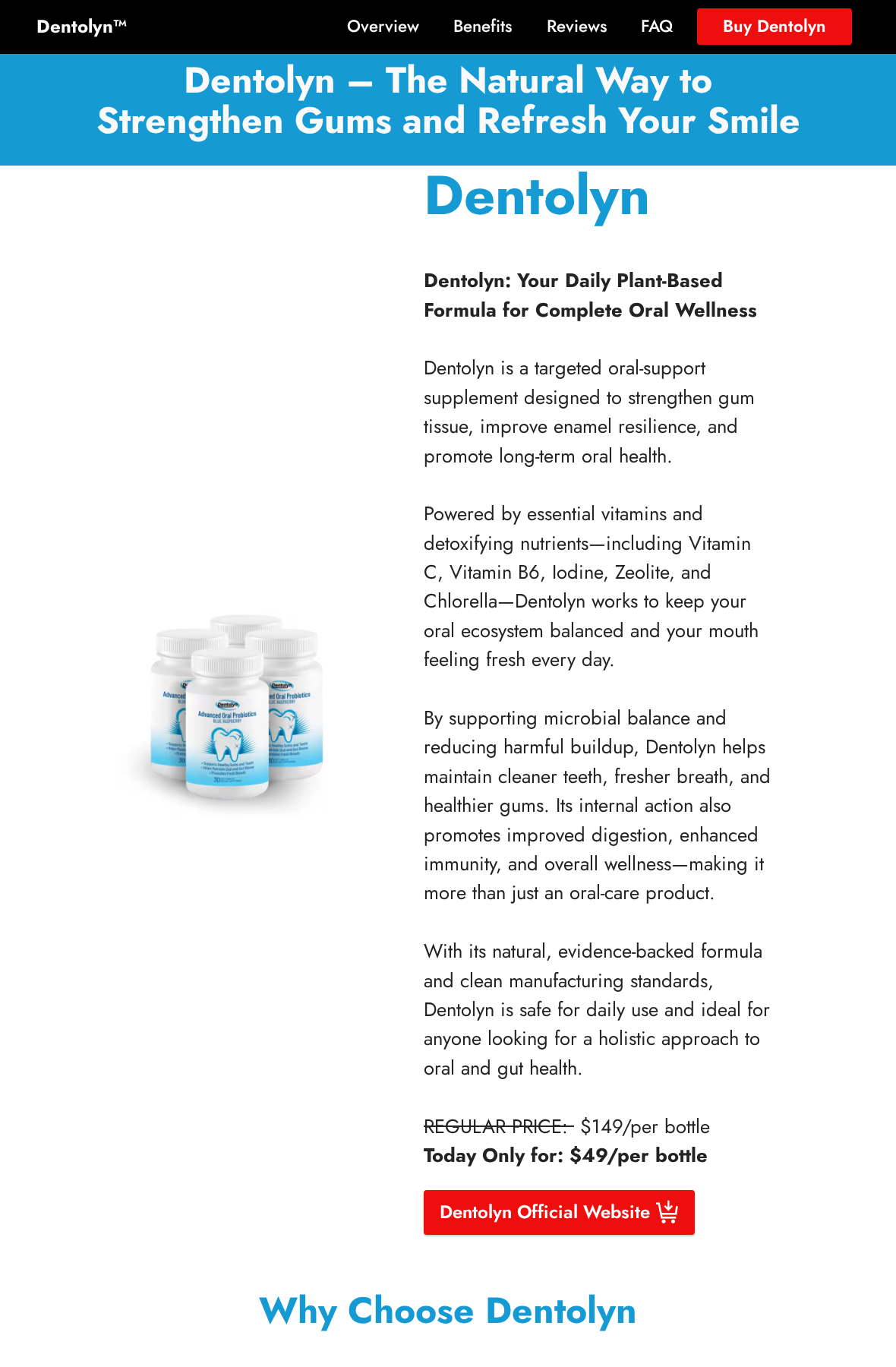
Dentolyn is promoted as a daily dietary supplement for teeth, gums, breath, and the oral microbiome. Several websites present themselves as its official destination.
That creates an immediate buying problem: the name on the bottle stays the same, but the description of what you’re buying can change.
Some promotions emphasize vitamins and minerals. Another describes a probiotic mixture. A buyer shouldn’t have to guess which formula would arrive.
The FDA Approval Claim Is Misleading
The eng-en-us-dentolyn.com promotion says Dentolyn has FDA approval and connects that approval with safety, effectiveness, and quality. That’s not how dietary supplements are approved.
The approval wording was present in its published page code. Several sections remained hidden in the browser, so that wording’s current visual presentation was not confirmed.
The FDA explains that it does not approve dietary supplements for safety and effectiveness before sale.
A manufacturing claim, a registration, or a disclaimer elsewhere on the page cannot turn a supplement into an FDA-approved treatment.
That false reassurance is a concrete reason not to buy through this promotion. It is separate from whether a particular bottle contains legitimate ingredients.
What Buyers Still Need to Establish
The available pages don’t establish a finished-product dental benefit, authenticate every claimed official seller, or prove that buyers are automatically enrolled in refills.
The practical concerns are specific:
- Incompatible formula descriptions under one product name.
- A misleading FDA approval statement on a promotional page.
- Per-bottle prices that require a larger package.
- Refund promises that need confirmation from the actual merchant.
- No verified manufacturer identity tied to the bottle you would receive.
Why the Dental Wellness Pitch Needs Careful Reading
People rarely search for a dental supplement because everything feels fine. Bleeding gums, stubborn breath, discomfort, or fear of expensive treatment often drive the search.
That’s why language about working from within is persuasive. It offers an easier explanation than another appointment, another cleaning, or a discussion about gum disease.
But an appealing explanation isn’t a diagnosis. Persistent bad breath can have different causes, and sore gums don’t tell you which ingredient your body needs.
The promotions combine several distinct promises: nourishing gum tissue, strengthening teeth, adjusting bacteria, improving digestion, and refreshing breath. Each needs evidence appropriate to that claim.
Evidence that a nutrient has a role in normal health doesn’t demonstrate that taking this particular tablet improves a dental condition.
You also need to know whether the proposed benefit concerns a deficiency, an existing disease, or an ordinary cosmetic concern. Those are not interchangeable situations.
A Supplement Doesn’t Remove the Need for Dental Treatment
Plaque and hardened deposits don’t disappear because a sales page describes internal balance. A dentist can identify problems that a supplement advertisement cannot.
The American Dental Association describes professional cleaning and, when appropriate, scaling and root planing as treatments for gum disease.
That matters if a shopper postpones care while waiting for a bottle to work. Money spent on an uncertain supplement is only one possible cost.
Ask your dentist what is causing the symptoms first. Show the actual label, rather than a webpage listing ingredients that may describe another version.
How the Dentolyn Sales Funnel Works
Step 1: A Dental Concern Becomes an Internal Wellness Problem
The opening pitch moves familiar concerns into a broader story about the mouth and digestive system. That makes one daily tablet seem relevant to several problems.
This shift can make a supplement feel like a comprehensive solution before the seller explains what was tested, how much was used, or who benefited.
Read the promise as advertising. If it speaks to bleeding gums or weakened teeth, ask what evidence supports that particular outcome.
A general statement about nutritional support should not silently become a promise to reverse damage or avoid necessary treatment.
Step 2: Quality Badges Make the Offer Feel Medically Vetted
Promotional badges mention manufacturing standards, natural ingredients, and U.S. production. The FDA approval wording adds a much stronger impression of official review.
Those statements do different jobs. A factory standard concerns production practices. A clinical trial concerns a tested result. Government approval is another matter entirely.
The eng-en-us-dentolyn.com page also carries a footer saying the FDA hasn’t evaluated its statements. That does not repair the approval assertion above it.
For someone comparing dental treatments, this is not a harmless decorative badge. It can influence how much trust they place in the health claims.
Don’t assume a familiar payment platform checked those claims either. Processing an order is not a medical endorsement of the product.
Step 3: Different Pages Describe Different Formulas
The dntolyn.com presentation lists vitamin B6, iodine, xylitol, chlorella, zeolite, vitamin C, and magnesium stearate among its named ingredients.
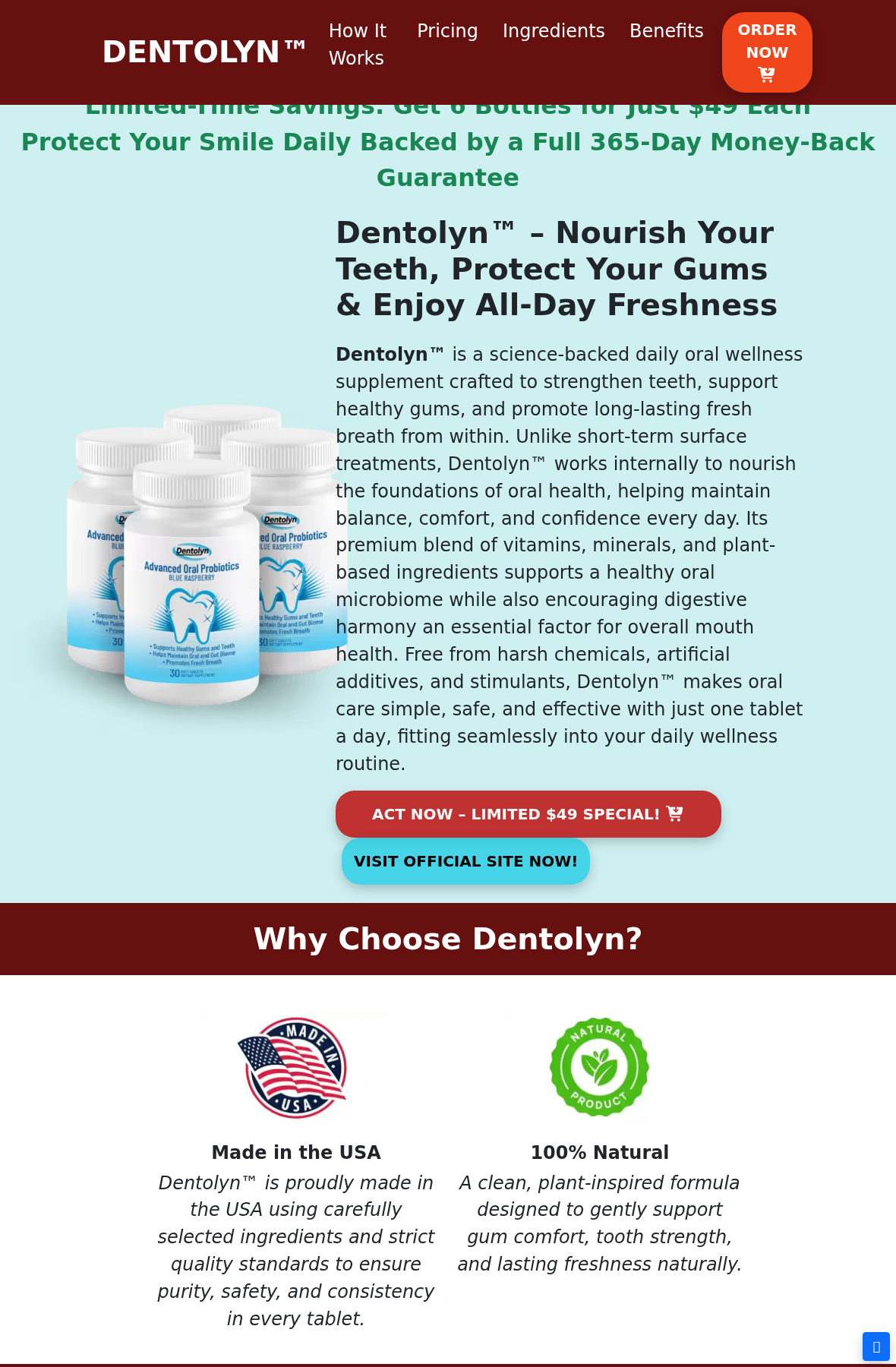
The dentolyn-co.com promotional description instead discusses inulin, guava powder, Lactobacillus paracasei, and glucose oxidase. Those are not simply alternate spellings of one list.
That second description was available through indexed material, but its live page restricted automated access. It should not be treated as the current label.
The discrepancy still makes an important point: search results and branded promotional pages are an unreliable substitute for the exact Supplement Facts panel.
Ask for a clear photograph showing serving size, ingredient amounts, other ingredients, warnings, and the responsible business. Match it to the offered bottle.
Until that match exists, don’t combine benefits from one formula with prices and guarantees taken from another page.
Step 4: The Low Unit Price Steers You Toward a Bundle
The dntolyn.com promotion advertises six bottles at $49 each. That is a $294 product purchase, not a single $49 bottle.
Another Dentolyn promotion presents one bottle at $69, three at $59 each, and six at $49 each. Shipping terms may differ between packages.
The larger package reduces the unit price while increasing the amount committed before you know whether the product suits you.
For example, three bottles at $59 each mean $177 before any additional charges. Write down the quantity and full total, not just the prominent number.
One promotional page also advertises $780 off six bottles beside a stated $149-to-$49 price change. Those displayed figures don’t reconcile on their own.
The final order summary must explain the discount, shipping, taxes, and quantity. If the arithmetic doesn’t fit, stop instead of assuming the checkout will fix it.
Step 5: The Promotion Hands You to Another Sales Platform
Links on eng-en-us-dentolyn.com use a ClickBank affiliate destination. Its footer acknowledges that a purchase through a merchant link may earn the site a fee.
An affiliate can advertise a product without being its manufacturer or the merchant responsible for shipment. The official-looking domain does not settle that relationship.
The dntolyn.com terms refer to authorized platforms such as ClickBank and assign payment and refund matters to the relevant processor’s policies.
Its order link redirected to a sparse order destination during checking. A working final payment offer and its recurring terms were not established.
That’s why no blanket subscription accusation belongs here. If you reach an active checkout, examine its actual renewal language before providing payment details.
Step 6: The Refund Promise Must Follow the Actual Order
Both live promotional presentations advertise a 365-day guarantee, while other indexed Dentolyn material describes a shorter guarantee and a minimum usage period.
A year-long banner is reassuring, but the business collecting the money must honor that promise for your specific order.
Record when the refund clock starts, whether opened bottles qualify, the return destination, shipping deductions, and how to submit a request.
Keep the checkout guarantee with the receipt. A screenshot of another seller’s page won’t necessarily resolve a dispute with the merchant you actually paid.
Who Is Behind the Dentolyn Offer?
The Promotional Domain Is Not the Manufacturer
Multiple pages claiming official status do not establish one verified legal operator. Start with the company named on the final receipt and payment descriptor.
Then compare that identity with the package label and the merchant terms. A product name alone is not a complete business identity.
The affiliate disclosure helps explain why a recommendation page may differ from the destination accepting the order. It doesn’t authenticate the health claims.
No Verified Factory or Return Depot Was Established
The promotions describe U.S. manufacturing, but the material inspected did not connect a named factory and verifiable address to a specific Dentolyn production batch.
That gap doesn’t prove foreign manufacture. It means the advertised origin remains a claim rather than a traced supply chain.
If returns are necessary, obtain written instructions from the merchant. Don’t send bottles to a shipping-label address without confirmation that it accepts your return.
Refund Support Must Belong to the Payment You Made
A promotional webpage can point outward while its own terms disclaim responsibility. Buyers need a usable support route associated with the order, not generic assurances.
No calls or emails were sent to test responsiveness. Don’t read a listed contact or payment logo as evidence that a refund request was answered.
For a ClickBank purchase, use the order details and support route associated with your receipt. Never disclose a full card number in a support email.
The Label Must Identify the Actual Supplement
A list of familiar ingredients is not enough to evaluate safety. Amounts, formulation, allergens, and your medications can change the practical risk.
Keep the lot number and expiry information if a bottle arrives. Those details are more useful for tracing a problem than a promotional testimonial.
No laboratory analysis, authenticated manufacturing certificate, or completed purchase was part of this assessment. It does not establish contamination or counterfeit contents.
What Would Make the Claims Worth Taking Seriously?
A meaningful clinical claim should identify the product tested, the dosage, participants, study duration, comparison group, and measured dental outcomes.
For gum health, a change in a relevant clinical measurement matters more than a shopper saying their mouth feels cleaner.
For breath, an appropriate assessment is different from asking customers whether they liked the experience. Satisfaction can reflect taste, convenience, expectations, or ordinary fluctuations.
The inspected promotions did not provide a verified finished-Dentolyn trial supporting the combined promises. A broad science-backed label cannot fill that gap.
Similarly, calling ingredients natural doesn’t answer whether the dose is suitable for someone with a thyroid condition, allergies, or a complex medication routine.
You don’t need to prove the bottle is dangerous to reject an offer with misleading approval wording and unresolved product identity.
What to Do If You Ordered Dentolyn
-
Identify the real order. Find the confirmation, merchant name, total, quantity, transaction date, and payment descriptor. Separate the merchant from the promotional website.
Compare the promised formula and guarantee with the receipt. Save both versions if they disagree rather than assuming the difference is unimportant.
-
Ask for cancellation before dispatch. Use the support route on the receipt. State the order number and request a written cancellation confirmation.
If shipment has started, ask which return procedure covers your purchase. Keep that response and the original refund promise together.
-
Check for recurring charges. Look for subscription, automatic shipment, or renewal language in the order documents. Request cancellation of future billing if you enrolled unintentionally.
A larger first package alone doesn’t prove a subscription. Ask the merchant to identify the exact recurring authorization if another charge appears.
-
Photograph the delivered bottle. Capture the front, Supplement Facts, manufacturer or distributor, seal, lot number, and expiry. Record unexpected substitutions before opening anything.
Send discrepancies to support with a specific remedy request. Don’t rely on the marketing ingredient list to identify the contents.
-
Protect dental care. Discuss persistent pain, bleeding, swelling, or breath changes with a dentist. Don’t postpone an appointment to finish a supplement trial.
If you develop an adverse reaction, stop the supplement and seek medical advice. Preserve the bottle so the product can be identified accurately.
-
Escalate an unresolved payment issue. Contact your payment provider promptly about non-delivery, wrong goods, or disputed billing. Ask about its deadline and required evidence.
Describe what happened precisely. A disagreement with advertising, an unauthorized charge, and an item not received are different problems requiring different documentation.
Frequently Asked Questions
Is Dentolyn FDA Approved?
No FDA approval for Dentolyn as a dietary supplement was established. The promotional approval statement conflicts with how FDA regulates supplements.
Factory registration or an ingredient’s status does not establish approval of the finished supplement’s dental benefits.
Is Every Dentolyn Website Operated by the Same Company?
That connection was not verified. Similar branding and official-site labels can appear on affiliate promotions that direct shoppers to another merchant.
Does Dentolyn Automatically Enroll Buyers in Refills?
Automatic enrollment was not demonstrated in a completed checkout. Review your actual order’s recurring terms instead of assuming every bundle includes a subscription.
How Much Is the Six-Bottle Package?
At the advertised $49 per bottle, six bottles cost $294 before any applicable additions. Check the final total and selected quantity before paying.
Can Dentolyn Replace a Dentist or Gum Treatment?
No. A supplement promotion cannot diagnose dental disease or substitute for necessary professional care. Persistent symptoms need a dental assessment.
Which Refund Guarantee Applies to My Order?
Use the promise attached to your actual payment offer and receipt. Ask the merchant to confirm the deadline, eligibility, deductions, and return destination in writing.
The Bottom Line
Do not buy Dentolyn through promotions claiming FDA approval. The misleading badge and conflicting formula descriptions leave essential questions unanswered.
If you already ordered, identify the merchant, preserve the offer, and request cancellation or a documented refund. Take ongoing dental symptoms to a dentist.








