

In recent weeks, a product called CerebroZen Tinnitus has been making waves on social media platforms, particularly on Instagram and Facebook. The advertisements for this drops feature AI-generated videos of well-known celebrities such as Joe Rogan, Johnny Depp and Kevin Costner, seemingly endorsing the product’s effectiveness in treating tinnitus and improving overall quality of life. However, upon closer examination, the marketing tactics surrounding CerebroZen Tinnitus Relief Drops raise several red flags that potential consumers should be aware of before considering a purchase.
This article aims to provide a comprehensive analysis of the controversial marketing strategies employed by the makers of CerebroZen Tinnitus Relief Drops, the potential risks associated with using the product, and the importance of consulting with a healthcare professional when seeking treatment for tinnitus.

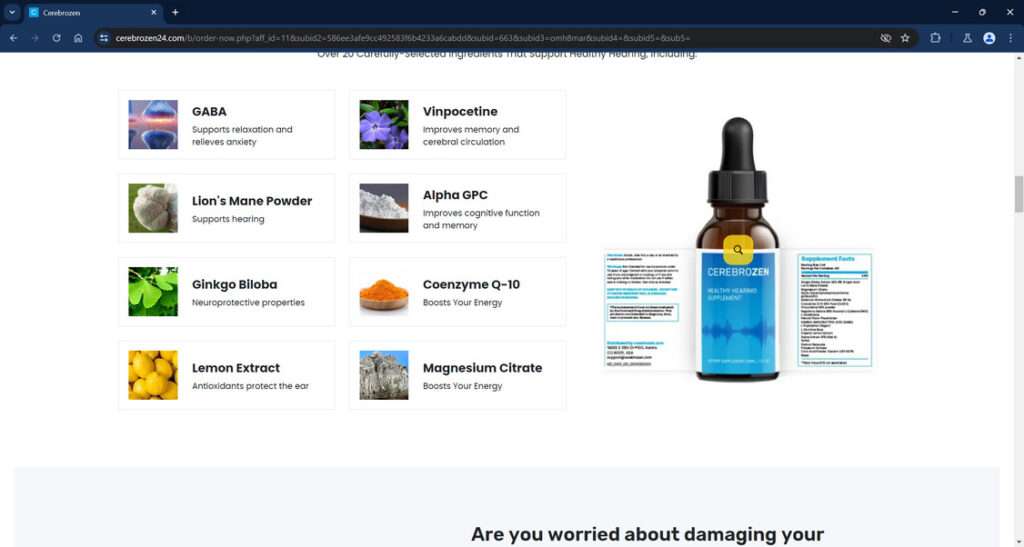
What is CerebroZen Tinnitus Relief Drops?
CerebroZen Tinnitus is marketed as an innovative ear care product that claims to improve ear health and reduce the intensity and frequency of tinnitus. According to the product’s website, the Drops is formulated with natural and effective ingredients that penetrate ear tissues, balance the auditory system, and promote ear circulation. The makers of CerebroZen Tinnitus claim that users will experience an immediate cooling and soothing effect, relieving ear discomfort and enhancing the clarity of hearing.
In addition to addressing hearing issues, the product’s marketing materials suggest that CerebroZen Tinnitus provides comprehensive emotional and psychological support, helping to improve the user’s mental state and enhance their overall quality of life. The website claims that the Drops brings a sense of tranquility and relaxation, allowing users to better focus on their tasks and enjoy a more fulfilling life.
Questionable Marketing Tactics
1. Celebrity Endorsements
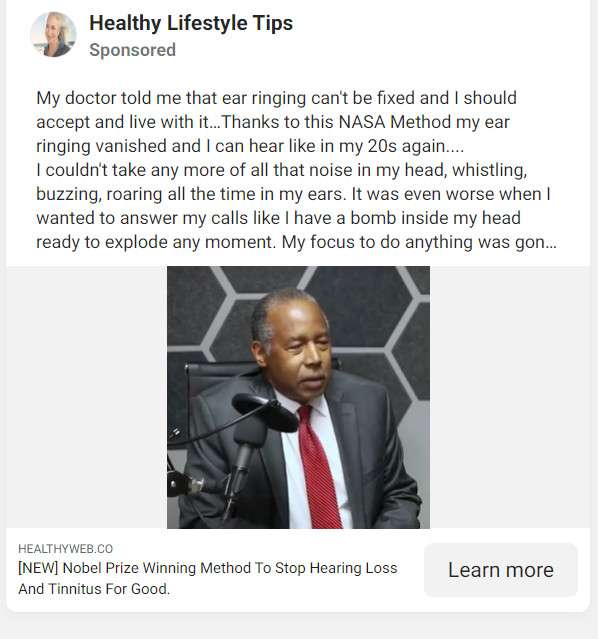
One of the most prominent and concerning aspects of the CerebroZen Tinnitus marketing campaign is the use of AI-generated videos featuring celebrities like Joe Rogan, Johnny Depp and Kevin Costner. These videos create the illusion that these well-known figures endorse the product and its effectiveness in treating tinnitus. However, it is highly unlikely that these celebrities have any genuine involvement with CerebroZen Tinnitus or have ever used the product themselves.
The use of celebrity endorsements, whether real or fabricated, is a common tactic employed by marketers to create a sense of trust and credibility around their products. By associating a well-known and respected figure with a product, marketers aim to transfer the celebrity’s positive attributes and reputation to the product itself. In the case of CerebroZen Tinnitus, the AI-generated videos of Joe Rogan, Johnny Depp and Kevin Costner are designed to make potential customers believe that these celebrities stand behind the product’s effectiveness and safety.
However, the use of fabricated celebrity endorsements is not only misleading but also unethical. It takes advantage of consumers’ trust in public figures and exploits their desire for relief from tinnitus. Potential customers should be wary of any product that relies on celebrity endorsements, especially when those endorsements appear to be generated by artificial intelligence rather than genuine testimonials.
2. Fake Testimonials
Another red flag in the marketing of CerebroZen Tinnitus Relief Drops is the presence of fake testimonials on the product’s website and in its advertising materials. These testimonials often appear as comments or reviews from supposed customers who claim to have experienced significant relief from tinnitus and improvements in their overall quality of life after using the Drops.
However, upon closer inspection, these testimonials are likely fabricated and are designed to trick potential buyers into believing that the product has a proven track record of success. The use of fake testimonials is a common tactic among scam products, as it creates a false sense of social proof and encourages potential customers to make a purchase based on the apparent experiences of others.
The problem with fake testimonials is that they are entirely unverifiable and do not represent the true experiences of real customers. In fact, the use of fake testimonials is a violation of consumer protection laws and is considered a deceptive marketing practice. Consumers should always approach testimonials with a critical eye and look for signs that they may be fabricated, such as overly enthusiastic language, lack of specific details, or a high volume of similar reviews posted within a short time frame.
3. Exaggerated Claims
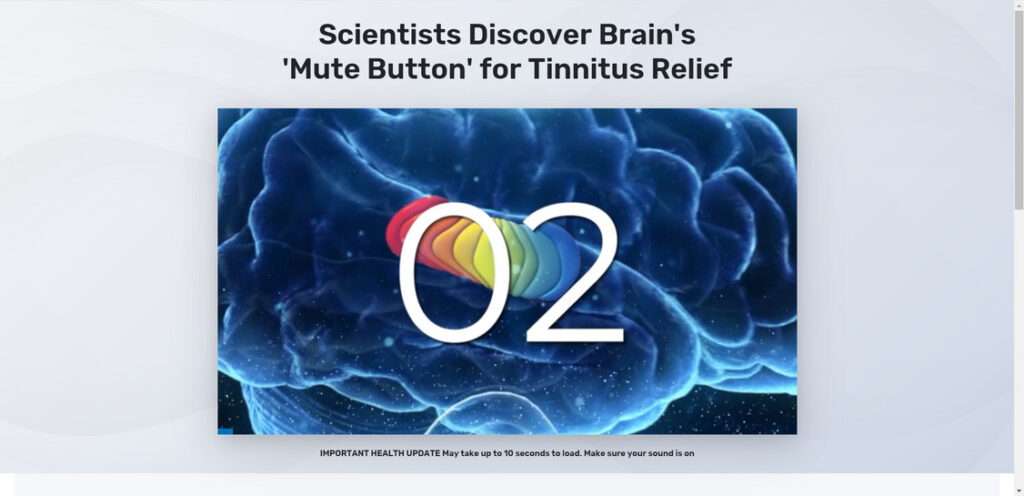
The marketing materials for CerebroZen Tinnitus make numerous exaggerated claims about the product’s ability to improve various aspects of life for those suffering from tinnitus. These claims include improved sleep quality, enhanced concentration, better emotional well-being, and an overall higher quality of life.
While it is true that tinnitus can have a significant impact on an individual’s quality of life, the claims made by CerebroZen Tinnitus seem too good to be true and lack substantial scientific evidence to support them. The website provides no information about clinical trials or studies that have been conducted to verify the effectiveness of the Drops in treating tinnitus or improving related symptoms.
Moreover, the claim that CerebroZen Tinnitus Relief Drops can provide “comprehensive emotional and psychological support” is particularly concerning, as it suggests that the product can replace the need for professional mental health care. Tinnitus can indeed take a toll on an individual’s emotional well-being, but a topical Drops is not a substitute for proper psychological treatment and support.
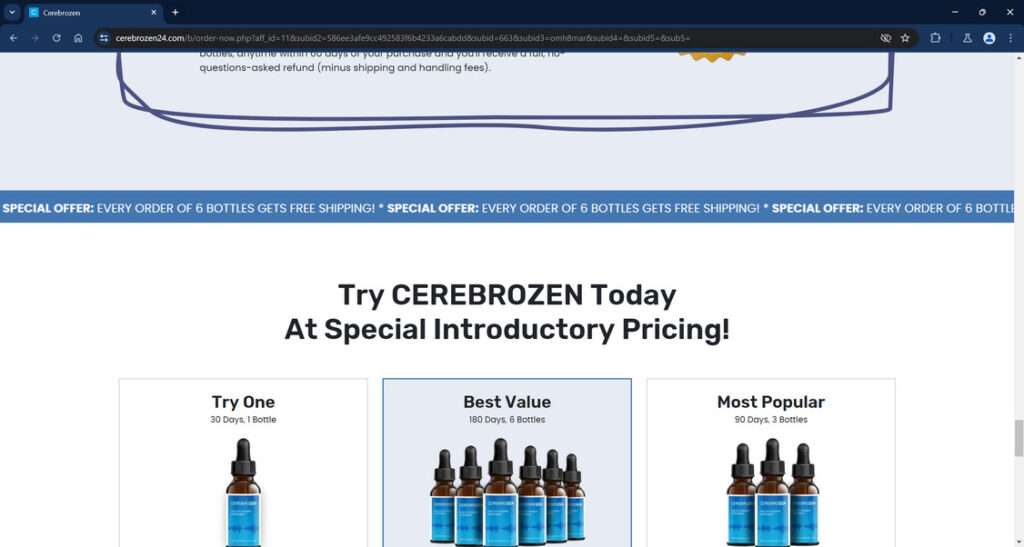
Consumers should be cautious of any product that makes exaggerated or unsubstantiated claims about its effectiveness, as these claims are often a sign of a scam or a product that does not live up to its promises. It is essential to look for products that have been rigorously tested and have demonstrated their efficacy through scientific research and clinical trials.
Lack of FDA Evaluation
Another concerning aspect of the CerebroZen Tinnitus Relief Drops marketing campaign is the lack of any mention of whether the product has been evaluated by the Food and Drug Administration (FDA). The FDA is responsible for regulating the safety and efficacy of medical products, including drugs, medical devices, and dietary supplements.
The absence of any information about FDA evaluation on the CerebroZen Tinnitus Relief Drops website raises questions about the product’s safety and effectiveness. If the Drops had been properly evaluated and approved by the FDA, it is likely that the manufacturers would prominently display this information to instill trust in potential customers.
The lack of FDA evaluation is particularly worrisome given the product’s claims of containing “natural and effective ingredients” that penetrate ear tissues and balance the auditory system. Without proper testing and regulation, there is no way to verify the safety or effectiveness of these ingredients when used in a topical Drops for the treatment of tinnitus.
Consumers should always look for products that have been evaluated and approved by the FDA, as this ensures that the product has undergone rigorous testing and has been deemed safe and effective for its intended use. In the absence of FDA approval, potential customers should exercise extreme caution and consult with a healthcare professional before using any new product, especially one that makes bold claims about its ability to treat a medical condition.
4. Questionable Ingredients
The primary active ingredient in CerebroZen Tinnitus Relief Drops, according to the product’s website, is Ginkgo biloba leaf extract. Ginkgo biloba is a popular herbal supplement that has been used for centuries to treat a variety of health conditions, including cognitive decline, cardiovascular disease, and tinnitus.
While Ginkgo biloba has been studied for its potential benefits in treating tinnitus, the evidence for its effectiveness is mixed. Some studies have suggested that Ginkgo biloba may help to reduce the severity and frequency of tinnitus symptoms, while others have found no significant benefit compared to placebo.
Moreover, the safety of using Ginkgo biloba in a topical Drops for the treatment of tinnitus has not been adequately studied. The CerebroZen Tinnitus Relief Drops website provides no information about the concentration of Ginkgo biloba in the product or the potential risks associated with applying the herb directly to the skin or ear tissues.
In fact, there is insufficient reliable information about the safety of using Ginkgo biloba topically, as the herb is most commonly consumed orally in the form of supplements or teas. Applying Ginkgo biloba directly to the skin or ear tissues may cause adverse reactions or interact with other medications, and there is no way to know the long-term effects of using the herb in this manner.
Consumers should be cautious of any product that relies on questionable or understudied ingredients, especially when those ingredients are being used in a novel way, such as in a topical Drops for the treatment of tinnitus. It is always best to consult with a healthcare professional before using any new herbal or natural product, as they can provide guidance on the safety and effectiveness of the ingredients based on the latest scientific research.
CerebroZen Tinnitus Relief Drops has been also investigated by Jordan Liles on his YouTube channel, where he offers a detailed video on the subject. We recommend watching his content for a comprehensive understanding of the deceptive marketing. You can find his video at Jordan Liles – YouTube.
The Potential Risks of Using CerebroZen Tinnitus Relief Drops
Given the questionable marketing tactics and lack of reliable information about the safety and efficacy of CerebroZen Tinnitus Relief Drops, potential customers should be aware of the potential risks associated with using the product.
Unverified Safety
One of the most significant risks of using CerebroZen Tinnitus Relief Drops is the lack of verified safety information. As mentioned earlier, the product has not been evaluated by the FDA, which means that there is no way to know whether it has undergone proper safety testing or if it has the potential to cause adverse reactions or interact with other medications.
The use of Ginkgo biloba in a topical Drops is also a concern, as there is limited information about the safety of applying the herb directly to the skin or ear tissues. Without proper testing and regulation, there is a risk that the product may cause irritation, allergic reactions, or other unwanted side effects.
Ineffectiveness
Another potential risk of using CerebroZen Tinnitus Relief Drops is that it may simply be ineffective in treating tinnitus or improving related symptoms. Despite the bold claims made by the product’s marketing materials, there is no scientific evidence to support the idea that a topical Drops containing Ginkgo biloba can significantly reduce the severity or frequency of tinnitus.
In fact, many of the claims made by CerebroZen Tinnitus Relief Drops, such as improved sleep quality, enhanced concentration, and better emotional well-being, are not typically associated with the use of Ginkgo biloba or other herbal supplements. These claims seem to be more of a marketing tactic than a reflection of the product’s actual capabilities.
Using an ineffective product not only wastes money but also delays proper treatment for tinnitus. Tinnitus can be a challenging condition to manage, and it is essential to work with a healthcare professional to identify the underlying cause and develop an appropriate treatment plan. Relying on an unproven product like CerebroZen Tinnitus Relief Drops may prevent individuals from seeking the care they need and may even worsen their symptoms over time.
False Hope
Perhaps the most significant risk of using CerebroZen Tinnitus Relief Drops is the false hope it may provide to individuals suffering from tinnitus. Tinnitus can be a debilitating condition that significantly impacts an individual’s quality of life, and many people are desperate for a solution that can provide relief from the constant ringing or buzzing in their ears.
The marketing tactics used by CerebroZen Tinnitus Relief Drops, including the use of celebrity endorsements and exaggerated claims, are designed to prey on this desperation and create a sense of hope that the product can provide a quick and easy solution to tinnitus. However, this hope is likely misplaced, given the lack of scientific evidence to support the product’s effectiveness.
Moreover, the use of false hope can be emotionally damaging to individuals with tinnitus, as it may lead them to invest significant time, money, and energy into a product that ultimately fails to deliver on its promises. This can lead to feelings of frustration, disappointment, and even despair, which can further exacerbate the emotional and psychological toll of tinnitus.
It is crucial for individuals with tinnitus to have realistic expectations about the treatment options available to them and to work closely with a healthcare professional to develop a comprehensive management plan. While there is no cure for tinnitus, there are many evidence-based treatments and coping strategies that can help to reduce the impact of the condition on daily life, including sound therapy, cognitive-behavioral therapy, and stress-reduction techniques.
The Importance of Consulting with a Healthcare Professional
Given the potential risks and questionable marketing tactics associated with CerebroZen Tinnitus Relief Drops, it is essential for individuals with tinnitus to consult with a healthcare professional before trying any new treatment options.
A healthcare professional, such as an audiologist or ENT (ear, nose, and throat) specialist, can provide a proper diagnosis of tinnitus and help to identify any underlying medical conditions that may be contributing to the symptoms. They can also provide guidance on the most appropriate treatment options based on the individual’s specific needs and medical history.
In some cases, tinnitus may be a symptom of a more serious underlying condition, such as Meniere’s disease, a vestibular schwannoma, or a cardiovascular disorder. These conditions require prompt medical attention and may not be effectively treated by a product like CerebroZen Tinnitus Relief Drops.
Moreover, a healthcare professional can provide information about the latest research and clinical trials related to tinnitus treatment, as well as connect individuals with support groups and other resources that can help them to cope with the emotional and psychological impact of the condition.
It is important to remember that there is no one-size-fits-all approach to treating tinnitus, and what works for one person may not work for another. A healthcare professional can help to tailor a treatment plan that takes into account an individual’s unique needs and preferences, and can adjust that plan over time based on the response to treatment.
FAQs
1. What is CerebroZen Tinnitus Relief Drops?
CerebroZen Tinnitus Relief Drops is a product marketed as a natural and effective way to treat tinnitus and improve ear health. The Drops contains Ginkgo biloba leaf extract and claims to penetrate ear tissues, balance the auditory system, and promote ear circulation.
2. Is CerebroZen Tinnitus Relief Drops endorsed by Joe Rogan?
No, the celebrity endorsements used in the marketing of CerebroZen Tinnitus Relief Drops, including videos of Joe Rogan, Johnny Depp and Kevin Costner, are AI-generated and do not represent genuine endorsements from these celebrities.
3. Has CerebroZen Tinnitus Relief Drops been evaluated by the FDA?
There is no information on the CerebroZen Tinnitus Relief Drops website to suggest that the product has been evaluated or approved by the FDA. This lack of FDA evaluation raises concerns about the product’s safety and efficacy.
4. Is Ginkgo biloba safe to use in a topical Drops for tinnitus?
There is insufficient reliable information about the safety of using Ginkgo biloba in a topical Drops for the treatment of tinnitus. The herb is most commonly consumed orally, and applying it directly to the skin or ear tissues may cause adverse reactions or interact with other medications.
5. Should I try CerebroZen Tinnitus Relief Drops if I have tinnitus?
It is not recommended to try CerebroZen Tinnitus Relief Drops without first consulting with a healthcare professional. The product’s marketing tactics and lack of reliable safety and efficacy information raise concerns about its potential risks and benefits. A healthcare professional can provide guidance on the most appropriate and evidence-based treatments for tinnitus based on your individual needs and medical history.
Conclusion
In conclusion, while the promise of quick and easy relief from tinnitus may be tempting, the marketing tactics and potential risks associated with CerebroZen Tinnitus Relief Drops should give potential customers pause. The use of AI-generated celebrity endorsements, fake testimonials, exaggerated claims, and the lack of FDA evaluation are all red flags that suggest the product may not live up to its promises.
Moreover, the lack of reliable information about the safety and efficacy of the product’s ingredients, particularly the use of Ginkgo biloba in a topical Drops, raises concerns about the potential for adverse reactions and long-term health effects.
Individuals with tinnitus who are seeking relief from their symptoms should consult with a healthcare professional before trying any new treatment options, including CerebroZen Tinnitus Relief Drops. A healthcare professional can provide guidance on the most appropriate and evidence-based treatments for tinnitus, as well as help to manage any underlying medical conditions that may be contributing to the symptoms.
While the emotional and psychological impact of tinnitus can be significant, it is essential to approach treatment with caution and to be wary of products that make bold claims without proper scientific evidence to back them up. By working closely with a healthcare professional and using proven coping strategies and treatments, individuals with tinnitus can find ways to manage their symptoms and improve their overall quality of life.
This article is for educational purposes only and does not constitute professional, financial or legal advice. The content is intended for general information and should not be construed as definitive guidance. Information contained herein is subject to change without notice.  For concerns, please contact us via the provided form.
If you are the owner of the website or product in question and wish to offer clarifications regarding your business or website, please reach out to us through the provided Contact Form.

Join the discussion
0 commentsShare your experience or ask a question about this article.
Discussion
Start the conversation
Have a question or something useful to share? Add the first comment.